Coal handling systems in power plants represent one of the highest-consequence, least-monitored segments of plant infrastructure. Conveyor belts spanning hundreds of metres carry thousands of tonnes of coal per hour through environments where longitudinal belt tears, spillage accumulations, foreign object ingestion, and spontaneous combustion events in coal stockpiles can progress from early warning signs to catastrophic equipment loss or facility fire within hours of onset. A belt longitudinal tear that begins as a small slit at a loading point can propagate to a full-length rip before a patrol technician completes the next walking inspection round. A hotspot developing in a coal pile reaches ignition temperature within the pile's interior — invisible on the surface until the combustion event is already self-sustaining. Spillage accumulations beneath conveyor galleries create both a secondary combustion fuel source and a structural loading hazard on gallery floors that manual inspection catches only on scheduled rounds. iFactory's AI vision camera platform addresses each of these risk categories through continuous anomaly detection — deploying vision models trained on coal handling environments to monitor conveyor belt surfaces, transfer points, and coal stockpile zones around the clock, generating structured alerts and maintenance work orders the moment an anomaly signature is detected. Power plant operations and maintenance leaders evaluating their current coal handling monitoring architecture regularly choose to Book a Demo with iFactory's engineering team to map the platform's detection capabilities against their specific coal yard configuration and risk profile.
Detect Belt Tears, Hotspots, and Spillage Before They Become Shutdowns.
iFactory's AI vision anomaly detection platform provides 24/7 continuous monitoring across coal conveyors, transfer points, and stockpile zones — connecting every detection event to real-time alerts and CMMS work order automation.
Why Coal Handling Monitoring Cannot Wait for the Next Patrol Round
The inspection interval problem in coal handling is structural. Most power plants conduct conveyor patrol inspections on a schedule of one to four hours depending on the criticality rating of each belt run — an interval that was set when manual patrol was the only available monitoring method. During that interval, a coal handling system operating at full throughput can experience multiple failure modes that are undetectable without continuous visual coverage. A longitudinal tear initiated by a tramp metal object at a loading chute can reach 10–20 metres in length within minutes at belt speeds of 3–5 m/s. A blocked chute creating a coal buildback at a transfer point reaches overflow conditions in 15–30 minutes at typical throughput rates. A conveyor fire fuelled by coal dust accumulation beneath the belt can progress from smouldering to open flame within the time between patrol rounds. These are not rare events in coal handling — they are the failure modes that dominate coal-yard insurance claims, plant outage records, and safety incident databases across the global thermal power industry. Continuous AI vision monitoring replaces the patrol interval uncertainty with a detection latency of seconds — identifying anomaly signatures the moment they appear and generating alerts before the event progresses to a stage where equipment damage or human safety risk is the outcome. iFactory's AI vision camera platform is designed specifically for the dust, heat, vibration, and variable lighting conditions of coal handling environments — delivering the continuous monitoring coverage that patrol inspection cannot provide.
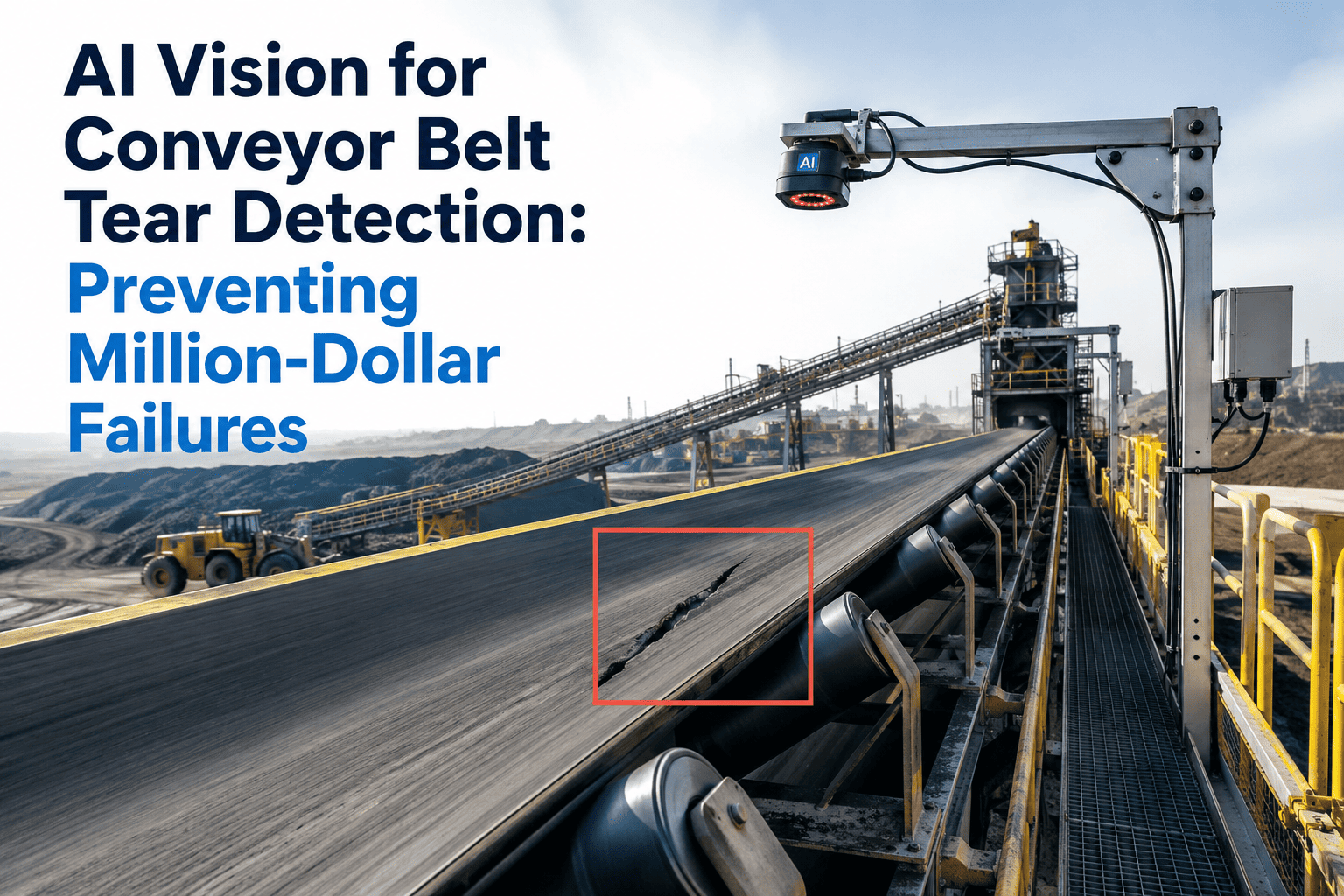
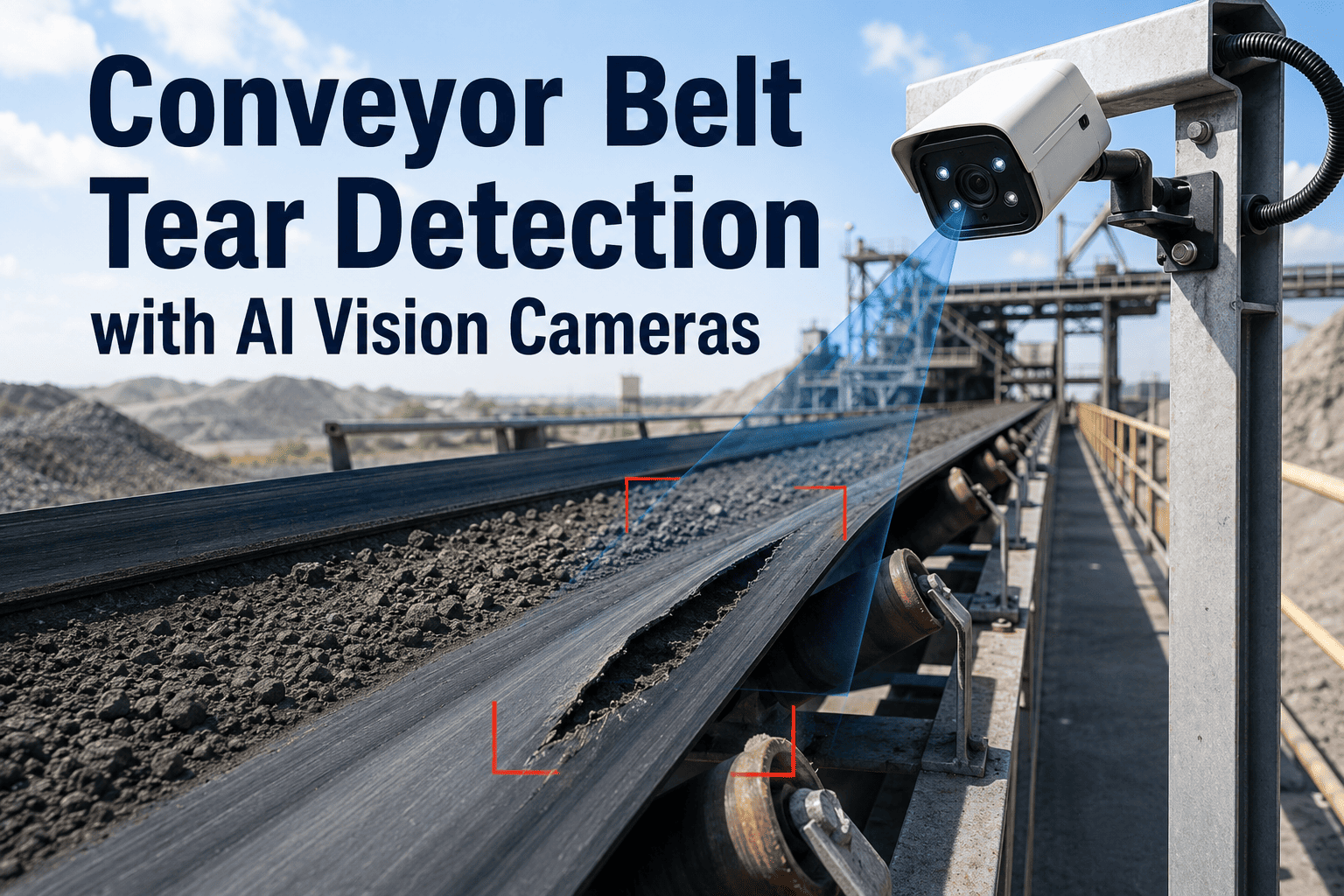
Longitudinal Tear Detection
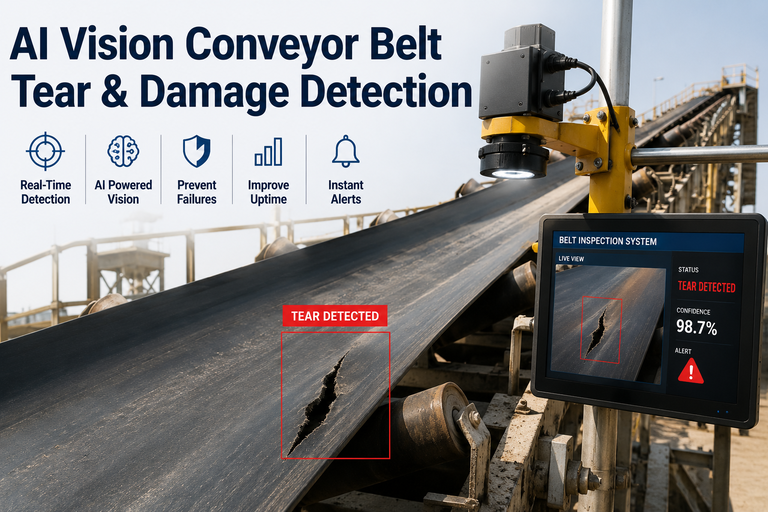
AI vision detects belt surface anomalies — cuts, slits, fraying edges, and splice failures — the moment they appear on the carry side or return run, before a slit propagates to a full-length rip requiring emergency shutdown and costly belt replacement.
Hotspot & Combustion Detection
Thermal and visual anomaly signatures in coal stockpiles and beneath conveyor galleries are detected before combustion events reach open flame — enabling intervention while suppression is still a scheduled maintenance action rather than an emergency response.
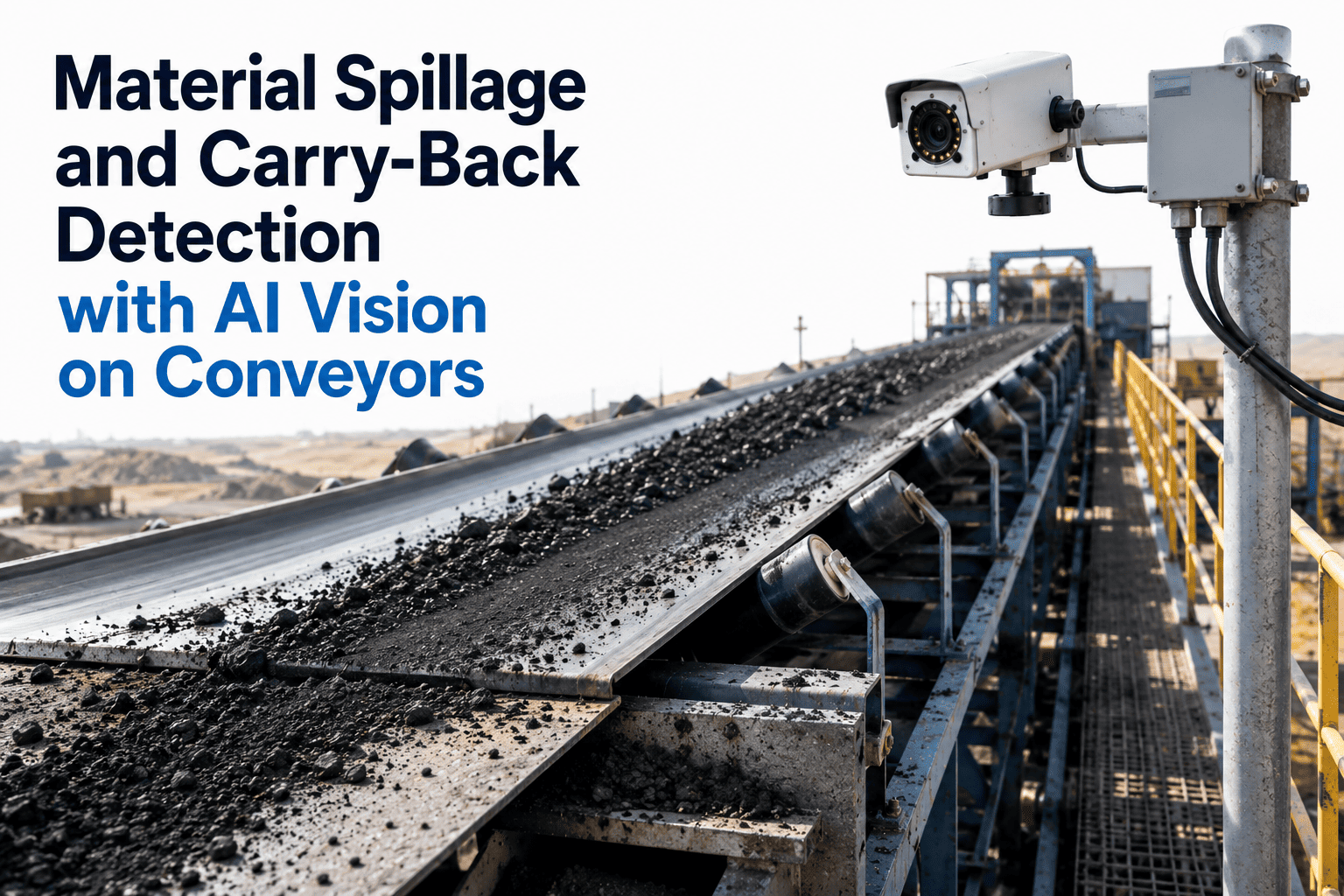
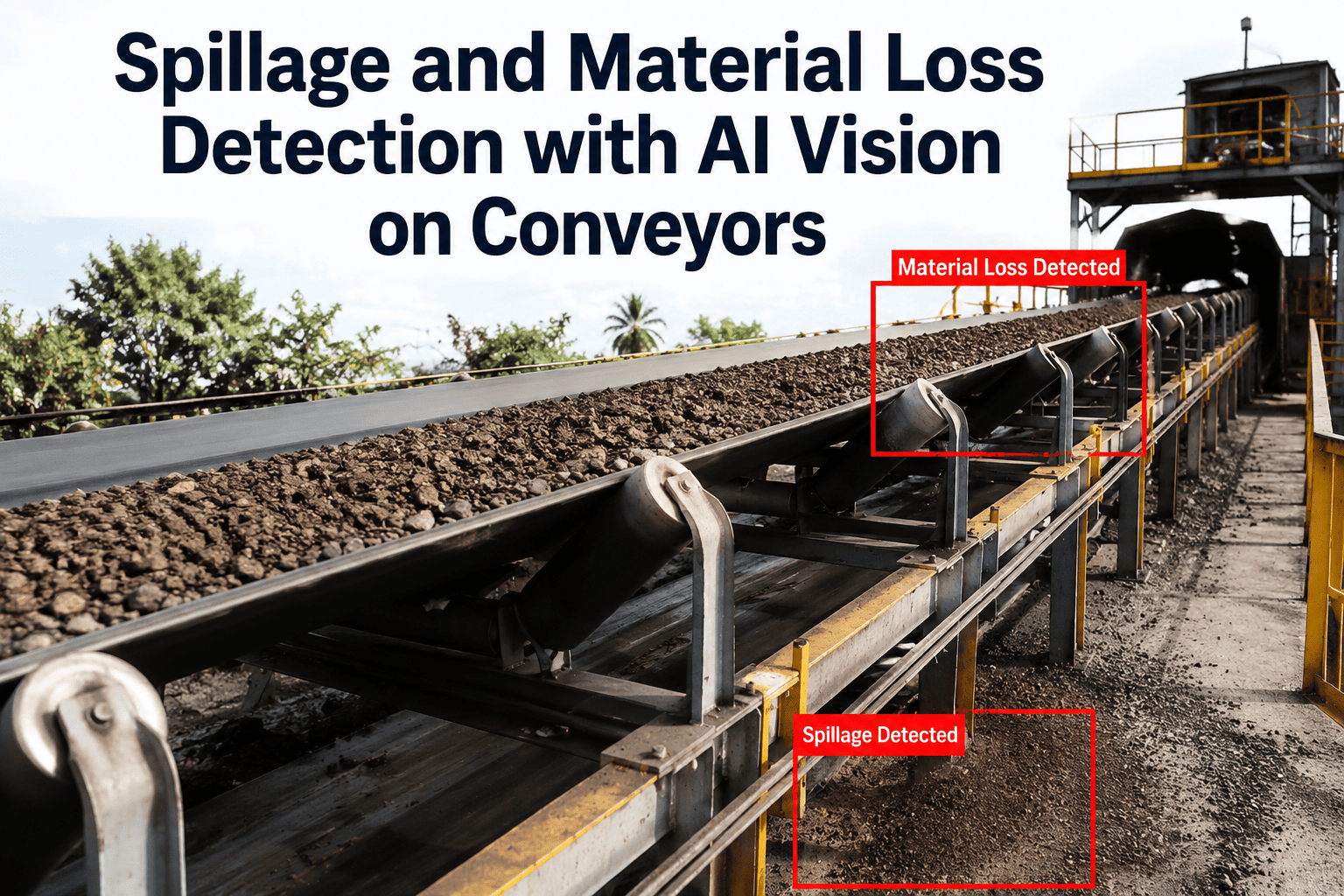
Spillage & Chute Blockage
Spillage accumulation below conveyor belts and coal buildback at blocked transfer chutes are detected continuously — triggering housekeeping alerts before accumulations reach fire risk thresholds or structural loading limits on gallery floors.
Foreign Object Detection
Tramp metal, timber, rope, and oversized rock fragments on the conveyor belt are identified before they reach belt scrapers, transfer chutes, or crusher inlets — preventing the ingestion events that initiate longitudinal tears and belt damage.
Anomaly Detection Coverage Across the Coal Handling System
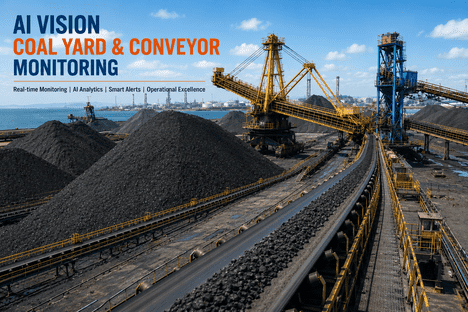
Effective coal yard monitoring requires detection coverage that follows the coal from stockpile through reclaim, along conveyor runs, through transfer towers, and to the bunker inlet — each zone presenting different anomaly types, environmental conditions, and equipment protection requirements. iFactory's AI vision platform is configurable for each zone in this handling chain with zone-specific camera configurations, model variants, and alert protocols that reflect the specific risks at each point.
| Monitoring Zone | Anomaly Types Detected | Detection Mechanism | Alert Action |
|---|---|---|---|
| Coal Stockpile Surface | Hotspot signatures, surface crust fracture, spontaneous combustion onset | Thermal and visual anomaly classification against stockpile baseline model | Hotspot alert to control room; CMMS work order for pile management team |
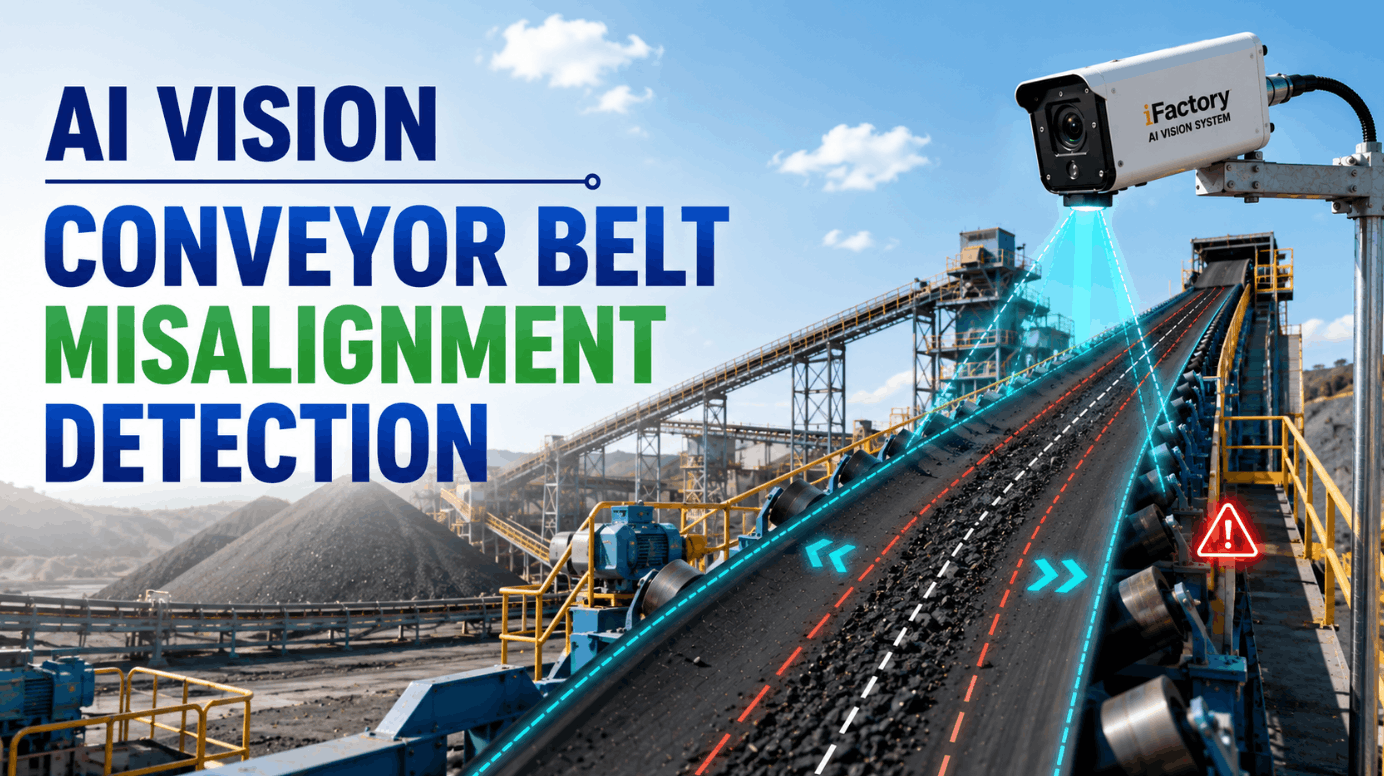
| Reclaim & Feeder Belt | Foreign objects, oversized rock, tramp metal, belt misalignment | Object detection and belt edge tracking on carry side imagery | Belt stop signal to PLC; maintenance alert with annotated detection image |
| Main Conveyor Run (Carry Side) | Longitudinal tears, splice failures, surface cuts, material loss | Belt surface anomaly detection comparing consecutive frame profiles | Immediate belt stop or speed reduction signal; CMMS emergency work order |
| Main Conveyor Run (Return Side) | Return belt damage, carryback accumulation, roller failures | Underside camera array with anomaly detection against clean belt baseline | Maintenance alert; scheduled inspection work order generation |
| Transfer Tower & Chute | Chute blockage, coal buildback, spillage overflow, dust generation | Volume change detection and spillage boundary classification | Chute blockage alert; operator notification with location and image |
| Conveyor Gallery Floor | Spillage accumulation, coal dust deposits, water ingress | Area coverage change detection against gallery floor baseline | Housekeeping alert; CMMS preventive task generation at threshold |
| Bunker Inlet & Tripper | Bunker overflow, tripper position anomaly, material bridging | Level detection and material flow continuity monitoring | Overflow alert; tripper control system notification |
Longitudinal Belt Tear Detection: The Highest-Cost Failure Mode in Coal Handling
A longitudinal belt tear is the single most costly failure event in a coal handling system. A full-length tear on a 1,000-metre conveyor run requires belt replacement that can cost $200,000–$600,000 in belt material alone, plus shutdown costs, coal supply disruption to the boiler, and the engineering time to execute an unplanned belt change. The vast majority of longitudinal tears are initiated by a single tramp metal object or sharp rock fragment that punctures the belt at a loading point and is then dragged along the belt surface under the material load, progressively extending the cut with every metre of belt travel. The critical intervention window is the period between the initial puncture and the propagation of the tear beyond economical repair — a window measured in minutes at typical belt speeds. iFactory's AI vision system monitors belt carry-side and return-side surfaces continuously, using anomaly detection models trained to identify the initial surface signature of a tear — the linear disruption in belt texture, the material loss profile at a cut edge, the splice failure signature — before the event has progressed beyond the initial detection zone. When a tear signature is detected, the system sends a stop signal to the belt drive PLC within the configured response time, reducing the tear propagation length from potentially hundreds of metres to the distance the belt travels during the detection-to-stop interval. Teams responsible for coal handling belt maintenance and wanting to understand the specific detection performance specifications for their belt dimensions and speed range are encouraged to Book a Demo with iFactory's coal handling engineering specialists.
Coal Pile Hotspot and Spontaneous Combustion Detection
Spontaneous combustion of coal stockpiles is a persistent operational risk at thermal power plants that store significant coal inventories — particularly for high-volatile sub-bituminous and lignite coals that oxidise rapidly when exposed to air at ambient temperatures. The combustion process begins as low-temperature oxidation in the pile interior, generating heat that gradually elevates pile temperature toward ignition thresholds of 140–160°C for most coal types. This process is initially invisible from the stockpile surface — the external temperature signature of an internal hotspot can be masked by surface cooling from rain, wind, or the thermal mass of overlying coal layers. By the time a surface thermal signature becomes visible to a patrol observer or a handheld thermal camera, the internal combustion event may already be self-sustaining and requiring active suppression rather than preventive management. iFactory's AI vision anomaly detection platform provides continuous monitoring of stockpile surfaces for the thermal and visual signatures that precede visible hotspot emergence — surface discolouration patterns, moisture-driven surface crust changes, and the characteristic smoke vapour signatures that appear in early combustion onset before visible flame. Integrated with fixed thermal imaging at critical stockpile zones, the platform maintains a continuous surface temperature map that alerts the coal yard management team when any stockpile zone exceeds the configured thermal threshold, enabling pile turnover, compaction, or water application to arrest combustion before active fire suppression is required. Beyond the direct fire risk, early hotspot detection reduces the insurance premium implications of stockpile combustion events and satisfies the coal yard fire management documentation requirements that insurers and regulators increasingly require as evidence of active risk control. Book a Demo to review iFactory's coal pile monitoring configuration options and thermal alert threshold architecture for your specific coal types and stockpile geometry.
Integration with Plant Control Systems, CMMS, and Safety Platforms
The operational value of coal yard AI vision monitoring is determined by how quickly and reliably detection events reach the control systems and maintenance teams that can act on them. iFactory's platform is designed for tight integration with the power plant's existing control and maintenance architecture — with detection events routed simultaneously to the DCS or SCADA operator display, the plant CMMS for work order generation, and the safety management system for incident logging, using the communication protocols already present in the plant's infrastructure.
DCS / SCADA Integration
Detection alerts are published to the plant DCS or SCADA via OPC-UA tags in real time — appearing on the coal handling operator console with the detected anomaly class, location, severity, and an annotated camera image within seconds of detection. Belt stop and speed reduction signals are delivered via hardwired digital outputs to the conveyor drive PLC, independent of network availability, ensuring the equipment protection response is not dependent on SCADA network health.
CMMS Work Order Automation
Every detection event above the configured severity threshold generates a structured work order in the connected CMMS via REST API — pre-populated with the anomaly class, equipment ID, conveyor zone, detection image, recommended action, and urgency classification. Belt tear detections generate emergency work orders with immediate dispatch priority; spillage accumulation detections generate scheduled housekeeping tasks; chute blockage detections generate reactive corrective work orders routed to the shift maintenance crew. This eliminates the manual work order creation step that delays response in conventional alert-to-action workflows.
Edge Compute — No Cloud Dependency
All image processing and AI inference runs on edge compute hardware installed in the coal handling electrical room or transfer tower control panel — with no cloud connectivity required for the detection and response cycle. This architecture ensures that detection latency and equipment protection signals are not affected by network outages, and that sensitive plant operational data does not leave the site perimeter. The edge node connects to the plant OT network for SCADA tag updates and CMMS API calls while processing all image data locally.
Environmental Enclosure for Coal Handling Environments
Camera systems in coal handling applications operate in environments with high coal dust concentrations, vibration from belt drives and transfer points, wide temperature ranges, and regular high-pressure water washdown during cleaning cycles. iFactory's camera enclosures for coal yard applications are IP66-rated with positive-pressure air purge systems that maintain lens cleanliness in dusty gallery environments, stainless steel housings rated for washdown, and vibration-isolated mounting brackets designed for installation on conveyor structures and transfer tower frames.
Frequently Asked Questions: AI Vision for Coal Yard and Conveyor Monitoring
How does AI vision detect belt tears differently from conventional rope-based tear detection systems?
Conventional steel cord rope-based belt tear detection systems use embedded steel ropes and inductive sensing loops to detect when a longitudinal tear severs a rope — providing a detection signal only after the tear has already propagated to the sensor loop location. AI vision detects the surface signature of a tear initiation on the belt surface itself, in the camera's field of view, before the tear has propagated beyond the detection zone. This provides detection at the earliest physically possible moment — the instant the belt surface anomaly is visible — rather than after the tear has travelled to a fixed sensor location. Vision-based detection also identifies developing anomalies such as surface cuts, delamination, and splice weakening that conventional rope systems cannot detect until a full tear occurs.
Can the system operate reliably in the heavy coal dust environment of a conveyor gallery?
Yes — iFactory's coal handling camera configuration addresses the dust environment through both hardware and model design. Positive-pressure air purge enclosures maintain lens clarity by creating a continuous outward airflow that prevents coal dust from settling on the optical window. Illumination systems are designed for even coverage in the low-reflectance visual environment created by coal-coated belt surfaces and gallery walls. The AI detection models are trained on imagery captured in operating coal gallery environments — not in controlled laboratory conditions — so they are calibrated to distinguish genuine anomalies from the background appearance variability created by dust accumulation, water spray, and varying coal surface profiles.
What conveyor belt speeds and widths does the system support?
iFactory's coal handling vision system supports belt speeds from 0.5 m/s to 6.5 m/s — covering the full range of reclaim belt, main conveyor, and tripper belt speeds found in utility-scale coal handling systems. Belt width coverage extends from 800 mm to 2,400 mm with single-camera or multi-camera configurations depending on belt width and the required spatial resolution for the target anomaly size. Camera specifications, frame rates, and mounting geometry are engineered to the specific belt speed and width combination at each installation point to ensure consistent pixel resolution at the belt surface across the full operating speed range.
How long does deployment and calibration take for a coal handling system installation?
Physical installation of cameras, enclosures, lighting, and edge compute hardware at a typical coal handling installation covering 3–5 conveyor runs and a stockpile monitoring zone is completed in 5–10 days during a planned outage or using weekend maintenance windows. Model calibration — adapting the anomaly detection models to the specific belt appearance, coal type, and environmental conditions at the site — runs over 2–4 weeks of live operation. During calibration, alerts are reviewed by iFactory's application engineering team and the plant maintenance team jointly to validate detection accuracy and adjust thresholds before autonomous operation begins. Full validated deployment is typically active within 6 weeks of installation commencement.
Does the platform integrate with the plant's existing fire detection and suppression systems?
Yes — iFactory's platform can be configured to send hotspot and combustion onset alerts to the plant's fire detection panel and safety management system via dry contact relay outputs or digital communication protocols, triggering the appropriate response in the plant's existing fire response workflow. The platform does not replace dedicated fire detection systems but adds an early-warning visual detection layer that identifies thermal and smoke precursor signatures before conventional heat or smoke detectors are activated — extending the response window from the point of detection to the point of suppression system activation. Integration with automatic water deluge or CO2 suppression systems at specific coal handling zones is supported through hardwired relay outputs configurable per detection zone and severity level.
Deploy 24/7 AI Vision Monitoring Across Your Coal Yard and Conveyor System.
iFactory's AI vision anomaly detection platform detects belt tears, coal pile hotspots, spillage, chute blockages, and foreign objects in real time — connecting every detection event to automated plant control responses and CMMS work order generation without manual intervention.