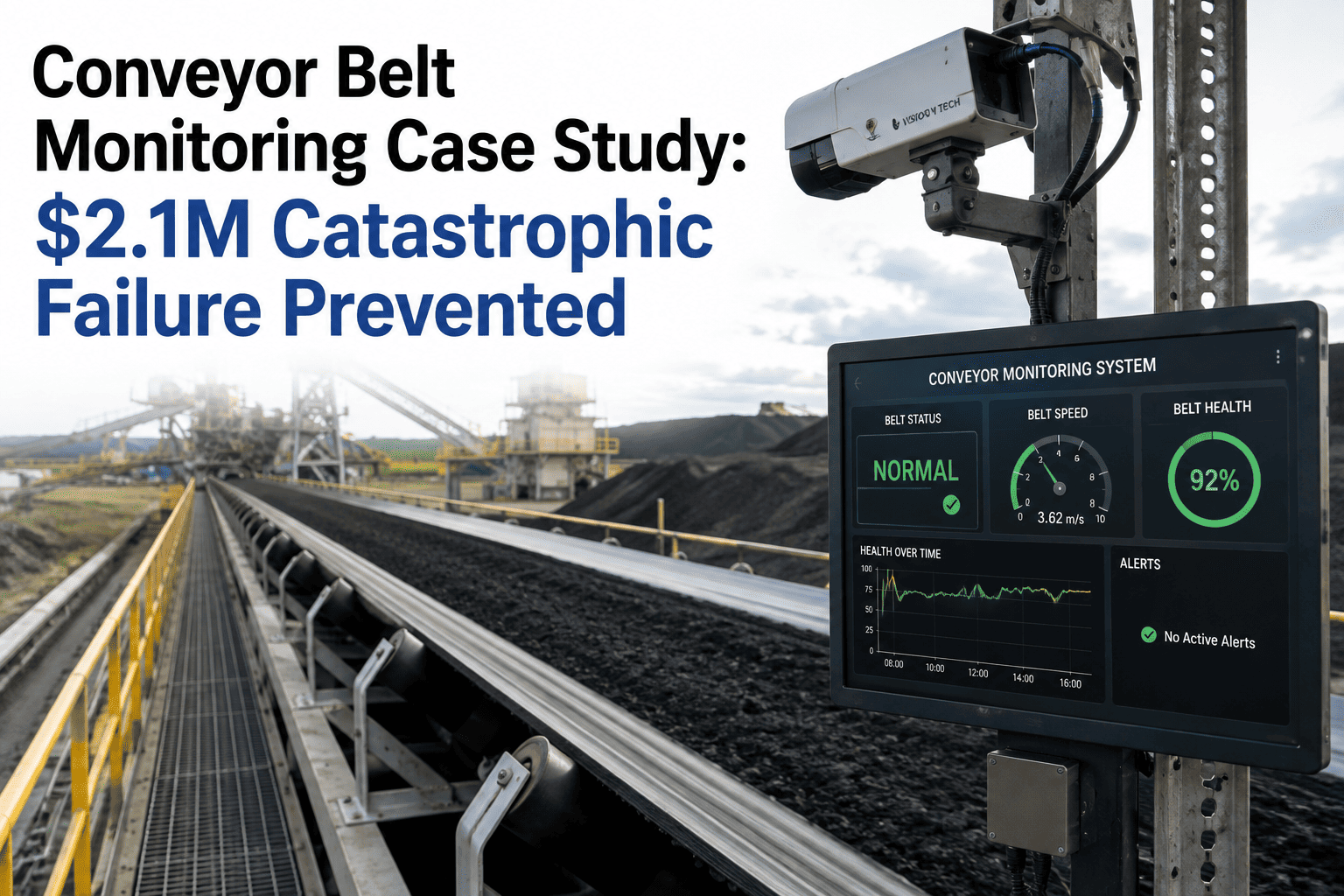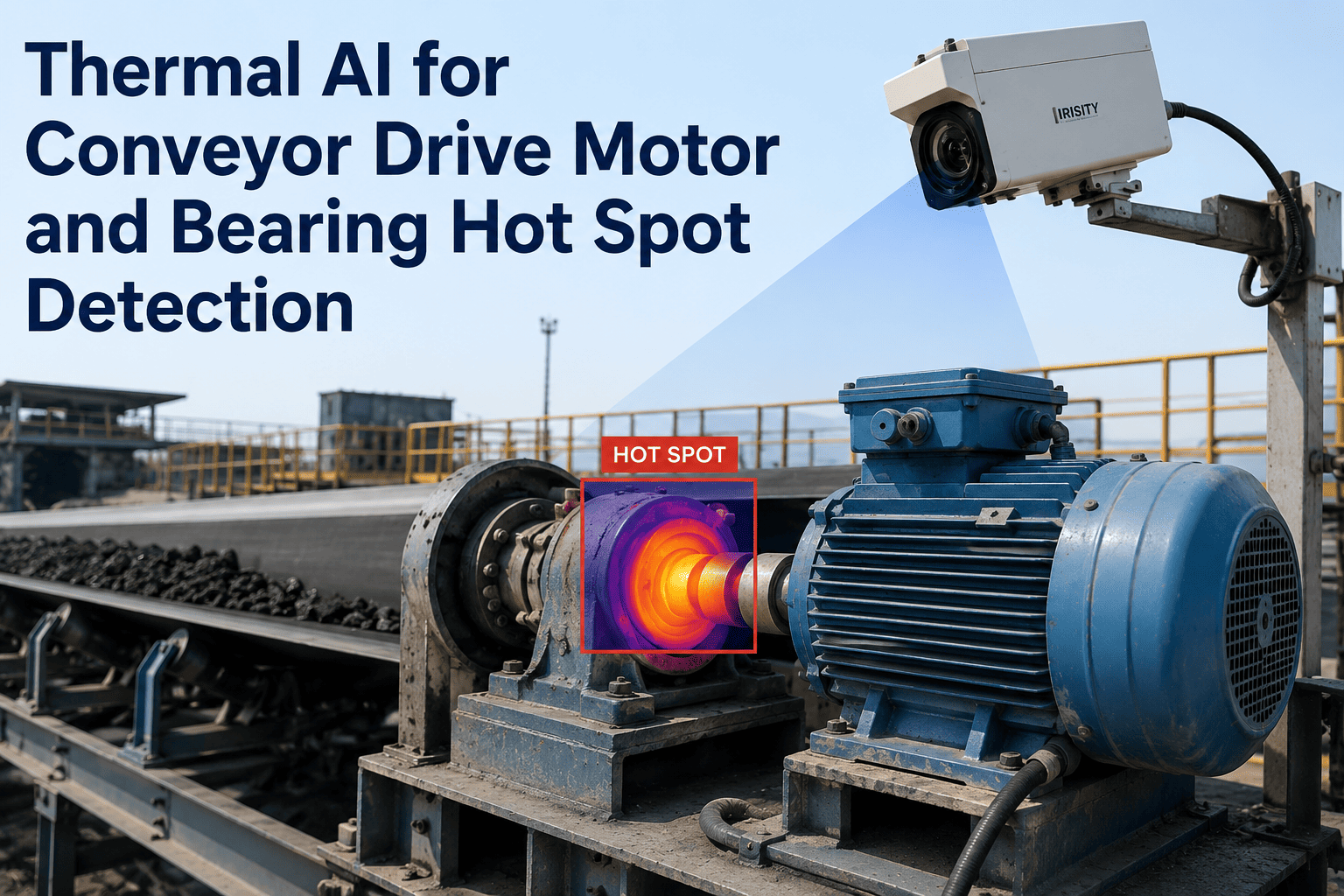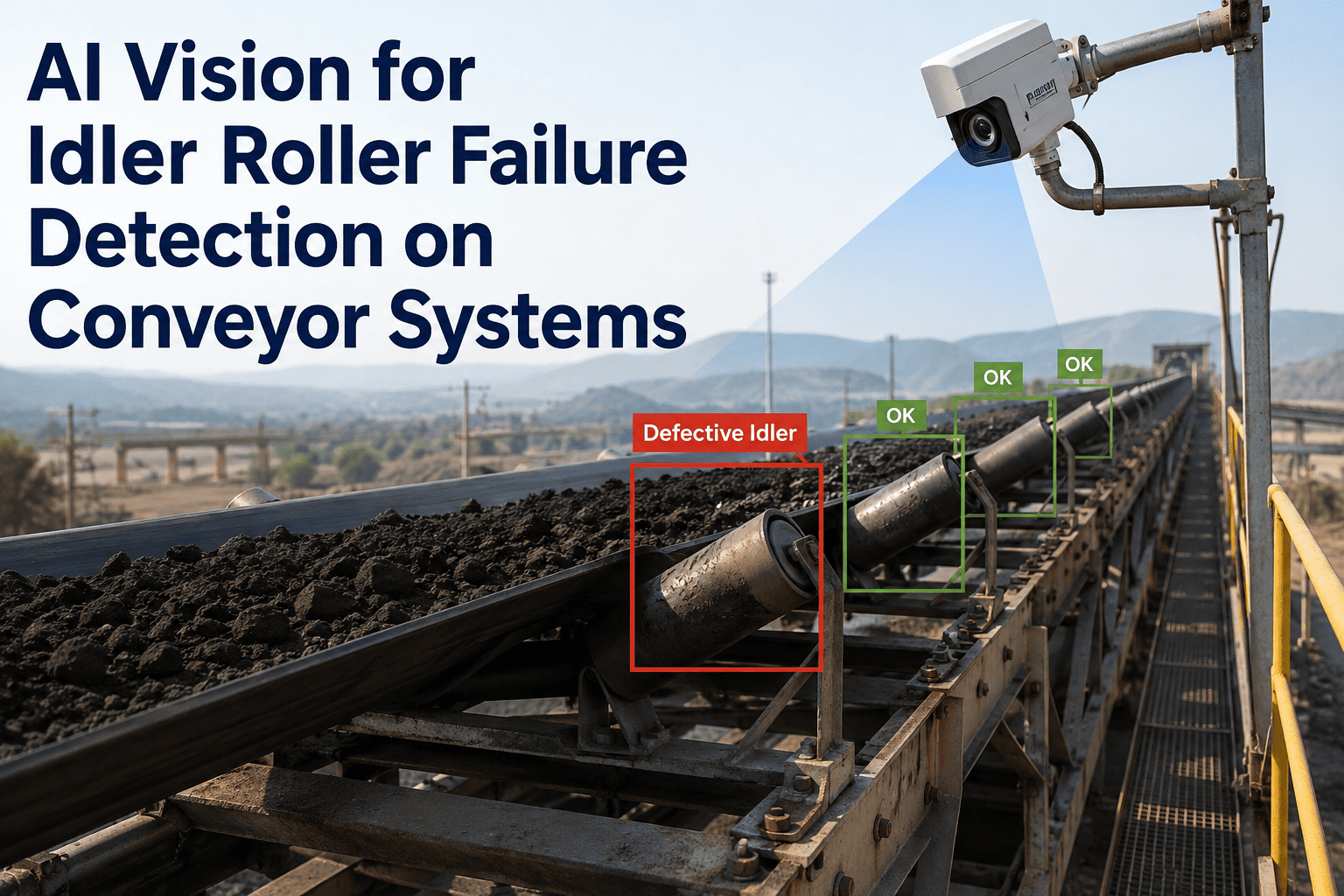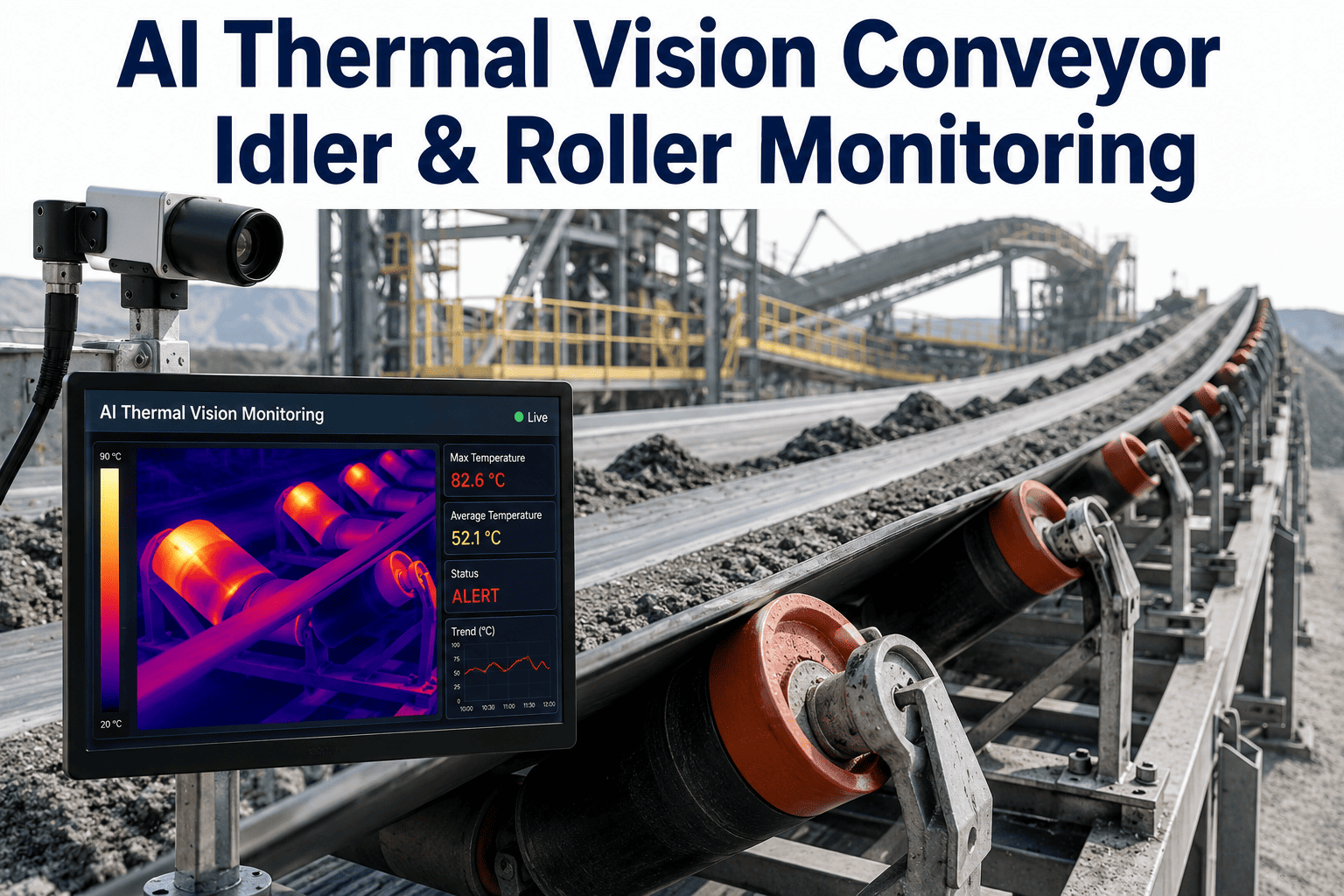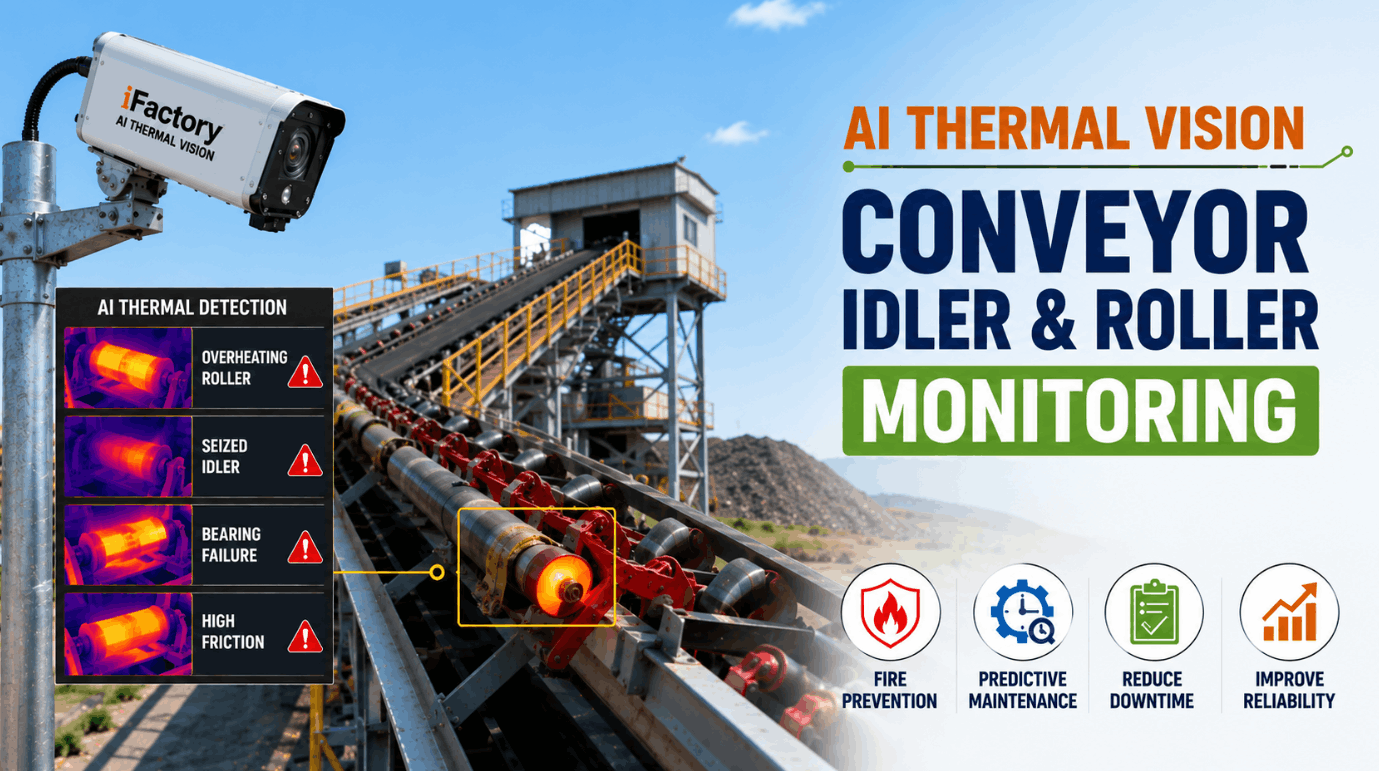
Conveyor idler and roller failures represent one of the most dangerous and costly failure modes in bulk material handling operations. When an idler seizes due to bearing failure, the friction-generated heat can rapidly reach temperatures sufficient to ignite coal dust, wood chips, or combustible material accumulated in the conveyor structure, making seized idlers a primary ignition source in conveyor belt fires. Traditional inspection methods relying on periodic manual thermal scanning rounds leave every idler unmonitored for hours or days between inspections, creating a window where a bearing that begins overheating minutes after an inspector passes can progress to catastrophic failure before the next scheduled scan. AI thermal vision monitoring eliminates this vulnerability by deploying continuous thermal surveillance across every idler and roller on every conveyor, detecting the earliest temperature rise patterns that precede bearing failure and idler seizure by up to 40 hours. The system gives maintenance teams the lead time needed to intervene before belt damage, structural overheating, or fire occurs. Book a Demo of iFactory's AI thermal vision platform to see how continuous idler temperature monitoring eliminates the gaps left by manual inspection programs.
Why Conveyor Idler and Roller Failures Demand Continuous Thermal Surveillance
The financial and safety consequences of undetected idler failures extend far beyond the cost of replacing a seized roller. When a conveyor idler locks up and begins generating friction heat, the cascading effects include belt damage from drag and abrasion, structural heat damage to the conveyor frame, fire risk from accumulated combustible materials, and production downtime that can exceed 24 hours for belt replacement. In coal-fired power plants, biomass facilities, mining operations, and cement plants where combustible dust accumulates naturally around conveyor structures, a single seized idler can ignite a fire that threatens personnel safety and shuts down an entire processing line for days. The typical manual inspection interval of once per shift leaves each idler unmonitored for 8 to 12 hours — ample time for a bearing failure to progress from initial overheating to full seizure. Facilities that deploy AI thermal vision monitoring report an average of 20 to 40 hours of early warning before failure, transforming the maintenance response from emergency shutdown to scheduled intervention during planned downtime. iFactory's AI thermal vision camera processes all inference at the edge, detecting temperature anomalies on every idler in the camera field of view with sub-second latency and no dependency on cloud connectivity.
How AI Thermal Vision Detects Idler and Roller Failures Before They Cause Fires
iFactory's AI thermal vision system combines high-resolution thermal imaging with deep learning models trained specifically on the temperature signatures of conveyor idler and roller failures. The cameras are positioned along the conveyor at intervals that provide complete coverage of every idler station, capturing the surface temperature of each roller continuously. The AI model distinguishes between normal operating temperature variation caused by load changes and the distinctive temperature rise patterns that indicate bearing degradation, lubrication failure, or impending seizure. When the system detects an idler exceeding its configured temperature threshold or exhibiting a rate-of-rise pattern consistent with developing failure, it generates a structured alert containing the specific idler location, current temperature, temperature trend graph, and severity classification. The edge AI architecture ensures that all thermal analysis occurs on the camera hardware, delivering detection latencies under 200 milliseconds while maintaining full functionality even during network outages. Book a Demo to see how iFactory's thermal vision platform detects overheating idlers and rollers in your conveyor system.
Continuous Thermal Surveillance Across Every Idler Station
High-resolution thermal imaging cameras positioned at strategic intervals along the conveyor capture surface temperature data from every idler and roller in the field of view, eliminating the blind spots inherent in manual thermal scanning programs that inspect each idler once per shift at best.
Deep Learning Anomaly Detection for Bearing Failure Patterns
The AI model is trained on thousands of hours of thermal conveyor data to recognize the specific temperature rise rate, spatial distribution, and temporal progression patterns that distinguish bearing degradation from normal operating temperature variation, enabling detection before failure.
Severity Classification and Alert Prioritization
Each detected anomaly is automatically classified by severity based on absolute temperature, rate of temperature rise, asset criticality, and proximity to combustible materials — routing high-severity alerts directly to work order queues while flagging lower-severity trends for planned maintenance.
Automated CMMS Work Order Generation
Every thermal anomaly that exceeds the configured severity threshold triggers automatic work order creation in the connected CMMS with the specific conveyor asset identifier, idler location coordinates, temperature trend data, and severity classification pre-populated — eliminating manual data entry and accelerating maintenance response.
Cross-Conveyor Trend Analytics and Fleet Benchmarking
The platform aggregates temperature data across all monitored conveyors to identify recurring failure patterns, compare idler temperature profiles between conveyors handling similar materials, and predict remaining useful life for bearing populations based on degradation rate trends.
Fire Prevention Documentation and Compliance Reporting
The system maintains a complete thermal history for every idler and roller, providing the audit trail required for safety compliance reporting, insurance risk assessment, and regulatory documentation of fire prevention measures in combustible dust environments.
Comprehensive Detection Capabilities for Conveyor Idler and Roller Health
The AI thermal vision platform detects and classifies multiple categories of idler and roller anomalies, each requiring a distinct maintenance response. The table below summarizes the detection capabilities, their operational impact, and the recommended intervention workflow.
| Detection Category | Thermal Signature | Operational Impact | Maintenance Response |
|---|---|---|---|
| Bearing Overheating | Gradual temperature rise at roller ends over 8-24 hours | Progressive bearing wear, increased drag on belt, eventual seizure | Schedule bearing replacement at next available window; monitor temperature trend |
| Seized Idler Development | Rapid temperature spike to 80-120°C above ambient over 2-4 hours | Belt damage from friction, fire risk if combustible materials present, structural heat damage | Immediate shutdown for idler replacement; inspect belt for heat damage |
| Lubrication Failure | Irregular temperature fluctuations at bearing housing | Accelerated bearing wear, increased maintenance frequency, reduced idler service life | Verify lubrication schedule; inspect seal condition; regrease or replace bearing |
| Roller Surface Wear | Uniform temperature elevation across roller surface | Reduced material handling efficiency, increased belt wear, potential for belt slip | Inspect roller surface for wear pattern; schedule roller replacement based on wear progression |
| Structural Heat Transfer | Temperature elevation in idler frame or structure from external source | Indicates adjacent failure or external heat source; may mask actual idler condition | Investigate heat source; verify idler condition independently; inspect surrounding equipment |
The most significant capability that AI thermal vision brings to conveyor idler and roller monitoring is the conversion of continuous thermal data into actionable predictive intelligence. Traditional condition monitoring approaches for idlers rely on periodic vibration readings or manual thermography that capture only a snapshot of the idler's thermal condition at a single point in time. A bearing that begins overheating and then cools before the next measurement cycle — a pattern common in early-stage bearing degradation — is completely invisible to snapshot-based inspection programs. Continuous AI thermal vision captures the full temperature history of every idler, enabling the detection of transient overheating events, rate-of-rise trends, and day-over-day baseline shifts that manual programs consistently miss. When this thermal intelligence is integrated with the CMMS through automated work order generation, the maintenance team transitions from reacting to seized idlers that have already caused damage to intervening in developing failures before any operational impact occurs. Facilities operating iFactory's integrated AI thermal vision and CMMS platform achieve the earliest possible detection-to-intervention cycle for conveyor idler and roller failures.
Frequently Asked Questions About AI Thermal Vision Conveyor Monitoring
How does AI thermal vision detect idler failures before they cause fires?
The system continuously monitors the surface temperature of every idler and roller in its field of view. The AI model is trained to recognize temperature rise patterns that indicate bearing degradation, lubrication failure, or mechanical seizure — typically detecting anomalies 20 to 40 hours before the idler reaches failure temperature. This early warning enables maintenance teams to schedule intervention during planned downtime rather than responding to emergency breakdowns or fires. The thermal camera captures temperature data at sub-second intervals, ensuring that transient overheating events are detected even if they occur between traditional inspection rounds.
What temperature threshold triggers a maintenance alert for conveyor idlers?
Alert thresholds are configurable per conveyor and per idler position based on ambient temperature, material type, belt speed, and historical temperature baselines. The system establishes a normal operating temperature range during an initial commissioning period of two to three weeks. Alerts are triggered when an idler exceeds its configured absolute temperature threshold or when the rate of temperature rise exceeds a configurable value, typically set between 5 and 10 degrees Celsius per hour for developing failures. The AI model also considers contextual factors such as load variation and ambient temperature changes to minimize false alerts while ensuring genuine anomalies are never missed.
Can the system distinguish between normal idler temperature variation and genuine bearing failure?
Yes. The deep learning model is trained on thermal data from thousands of hours of conveyor operation under varying load, ambient temperature, and material conditions. It learns the difference between normal temperature variation caused by load changes, seasonal ambient temperature shifts, and material temperature variation versus the distinctive temperature rise patterns that indicate bearing degradation, lubrication breakdown, or mechanical seizure. The rate-of-rise analysis is particularly effective — healthy bearings warm and cool gradually with operating conditions, while failing bearings exhibit sustained temperature elevation and accelerating rate-of-rise that the model recognizes with high precision. False positive rates are typically under 3% after the initial calibration period.
What is the typical payback period for an AI thermal vision conveyor monitoring system?
Most operations achieve full payback on their AI thermal vision investment within three to six months. The primary value drivers are prevented conveyor fires, eliminated idler-related belt damage, reduced unplanned downtime, and lower maintenance labor costs from replacing planned versus emergency repairs. A single prevented conveyor fire typically saves enough in equipment damage, production loss, and liability costs to cover the entire camera deployment for a multi-conveyor facility. Facilities with high-value production lines or combustible material handling operations see the fastest payback because the hourly cost of unplanned downtime and the fire risk premium are highest in these environments.
Does AI thermal vision monitoring replace existing vibration analysis and manual thermography programs?
AI thermal vision complements rather than replaces existing condition monitoring programs. Vibration analysis remains valuable for detecting mechanical looseness and misalignment in rotating components that may not yet generate detectable temperature elevation. Manual thermography provides higher-resolution thermal data for detailed diagnostic analysis once an anomaly has been flagged. The role of AI thermal vision is to serve as the continuous surveillance layer that detects developing failures between scheduled inspection intervals and ensures no idler goes unmonitored. Organizations that deploy AI thermal vision alongside their existing vibration and thermography programs achieve the most comprehensive coverage and the earliest possible detection of developing idler and roller failures.