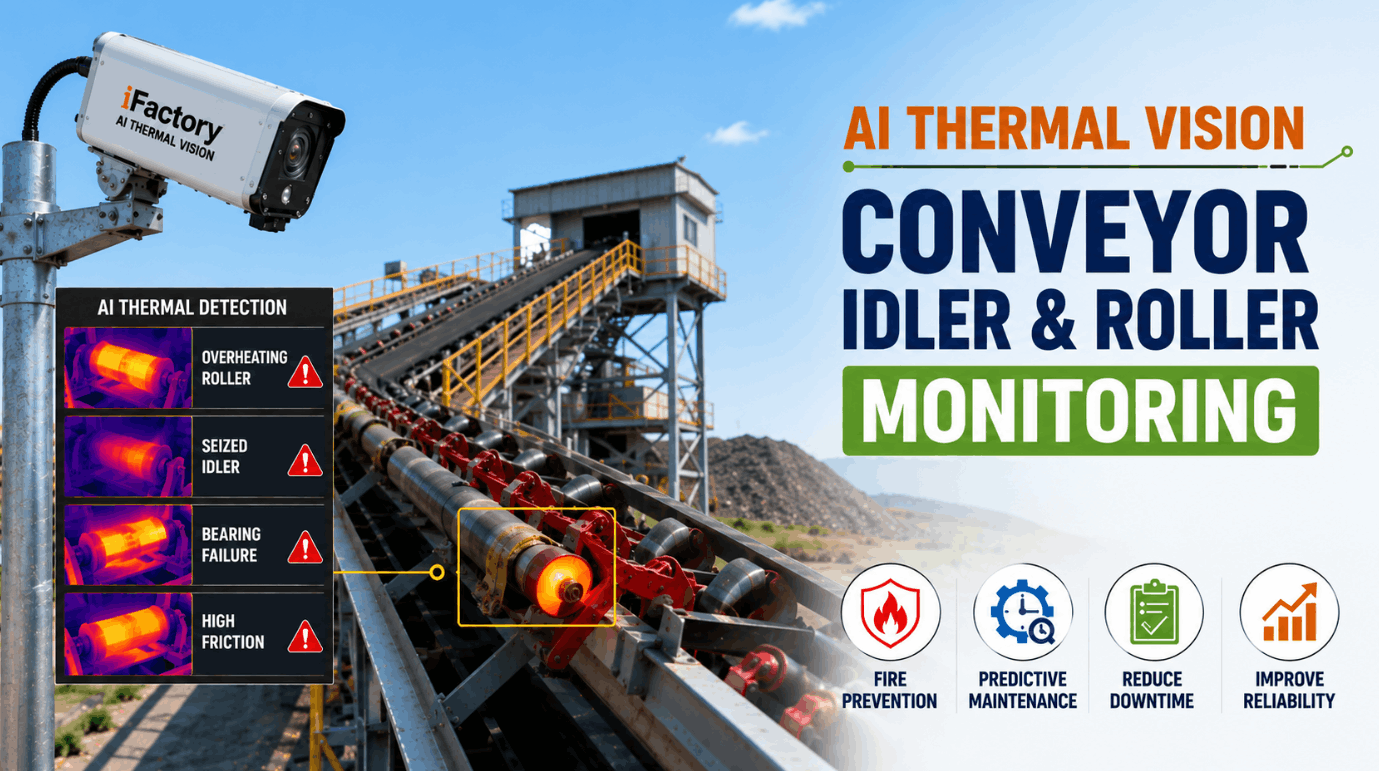
A seized idler can run under a belt for weeks before anyone notices — until friction turns it into one of the leading causes of conveyor fires. MSHA data attributes 40 percent of all conveyor fires to friction from seized rollers or misaligned belts, and thermal research confirms a damaged bearing's temperature climbs measurably faster than a healthy one, often reaching a 7°C or greater difference within minutes of load. A single overland conveyor can carry tens of thousands of idlers, which makes a handheld thermal gun and a walking route mathematically incapable of catching the one roller that matters before it seizes. Book a Demo to see iFactory's thermal vision spot a heating idler on your conveyor before it becomes a fire risk.
Thousands of Idlers. One Camera Array. Zero Blind Spots.
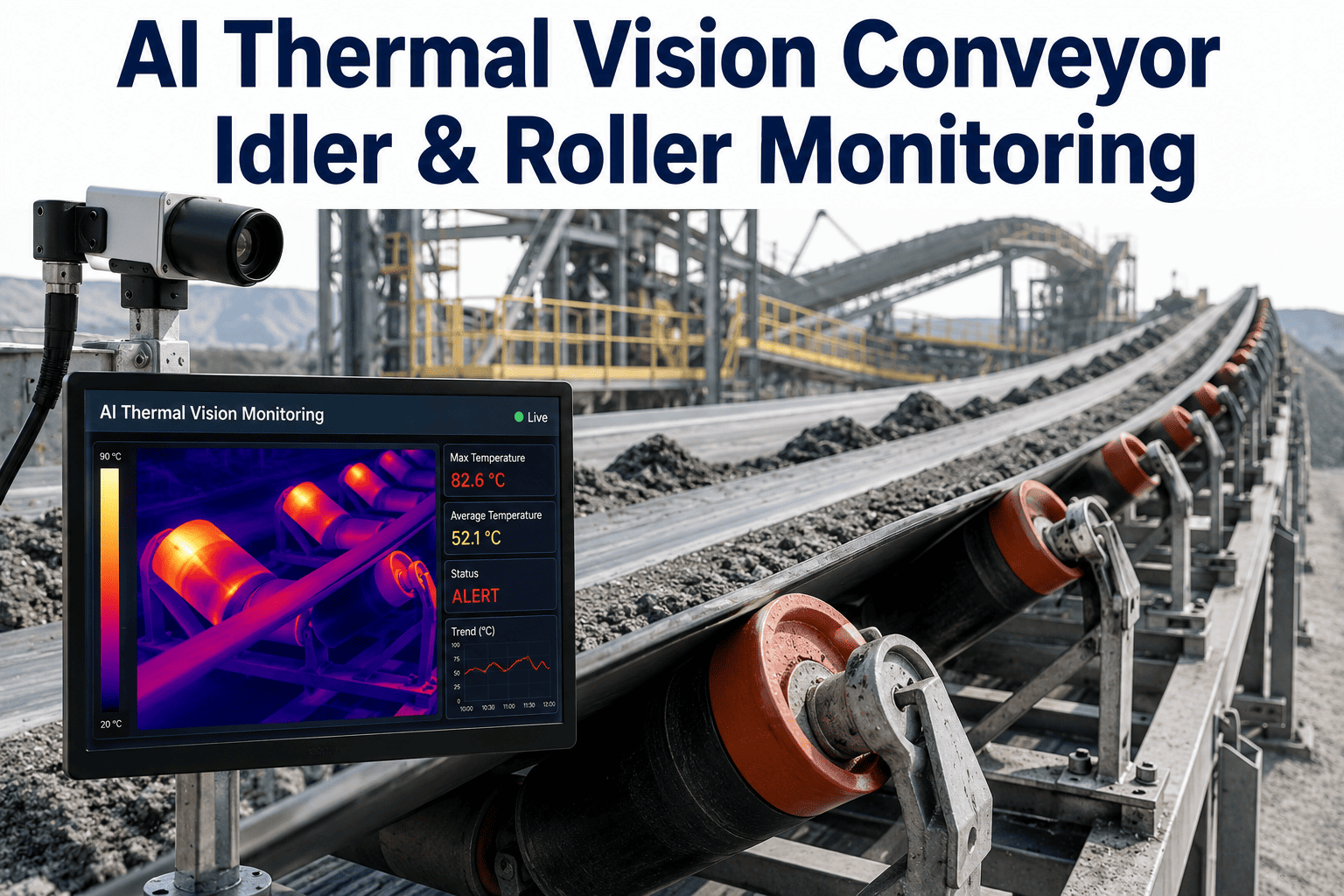
iFactory's AI Thermal Vision watches every roller across the full conveyor span continuously — catching a seizing idler the same shift it starts overheating, not weeks later during a scheduled walk-down.
40%
Of conveyor fires caused by friction from seized rollers
200–400°F
Pre-ignition temperature range thermal cameras detect
Same Shift
Detection window vs. weeks of silent running before discovery
Why a Seized Idler Is Invisible Until It Isn't
A roller that has seized does not stop the conveyor or trip an alarm. It keeps grinding against the moving belt, generating friction heat in a spot no one is looking at, on one roller out of thousands. This is exactly why seized idlers are such a persistent fire risk — the failure mode is silent by nature.
Bearing Damage
Internal bearing wear increases friction at the point of failure, raising local temperature faster than the surrounding roller surface.
Lubrication Loss
A dry or contaminated bearing loses its protective film, accelerating heat buildup at the exact spot most likely to seize.
Carryback & Fouling
Fugitive material builds up around rollers, restricting rotation and creating the friction conditions that precede seizure.
Belt Mistracking
A belt running off-center creates continuous friction against structure and idlers, adding a second heat source alongside bearing wear.
The Thermal Signature of a Failing Idler
Research using infrared imaging on conveyor rollers shows a clear, measurable pattern: a healthy idler's temperature rises quickly in the first minutes of operation and then levels off, while a bearing-damaged idler keeps climbing — creating a growing temperature gap that AI thermal vision is trained to catch early, well before the difference becomes visible to the eye.
Healthy Idler
Temperature rises briefly, then stabilizes within the first minutes of load
Early-Stage Wear
Bearing shows an elevated but still slow-climbing temperature trend
Seizing Idler
Temperature climbs continuously without leveling — a mandatory replacement signal
A 7°C Gap Between a Healthy Roller and a Failing One Is Invisible to the Eye. It Is Not Invisible to a Thermal Camera.
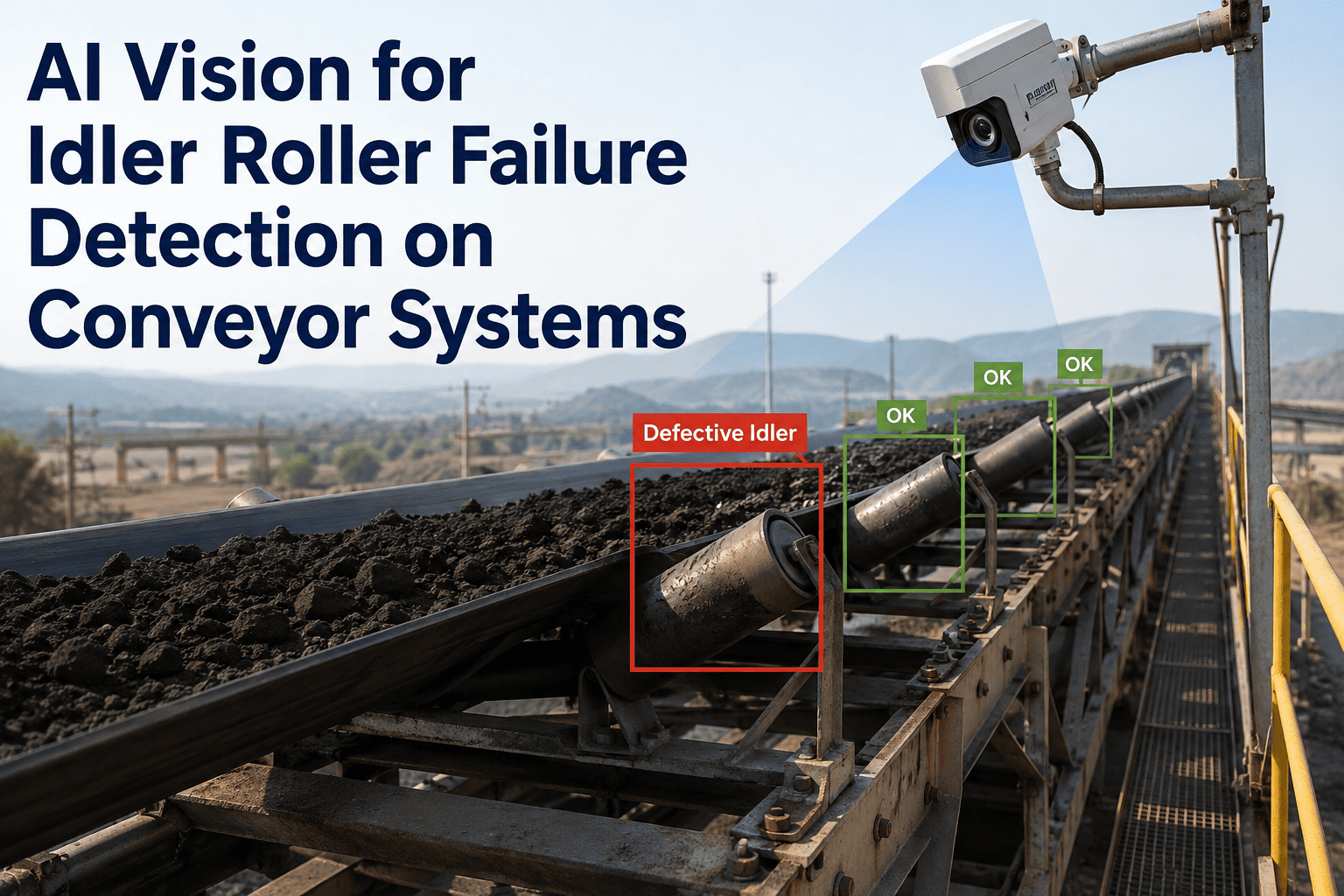
iFactory's thermal camera arrays scan the full roller span continuously during normal operation, identifying the exact idler heating up out of thousands running side by side.
How iFactory's Thermal Vision Pipeline Protects the Full Conveyor Span
Detection has to work across distance, dust, and continuous operation — the exact conditions that defeat a handheld inspection route. Ask our team how camera spacing is planned for your specific conveyor length.
01
Continuous Thermal Scanning
Camera arrays mounted at belt level scan the full roller span during normal operation, capturing temperature data across every idler without stopping the conveyor.
02
Roller Identification
Deep learning models locate each individual idler position along the belt, so a hot spot is attributed to a specific roller rather than a general section of conveyor.
03
Temperature Differential Analysis
Each roller's temperature is compared against ambient and against neighboring rollers, flagging the differential pattern that distinguishes a failing bearing from normal operating heat.
04
Degradation Rate Forecasting
The rate of temperature climb is tracked over time to estimate how many operating days remain before the idler reaches seizure risk, not just whether it is currently hot.
05
Automated Work Order & Alert
A qualifying detection generates a work order with the exact idler location, temperature trend, and recommended replacement window — timed to the next scheduled belt stop wherever possible.
Where Thermal Vision Coverage Matters Most
Heat is most likely to develop at specific points along a conveyor system — and that is exactly where continuous thermal monitoring delivers the fastest return.
Loading Zones
Impact and material buildup at loading points create friction and fouling conditions that accelerate idler wear.
Head & Tail Sections
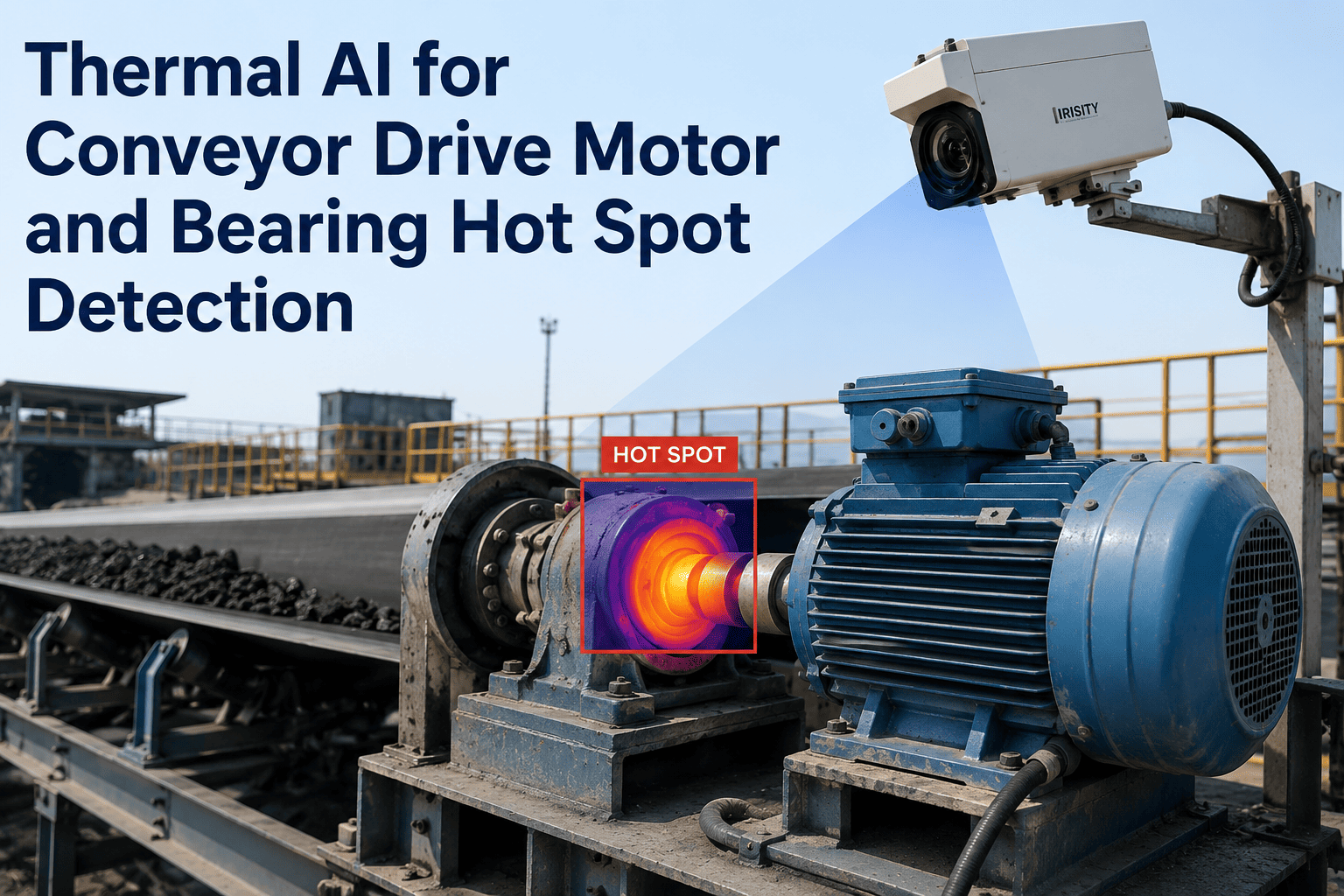
Pulley bearings under highest continuous load are among the most common points for temperature anomalies to develop.
Gravity Take-Ups
Tensioning components experience cyclical load changes that can mask early heat buildup from casual visual inspection.
Drive Stations
Motor and gearbox proximity means a rising idler temperature here can be mistaken for normal drive heat without thermal differentiation.
Thermal Vision vs. the Inspection Methods You're Using Today
Every existing monitoring method has a real role, but each also has a specific gap that continuous thermal vision was built to close.
What Changes Once Every Idler Is Monitored Continuously
These are the operational and safety shifts reliability and safety teams report after replacing periodic thermal checks with continuous camera-based monitoring.
01
Fire risk drops as seized-idler friction heat is caught in the pre-ignition range, before smoke or flame develops.
02
Belt damage from a running seized idler is avoided, since the roller is flagged and replaced before it cuts into the belt carcass.
03
Idler replacement moves from reactive emergency swaps to scheduled work timed to the next planned belt stop.
04
Technicians spend less time walking exposed or hard-to-access sections of long conveyor runs for manual thermal checks.
Frequently Asked Questions
How does thermal vision tell a normally warm roller apart from one that is actually failing?
Every roller develops a small amount of operating heat, so the model compares each idler's temperature trend against its own baseline and against neighboring rollers rather than applying a single fixed cutoff. A roller that levels off after initial warm-up is treated as normal, while one that keeps climbing without stabilizing is flagged, since that continuous climb is the pattern research consistently associates with bearing damage rather than routine operation.
Can this system cover conveyors that stretch several kilometers with tens of thousands of idlers?
Yes. Camera array spacing is planned specifically for long overland conveyors, where installing an individual sensor on every idler would be impractical from both a cost and maintenance standpoint. The thermal camera approach scans across the full roller span from fixed mounting points, giving continuous coverage without requiring hardware on each of the thousands of rollers along the belt.
Talk to our team about camera placement for your conveyor's exact length and layout.
Does dust or a harsh environment interfere with thermal detection accuracy?
Handheld thermal imaging in dusty environments can be affected by particulate interference with the image, which is one of the known limitations of manual spot-checks. Fixed camera arrays with consistent positioning and calibrated processing are built to account for this, filtering environmental noise so detection stays reliable in the same demanding conditions that make manual thermal rounds inconsistent.
How much advance warning does thermal monitoring typically give before an idler seizes?
Detection lead time depends on the failure mode and the idler's operating conditions, but continuous thermal monitoring is documented to catch fatigue-initiated bearing defects and heating patterns well before a seizure event, often on the order of weeks rather than the hours or days available once a fault is already visible or audible. This lead time is what allows replacement to be scheduled at a planned belt stop instead of triggering an emergency shutdown.
Does a flagged idler automatically shut down the conveyor?
Catch the One Seizing Idler Before It Becomes a Fire, a Belt Tear, or an Emergency Shutdown
iFactory's AI Thermal Vision watches every roller across your conveyor span continuously, turning a silent failure mode into an early, scheduled work order.
Full-span thermal coverage across thousands of idlers
Detects pre-ignition heat in the 200–400°F range
Same-shift detection instead of weeks of silent running
Automated work orders timed to planned belt stops