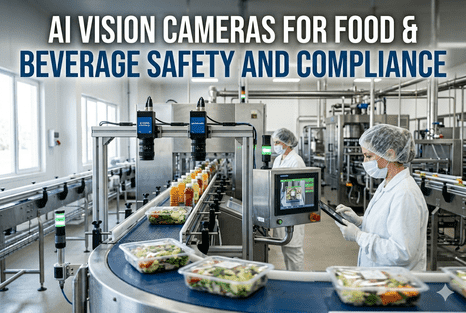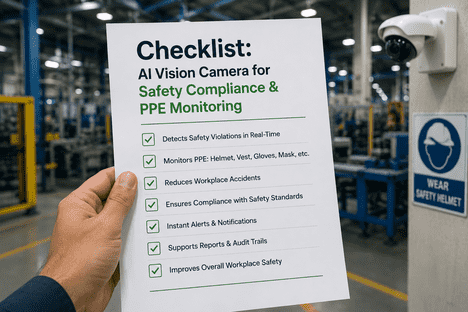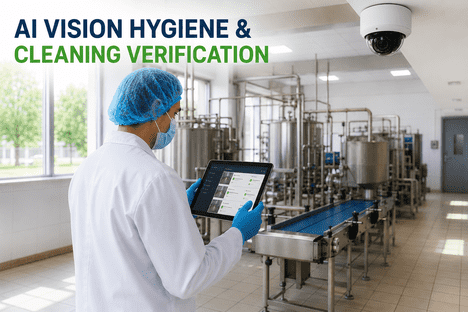
Food safety and hygiene compliance remain the highest-stakes operational priorities in food and beverage manufacturing. Traditional cleaning verification methods — visual inspections, ATP swab sampling, and paper-based audit logs — leave critical gaps between checks that regulators and consumers increasingly find unacceptable. AI vision technology fundamentally changes this paradigm by delivering continuous, automated monitoring of hygiene conditions across production environments. iFactory's AI Vision Camera platform deploys deep learning models trained on millions of food production images to detect visible residue, cross-contamination indicators, hygiene zone breaches, and sanitation compliance failures in real time. Every detection event is automatically logged with annotated image evidence, defect classification, timestamp, and lot code — creating an immutable digital audit trail that strengthens HACCP plans and satisfies FSMA 204, BRC, and SQF documentation requirements without manual data entry. The system integrates with existing ONVIF-compatible cameras and edge AI hardware, eliminating the need for costly infrastructure replacement while providing continuous visual verification that no manual inspection regime can match.
Strengthen Your HACCP Program with AI Vision Hygiene Monitoring
iFactory's deep learning inspection platform gives food safety and quality teams the continuous cleaning verification data they need to move from periodic swab sampling to real-time compliance assurance — accelerating audit readiness and reducing contamination risk across every production shift.
The Challenge of Cleaning Verification in Food Production
Food processing environments present uniquely difficult conditions for hygiene monitoring. High-speed production lines, frequent product changeovers, complex equipment geometries, and allergen-sensitive SKU transitions create numerous points where cleaning verification gaps can develop. Manual inspection methods — visual checks by sanitation crews, periodic ATP swabbing, and end-of-shift paper logs — are inherently intermittent and subject to human variability. A single missed residue spot on a conveyor transfer point or an incomplete rinse in a CIP loop can trigger cross-contamination that affects thousands of units before the next scheduled inspection catches it.
Regulatory frameworks including FDA FSMA 204, BRC Global Standards, SQF Code, and HACCP principles require documented evidence of controlled hygiene conditions. Yet most facilities still rely on manual documentation processes that generate audit findings with predictable regularity. The gap between what regulators expect and what traditional methods deliver is widening as production speeds increase and product portfolios become more complex with allergen-containing SKUs.
Quality managers and food safety directors responsible for multiple production lines consistently identify cleaning verification as the weakest link in their compliance programs. The fundamental limitation is structural: no manual inspection regime can provide the continuous, documented coverage that modern food safety standards demand. This is the gap that AI vision technology was designed to close.
How AI Vision Transforms Hygiene and Sanitation Monitoring
iFactory's AI Vision Camera platform addresses the structural limitations of traditional cleaning verification by deploying deep learning models that continuously analyze visual data from existing camera infrastructure. The system detects visible residue, hygiene zone violations, incomplete cleaning, and cross-contamination indicators across all critical control points — including conveyors, transfer points, fill stations, packaging areas, and production changeover interfaces.
Unlike fixed-rule machine vision systems that trigger false alarms under varying lighting or steam conditions, iFactory's deep learning models are trained on diverse food production environments and adapt to real-world variability in humidity, condensation, temperature fluctuations, and ambient light changes. The edge AI architecture processes every frame in under 50 milliseconds with zero cloud dependency, ensuring continuous inspection even on lines where internet connectivity cannot be guaranteed.
When the system detects a hygiene deviation — visible residue after cleaning, product buildup on equipment surfaces, or zone access breaches — it automatically generates an alert with annotated image evidence, classifies the deviation type, assigns severity scores, and logs the event with timestamp and location metadata. This data feeds directly into the iFactory CMMS, where it can trigger corrective action workflows, notify sanitation supervisors, and document the event for HACCP audit trails without any manual intervention.
Key Capabilities for HACCP and Audit Readiness
The core value of AI vision for food hygiene lies in its ability to transform compliance from a retrospective documentation exercise into a real-time assurance process. Every inspection event — whether a pass, a deviation, or a corrective action verification — is automatically recorded in an immutable audit log formatted for HACCP, FSMA 204, BRC, and SQF compliance. Quality managers can export compliance packages on demand for regulatory inspections or customer audits without manual log reconciliation.
Allergen changeover verification is one of the highest-impact applications. When a production line switches between SKUs containing different allergens, AI vision cameras monitor the cleaning process in real time, flagging visible residue or cross-contact indicators before the next production run begins. This continuous visual audit layer complements ATP swab programs by providing immediate, documented evidence of line clearance — reducing the risk of allergen cross-contact recalls that cost the food industry hundreds of millions annually.
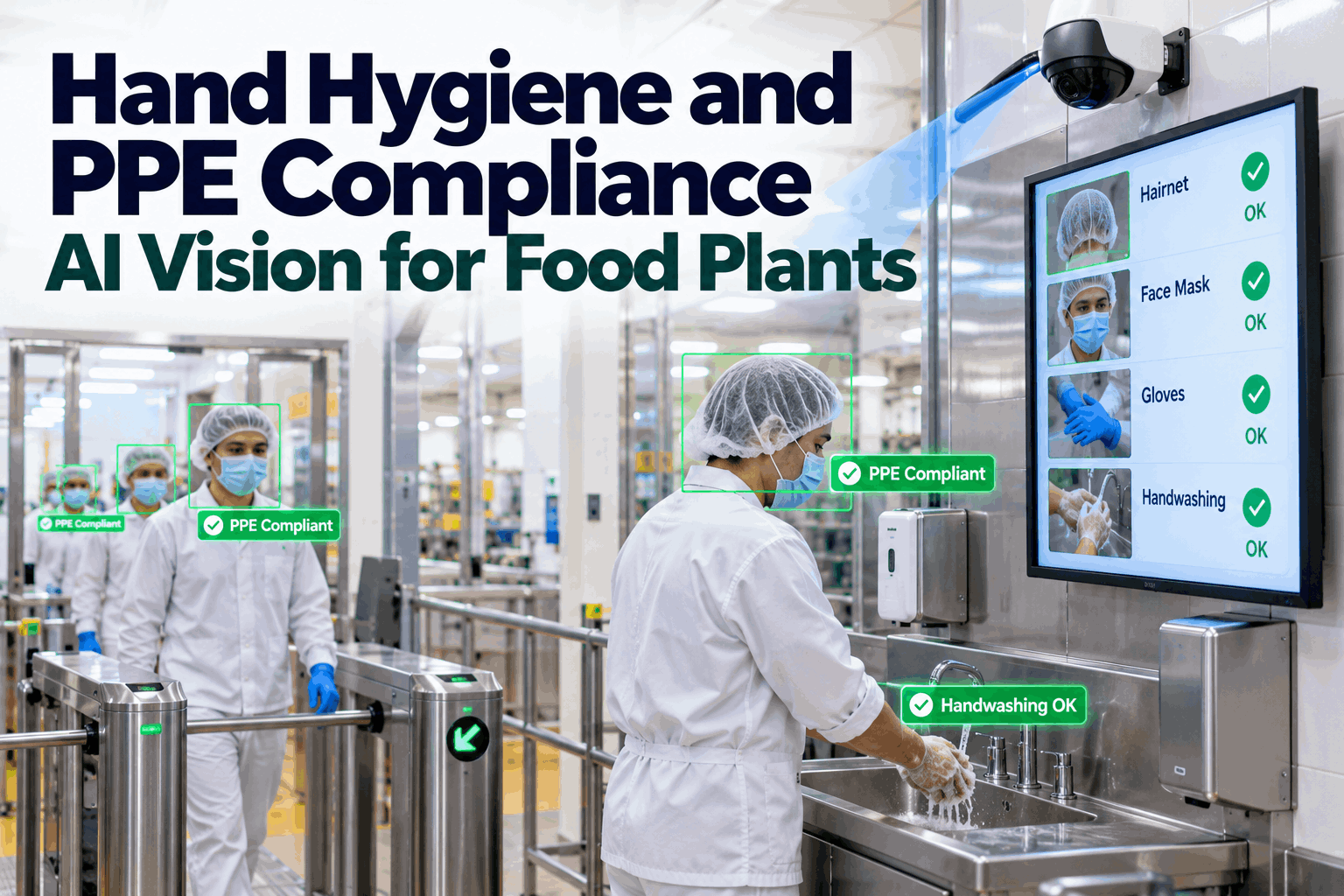
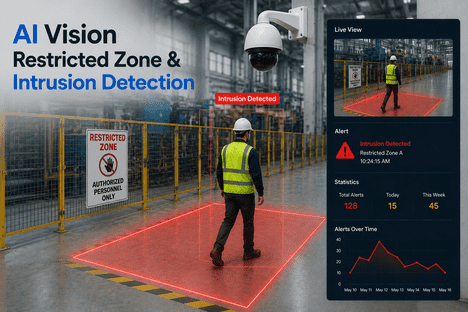
Hygiene zone monitoring extends beyond production equipment to include facility-level controls. AI vision systems can monitor handwash stations, boot scrub areas, hygiene barrier compliance, and restricted zone access — flagging violations in real time and logging each event with photographic evidence. For facilities operating under BRC or SQF certification, this continuous monitoring provides the documented hygiene control evidence that auditors increasingly expect to see.
Book a Demo to see how iFactory's AI vision platform integrates with your existing HACCP program and camera infrastructure to deliver cleaning verification data that strengthens compliance and reduces audit exposure.
Building a Compliance-Driven Sanitation Program with AI Vision
Implementing AI vision for hygiene monitoring follows a structured deployment approach that minimises production disruption while maximising compliance value. The first phase typically involves mapping critical control points where cleaning verification is most consequential — allergen changeover interfaces, post-CIP equipment surfaces, conveyor transfer zones, and packaging areas where product contact is direct and continuous.
Existing ONVIF-compatible cameras at these points are connected to iFactory's edge AI processing hardware, with deep learning models configured to detect the specific residue types, contamination indicators, and zone violations relevant to each location. Model training uses facility-specific imagery to ensure accurate detection of the actual cleaning conditions, material residues, and equipment geometries present on the line.
Once deployed, the system runs continuously across all shifts, generating real-time compliance data that integrates with the CMMS for corrective action workflow automation. Sanitation supervisors receive immediate alerts on mobile devices when deviations occur, with annotated image evidence that enables rapid assessment and response. Every alert, action, and verification step is automatically documented in the HACCP audit trail — eliminating the documentation gaps that generate the most common audit findings.
Over time, the accumulated data enables trend analysis that identifies recurring hygiene failure points, optimises cleaning procedure frequency and duration, and provides objective evidence for sanitation program effectiveness reviews. Facilities using iFactory's AI vision for cleaning verification consistently report measurable reductions in audit findings, faster corrective action cycles, and improved confidence in allergen changeover clearance.
Book a Demo to discuss a deployment plan tailored to your facility's specific hygiene monitoring requirements and compliance framework.
Frequently Asked Questions
See AI Vision Cleaning Verification in Action
iFactory's deep learning inspection platform combines continuous hygiene monitoring with automated HACCP documentation, allergen changeover verification, and real-time deviation alerts — giving food safety teams the tools to move from reactive compliance to proactive contamination prevention. Train on your specific production environment and build the audit-ready hygiene verification program that regulators increasingly demand.