Gear and chain drives are among the most mechanically stressed components in any industrial facility, yet they are also among the least frequently inspected with any real precision. Most maintenance teams rely on periodic manual checks that catch only the most advanced wear, while early-stage tooth pitting, chain elongation under load, and gradual misalignment go unnoticed until the drive fails on shift. The cost of that unplanned stoppage, including lost production, emergency repair labor, and potential damage to connected equipment, almost always exceeds what a consistent inspection program would have cost to run. AI vision systems now make it possible to inspect every tooth and link on every cycle without shutting down the line, catching the failures that manual walk-throughs miss. You can book a demo to see how AI vision handles your specific drive configurations.
AI Vision Catches Gear and Chain Wear Before It Becomes a Shutdown
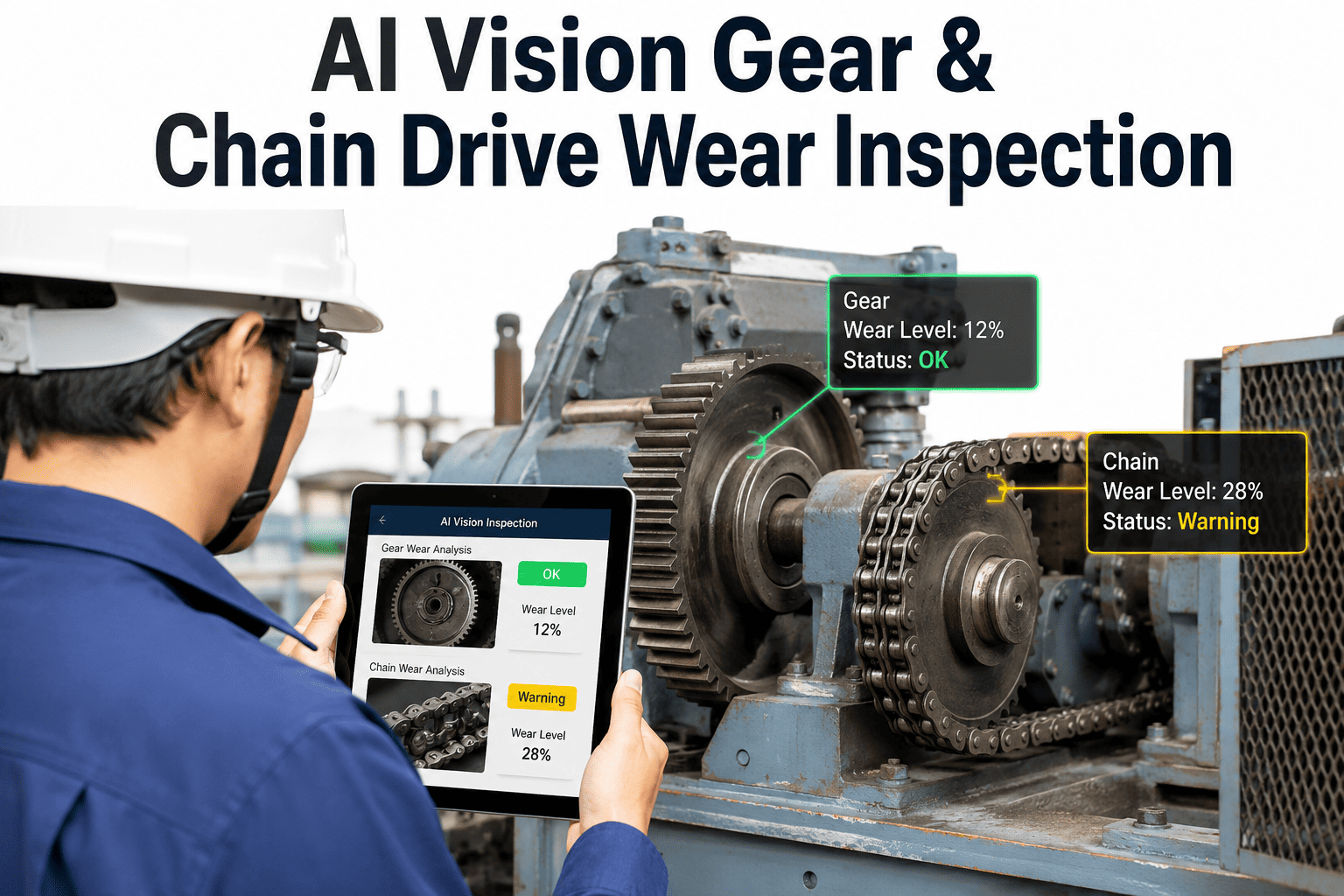
iFactory's AI vision monitors gear tooth surfaces, chain link pitch, and drive alignment in real time, scoring wear severity at every stage so your maintenance team acts on early detection instead of emergency response.
Unplanned Drive Failures Cost More Than the Inspection Program That Would Prevent Them
Most facilities accept drive failures as a normal operating cost because they have never measured what a consistent, automated inspection cycle would save. The figures below represent industry-averaged costs pulled from maintenance records across manufacturing, mining, and material handling operations where gear and chain drives are critical to production continuity.
Six Gear and Chain Failure Modes AI Vision Identifies From Surface Images Alone
Each failure mode below produces a distinct visual signature on the tooth flank, chain link, or contact surface that a trained deep learning model can recognize from standard camera feeds, without requiring sensors mounted on the drive itself.
Surface fatigue creates micro-craters on the loaded flank of gear teeth, which grow into spalls that remove material and alter the tooth profile. AI vision detects the texture change from a smooth machined surface to a pitted pattern at a stage where manual visual inspection still reads as normal wear.
Progressive wear at pin and bushing interfaces increases the chain pitch length, causing uneven load distribution and sprocket tooth engagement problems. AI vision measures link spacing from camera images and flags elongation before it exceeds the replacement threshold.
Angular or parallel misalignment between drive and driven shafts creates uneven tooth contact patterns visible as asymmetric wear across the face width. AI vision maps the wear distribution across the gear face and quantifies the misalignment angle from the contact pattern alone.
Insufficient or degraded lubricant leaves visible surface discoloration, scoring marks, and heat tinting on tooth flanks and chain links. AI vision classifies these surface conditions against a baseline of properly lubricated surfaces to flag lubrication problems before mechanical damage begins.
Cumulative wear alters the involute tooth profile, shifting load concentration to the tooth tip and accelerating failure. AI vision compares the current tooth silhouette against the expected profile geometry and quantifies the deviation as a percentage of profile loss.
Worn sprocket teeth develop a hooked profile that grabs the chain rather than guiding it smoothly, accelerating both chain and sprocket wear. AI vision measures the tooth tip curvature from camera images and flags hooking before it starts damaging replacement chains.
Gear Drives and Chain Drives Fail Differently — AI Vision Adapts to Both
The table below summarizes how the dominant failure modes, visual signatures, and detection approaches differ between gear and chain drive systems, and how a single AI vision platform handles both without requiring separate models for each drive type.
| Inspection Aspect | Gear Drives | Chain Drives |
|---|---|---|
| Primary Wear Mode | Tooth surface fatigue, pitting, and spalling on loaded flanks | Pin and bushing wear causing progressive pitch elongation |
| First Visible Sign | Micropitting texture change on tooth flank surface | Increased chain sag under tension and uneven link spacing |
| AI Visual Signature | Surface texture classification from flank image analysis | Link pitch measurement deviation from nominal spacing |
| Failure Progression Speed | Weeks to months from first detectable pitting to spalling | Weeks from measurable elongation past threshold to failure |
| Critical Risk Indicator | Spalling reaching tooth root or crack initiation at root fillet | Elongation exceeding 3 percent of original pitch length |
| Inspection Challenge | Teeth often enclosed in gearbox housing with limited sight lines | Chain often in dirty, exposed, or poorly lit environments |
From Camera Feed to Wear Alert — The AI Vision Inspection Sequence
Each stage below runs automatically once the system is calibrated, requiring no manual image review or operator intervention to produce a usable wear assessment on every inspection cycle.
Camera Placement and Calibration
Industrial cameras are positioned at sight lines that capture the gear face or chain run, and the system is calibrated to the specific drive geometry, lighting conditions, and surface finish of your components.
Continuous Image Capture During Operation
High-resolution images are captured at defined intervals while the drive is running, with exposure and framing adjustments that compensate for motion blur and variable lighting without stopping production.
AI Model Analyzes Each Frame for Wear Patterns
The deep learning model classifies surface conditions against trained wear stages, measuring tooth profile deviation, chain pitch variance, and contact pattern asymmetry from each captured frame.
Alerts and Reports Generated for Maintenance Planning
When a wear stage crosses a defined threshold, the system generates a prioritized alert with annotated images showing the detected wear location and severity, ready for review by the maintenance planner.
Where Gear and Chain Drive Inspection Delivers the Most Measurable Value
Drive inspection value scales with the consequence of failure and the difficulty of manual access. The industries below represent the environments where AI vision inspection typically delivers the fastest and largest return on deployment investment.
Heavy shock loads, abrasive dust, and large gear reducers on conveyors and crushers create aggressive wear conditions where early detection prevents multi-day shutdowns in remote locations.
Washdown environments degrade lubrication quickly, and stainless chain drives on packaging lines fail without visible warning because the corrosion masks the underlying wear progression.
High-speed precision gear drives in robotic cells and transfer lines have tight failure windows where pitting progresses to spalling in days once it crosses the detection threshold of manual inspection.
Warehouse conveyor chain drives run continuously with limited maintenance windows, and chain elongation causes tracking problems that damage both the chain and the conveyor structure over time.
Large slow-speed gear reducers on roll handling and calender drives accumulate wear over long periods, and their size makes manual tooth inspection physically difficult and inconsistent between inspectors.
Outcomes Reported After Deploying AI Vision Drive Inspection
The figures below reflect tracked results across facilities that replaced periodic manual drive inspection with continuous AI vision monitoring, measured over twelve or more months of operation against each facility's own prior failure and maintenance records.