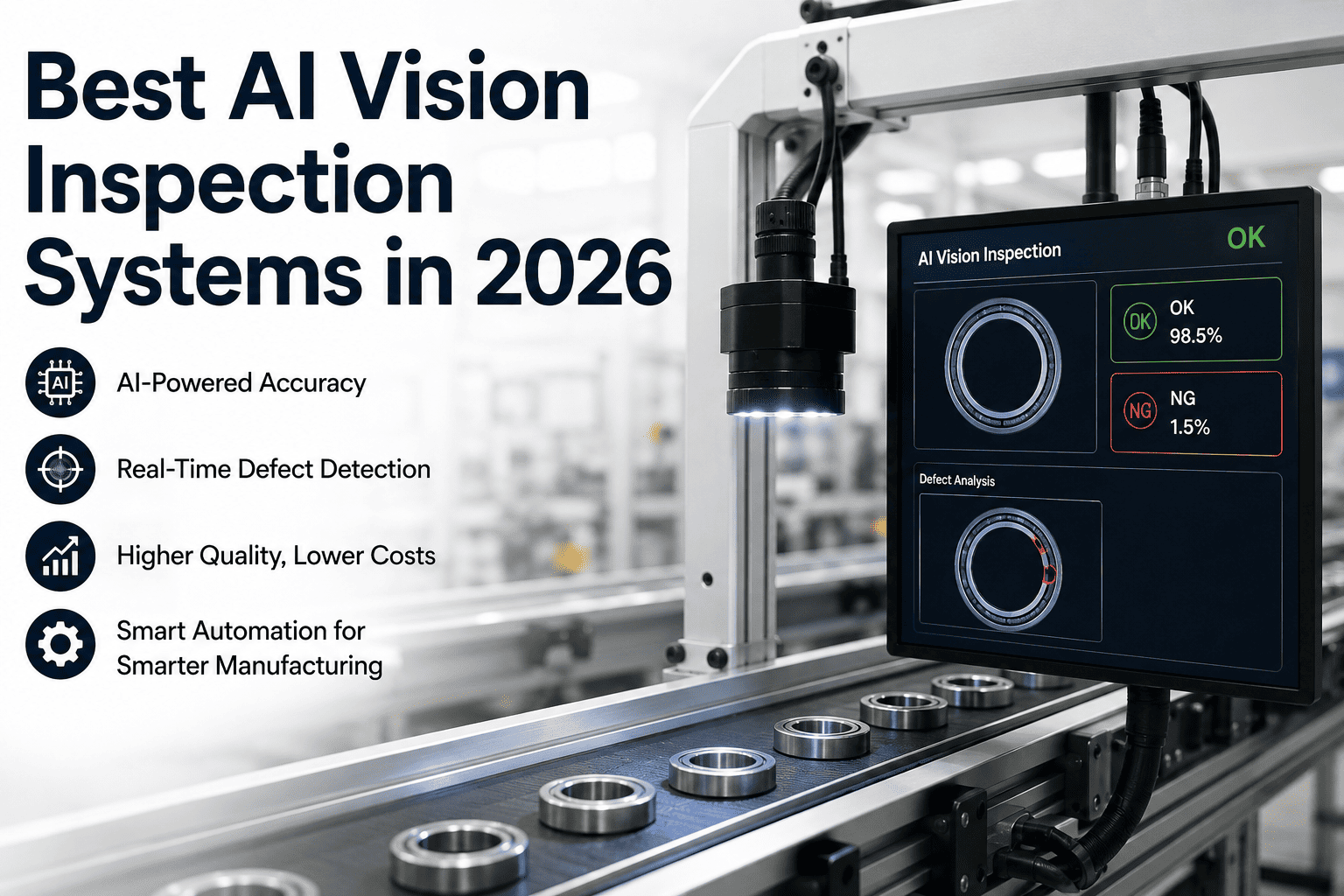
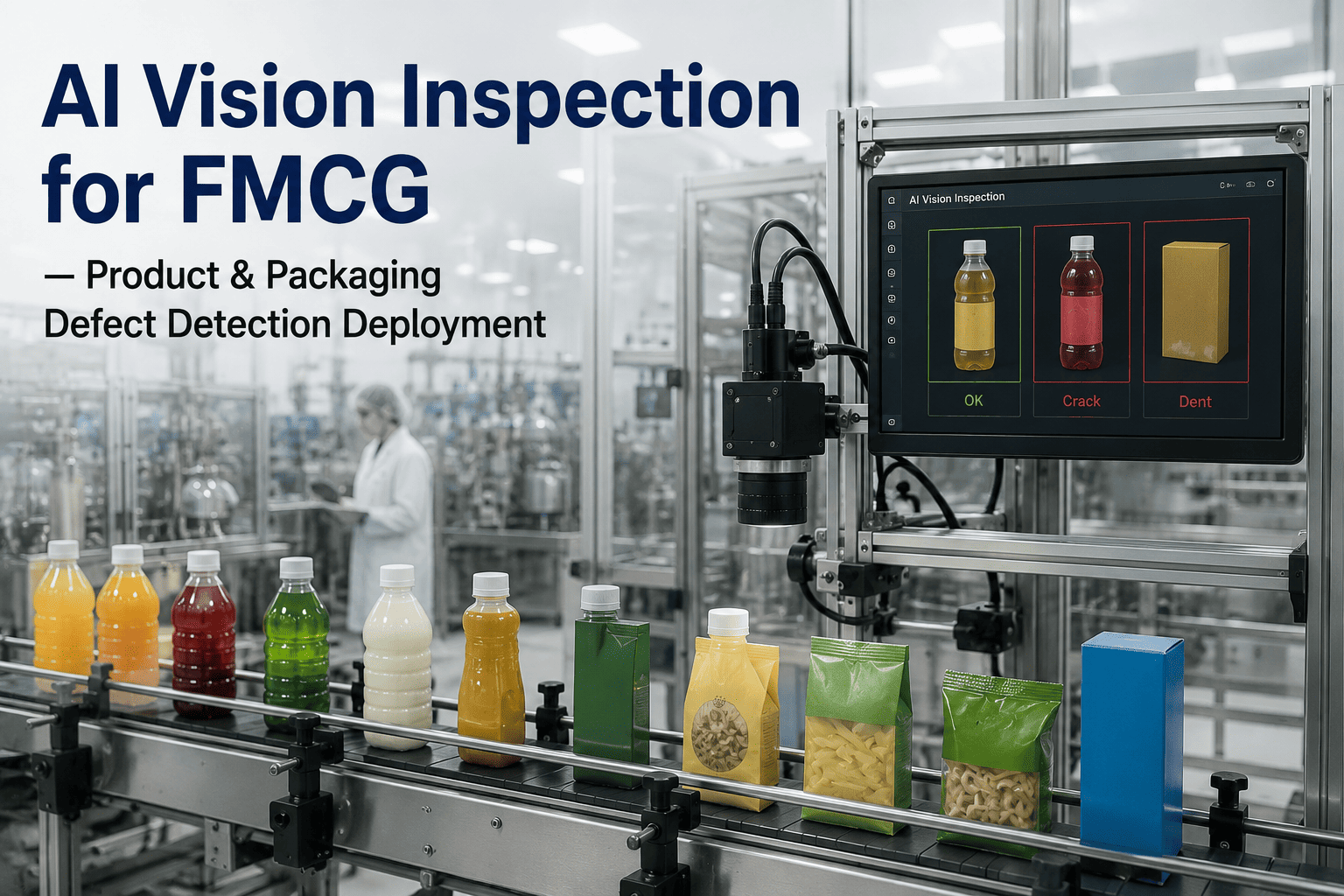
Type "best AI vision inspection system" into a search bar in 2026 and you will get a dozen confident top-10 lists, most of them written by a vendor ranking itself first. That is not useful when you are the one who has to defend the purchase order to a plant manager and live with the false-reject rate for the next three years. The honest version of this question is not "which single vendor wins" — it is "which category of system fits your line, your defect profile, and your integration stack, and which specific criteria actually separate a four-week deployment from a twelve-month integration project." This guide breaks the 2026 market into the archetypes buyers actually choose between, the scorecard serious procurement teams use, and where iFactory fits. Teams ready to test a system against their own parts can book a demo and see the evaluation run on real production samples.
2026 BUYER'S GUIDE · AI VISION INSPECTION SYSTEMS
The Best AI Vision Inspection Systems in 2026 — A Real Buyer's Scorecard, Not a Sponsored Ranking
The machine vision market has splintered into legacy hardware giants, cloud-native AI startups, and integrated manufacturing platforms — each optimized for a different buyer. This guide gives you the evaluation criteria that actually predict deployment success, so you can score your own shortlist instead of trusting someone else's top 10.
WHAT SEPARATES A 4-WEEK DEPLOYMENT FROM A 12-MONTH ONE
7
Criteria that predict deployment success
3
Vendor archetypes competing for your budget
1
Shortlist that actually fits your line
Why Every "Top 10" List Disagrees With Every Other One
Search the category and you will find one list led by a 40-year-old optics and smart-camera manufacturer, another led by a cloud-native startup two years old, and a third led by whichever company published the article. None of them are lying exactly — they are each optimizing for a different buyer profile and calling the result "best." A hardware-first list favors camera resolution and lens ecosystems. A software-first list favors training speed and no-code model building. A platform list favors MES and CMMS integration. The ranking changes entirely depending on which criterion gets weighted first, which is precisely why a generic top-10 list is close to useless for your specific decision.
The market itself has genuinely fragmented into distinct categories rather than one continuum, which is part of why comparison is hard. There are traditional machine vision hardware companies that have bolted deep learning tools onto decades-old smart camera product lines, a wave of cloud-native AI vision startups built deep-learning-first with no legacy hardware business to protect, and a smaller set of integrated manufacturing platforms that treat vision as one module inside a broader quality and maintenance workflow rather than a standalone point solution. Buyers who understand which of these three archetypes they actually need can skip most of the noise in a top-10 list and go straight to the two or three vendors worth a real proof of concept.
The Three Vendor Archetypes Splitting the 2026 Market
Before scoring any specific vendor, it helps to know which shelf they are sitting on. Nearly every AI vision inspection provider in 2026 falls into one of three broad categories, and knowing which one you actually need eliminates most of the wasted demo calls.
ARCHETYPE A
Legacy Hardware-First Vision Companies
Established smart-camera and optics manufacturers with decades of hardware engineering, now layering deep-learning tools onto existing product lines. Strong on camera ruggedization, lens ecosystems, and factory-floor durability. Often the safest choice when the buyer already has a large fleet of the vendor's cameras installed and wants continuity.
ARCHETYPE B
Cloud-Native AI-First Startups
Newer companies built deep-learning-first, with no legacy hardware business to protect and often no-code model training aimed at quality engineers rather than data scientists. Frequently the fastest to a working proof of concept on a single station, with strong sample efficiency and quick model iteration.
ARCHETYPE C
Integrated Manufacturing Platforms
Vision inference built as one module inside a broader manufacturing quality and maintenance platform, so a detected defect can automatically create a work order, link to a production lot, or feed a CMMS instead of dying as an isolated alert on a vision dashboard. iFactory sits in this category — the vision detection is the trigger, not the destination.
None of the three archetypes is universally correct — the right one depends entirely on what happens after a defect gets flagged. A plant with a mature MES and a dedicated vision engineering team may be well served by a pure hardware or software point solution. A plant that wants defect detection to automatically trigger maintenance work orders, update production records, and feed a quality management system without a systems integrator stitching it together is better served by an integrated platform.
TEST ON YOUR OWN PARTS · NO GENERIC DEMO SCRIPT
Stop Comparing Marketing Pages — Compare Real Detection on Real Parts
The only comparison that matters is how a system performs on your specific defects, your lighting, and your line speed. iFactory runs a proof of concept against your own production samples so the decision is based on evidence, not a sales deck.
The Seven-Point Scorecard Serious Buyers Actually Use
Strip away the marketing language from every credible buyer's guide in this category and the same seven criteria keep surfacing as the ones that actually predict whether a deployment ships value in weeks or turns into a year-long integration slog. Score every vendor on your shortlist against these seven before a single demo call.
1
Detection Accuracy on Your Defects, Not the Vendor's Demo Set
A credible AI vision system should consistently exceed 99 percent detection accuracy for your specific defect profile, but only when measured on your live production samples — good parts, bad parts, borderline parts, and parts from a Monday morning after a tooling change. Accuracy claims without a disclosed test set and false-reject rate are marketing, not evidence.
2
Sample Efficiency — How Many Images to Start Training
Genuine deep-learning systems can begin useful training on a handful to a few hundred images. Systems that need thousands of labeled examples before the model is usable push the real deployment timeline out by months, which is often the single biggest hidden cost in a vision project.
3
Edge Inference vs Cloud Dependency
Inference running locally on-camera or at an edge compute node delivers response times fast enough for real-time line stop and reject decisions, and removes recurring cloud fees and network dependency risk. A system that requires a round trip to the cloud for every inference adds latency and a new point of failure to a process that cannot tolerate downtime.
4
Retraining Ownership — Who Updates the Model When Conditions Change
Production conditions change constantly — new suppliers, seasonal lighting, tooling wear. Systems that require the vendor's data science team for every model update create an ongoing dependency and cost. Systems designed for quality engineers to retrain directly, in minutes rather than weeks, keep the model current without a support ticket every time.
5
Integration Depth With PLCs, MES, and Quality Systems
Vision systems must connect to existing plant infrastructure through open industrial standards rather than proprietary protocols that lock a line to one vendor's ecosystem. The deeper question is what happens after a defect fires — does it just show up on a vision dashboard, or does it automatically create the production and quality records your team already relies on.
6
Deployment Timeline From Signed Contract to Live Line
Timelines across the category range from a handful of weeks to well over a year, largely driven by how much custom integration work and systems-integrator involvement a platform requires. A realistic deployment plan names a specific week for go-live, not an open-ended "it depends on your requirements."
7
True Total Cost of Ownership Over Three Years
A complete TCO figure includes hardware, software licensing, integration labor, data collection and labeling time, ongoing retraining, and any recurring cloud or per-inspection fees — not just the initial quote. Two systems with identical sticker prices can differ by a wide margin once three years of licensing and integrator dependency are factored in.
Where the Category Splits: A Fast Comparison Across Buyer Priorities
Rather than force-ranking every vendor into one ordered list, the more useful comparison is priority-based — which archetype tends to win depending on what your evaluation actually optimizes for. Use this to narrow your shortlist to the one or two archetypes worth a real proof of concept.
| If Your Priority Is |
Archetype That Tends to Win |
What to Verify Before Buying |
| Continuity with an existing large camera fleet |
Legacy hardware-first vendor |
Confirm the AI tooling is genuine deep learning, not rule-based logic rebranded as AI |
| Fastest possible proof of concept on one station |
Cloud-native AI-first startup |
Confirm edge inference option and true multi-year licensing cost, not just the pilot price |
| Defects turning into work orders and quality records automatically |
Integrated manufacturing platform |
Confirm the platform supports your existing camera hardware without a rip-and-replace |
| Rolling out across many plants with one governance layer |
Integrated manufacturing platform or enterprise hardware vendor |
Confirm model management and retraining workflow scales without a central data science bottleneck |
| Lowest possible total cost of ownership over three years |
Varies — depends on integration labor more than sticker price |
Build the full three-year TCO model before comparing quotes, not just year-one cost |
A Realistic Scenario: The RFQ That Took Nine Months Longer Than It Should Have
A mid-size metal fabrication plant issues an RFQ for AI vision inspection after a customer quality escape traces back to a missed weld defect. Three vendors respond, all with confident top-10 marketing pages and near-identical accuracy claims of ninety-nine percent plus. The plant's quality engineer, working from the marketing pages alone, shortlists based on brand recognition and picks a well-known hardware vendor whose smart cameras the plant already uses elsewhere on the floor.
Six weeks into deployment, it becomes clear the vendor's deep-learning tooling requires a certified integrator for model training and PLC integration, because the AI capability was added on top of a legacy platform not originally designed for it. The integrator engagement alone adds a five-figure cost and a three-month wait for a project slot. By month four, the model is trained but retraining for a new part variant requires another integrator engagement rather than something the plant's own quality team can do. The total project, originally quoted at ten weeks, stretches to eleven months once integration, retraining dependency, and a second defect class requiring another labeled dataset are accounted for.
A structured seven-point scorecard evaluation at the RFQ stage would have surfaced this outcome before the contract was signed — specifically the retraining ownership question and the true integration cost beyond the sticker price. The lesson generalizes well beyond this one plant: the vendor comparison that actually predicts deployment success is not brand recognition or a marketing page's accuracy claim, it is a structured evaluation against the seven criteria that determine whether a defect gets caught cheaply in week four or expensively in month eleven.
Where iFactory Fits on the Scorecard
iFactory is built as an integrated manufacturing platform — vision inference paired natively with an inspection workflow and a maintenance loop, rather than a standalone vision component that requires a separate system to act on what it detects. Scored against the seven criteria above, the platform is built specifically to close the gaps that show up most often in the RFQ scenario described earlier.
Sample Efficiency & Deployment Speed
Pre-built defect libraries across metals, food and beverage, pharma, and automotive collapse the training phase — models train on your own samples in days, not the months a from-scratch labeled dataset typically requires.
Retraining Ownership
Quality engineers retrain and adjust models directly as conditions change, without a recurring dependency on an external data science team or integrator for every update.
Camera & Hardware Flexibility
Runs on existing area-scan, line-scan, or 3D cameras through open industrial protocols, avoiding the rip-and-replace of already-installed hardware that a closed ecosystem often forces.
Detection-to-Action Loop
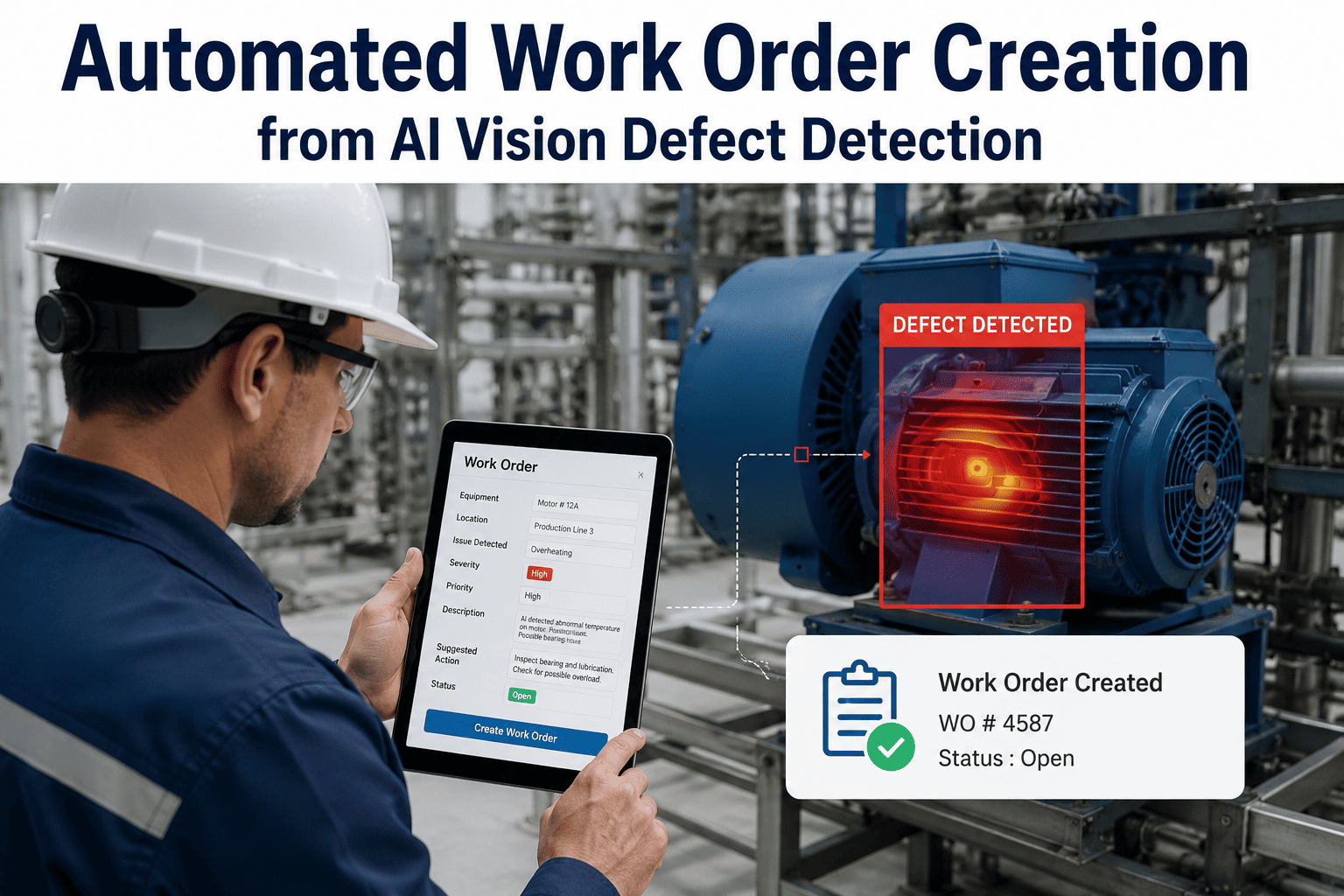
A recurring defect pattern raises a work order on the actual source asset — the tool, the die, the coating nozzle — instead of sitting as an isolated flag on a vision dashboard nobody circles back to.
This does not mean iFactory is the right fit for every buyer profile on this page — a team that specifically wants a lightweight, standalone vision component to embed inside a home-grown quality stack may be better served by an Archetype A or B point solution. The honest answer to "is this the best system" is the same for every vendor in this category: run it against your own parts using the seven-point scorecard, and let the evidence decide.
Frequently Asked Questions
Why doesn't this guide just name the single best vendor?
Because the honest answer depends entirely on your defect profile, existing hardware, integration requirements, and what you want to happen after a defect gets flagged. A ranking that ignores those variables is optimizing for a generic reader rather than your specific line. The seven-point scorecard in this guide is designed so you can score your own shortlist against criteria that actually predict deployment outcomes. Teams that want a structured walkthrough of how their specific requirements map to the scorecard can
book a demo and work through it directly with an engineer.
What accuracy number should I actually expect from a genuine AI vision system in 2026?
Well-trained AI-powered visual inspection models typically reach detection accuracy in the mid-to-high nineties on the defect classes they have been trained on, with false-reject rates held under a couple of percent in a properly tuned deployment. The remaining error rate depends heavily on lighting consistency, the diversity of defect variation covered in training, and the size and quality of the training set — which is exactly why any accuracy number quoted without a disclosed test methodology should be treated with skepticism.
How long should a proof of concept actually take before we sign a contract?
A credible proof of concept, sometimes called Site Acceptance Testing, should verify detection performance on your own live production samples within about a week, not months. If a vendor cannot show meaningful results against your actual parts within days of receiving samples, that is itself a signal about how the full deployment timeline is likely to unfold once a contract is signed.
Do we need to replace our existing cameras to adopt an AI vision inspection system?
Not necessarily — many modern AI vision platforms, including integrated manufacturing platforms, are designed to run inference against existing area-scan, line-scan, or 3D camera hardware through open industrial protocols rather than forcing a proprietary hardware swap. Whether this applies to your specific installed base depends on camera resolution, frame rate, and existing network architecture, so it is worth confirming directly. Teams with an existing camera fleet can contact
iFactory support to review compatibility before assuming a full hardware replacement is required.
What is the biggest mistake buyers make when comparing AI vision inspection vendors?
The most common and costly mistake is evaluating vendors on marketing accuracy claims and brand recognition alone, without running a structured proof of concept against real production samples and without modeling the true three-year total cost of ownership including integration labor and retraining dependency. The RFQ scenario in this guide, where a project quoted at ten weeks stretched to eleven months, traces directly back to skipping this step in favor of a familiar brand name.
SCORE YOUR OWN SHORTLIST · PROVE IT ON YOUR OWN PARTS
Run iFactory Through the Seven-Point Scorecard on Your Own Production Line
Skip the sponsored rankings and see actual detection performance on your own defects, integration depth with your existing PLCs and MES, and a deployment timeline with a real go-live date attached to it.