Transit damage claims, load collapses, and rejected shipments cost logistics operations millions annually — and the root cause is almost always a pallet or load condition that was never caught before the truck left the dock. Stretch wrap voids, load overhang, unstable stacking patterns, and damaged base pallets are inspection failures, not packaging failures. Manual dock inspection is inconsistent, speed-dependent, and entirely reliant on individual attention at the moment of loading — a combination that guarantees missed defects under real warehouse operating conditions. iFactory's AI Vision Camera applies deep learning-based object detection to pallet and load inspection at the point of palletizing and dispatch, verifying wrap coverage, load geometry, overhang tolerance, and base pallet integrity automatically before every shipment leaves the facility. The result is a documented, consistent inspection record on every pallet — independent of shift, staffing level, or throughput pressure. Logistics and supply chain teams evaluating AI vision inspection for outbound quality programs are encouraged to Book a Demo with iFactory to assess how automated load verification reduces transit damage rates and claims exposure across their distribution network.
Verify Every Pallet Before It Leaves the Dock — Automatically
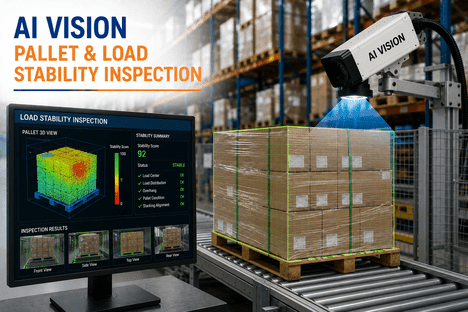
iFactory AI Vision inspects wrap coverage, load stability, overhang, and pallet damage at line speed — generating a compliance record on every shipment without slowing dispatch operations.
AI Vision Pallet and Load Stability Inspection: Eliminating Transit Damage at the Source
A technical overview of how iFactory's AI Vision Camera applies deep learning object detection to pallet wrap verification, load stability assessment, overhang detection, and base pallet damage identification — delivering automated outbound quality control at dock speed across logistics and distribution operations. Book a Demo to see iFactory's pallet inspection platform configured for your distribution environment.
Six Pallet and Load Defects That AI Vision Catches Before Manual Inspection Misses Them
High-throughput distribution environments process hundreds or thousands of pallet loads per shift under constant time pressure. Manual inspection — even when procedures exist — degrades in consistency as throughput increases, staffing fluctuates, and shift fatigue accumulates. iFactory's AI Vision Camera system detects every category of outbound load defect automatically, at dock speed, with a compliance image and record generated for every pallet. Logistics operations ready to reduce transit damage claims can Book a Demo to see the detection categories configured for their load types.
Stretch Wrap Coverage Failures
Incomplete wrap cycles, void areas in the wrap film, and under-tensioned coverage leave load sections unsecured. AI vision detects wrap gaps, thin coverage zones, and missing top-cap wrap before the pallet is staged for loading — catching defects that manual walkarounds miss at the base and rear of tall loads.
Load Overhang Violations
Product extending beyond pallet edge dimensions creates crush risk during transit and carrier rejection at delivery. iFactory's object detection models measure load geometry against pallet boundary in real time, flagging overhang conditions at every face of the load before dispatch approval is issued.
Unstable Stacking Patterns
Improper layer interlocking, column stacking of heavy cases, and mixed-weight configurations that place heavy product above lighter layers create top-heavy load profiles that collapse under transit vibration. AI vision assesses load profile geometry and identifies instability risk conditions that are invisible to a walkaround inspection of the wrapped exterior.
Base Pallet Damage
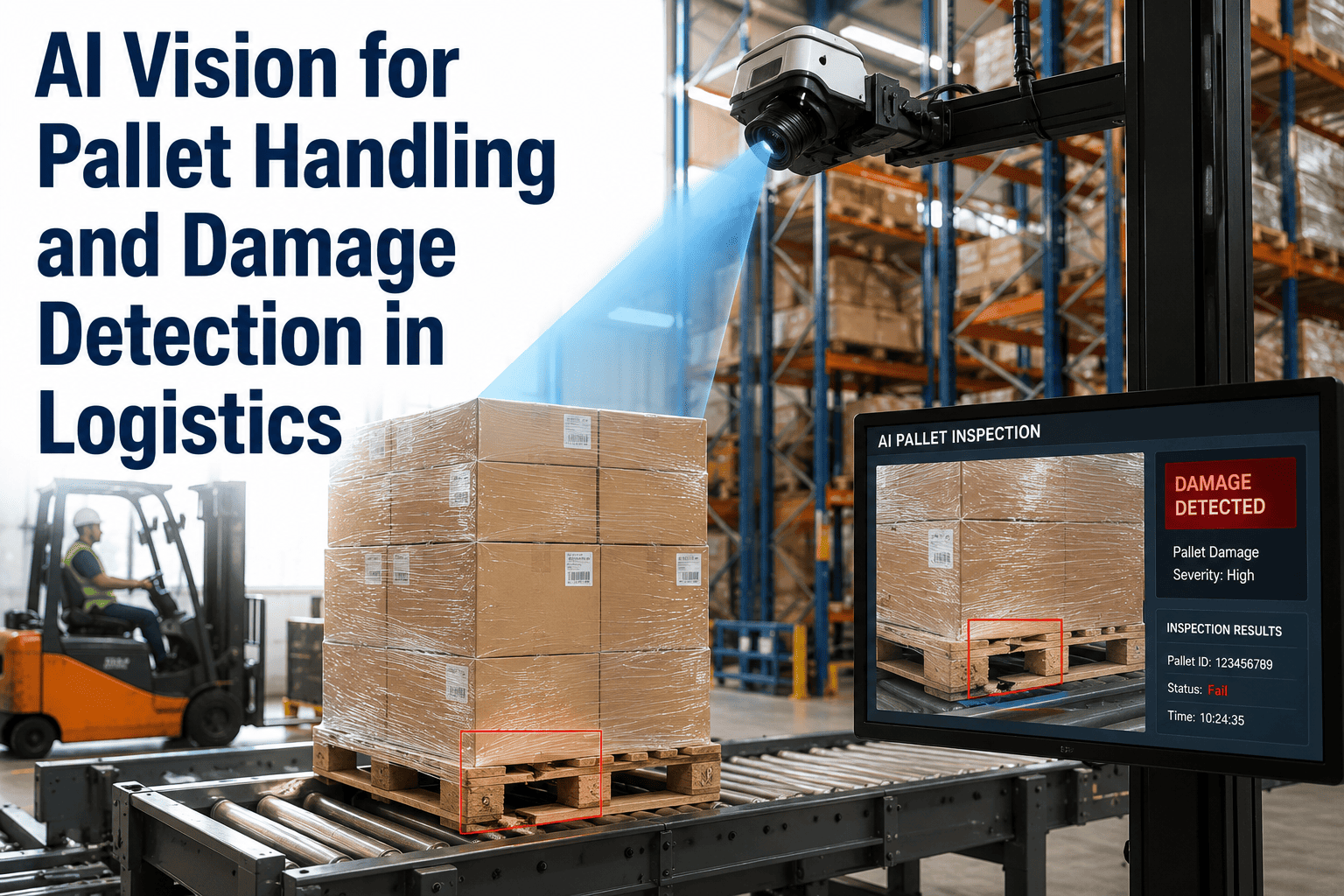
Cracked deck boards, missing blocks, broken stringers, and split deckboards compromise load-bearing integrity and create forklift entry hazards at the delivery point. AI vision inspects base pallet condition before the load is built, preventing defective pallets from entering the outbound supply chain.
Product Damage Visible Pre-Wrap
Crushed cartons, torn cases, and damaged outer packaging that enter the outbound load represent returns and claims the moment they reach the customer. AI vision inspection at the palletizing station identifies visibly damaged product before wrap conceals it — enabling removal and replacement before the load is sealed.
Load Height Non-Compliance
Pallet loads exceeding carrier or customer height specifications are rejected at delivery or create trailer loading conflicts that delay dispatch. iFactory's vision system measures load height against configurable tolerance limits and flags non-compliant loads before they reach the staging lane.
Manual Pallet Inspection vs. iFactory AI Vision: Key Performance Benchmarks
Replacing inconsistent manual inspection with automated AI vision at the palletizing and dispatch points produces measurable reductions in transit damage, freight claims, and carrier rejections across distribution operations of every scale.
| Inspection KPI | Manual Dock Inspection | iFactory AI Vision | Improvement |
|---|---|---|---|
| Wrap Defect Detection Rate | ~55% (varies by inspector) | 96–99% per pallet | ~80% improvement |
| Overhang Detection Accuracy | Inconsistent — angle-dependent | All four faces, every pallet | Full 360° coverage |
| Inspection Time Per Pallet | 45–90 seconds manual | Under 3 seconds automated | 95% faster |
| Transit Damage Claim Rate | Industry avg: 2–4% of shipments | Under 0.5% post-deployment | Up to 75% reduction |
| Compliance Documentation | None or manual log | Timestamped image per pallet | 100% audit traceability |
iFactory AI Vision Pallet Inspection: Four Detection Layers That Clear Every Load for Dispatch
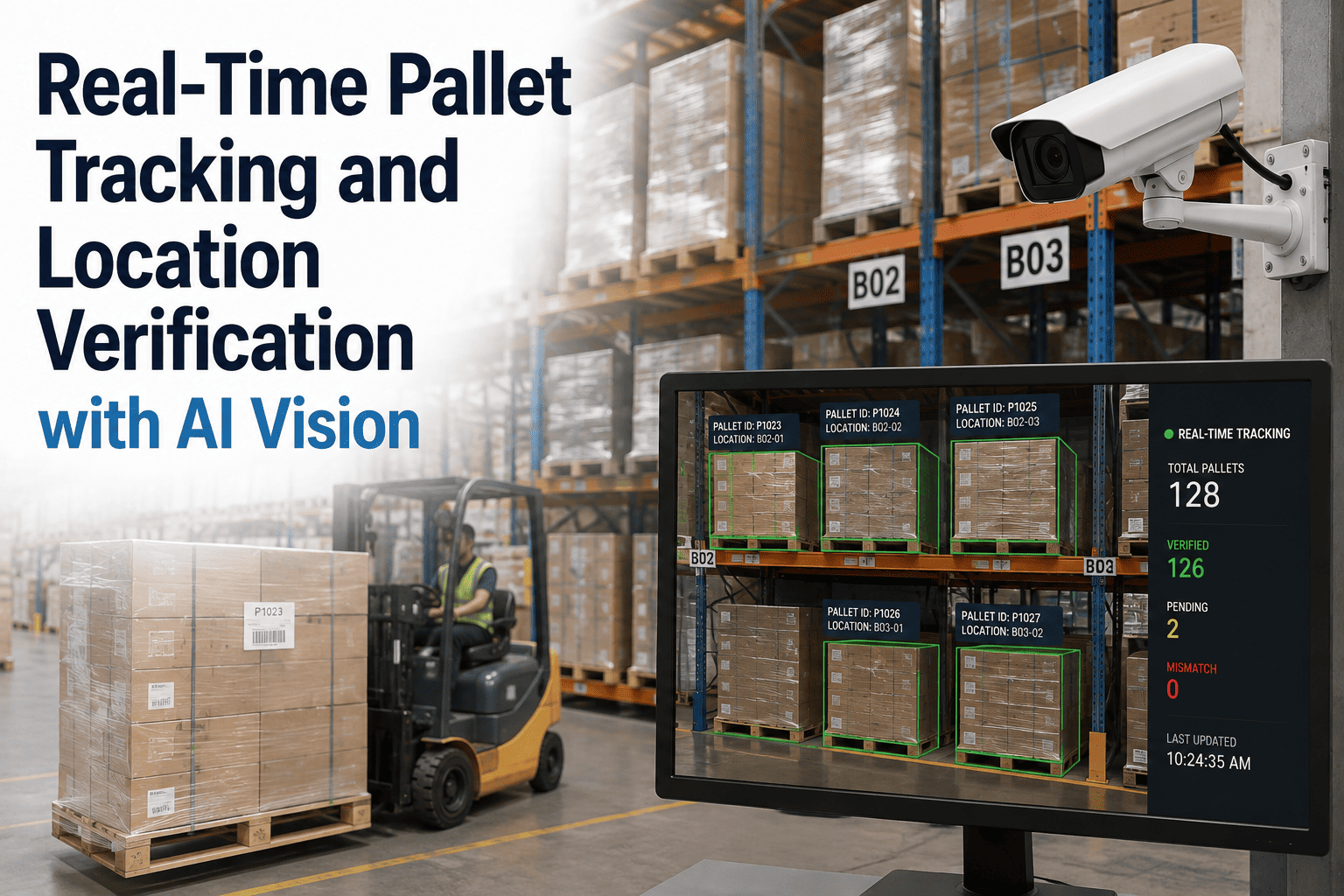
iFactory does not slow your dispatch operation. The AI Vision Camera is positioned at the exit point of the stretch wrapper or the entry to the staging lane, analyzing every pallet as it passes without interrupting material flow. Detection results are available in under three seconds, with non-compliant pallets flagged for correction before they reach the dock door. Logistics managers who Book a Demo typically see measurable defect catch rate improvement within the first week of deployment.
Wrap Coverage and Tension Verification
As the pallet exits the stretch wrapper, iFactory's AI Vision Camera analyzes wrap film coverage across all faces and the top of the load. The system detects void areas, single-layer coverage where double-layer is required, missing top-cap film, and wrap tear conditions — generating a pass or flag result in under three seconds.
Load Geometry and Overhang Detection
The AI object detection model measures the load footprint relative to the pallet deck on all four faces, identifying overhang conditions against configurable tolerance thresholds. Load height is measured simultaneously against carrier and customer specifications, flagging both overhang and over-height conditions before staging.
Load Stability and Profile Assessment
AI vision analyzes the load profile for visible instability indicators — leaning, bulging, irregular layer profiles, and top-heavy configurations — classifying load stability risk against facility-defined thresholds. Borderline loads are flagged for supervisor review before dispatch approval rather than discovered during loading or in transit.
Automated Dispatch Compliance Record
Every pallet that passes AI inspection receives a timestamped compliance record — including inspection images, detection results, and pallet ID — stored against the shipment record in iFactory's platform and pushed to your WMS or TMS via API. Non-compliant pallets are held with a specific defect code, enabling targeted correction and re-inspection before loading.
Transit Damage Is an Inspection Problem — AI Vision Is the Solution
Freight claims, carrier rejections, and customer returns from transit damage are not inevitable costs of distribution operations — they are the measurable output of inspection processes that fail under real operating conditions. Manual dock inspection, however well-intentioned, cannot maintain consistent detection rates across shifts, throughput peaks, and staffing changes. iFactory's AI Vision Camera delivers inspection consistency that human walkarounds cannot — analyzing every pallet against defined compliance criteria in under three seconds, generating a documented pass or reject result, and creating an auditable compliance record on every outbound shipment. The result is a sustained reduction in transit damage rates, freight claim exposure, and carrier rejection events that compounds over time as the system learns the specific load profiles and defect patterns of your operation. Distribution and logistics teams ready to eliminate transit damage at its source should Book a Demo to see how iFactory's AI Vision pallet inspection platform configures to their specific load types, wrap standards, and WMS integration requirements.
Frequently Asked Questions
Q: What pallet and load types can iFactory AI Vision inspect?
iFactory's AI Vision system handles GMA, Euro, and custom pallet formats across wrapped and unwrapped loads. Detection models are calibrated to your specific load configurations during commissioning — including mixed-SKU loads, uniform case stacks, and irregular product profiles. The system adapts to your existing palletizing standards rather than requiring changes to your load specifications.
Q: How does AI vision detect wrap defects that are hard to see from a walkaround?
iFactory's camera positioning captures all four faces and the top of every load under consistent lighting conditions, with the AI model trained to detect coverage voids, film tension anomalies, and single-layer zones that vary in appearance depending on product color, wrap film type, and lighting. The system detects coverage defects at base-level and rear-face positions that walkaround inspectors routinely miss under throughput pressure.
Q: Can the system integrate with our WMS or TMS for shipment-level compliance records?
Yes — iFactory integrates with major WMS and TMS platforms via REST API, pushing pallet inspection results, compliance images, and defect codes against shipment and pallet IDs in real time. This creates a shipment-level compliance record that is available for carrier dispute resolution and customer quality reporting without manual documentation.
Q: Does the inspection system slow down dispatch throughput?
Inspection results are generated in under three seconds per pallet as the load passes the camera position — well within the dwell time of standard conveyor or forklift staging flows. The system is designed for zero-impact integration into existing dock throughput; no operator action is required for passing pallets, and non-compliant pallets are diverted automatically to a correction lane.
Q: How does iFactory handle the compliance record for carrier dispute resolution?
Every pallet receives a timestamped inspection record that includes annotated images from all inspection angles, detection results for each compliance criterion, and a pass or reject classification. These records are stored against the shipment in iFactory's platform and exportable on demand — providing objective, image-based evidence of load condition at dispatch for use in carrier damage claim disputes.
Q: What is the typical reduction in freight claims after iFactory deployment?
Distribution operations deploying iFactory AI Vision for pallet and load inspection report transit damage claim rate reductions of 60–75% within the first 90 days of full operation. The primary drivers are elimination of wrap coverage failures and load overhang conditions, which together account for the majority of damage events in wrapped-load outbound supply chains.
Start an AI Vision Pallet Inspection Pilot at Your Facility
iFactory deploys at your palletizing and dispatch points in days — no WMS overhaul, no operational disruption. Get a site-specific configuration assessment and pilot scope from an iFactory logistics specialist.