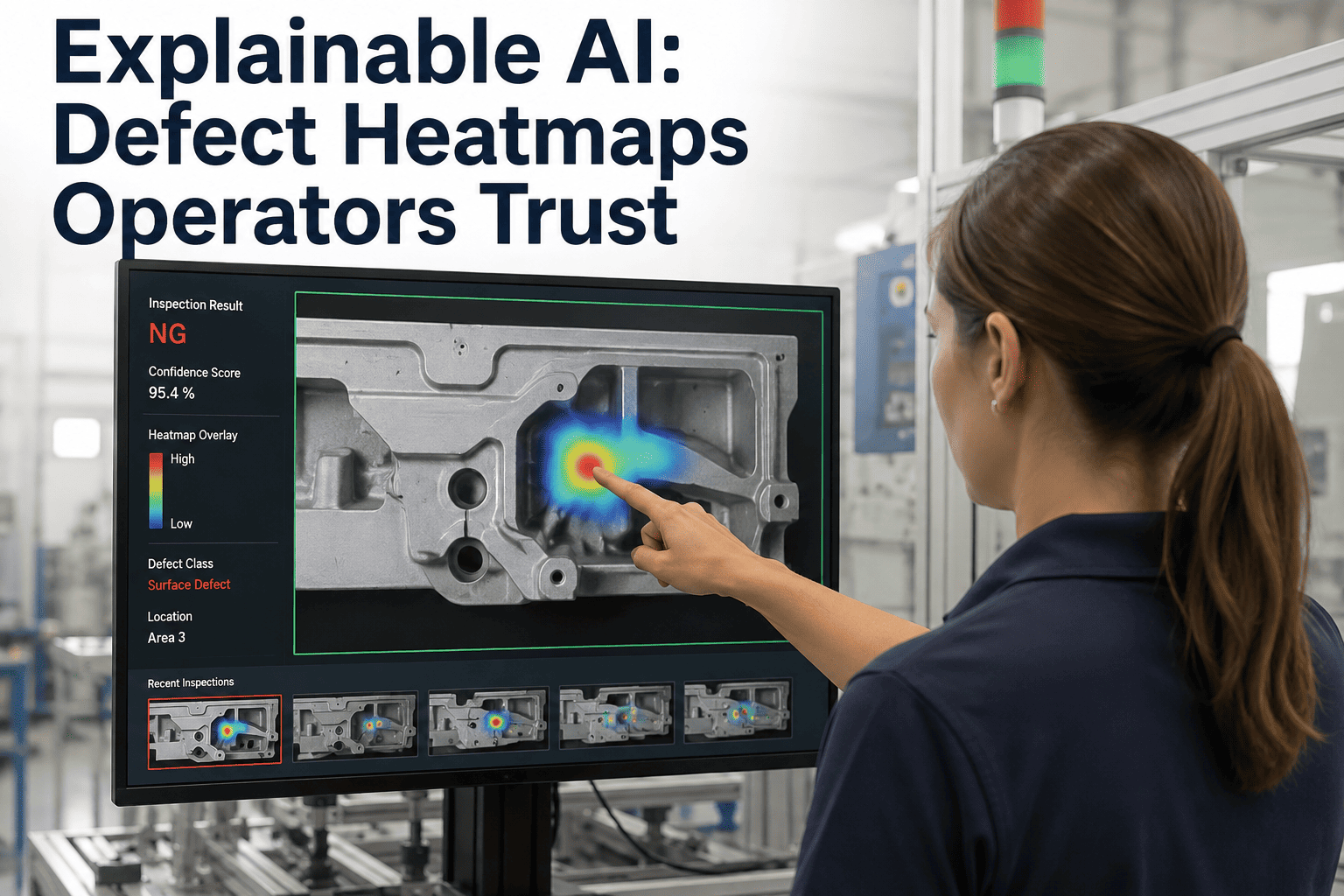
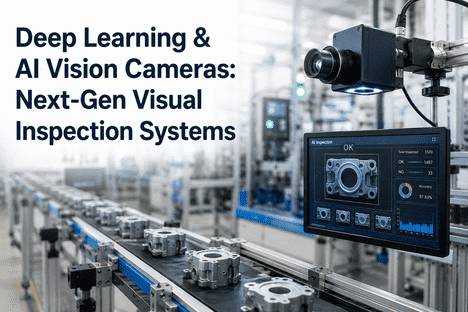
Ask a line operator why an AI vision system just rejected the part sitting in front of them, and the honest answer is usually the same on every floor — they don't actually know. The camera flashed a red overlay, the reject arm fired, the part hit the scrap bin, and the software logged a defect code that reads more like a serial number than a reason. That opacity is the single biggest reason automated inspection stalls after a promising pilot: models can hit 99% lab accuracy and still lose the shop floor because the people running the line stop trusting decisions they can't see inside. Explainable AI closes that gap by turning every accept/reject call into a visual heatmap the operator can look at, verify, and audit — so the model's attention lines up with the actual defect instead of a shadow, a background edge, or a scale marker. That is exactly what the explainable AI vision inspection platform from iFactory is built to deliver.
Explainable AI · Vision Inspection · Operator Trust
Explainable AI: Defect Heatmaps Operators Trust
A black-box camera that flashes a reject signal without evidence gets overridden, bypassed, or unplugged within weeks of go-live. iFactory ships every AI inspection decision with a Grad-CAM style saliency heatmap that shows exactly which pixels drove the call, giving quality teams the audit trail they need and operators the visual proof they trust — so the system stays running, false rejects drop, and real defects stop slipping through.
Every Call
Ships with a pixel-level saliency heatmap
1-Click
Operator override with reason capture
Audit-Ready
Full evidence chain for regulated industries
Why It Matters
What Happens When Inspection AI Can't Show Its Work
01
Operators start overriding the system
When a reject signal arrives with no visible reason, floor staff eventually stop trusting it. Documented AOI overkill rates above 20% in complex real-world lines lead directly to operators bypassing automated QA, defeating the whole point of the deployment.
02
The model may be looking at the wrong thing entirely
A vision system that focuses on a conveyor edge, a fixture shadow, or a scale marker instead of the actual part surface can post excellent test accuracy and still miss defects. Without a heatmap you have no way to catch that failure mode until scrap piles up.
03
Regulated industries can't sign off on unexplained decisions
In aerospace, medical devices, and automotive, inspectors have to justify every accept and reject. A defect code with no visual evidence behind it doesn't satisfy an auditor, and it certainly doesn't survive a customer complaint traceback.
04
Quality engineers can't debug what they can't see
When a batch suddenly develops a false reject spike, the engineer needs to know whether the model drifted, the lighting changed, or a new SKU broke a threshold. Without saliency evidence, root cause becomes a guessing game across camera, model, and process — often days of tuning that a single heatmap review would have collapsed into an hour.
Inside a Single Decision
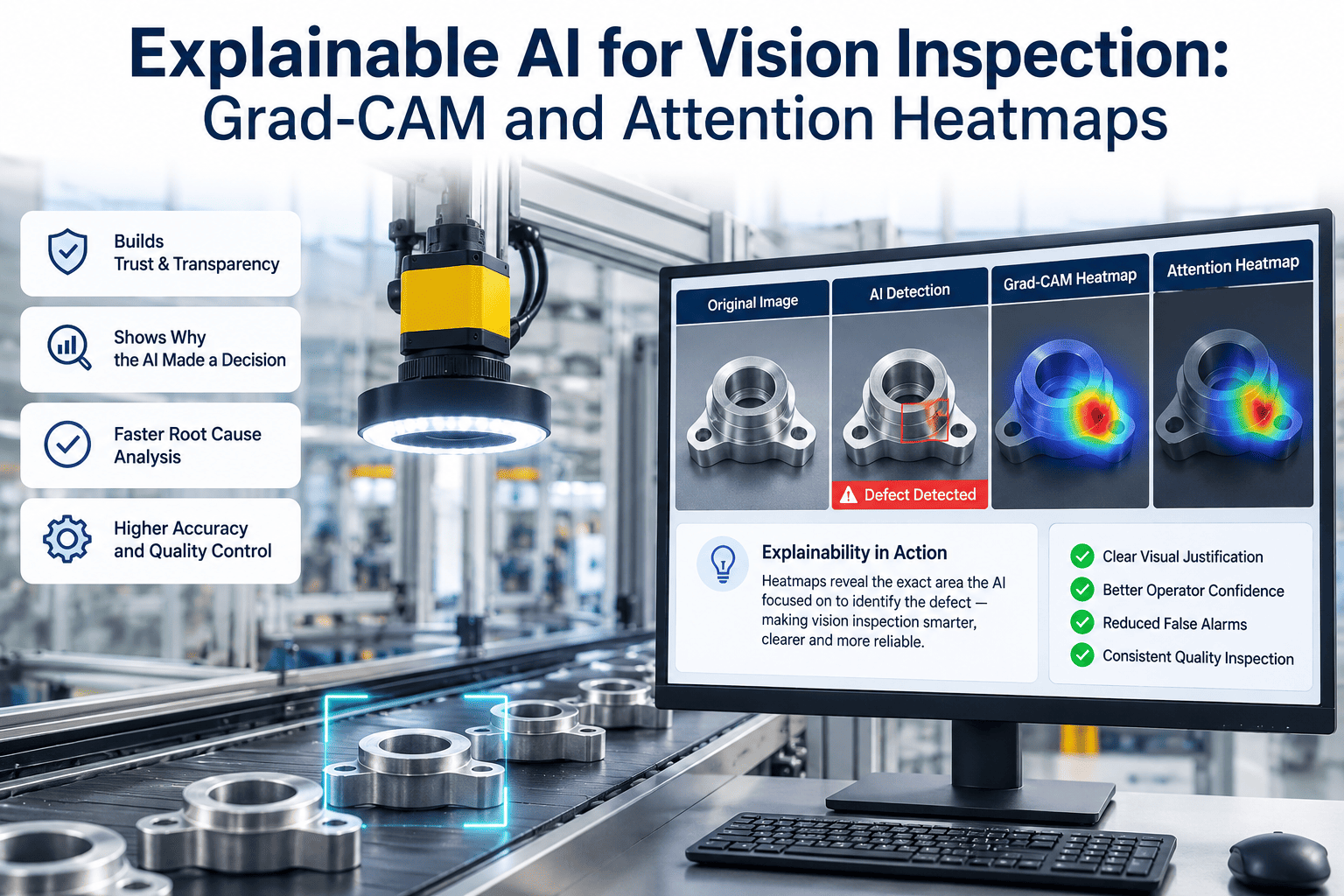
Anatomy of an Explainable Defect Heatmap
Layer 1
Original Frame
The raw camera image the model actually saw, timestamped and tied to the part's serial or batch ID for full traceability.
Layer 2
Saliency Overlay
A colored heatmap where warmer regions indicate stronger influence on the model's decision — computed from the final convolutional layer's gradients.
Layer 3
Bounding Region
A cleaned-up box or polygon around the peak activation area, so the operator can spot the flagged region at a glance without reading pixel intensities.
Layer 4
Confidence Score
A numeric probability alongside the visual so the operator can distinguish a borderline call from a clear-cut defect and act accordingly.
Layer 5
Defect Class Tag
The predicted defect type (scratch, crack, contamination, dimensional) shown next to the heatmap so the decision is both categorical and localized.
Layer 6
Operator Feedback
A one-tap agree/override control that captures the operator's judgment against the model's — feeding directly into the retraining loop without extra clicks.
These six layers travel together on every inspection event. When a customer complaint or an internal audit lands months later, the full stack is retrievable for that exact part, that exact frame, that exact model version — no digging through separate camera archives, MES tables, and quality spreadsheets to reconstruct what happened at 2:14 a.m. on a Tuesday.
The Explainability Toolkit
Which XAI Method Backs Each Kind of Decision
| Technique | What It Produces | Best For | Trade-Off |
| Grad-CAM |
Class-discriminative heatmap from last conv layer gradients |
Fast pass/fail visualization on any CNN backbone |
Coarse spatial resolution |
| Grad-CAM++ |
Refined weights for multi-instance defect scenes |
Multiple small defects in one frame |
Slightly heavier compute |
| Integrated Gradients |
Pixel-level attribution along an input path |
Fine surface anomaly localization |
Requires baseline image choice |
| Occlusion Sensitivity |
Prediction change when patches are masked out |
Sanity-checking whether the model relies on the actual defect region |
Slower — many forward passes per image |
| SHAP |
Feature-attribution values grounded in game theory |
Tabular inspection signals and multi-modal fusion |
Compute cost scales with feature count |
| LIME |
Local surrogate model built around one prediction |
Explaining borderline calls to non-technical reviewers |
Explanations vary between runs |
Where Trust Actually Comes From
The Operator Trust Cycle Explainability Creates
1
Model calls a defect
Camera captures the frame, the model classifies it, and a saliency heatmap is generated in the same pass.
→
2
Operator sees the reason
The overlay lands on the HMI within the cycle time, showing which region of the part drove the call.
→
3
Operator agrees or overrides
A single tap either confirms the call or overrides it with a reason code — no extra data entry required.
→
4
Feedback retrains the model
Overrides feed the active-learning loop, so the model's next version reflects what the floor actually knows.
Independent research on explainable active-learning setups in production has recorded operator support levels around 83% once they can see and correct model reasoning — the opposite of the override-and-bypass pattern that black-box systems produce. The mechanism is straightforward: people trust a machine that shows its work, and they contribute more when their input visibly changes what the machine does next. That single feedback loop turns a static classifier into a system that improves week over week instead of drifting quietly.
Cut False Rejects, Keep Real Ones
Bring Down Overkill Without Loosening Your Defect Thresholds
Explainability lets you see exactly why the model is calling a false reject — a shadow, a background edge, a texture confusion — so you can fix the root cause instead of blindly relaxing thresholds and letting real defects through.
Where It Shows Up on the Floor
Industry Scenarios Where Heatmap Evidence Changes the Outcome
Automotive Surface Inspection
A stamped panel gets flagged for a scratch. The heatmap shows the model is actually reacting to a die-line reflection near the fender crown, not a real defect. The engineer adjusts lighting rather than retraining the whole model, and the false-reject spike disappears the same shift — a fix that would have taken a full model retraining cycle to find without visual evidence of what the model was actually looking at.
Semiconductor Wafer Screening
A wafer map classifier reports a scratch pattern. Grad-CAM overlays confirm the activation is on the actual scratch cluster and not on an edge-die artifact — evidence the FAB engineer can hand to the process team without arguing about model reliability first, so root cause investigation begins on the tool rather than on the inspection system itself.
Pharma Vial and Blister Inspection
A vial gets rejected for a suspected particulate. The saliency overlay shows the peak activation on a real black speck inside the meniscus, giving QA the visual proof they need to justify the reject in the batch record without a manual re-inspection. When the regulator later asks why a specific lot had an elevated reject rate, the answer is a folder of annotated frames rather than a defensive email chain.
Textile Roll Grading
A loom-side camera flags a thin place. The heatmap sits on the exact warp region the grader would have circled, so the operator accepts the call without pulling the roll off the machine to physically verify — saving minutes on every alert.
Food and Beverage Contamination Screening
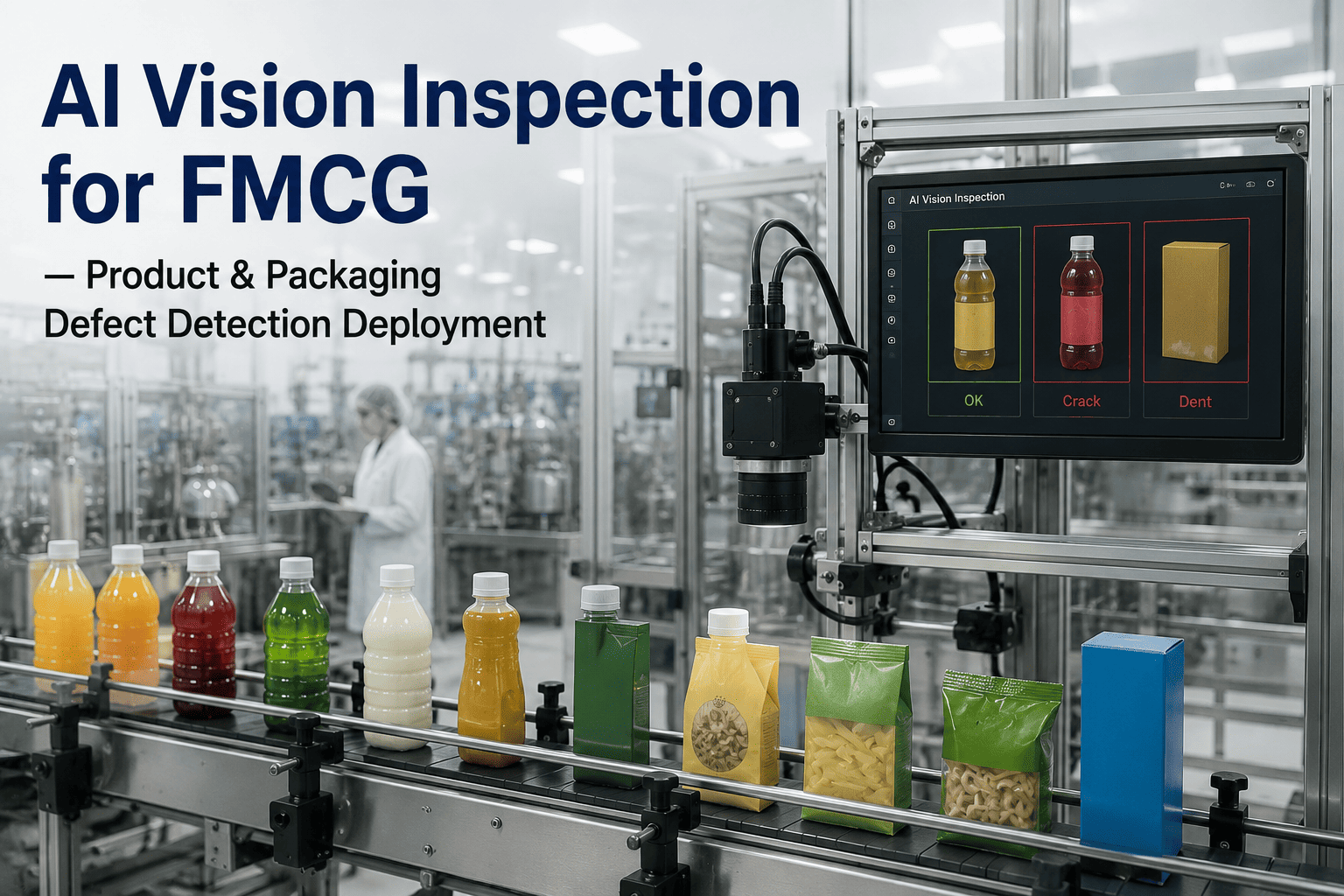
A conveyor camera calls a foreign-body event on a snack line. The overlay shows the activation on an actual dark fragment rather than a routine seasoning cluster, and the reject-arm decision is defensible on video to the QA lead within seconds.
Metal Casting and Forging
A cast-part surface classifier fires on a porosity call. The saliency layer sits over the pit rather than on a normal parting-line seam, giving the foundry a clear frame-by-frame audit trail for a customer PPAP submission.
Two Ways to Ship the Same Model
Black-Box Vision vs. Explainable Vision
Black-Box System
Reject signal, no visual reason
Operator override happens quietly, not captured
Root cause of overkill is guessed at
Audit and PPAP responses take days of manual pull
Retraining depends on new labeled batches from scratch
Trust erodes month over month until the system is unplugged
Explainable System
Saliency heatmap on every accept and reject
One-tap override captured with reason code
False rejects traced to lighting, fixture, or true drift
Audit evidence retrievable per part, per frame, per model version
Active-learning loop uses operator overrides directly
Trust builds as operators watch the heatmap match their own eye
How It Ships
Turnkey Deployment: From Rack to Live Heatmaps
Week 1–4
Ship, Rack, and Network
Pre-configured NVIDIA AI server arrives racked with software pre-loaded. Plug power and Ethernet, connect cameras, and the platform is talking to your PLC/SCADA layer.
Week 5–8
Train and Pilot
Model trains on your part images, saliency generation is validated against known defects, and a pilot cell runs alongside your existing inspection so operators can compare calls.
Week 9–12
Go-Live and Train Operators
Full line cutover with 24×7 remote monitoring, operator HMI training, and the override-feedback loop live from day one so retraining begins immediately.
Live in 6–12 weeks · 1000+ clients · 99.9% platform uptime
Cabling, network integration, PLC/SCADA hookup, operator training, and continuous remote monitoring all included — no separate systems-integrator engagement to schedule, no scoping calls with three vendors before a single camera goes live. One purchase order, one accountable partner, one go-live date on the calendar.
Before You Sign Off on a Vision Vendor
Explainability Readiness Checklist
Every accept and reject event ships with a saliency overlay, not just the ones that get flagged for review
The overlay is anchored to the same frame the model classified, with model version and timestamp captured together
Operators can override a call in one tap from the line HMI, and the override reason is stored in the same event record
Historical events are searchable by part ID, defect class, and model version for audit or customer complaint response
Operator overrides feed the retraining pipeline directly, without a separate labeling project
The vendor can show heatmaps from a real deployed line, not just marketing screenshots
Common Questions
Explainable AI Defect Detection — FAQ
Does generating a heatmap for every decision slow the inspection line down?
Modern saliency methods like Grad-CAM run on the same forward pass the model already computes, so the additional cost is a fraction of the base inference time and easily fits inside cycle-time budgets on standard AI hardware. On the pre-configured NVIDIA servers iFactory ships, heatmap generation is effectively free from the operator's perspective — the overlay arrives on the HMI in the same frame as the classification, whether the line is running at a few parts per second or a few thousand. If you have a specific cycle-time constraint,
our team can validate it against your part volume before deployment.
How is a Grad-CAM heatmap different from a bounding box around a defect?
A bounding box tells you where the model thinks the defect is; a heatmap tells you which regions of the image actually influenced the model's decision to call a defect at all. Those two things sound similar but come apart in practice — a model can put a box on the right defect while its actual attention is on a shadow or a fixture edge next to it. Heatmaps expose that mismatch, which is exactly what you need to catch a model that is right by accident. iFactory shows both, layered on the same frame, so operators get the intuitive box view and engineers get the diagnostic saliency view.
Which industries most need explainable vision inspection?
Any industry where inspectors have to justify accept and reject decisions to an auditor, a customer, or a regulator benefits fastest — aerospace, medical devices, pharmaceutical packaging, automotive PPAP-driven programs, and food safety are the strongest examples. That said, even in industries with lighter regulation, operator trust erosion is the real cost of black-box systems, and every plant that has watched an inspection cell get bypassed after a rocky first quarter has felt that cost directly. High-mix lines with frequent SKU changeovers also benefit disproportionately, since threshold drift after a changeover is exactly the failure mode heatmaps expose in minutes rather than days.
Book a demo to see how the evidence chain looks in your specific industry.
Can operators actually change how the model behaves through the override interface?
Yes, that is exactly the point of the feedback loop. Operator overrides are captured as labeled counter-examples with their reason codes and get fed into the active-learning pipeline on a regular cadence, so the next model version reflects what the floor actually knows about which calls were wrong and why. Research on explainable active learning in production settings has consistently shown that operators who can see and correct model reasoning end up trusting the system more, not less — the opposite of the pattern you get with a black-box classifier that never changes based on their input. Every retrained model version is tracked so you can see exactly which overrides shaped the current behavior, and rollback to a previous version is always available if a retraining cycle underperforms on a validation set.
How long do the heatmaps and evidence records stay retrievable?
Retention is configurable to fit your quality-record policy and any regulatory requirement you're operating under — pharma customers typically hold event evidence for several years, automotive PPAP programs align to the production window and warranty period, and lighter industries often keep a rolling window. The storage cost is small because heatmaps and metadata are compact next to the raw video, and the platform lets you tier older events to cheaper storage without losing searchability. Contact
our support team to scope retention against your specific compliance framework.
Ship Vision Inspection Operators Actually Trust
Turn Every AI Decision Into Visual Evidence Your Floor and Your Auditors Both Believe
iFactory delivers explainable AI vision inspection as a turnkey stack — pre-configured hardware, saliency heatmaps on every call, one-tap operator overrides, and a full audit trail — live on your line in 6 to 12 weeks.