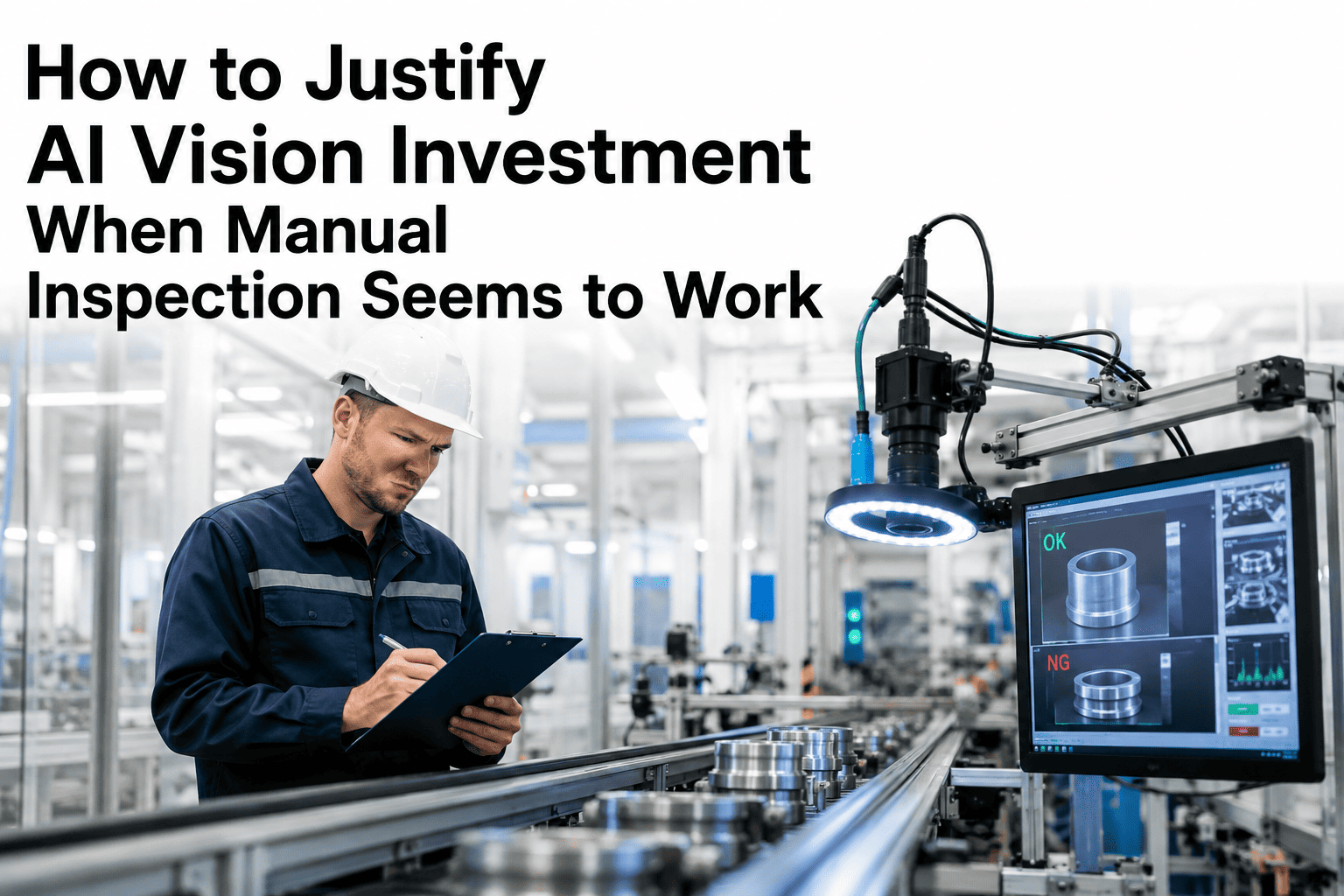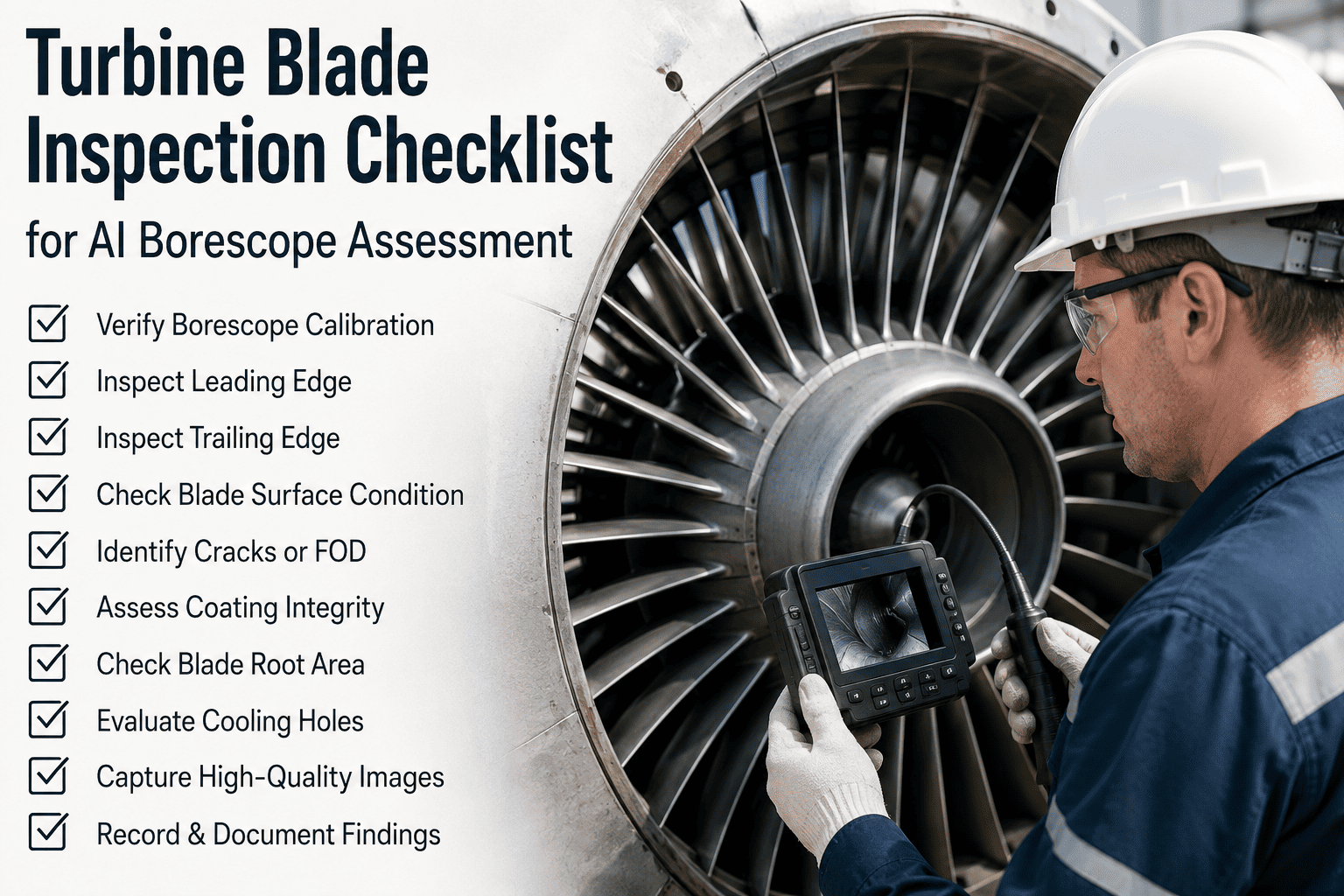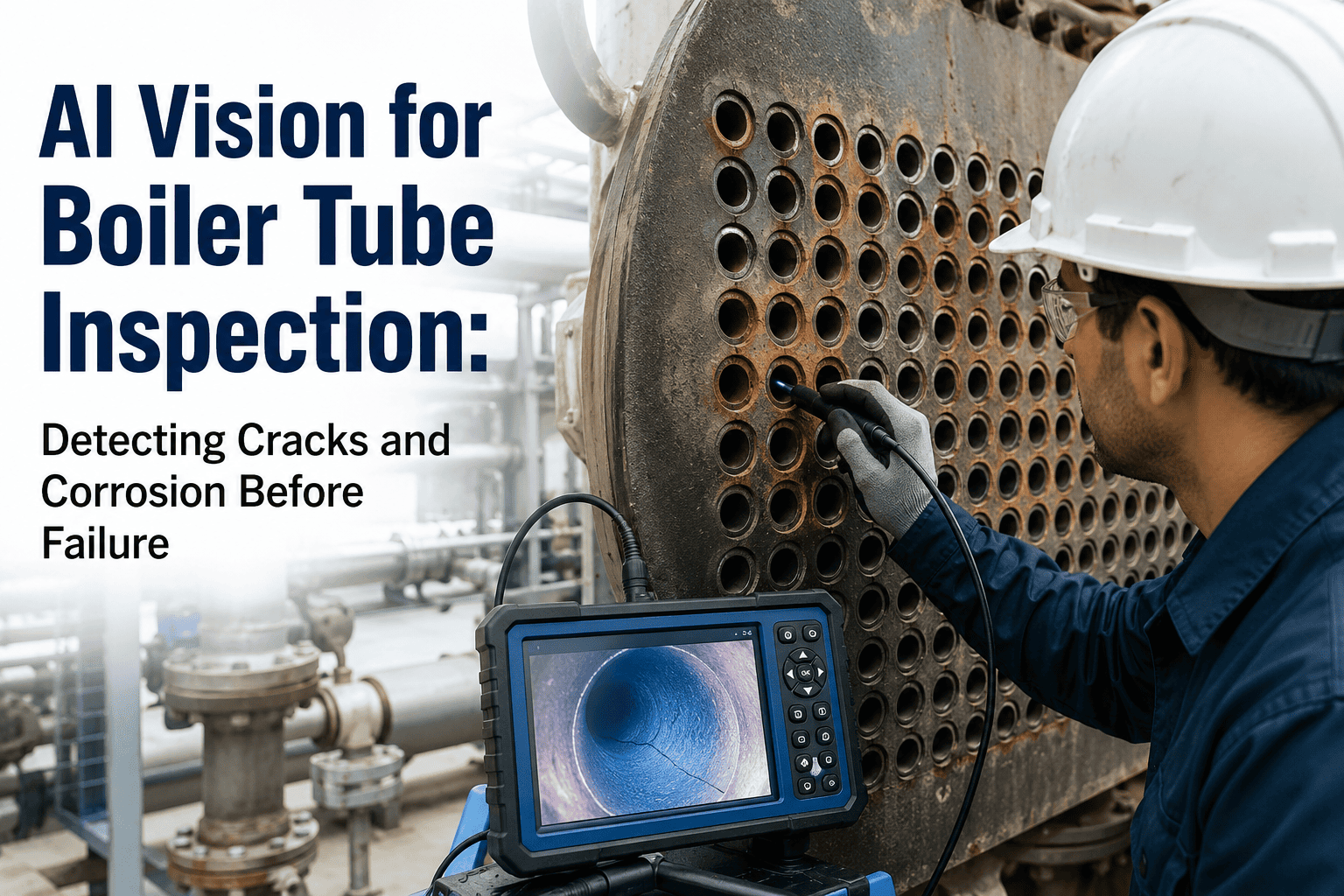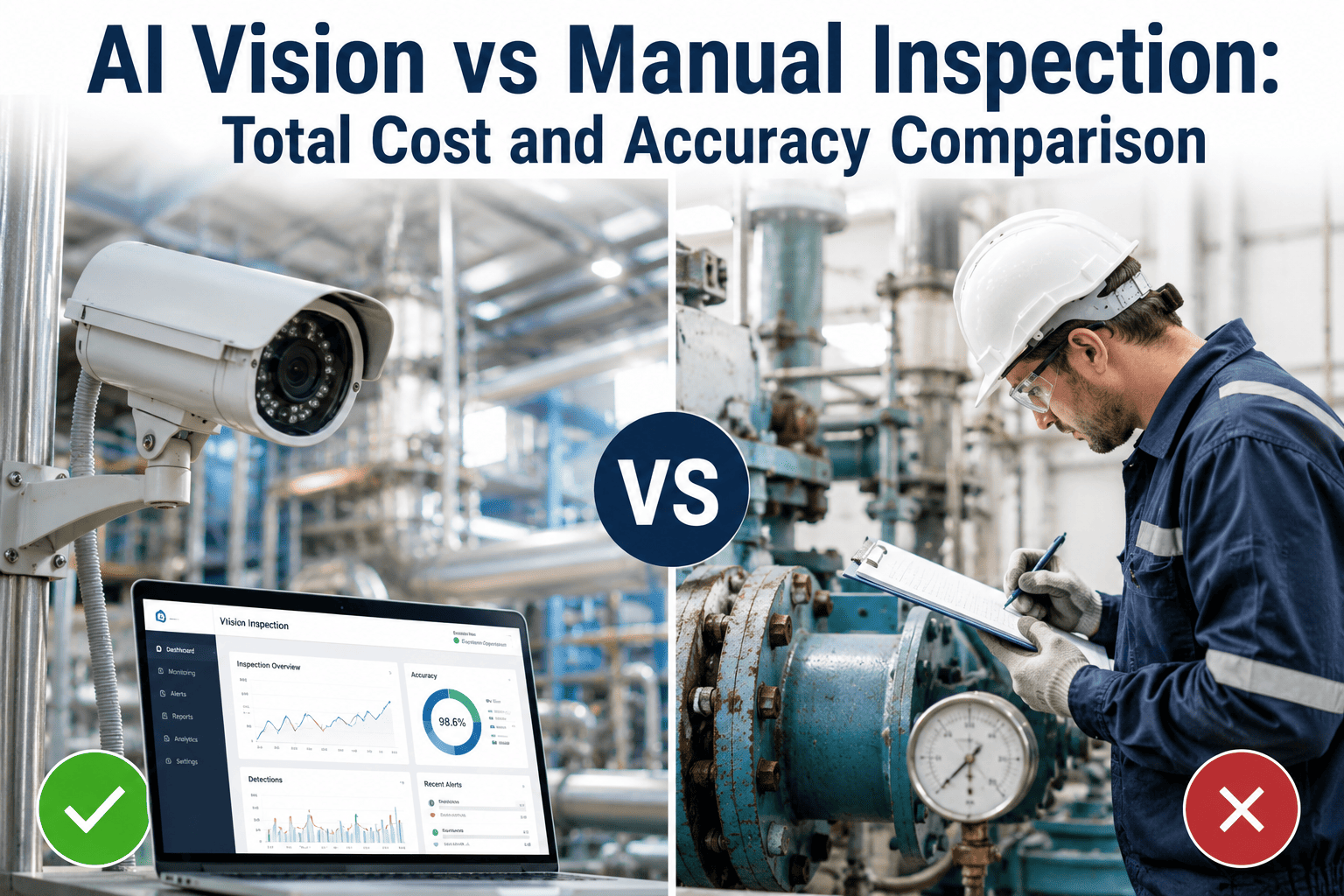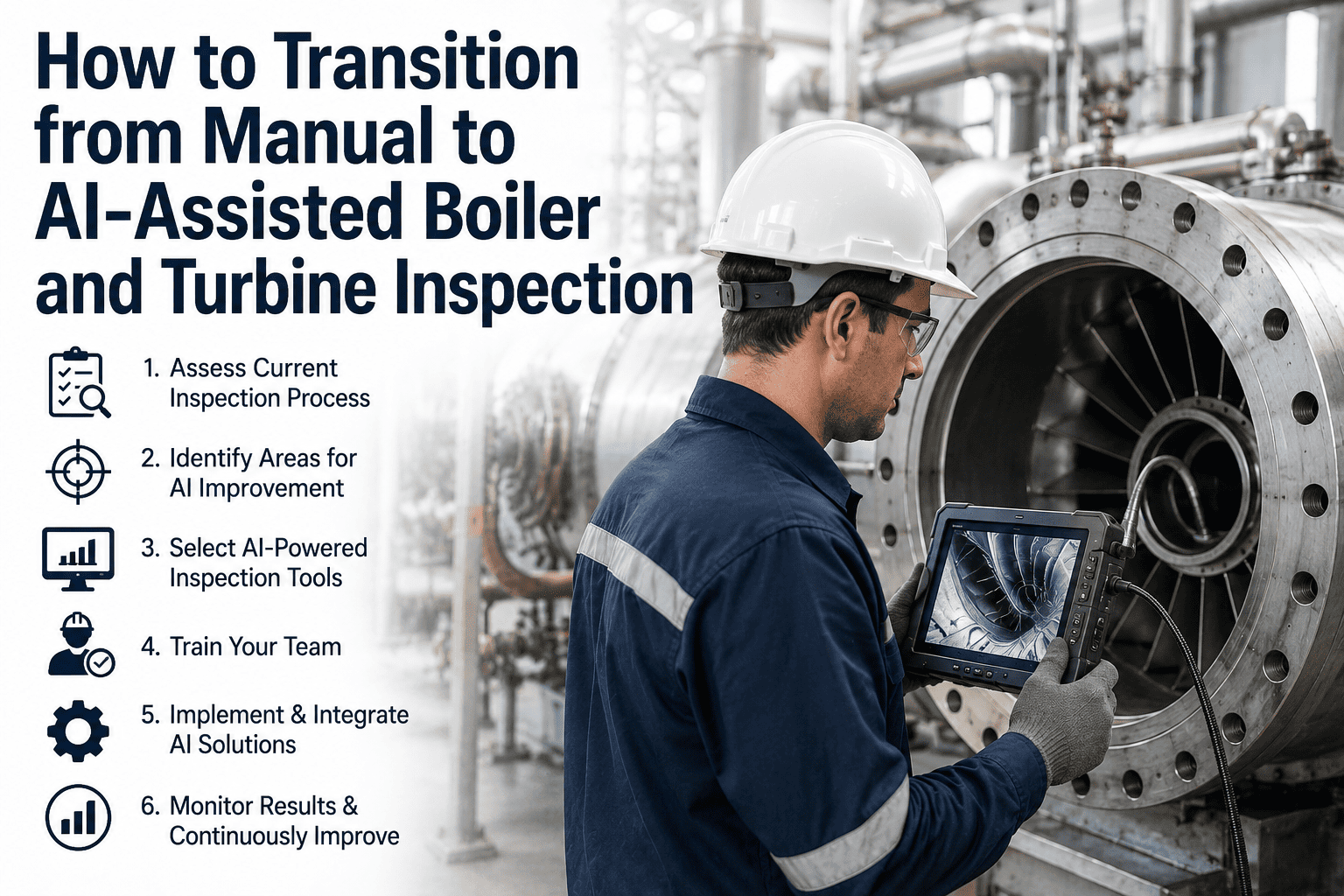
Most plants running boiler and turbine borescope inspection today are not choosing between manual and automated review from a blank slate — they already have years of inspection history, an established outage workflow, and technicians whose judgment the plant has relied on for a long time. The transition to AI-assisted inspection is not about replacing that experience but about giving it consistent measurement and a memory that does not degrade as staff rotate or retire. This piece walks through what actually changes at each stage of that transition and how to sequence it without disrupting an outage schedule already under enough pressure, with support available through iFactory's inspection team at any stage.
Moving From Manual Judgment to AI-Verified Boiler and Turbine Inspection
Why the Manual Model Reaches a Ceiling
A skilled inspection technician working from experience and reference photographs is genuinely good at catching obvious defects — an active leak, a clearly cracked weld, a visibly deformed tube. What manual review struggles with consistently is the gradual case: wall thickness that has degraded ten percent since last cycle but still looks broadly normal, a coating condition that has slowly worsened across three cycles without any single cycle looking alarming on its own, or a defect pattern that only becomes visible when this cycle's image is placed directly against last cycle's image at the same angle. None of that is a knock on technician skill — it is simply outside what unaided visual memory across many similar-looking images can reliably track.
What Actually Changes With AI-Assisted Review
The physical inspection process does not change. The technician still walks the unit, still operates the borescope, still captures images at the same access points using the same equipment. What changes is what happens after capture — every image is measured against the plant's own historical baseline rather than relying on a technician's memory of what last cycle looked like, and every finding is scored on a consistent severity scale rather than a subjective judgment call that can vary by reviewer and by mood.
| Inspection Element | Manual-Only Approach | AI-Assisted Approach |
|---|---|---|
| Baseline comparison | Relies on technician memory or spot photo review | Every image compared automatically to matched baseline |
| Severity classification | Subjective, varies by technician | Standardized scale applied consistently |
| Gradual degradation detection | Often missed until visually obvious | Flagged from measurable deviation, cycle over cycle |
| Trend tracking across cycles | Manual cross-reference, time intensive | Automated trend record per component |
| Reviewer-to-reviewer consistency | Varies with rotation and experience level | Same criteria regardless of who performs the walkdown |
| Documentation for audits and disputes | Written notes and select photos | Full image record with comparison overlay per finding |
Phase One — Parallel Run, No Workflow Change
The lowest-risk way to begin is running AI-assisted analysis alongside the existing manual process for one full outage cycle, without changing anything about how the physical inspection is performed or how findings are currently documented and acted on. The technician does their normal walkdown, the images also get processed through the AI comparison layer, and the two sets of findings are compared afterward rather than the AI output driving any live decision.
Phase Two — Confirming Trust in the Flags
Once the parallel-run comparison shows the AI layer's findings hold up against secondary testing and engineering review, the plant typically begins routing AI-flagged items into the standard engineering review queue alongside manually-identified concerns, rather than treating AI output as a separate advisory track. This is usually where a plant sees the first flags the manual process would have missed, and where trust in the tool either solidifies or reveals tuning gaps that need to be addressed before wider rollout.
Phase Three — AI-First Triage With Manual Confirmation
By this phase, the AI layer's severity scoring becomes the primary triage mechanism directing where engineering attention goes first, while manual visual review continues as a secondary check rather than the primary path. Technicians still perform the physical walkdown and still exercise judgment during the capture process, but the sorting of which findings need urgent attention now runs through consistent automated scoring rather than reviewer-by-reviewer prioritization.
Phase Four — Full Integration Into the Outage Workflow
The final phase folds AI-assisted findings directly into the outage work-scope planning process, work order system, and reliability engineering trend records, so that a flagged component automatically generates the documentation trail needed for repair-versus-monitor decisions without a separate manual reconciliation step. At this stage the baseline image library has typically built up across two or more cycles, making cycle-over-cycle trend detection reliable across the full inspected scope.
Want to see what a Phase One parallel run would look like against your own image archive? Send a sample set to our team for a no-cost comparison.
Common Pitfalls Plants Run Into During the Transition
What Reliability Engineering Teams Notice First
Plants that have gone through this transition consistently report that the first noticeable change is not a dramatic new finding — it is the disappearance of a familiar argument. Before the transition, disagreements between technicians about whether a given tube or blade had changed since last cycle were common and usually unresolvable, since both sides were arguing from memory and photographs that were hard to compare with precision. Once baseline comparison is running, that argument simply stops happening, because the comparison output is the same regardless of who is looking at it. Reliability engineers describe this as one of the more underrated benefits of the transition — not a specific defect caught, but a category of unproductive debate removed from the review process entirely.
The second thing teams notice is how much faster the review meeting moves once findings arrive pre-sorted by severity. A review session that used to involve walking through every captured image in sequence becomes a session focused only on the subset flagged as medium or high severity, with the remainder available for reference but not requiring active discussion. Engineers report this cutting review meeting time meaningfully, freeing that time for deeper discussion of the findings that actually need it rather than a uniform pass through everything captured.
Building Internal Buy-In Before the First Parallel Run
The technical mechanics of a transition are usually the easier part. The harder part is getting the inspection team, the reliability engineering group, and outage planning leadership aligned on what the tool is for before the first parallel-run cycle begins. Plants that skip this step tend to see slower adoption, more resistance to capture discipline changes, and more second-guessing of AI-flagged findings during the early cycles when trust has not yet been established.