Inspekto's S70 built a category by promising something the machine vision industry had spent thirty years denying was possible — an inspection camera a shop-floor operator could unbox, clip on, and have running in under an hour, with no systems integrator, no lighting engineer, no data scientist. That promise resonated for a reason, and for a single-station, moderate-complexity job on a stable part, the plug-and-inspect approach still holds up. The problem shows up when the same buyer needs to scale that first station to twelve lines across three plants, integrate calls into an MES quality module, hand auditors a defensible evidence trail per part, and onboard new SKUs every quarter without redoing the setup from scratch. That is the gap most Inspekto alternatives are actually chasing, and it's exactly the gap the full-stack AI vision inspection platform from iFactory was built to close.
AI Vision · Inspekto Alternative · Autonomous Inspection
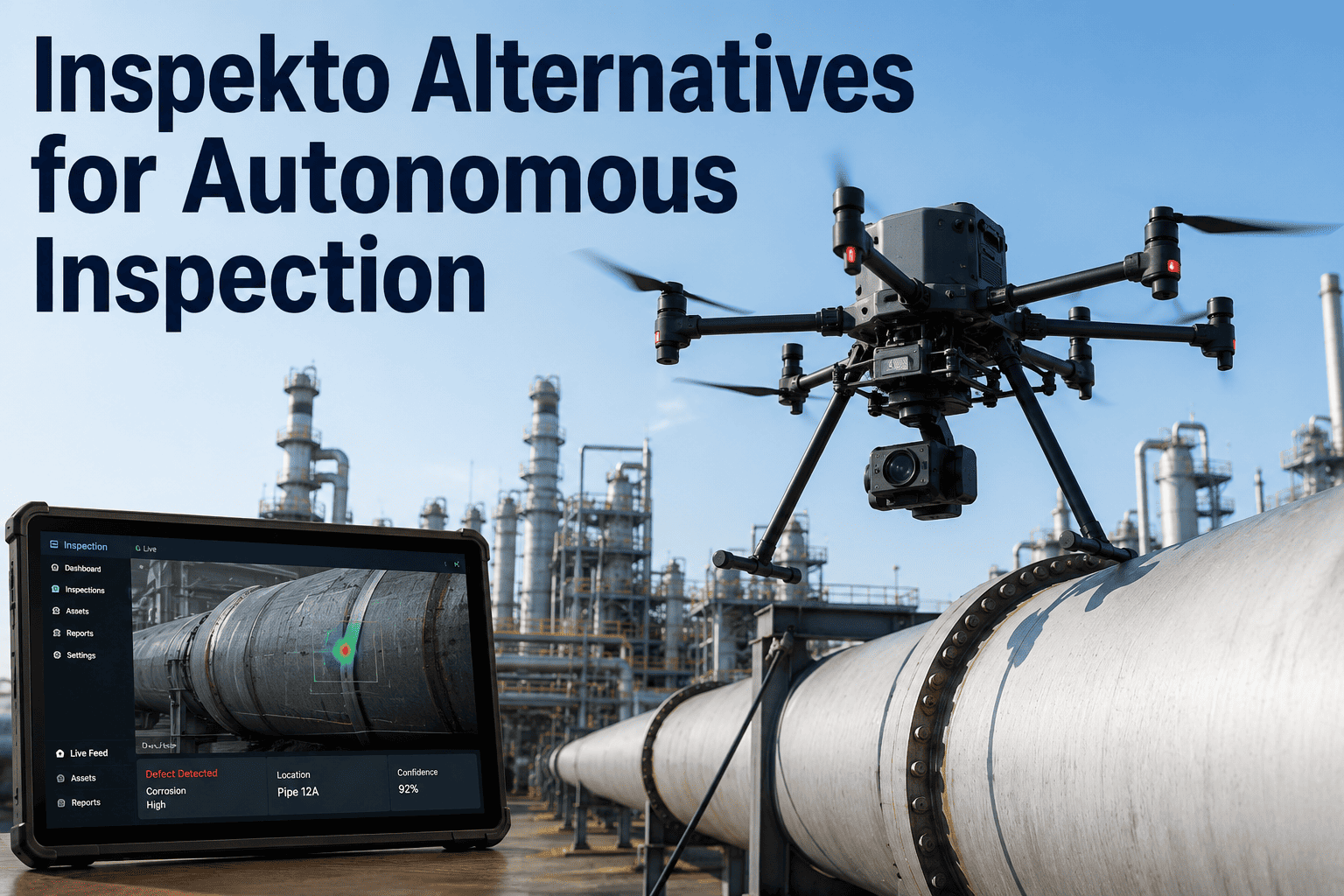
Inspekto Alternatives for Autonomous Inspection
Inspekto's S70 popularized fast, expert-free single-station inspection — but plant teams scaling beyond one line consistently hit the same walls: limited MES integration depth, no explainability for auditors, restricted defect-class ceilings, and no path from a portable box to a fleet of coordinated cameras. iFactory delivers the same turnkey ease with a full-stack platform built for multi-line, high-mix, audit-heavy manufacturing — racked, connected, and live in 6 to 12 weeks.
6–12 Weeks
Turnkey rack-to-live-on-line deployment
Multi-Line
Coordinated cameras across plants and shifts
Audit-Ready
Saliency heatmap per decision, retrievable by part
Where Inspekto Fits
What the S70 Does Well — and Where the Category Runs Out
Genuine Strengths
Single-station setup measured in an hour, not weeks
No systems integrator required for basic go-live
Learns from roughly 20–30 good samples, no defect labeling
Adjusts its own lighting and re-anchors on part movement
Portable — one unit can move between stations
Where Plants Outgrow It
One-camera-per-station architecture limits multi-angle coverage
MES/ERP integration depth is narrower than full-stack platforms
Anomaly detection alone doesn't classify defect types for CAPA
Limited saliency evidence for regulated-industry audits
No fleet-level model management as camera count grows
The Decision Point
Signals You've Outgrown Plug-and-Play Autonomous Inspection
A
You need more than one camera per station
Multi-angle capture on a single part — top, side, underside — needs coordinated inference on the same physical part, not three portable units running independently and hoping their timing aligns. As soon as a defect can only be seen from a specific pose, or its severity depends on how it appears across multiple views combined, the single-box architecture starts costing you missed defects.
B
Quality wants defect classes, not just accept/reject
Anomaly detection is a binary answer — the part looks off, or it doesn't. When your CAPA process needs to know whether it was a scratch, a dent, contamination, or a dimensional variation to drive the right corrective action, you've crossed into supervised classification territory that plug-and-play autonomous units weren't designed to handle.
C
Auditors and customers want evidence per part
Pharma batch records, automotive PPAP submissions, and medical device DHRs demand retrievable visual evidence linked to the exact part serial. A pass/fail log without a saliency overlay per event doesn't clear those bars, and a customer complaint traced back to an inspection unit that can't show what it saw at 3 a.m. on a Tuesday tends to turn into an expensive concession.
D
You're deploying beyond a handful of cameras
Ten cameras is a fleet, not a set of standalone units. Fleet-level model versioning, centralized retraining, and cross-line drift monitoring aren't nice-to-haves at that scale — they're the difference between managing the system and firefighting it. Every additional standalone unit multiplies the operational overhead linearly, while a fleet-aware platform absorbs new cameras with a marginal cost that keeps flattening as the deployment grows.
E
MES, SCADA, and ERP need real integration
Digital I/O and basic PLC handshakes get a station running. Streaming inspection results into a quality module, tagging events with batch IDs from the ERP, feeding OEE dashboards with real-time defect trends, and pushing rejected-part serials back to a customer-complaint traceability system requires deeper integration than plug-and-inspect was designed for. This is often where the standalone architecture stops being a cost saver and starts being a data island the rest of the plant has to work around.
Side by Side
Plug-and-Play Autonomous vs Full-Stack Turnkey AI Vision
| Capability | Plug-and-Play Autonomous (Inspekto-Style) | Full-Stack Turnkey (iFactory) |
| Time to first inspection |
30–60 minutes on a single station |
6–12 weeks fully integrated across multiple lines |
| Detection approach |
Unsupervised anomaly detection from good samples |
Supervised defect classification plus anomaly detection |
| Defect class output |
Binary anomaly (looks off vs looks normal) |
Named defect classes tied to CAPA and process teams |
| Multi-camera coordination |
Independent units per station |
Coordinated multi-angle inference on a single part |
| MES/ERP integration |
Digital I/O and common PLC protocols |
Deep MES connectors, ERP batch tagging, OEE feeds |
| Explainability |
Pass/fail signal, limited visual evidence |
Saliency heatmap on every event, retrievable by part |
| Fleet management |
Per-unit configuration |
Centralized model versioning and drift monitoring |
| Ongoing support |
Software updates and troubleshooting |
24×7 remote monitoring plus retraining as a service |
See Your Line, Not a Sample Video
Compare an iFactory Deployment Against Your Current Autonomous Vision Setup
Bring your current inspection pain points — the SKU that keeps failing to onboard, the auditor question you can't answer, the multi-angle defect that keeps slipping through. We'll show you what a full-stack deployment does differently on your parts.
The Practical Path
Migrating From Standalone Boxes to a Full-Stack Platform
01
Inventory your existing stations
List every autonomous inspection unit, its part family, and the specific defects it catches or misses today. This becomes the baseline the new platform has to match on day one, plus the gap list it needs to close.
02
Rank stations by pain
Which stations produce the most false rejects, the most escape complaints, or the most auditor friction? Those are the first candidates for the pilot cutover, not the easiest ones.
03
Pilot in parallel on the worst station
Run iFactory alongside the existing unit for two to four weeks on the same station. Compare call-for-call on the same parts, with the saliency overlay side by side, so the quality team can validate before anything gets unplugged. This is where confidence gets built and where the buyer discovers exactly which defects were being missed by the previous setup — usually a longer list than anyone expected going in.
04
Cut over station by station
Cutover order follows the ranked pain list, not the geographic order of the plant. Each station gets its own written go-live checklist, and the previous unit stays available as a fallback for the first week.
05
Consolidate onto the fleet layer
Once several stations are live, centralize model versioning, drift monitoring, and retraining. This is the point where the multi-line benefit actually materializes: a defect pattern spotted on one line pushes an updated model to the other lines running the same product family, and drift on any camera surfaces on the same dashboard. Standalone boxes stop being a viable comparison at this stage, because there's no equivalent operational layer to point at.
Real Buyer Situations
When Manufacturers Trade Standalone Autonomous for Full-Stack
Automotive Tier-1 with 14 Stations
A stamping-and-assembly Tier-1 ran standalone autonomous units on 14 stations across three plants. Every SKU changeover meant walking around and reconfiguring each unit — a shift's worth of setup work spread across engineers who could have been doing higher-value tasks. Consolidating onto a full-stack platform collapsed changeover time from a shift to under an hour, and gave the corporate quality team a single dashboard across all three plants for the first time. The knock-on effect was cultural: engineers stopped treating inspection as a maintenance burden and started using the cross-plant data to spot process drift they had been missing entirely.
Injection Molder Losing PPAP Arguments
An injection molder shipping to a Tier-1 kept losing customer complaint reviews because the standalone unit could show pass/fail history but not visual evidence of the specific defect. Every complaint became a defensive email chain that ended in a concession or a costly re-sort. Moving to explainable heatmap-per-event evidence changed the tone of the next PPAP audit from defensive to routine — the auditor could see exactly which pixels drove each reject, tied to the exact part serial, and closed the review two weeks earlier than budgeted.
Pharma Blister Line With a New Auditor
A pharma packaging line had a plug-and-play unit running for two years and everyone was reasonably happy with it. A new regulator on the annual inspection asked for retrievable visual evidence per rejected blister, tied to batch ID, and the standalone architecture simply didn't have a good answer. The full-stack cutover was scoped and completed inside a validation window because deep MES and batch integration was already part of the platform, not an add-on quoted separately. The lesson was less about the specific system and more about how quickly a regulatory expectation can turn an adequate deployment into a compliance risk.
Contract Electronics Assembler Scaling Fast
A contract electronics assembler grew from 4 stations to 22 across two facilities in a year, driven by a couple of new customer programs. Managing 22 standalone units became a full-time operator job by itself — every configuration change, every SKU-specific tweak, every recovery from a false-reject spike had to happen unit by unit. Fleet-level model versioning and centralized retraining turned that operator's role back into supervising quality rather than babysitting cameras, and freed up enough time to actually respond to the quality signals the system was surfacing.
The Turnkey Difference
iFactory Ships Turnkey Without Giving Up Fast Deployment
Week 1–4
Rack, Plug, Network
Pre-configured NVIDIA AI server arrives racked with software pre-loaded. Plug power and Ethernet, connect the cameras, and the platform is talking to your PLC/SCADA layer within days.
Week 5–8
Train and Pilot
Model trains on your part images, saliency overlays are validated against known defects, pilot cell runs alongside your existing inspection so operators can compare calls directly.
Week 9–12
Go Live and Train Operators
Full line cutover with 24×7 remote monitoring, operator HMI training, and the override-feedback loop live from day one so retraining begins immediately.
Live in 6–12 weeks · 1000+ clients · 99.9% platform uptime
Cabling, network integration, PLC/SCADA hookup, operator training, and continuous remote monitoring all included — one purchase order, one accountable partner, one go-live date. The plug-and-play convenience of a standalone box, delivered as a platform that scales past a single station.
Before You Replace
Buyer Checklist for Evaluating an Inspekto Alternative
Vendor can show multi-camera coordinated inference on a single part, not just multiple independent stations
Every decision ships with a saliency heatmap the operator and the auditor can both see
Defect classes are named, not just anomaly scores, so CAPA and process teams get actionable data
MES, SCADA, and ERP integration is included in the base deployment, not sold as a separate SI engagement
A fleet management layer covers model versioning, drift monitoring, and centralized retraining across cameras
Vendor offers a paid pilot with written acceptance criteria on your own parts before full commit
Common Questions
Inspekto Alternatives — FAQ
Is Inspekto still the fastest way to get a single inspection station running?
For a single simple station with a stable part and no MES integration requirement, plug-and-play autonomous units are genuinely among the fastest options on the market — that's what built the category, and it's a real advantage. The tradeoff is that everything that makes them fast in that one context also caps what they can do at scale. If your buying decision covers exactly one station and you'll never need multi-camera coordination, deep integration, or classified defect data, plug-and-play is a reasonable pick and this page probably isn't for you. If any of those matter within the next two years, a full-stack turnkey platform pays back quickly because you avoid the second procurement cycle and the awkward migration that comes with it.
Why doesn't unsupervised anomaly detection cover every quality use case?
Anomaly detection answers one question — does this part look different from the good samples the system was trained on? That's useful for catching defects you can't anticipate, especially early in a product's life when the defect library is thin, but it doesn't tell you what type of defect occurred. A CAPA process needs to know whether the reject was a scratch, a dent, a contamination event, or a dimensional deviation, because each of those points at a different root cause on the process side. Without that breakdown, engineering teams end up chasing every anomaly manually to figure out what actually happened. Full-stack platforms combine anomaly detection with supervised classification so you get both the unknown-unknowns and the actionable defect-type breakdown feeding directly into your corrective-action workflow.
Can iFactory actually match the sub-hour setup Inspekto is known for?
On a single-station shadow deployment, yes — the platform runs on pre-configured hardware and can be inspecting parts alongside your existing setup within a day. The 6-to-12-week timeline reflects a full production go-live: multi-camera coordination, MES integration, operator HMI training, pilot with written acceptance criteria, and cutover. That is the difference between an inspection demo and a production system your quality team will actually rely on.
Book a demo to see a shadow deployment scoped against your timeline.
What happens to my existing standalone units during migration?
The recommended pattern is parallel operation before decommission. Existing units keep running while iFactory shadows the same station for two to four weeks, so the quality team can validate call-for-call before anything gets unplugged. On cutover day, the standalone unit typically stays powered for the first week as a fallback while the new deployment stabilizes. This mirrors how most plants replace critical automation equipment — the old system leaves the line only after the new one has earned the confidence to stand alone.
Our team can walk through the specific migration steps for your setup.
Which industries most commonly outgrow plug-and-play vision?
Regulated industries with strict evidence and traceability requirements — pharma, medical devices, aerospace, automotive PPAP-driven programs — tend to hit the wall soonest because the audit and CAPA layers demand more than pass/fail history. High-mix contract manufacturers hit the wall next because SKU changeover overhead compounds with every added station, and what was a small tax at 4 units becomes a full-time role at 20. Multi-plant enterprises reach it when corporate quality wants a single dashboard across facilities and discovers there's no clean way to aggregate independent boxes. Stable, single-station, low-mix operations can stay on plug-and-play for years without pain — the honest question is whether your business is heading in that direction or in the opposite one.
The Alternative That Scales With You
Keep the Turnkey Ease. Add the Depth Standalone Boxes Can't Deliver.
iFactory ships full-stack AI vision inspection — pre-configured hardware, explainable heatmap evidence, coordinated multi-camera inference, deep MES integration, and centralized fleet management — with a live-on-line timeline of 6 to 12 weeks and 24×7 remote support from day one.