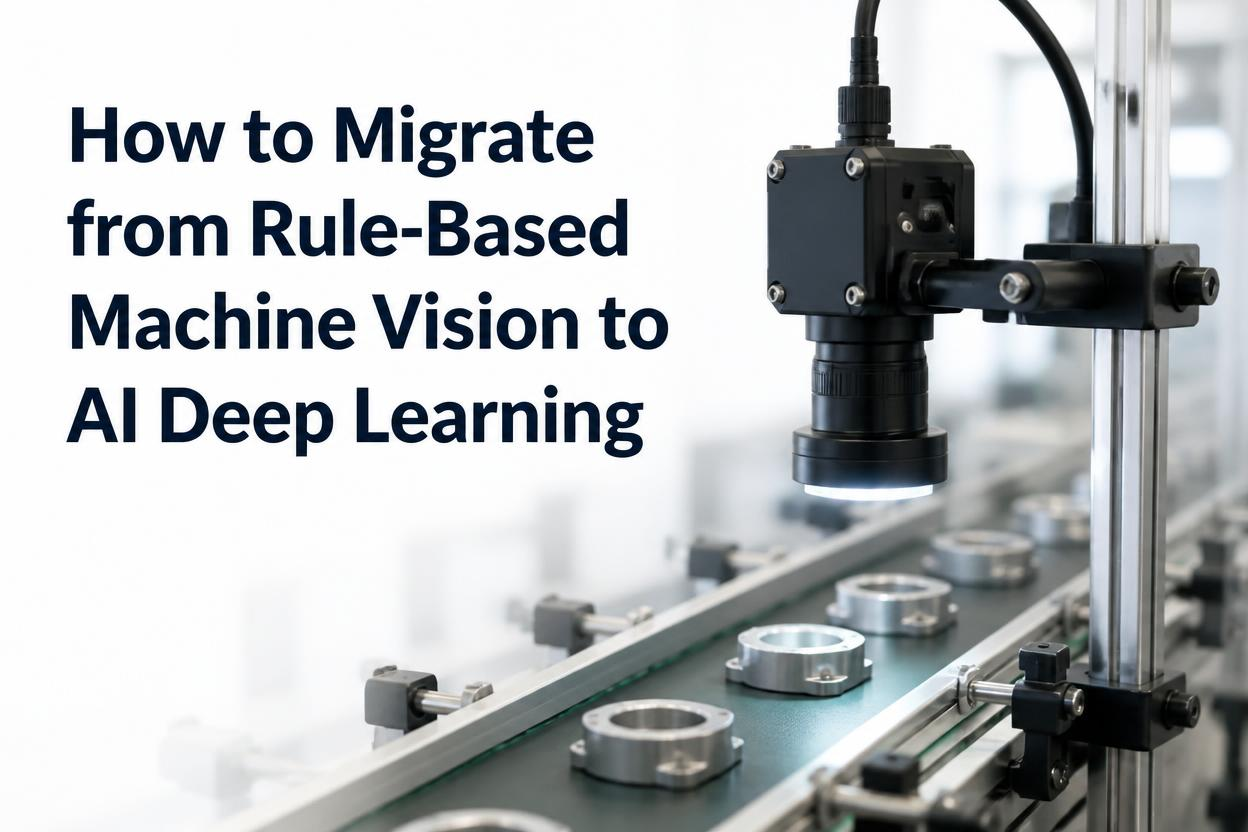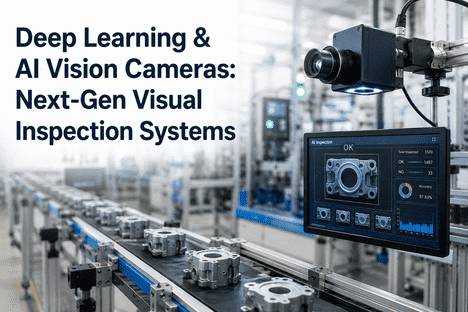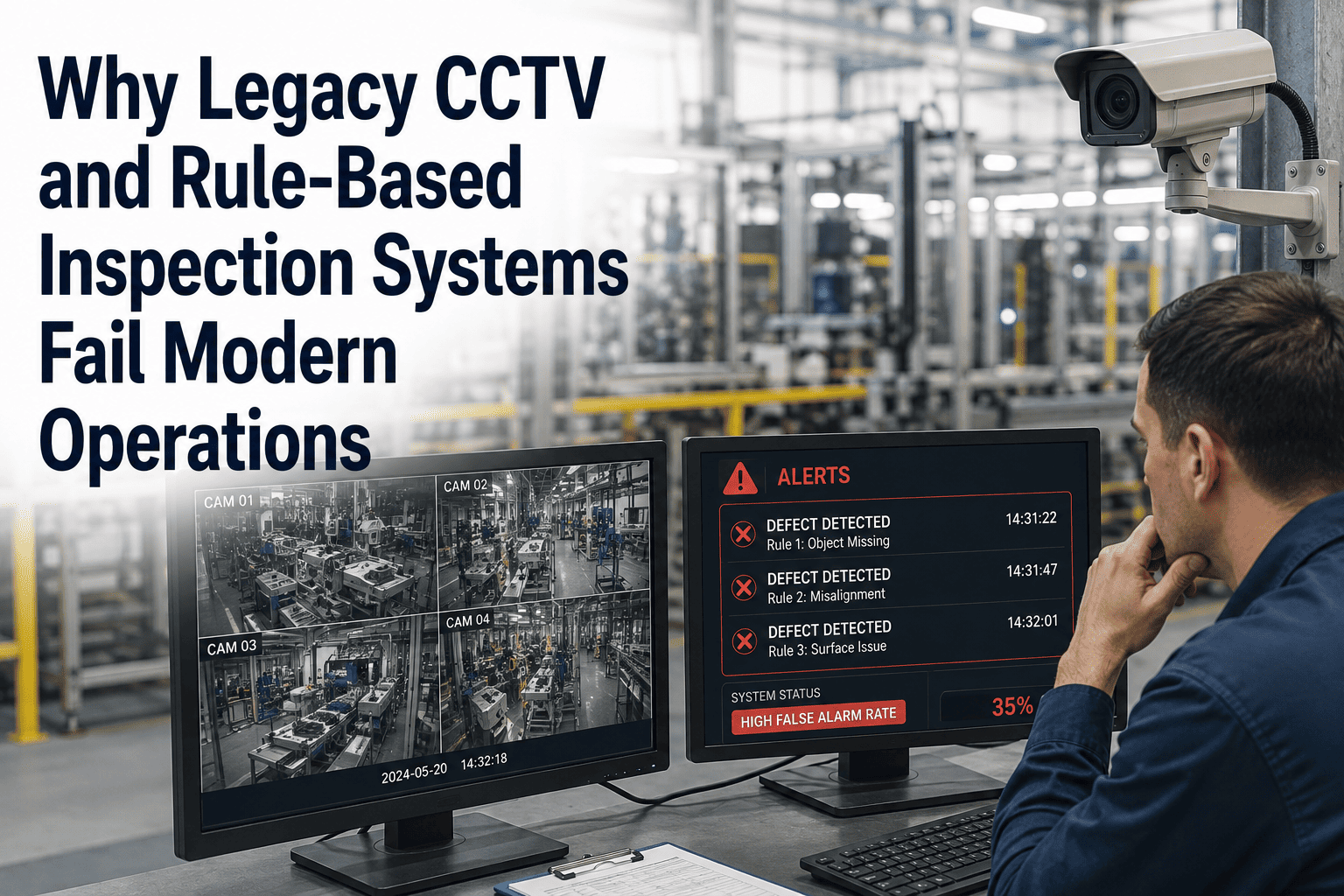
Most plants already have cameras everywhere. That's rarely the problem operators bring up when a defect makes it to a customer or a near-miss goes unreported for a week. The problem is that nobody was watching that specific feed at that specific moment, and even if they had been, a rule-based system tuned to flag "motion in zone 4" would have fired the same alarm it fires two hundred times a shift for a forklift passing through. iFactory's video intelligence layer sits on top of existing camera infrastructure and turns unwatched footage into filtered, actionable signal.
Terabytes of Footage. Almost None of It Watched. That's the Real State of Most Plant CCTV.
Legacy CCTV and rule-based motion detection weren't built to separate a real anomaly from routine plant activity — which is exactly why most recorded footage only gets reviewed after something has already gone wrong.
The Gap Between "Recording" and "Monitoring"
A CCTV system records. It does not monitor, diagnose, or prioritize — those are jobs that were quietly assigned to whichever operator happened to be looking at the right monitor at the right second, across a wall of feeds that no person can meaningfully attend to for an eight-hour shift. Rule-based analytics tried to close that gap with simple triggers: motion in a zone, a tripwire crossed, a pixel-change threshold exceeded. Those rules work exactly as well as the environment is static — and an industrial floor is never static.
Where Rule-Based Systems Break Down First
Rule-based video analytics were never built for the variability of a working industrial floor. The following are the specific failure patterns that show up first, once a rule-based system has been running long enough for operators to develop opinions about it.
Lighting & Shadow Changes
A simple motion-detection rule can't tell a moving shadow from an actual object, so lighting changes across a shift or a day generate false triggers that erode trust in the whole system.
Variable Product & SKU Mix
A rule tuned for one product's silhouette breaks the moment the line changes over to a different SKU, requiring manual reconfiguration that rarely keeps pace with production changes.
Normal Personnel & Vehicle Traffic
Forklifts, pedestrians, and routine material movement trip zone-based rules constantly, forcing operators to either widen dead zones or accept a flood of irrelevant alerts.
Gradual, Slow-Developing Defects
Rules built around a single-frame threshold miss anomalies that develop gradually across days or weeks — exactly the pattern most equipment degradation and wear actually follows.
What Deep Learning Actually Changes
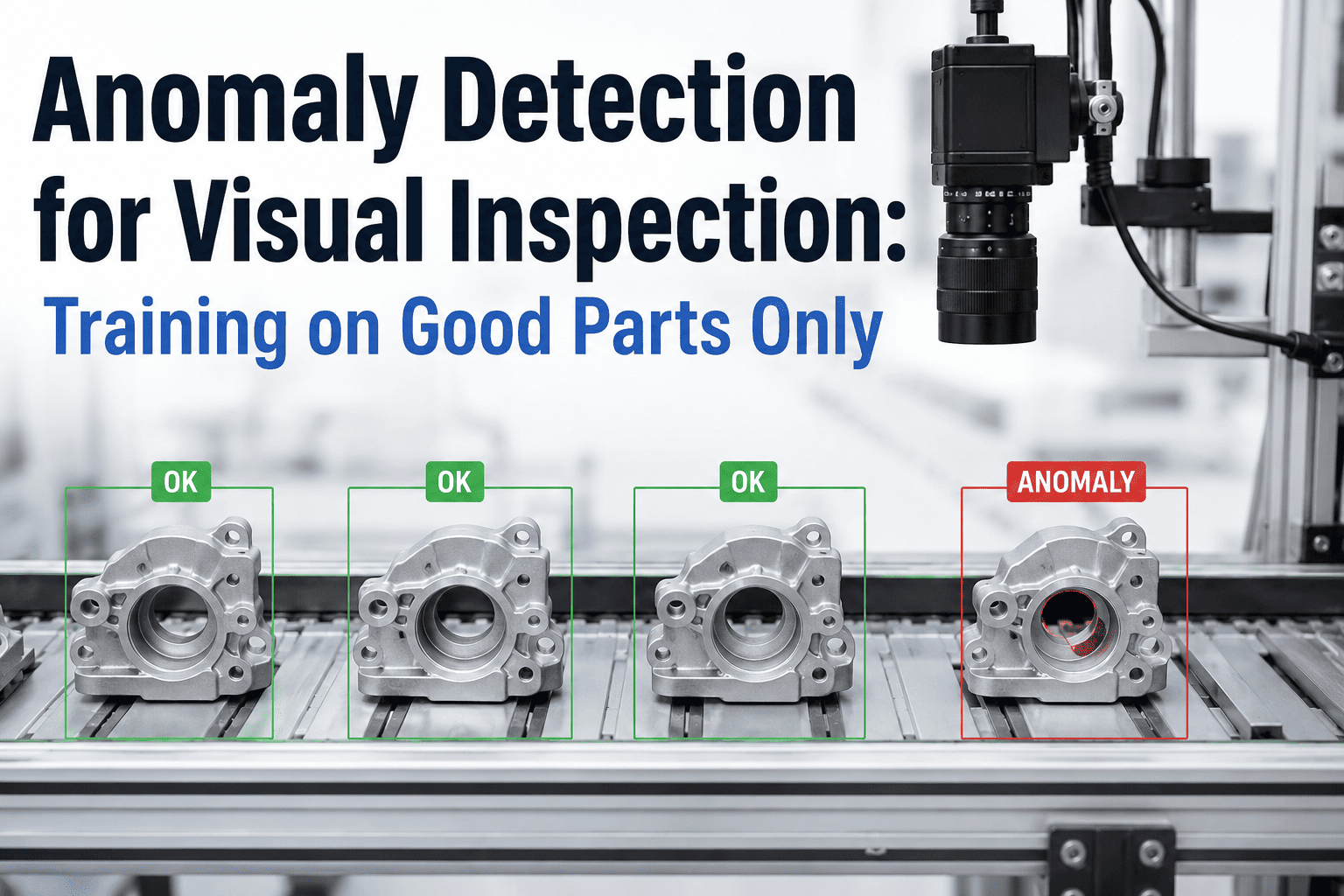
The core difference isn't just "smarter alerts" — it's a fundamentally different approach to what counts as an anomaly. A rule-based system compares a frame against a fixed threshold. A trained vision model compares what it sees against a learned understanding of what normal operation looks like at that specific location, on that specific asset, and flags meaningful deviation rather than raw pixel change.
Baseline learning
The model observes normal operating conditions at each camera location across shifts, lighting conditions, and routine traffic, building a facility-specific understanding of "normal" rather than a generic template.
Continuous inference
Every frame is evaluated against that learned baseline in real time, distinguishing routine variation from an anomaly that actually warrants attention.
Classification & confidence scoring
Flagged events are classified by type and assigned a confidence score, so operators can prioritize high-confidence, high-severity alerts over marginal ones.
Routed, actionable alerts
Instead of a raw clip sitting in a review queue, a confirmed anomaly generates a routed notification — and where relevant, a work order — with the supporting image already attached.
Model refinement
Operator feedback on flagged events — confirmed or dismissed — feeds back into the model, so accuracy improves the longer the system runs at a given site.
You Already Paid for the Cameras. The Intelligence Layer Is What's Missing.
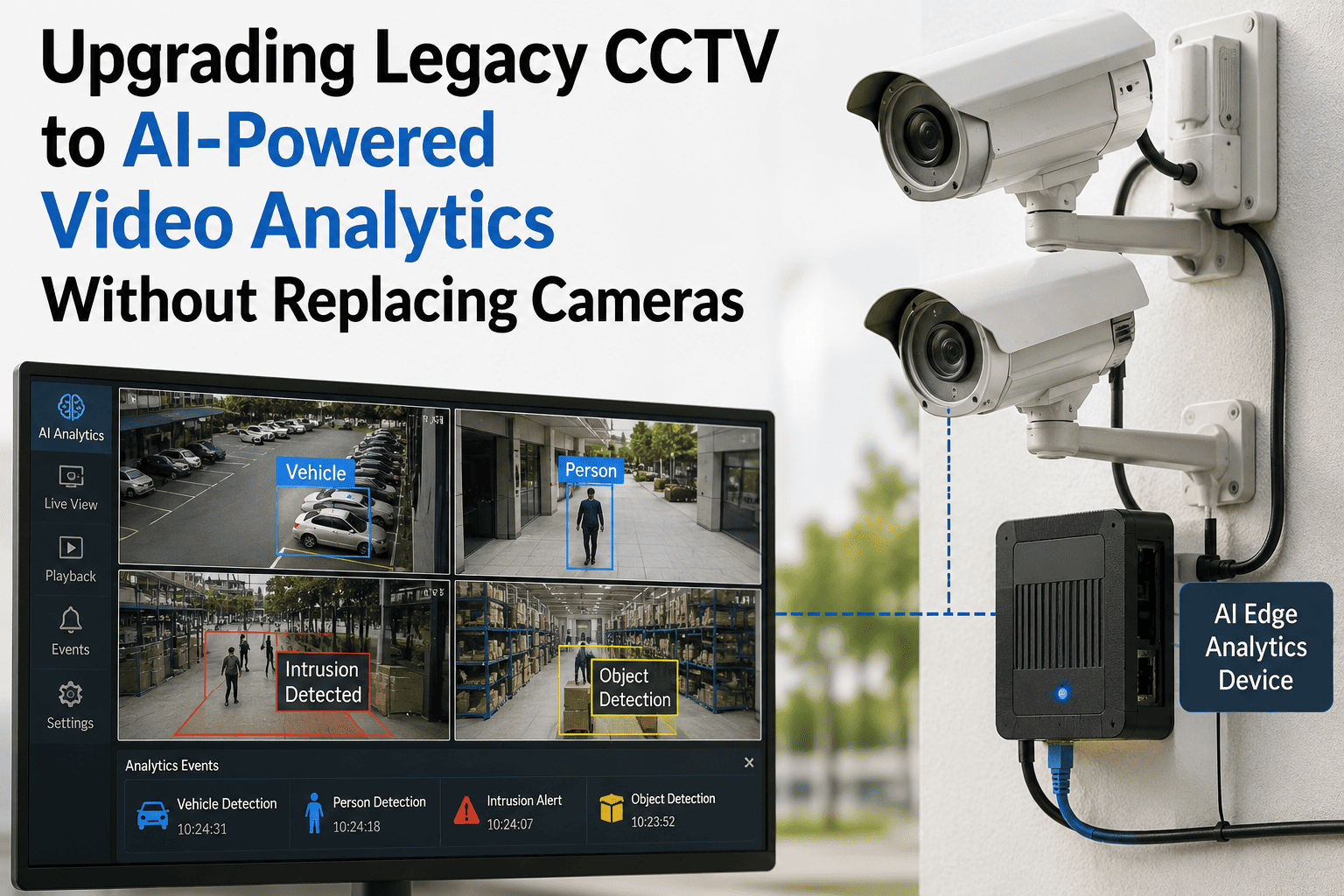
iFactory typically integrates with existing camera infrastructure rather than requiring a full hardware replacement — the gap is analytical, not physical.
Capability Comparison at a Glance
| Capability | Rule-Based CCTV | AI Video Intelligence |
|---|---|---|
| Anomaly definition | Fixed threshold or zone trigger | Learned deviation from normal operating pattern |
| Adaptation to change | Manual reconfiguration required | Continuous learning from ongoing operation |
| False alert volume | High, driving alert fatigue | Reduced through classification and confidence scoring |
| Historical trend visibility | Minimal — clips reviewed individually | Structured history per asset, searchable over time |
| Integration with maintenance workflow | Manual — someone has to notice and act | Automated work order generation on confirmed events |
A Composite Scenario: From Alert Fatigue to Actual Signal
Consider a mid-size packaging plant with roughly forty cameras across three production lines, all feeding into a legacy rule-based system that generated several hundred motion alerts a day. Operators had, unofficially, stopped responding to most of them within the first month of the system going live — the volume made it functionally noise. A recurring case scoring low leak near a filler head had been triggering the same generic motion alert for weeks, indistinguishable from routine operator movement in that zone.
After transitioning that camera feed to a trained vision model, the system correctly separated normal filler operation from the specific visual signature of the leak — fluid pooling at a consistent location, growing slightly shift over shift — and routed a single, classified alert with an attached image directly to the maintenance queue. The fix was a gasket replacement during the next changeover. The underlying issue had been visible in the footage the entire time; what changed wasn't the camera, it was whether the system could tell the difference between "something moved" and "something is actually wrong."
Rolling Out Video Intelligence Without Disrupting Operations
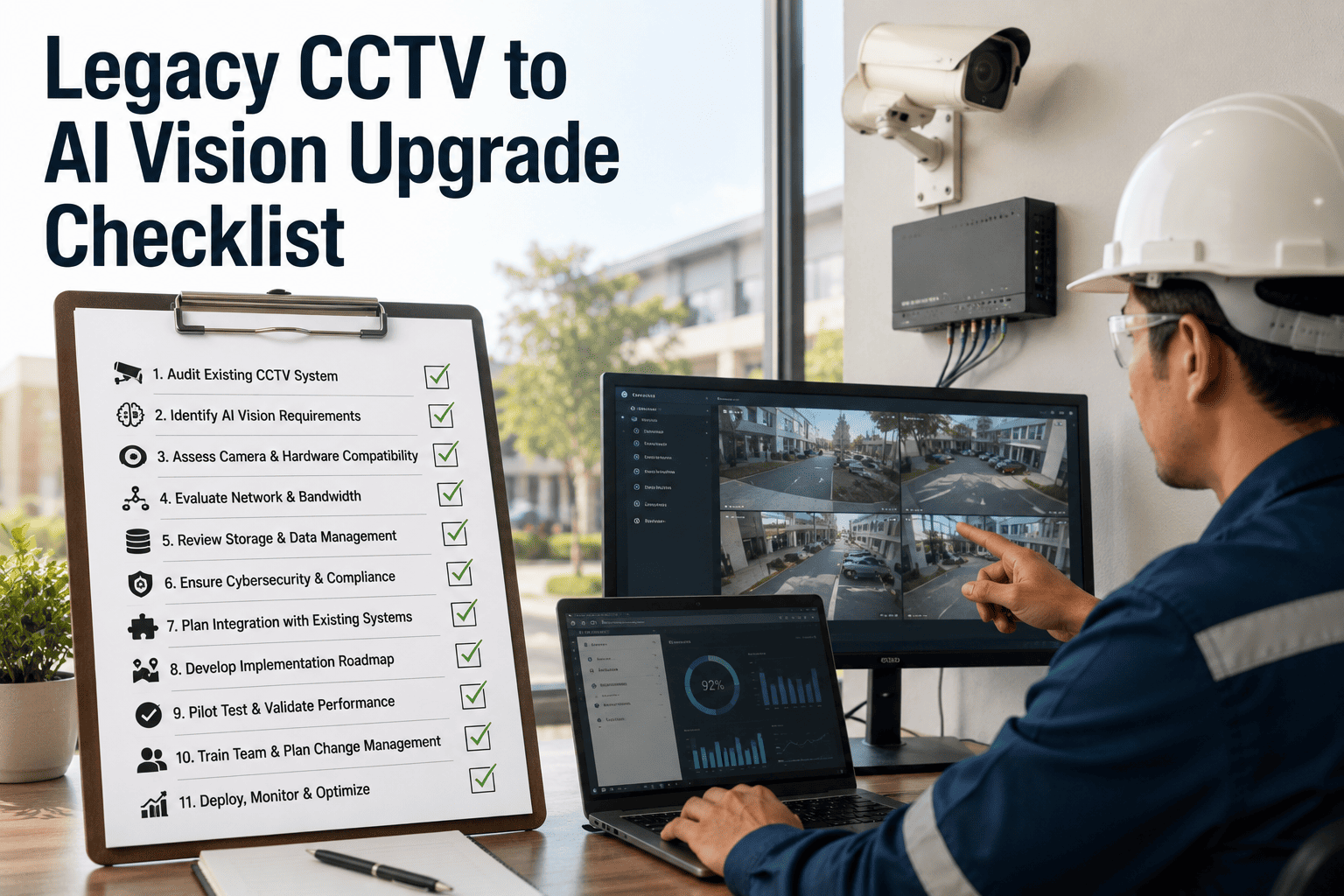
Replacing an entrenched rule-based system, or layering AI analytics on top of one, tends to go smoothly when it's staged deliberately rather than switched on plant-wide overnight. The rollout pattern below is what typically keeps operators engaged instead of skeptical of yet another monitoring tool.
Pilot on the Noisiest Feeds First
Starting with the camera locations generating the most false alerts under the old rule-based system produces the most visible, fastest improvement for skeptical operators to see.
Run Both Systems in Parallel Briefly
Keeping legacy rule-based alerts active alongside the new model during an initial validation window builds confidence before fully retiring the old trigger set.
Involve Operators in Confirm/Dismiss Feedback
Having the people who actually watch the floor confirm or dismiss early alerts both improves the model faster and builds the operational trust that determines whether alerts get acted on.
Expand by Zone, Not All at Once
Rolling out line by line or zone by zone lets the team absorb the workflow change and refine alert routing before the entire facility is running on the new system simultaneously.
Frequently Asked Questions
Do we need to replace our existing cameras to use AI video intelligence?
In most cases, no. The analytical layer typically runs on top of existing IP camera infrastructure, provided the cameras meet baseline resolution and frame rate requirements for the use case in question. Older analog systems or very low-resolution cameras may need targeted upgrades at specific high-value locations, but a full camera replacement is rarely the starting point. Visit support to check compatibility with your current hardware.
How long does it take before the system stops generating false alerts?
Baseline learning for a given camera location typically happens over an initial observation period as the model builds an understanding of normal conditions at that specific site, and alert precision improves progressively as operators confirm or dismiss flagged events. This is a materially faster and more transparent process than manually re-tuning a rule-based system every time conditions on the floor change.
Can this integrate with our existing CMMS or work order system?
Yes — confirmed anomalies can generate work orders automatically, tagged to the specific asset or location the camera identified, rather than requiring an operator to manually create a ticket after noticing an alert. This closes the loop between detection and action instead of leaving flagged events sitting unactioned in a review queue.
What happens to all the historical footage we already have?
Existing footage can often be used to help establish an early baseline for what normal operation looks like at a given camera location, shortening the initial learning period rather than starting the model from zero. It also remains available for standard retention and incident review purposes independent of the new analytics layer running alongside it.
How do you prevent the new system from just generating a different flavor of alert fatigue?
Confidence scoring and classification mean alerts can be filtered and prioritized by severity rather than treated as a single undifferentiated stream, and the feedback loop from confirmed versus dismissed events continuously narrows what the system surfaces. Book a demo to see how alert tuning works for a facility similar to yours.
The Footage Was Never the Problem. What You Do With It Is.
iFactory turns the cameras you already have into a monitoring system that actually filters signal from noise — before the next incident, not during the review afterward.