Digital Twin for Cement Rotary Kilns & Pyroprocessing
By James C on September 19, 2026
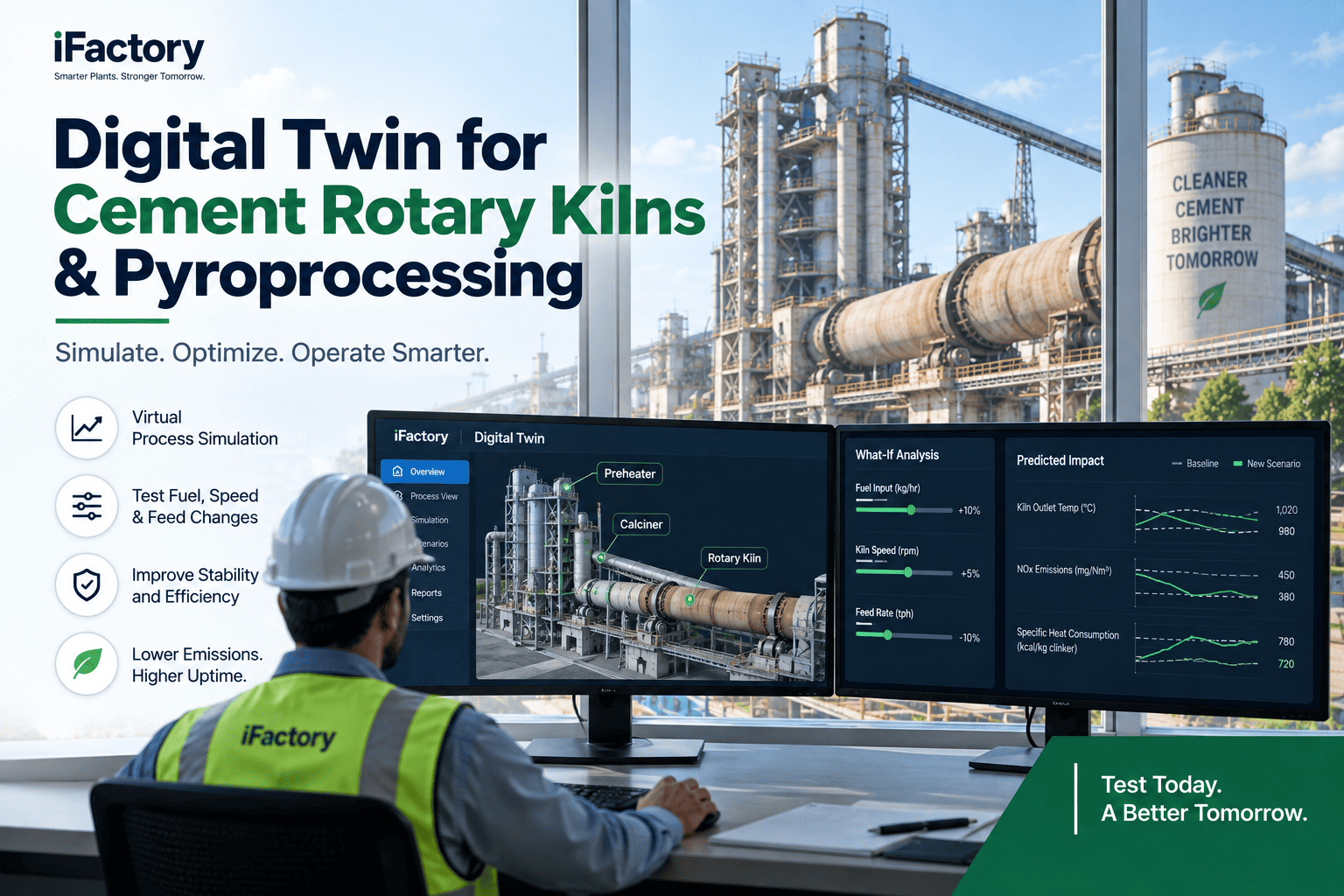
Every change worth making to a pyro line is a change nobody wants to make first on the line itself. Raise the feed, and you find out what it does to free lime two hours later. Change the fuel, and the calciner, the preheater draft and the cooler all answer at once, in an order nobody can predict from a P&ID. The result is that most plants run the settings that were proven safe years ago, and the headroom between safe and optimal is never explored. iFactory's digital twin puts the preheater, calciner, kiln and cooler in one connected model, so a change can be tested virtually and its consequences seen across the whole line before anyone touches a setpoint.
Digital Twin and AI Optimization for Cement
Digital Twin for Cement Rotary Kilns and Pyroprocessing
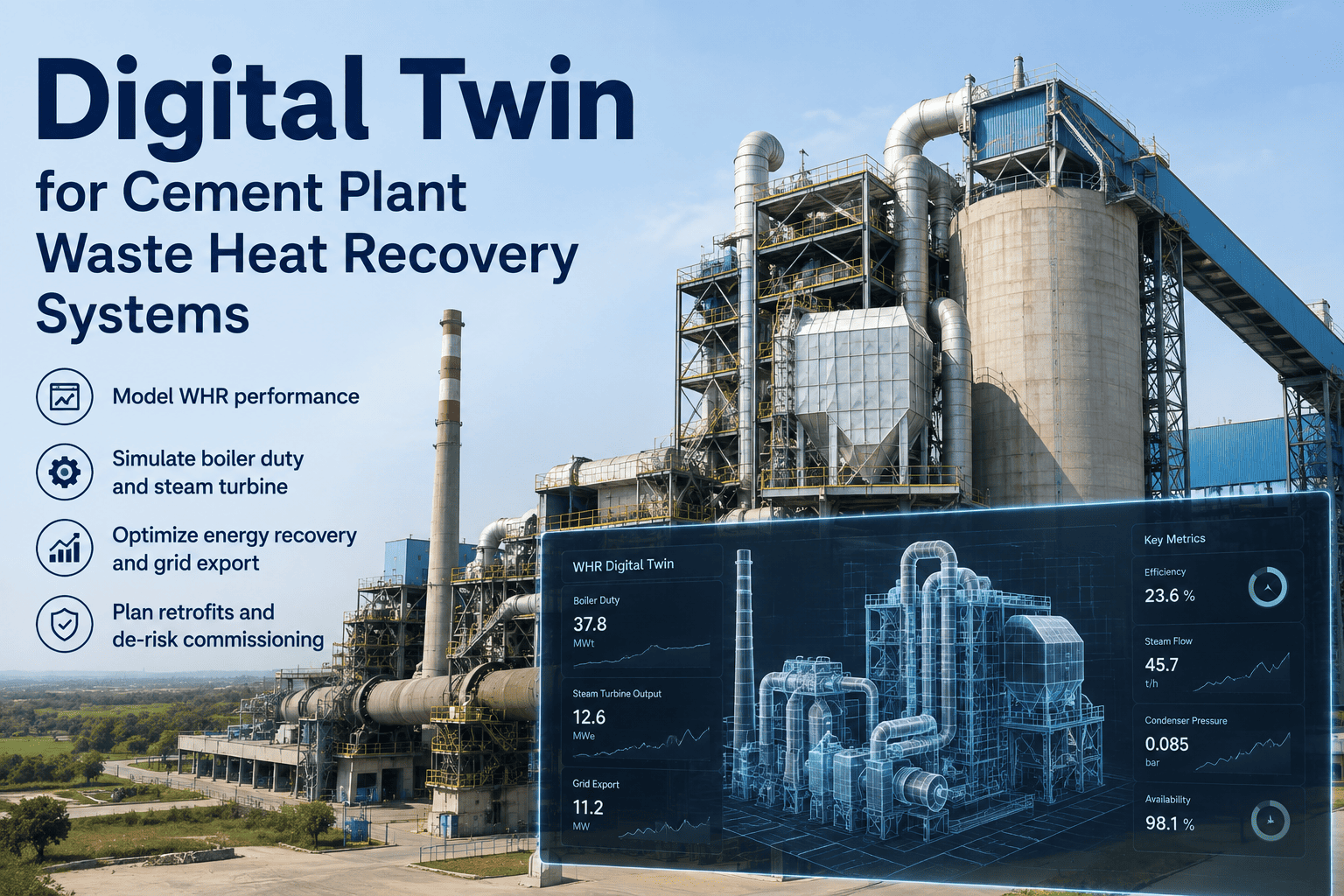
Simulate the whole pyro line — preheater, calciner, kiln and cooler — as one coupled system. Test fuel changes, kiln speed and feed shifts virtually, and see the effect on burning zone, free lime, draft and heat consumption before the real line ever moves.
A cement kiln is not a sequence of independent stages. Kiln feed rate sets the calcination duty; calciner firing sets the gas temperature entering the lowest cyclone; draft ties the whole tower together; kiln speed changes the bed depth and the time the meal spends in the burning zone; cooler air both recovers heat and supplies the tertiary air the calciner needs. Push one and the others respond, often with a delay long enough that the operator has already made a second correction before the first one arrives. That is why trial-and-error tuning on a real line is slow and why it stops early: nobody can hold five coupled responses in their head while clinker is on the floor. A twin can, and it will run the same trial a hundred times without costing a tonne.
What the Twin Represents
The model follows the material and the gas in opposite directions through the same equipment, the way the real line does: meal descending through the preheater and calciner into the kiln and out to the cooler, gas rising from the cooler and kiln back through the tower.
The pyroprocessing line as one connected model
Because the twin holds heat, mass, gas flow and chemistry across the whole line, a change to feed or fuel is not evaluated in isolation. The draft, the calcination degree, the burning zone and the cooler recuperation all move in the model exactly as they would on the line.
Run the Change Virtually First
A what-if run takes a proposed operating change, applies it to the twin, and reports where the line ends up once everything has settled — including the constraints you would have discovered the hard way.
Feasible with roughly 2% more kiln fuel to hold the burning zone, applied before the feed step rather than after. The twin also shows the fan, not the kiln, is the ceiling on any larger increase.
A Twin Is Only Useful If It Matches Your Line
The value of a simulation depends entirely on whether it tracks reality. The twin is built on physics — heat and mass balance, gas flow, calcination and clinker chemistry — and then tuned against your historian, so it reproduces how your kiln actually behaved through past feed changes, fuel switches and upsets. That calibration is what makes a prediction about a setting you have never run believable.
Twin prediction against measured plant behaviour
Calibration is run against your own history, including the upsets. A twin that only matches steady operation is not much use, because the decisions you want to test are the ones that move the line.
What You Can Test in the Twin
Four families of question account for most of the value, and all of them are expensive to answer on a running line.
Fuel and firing changes
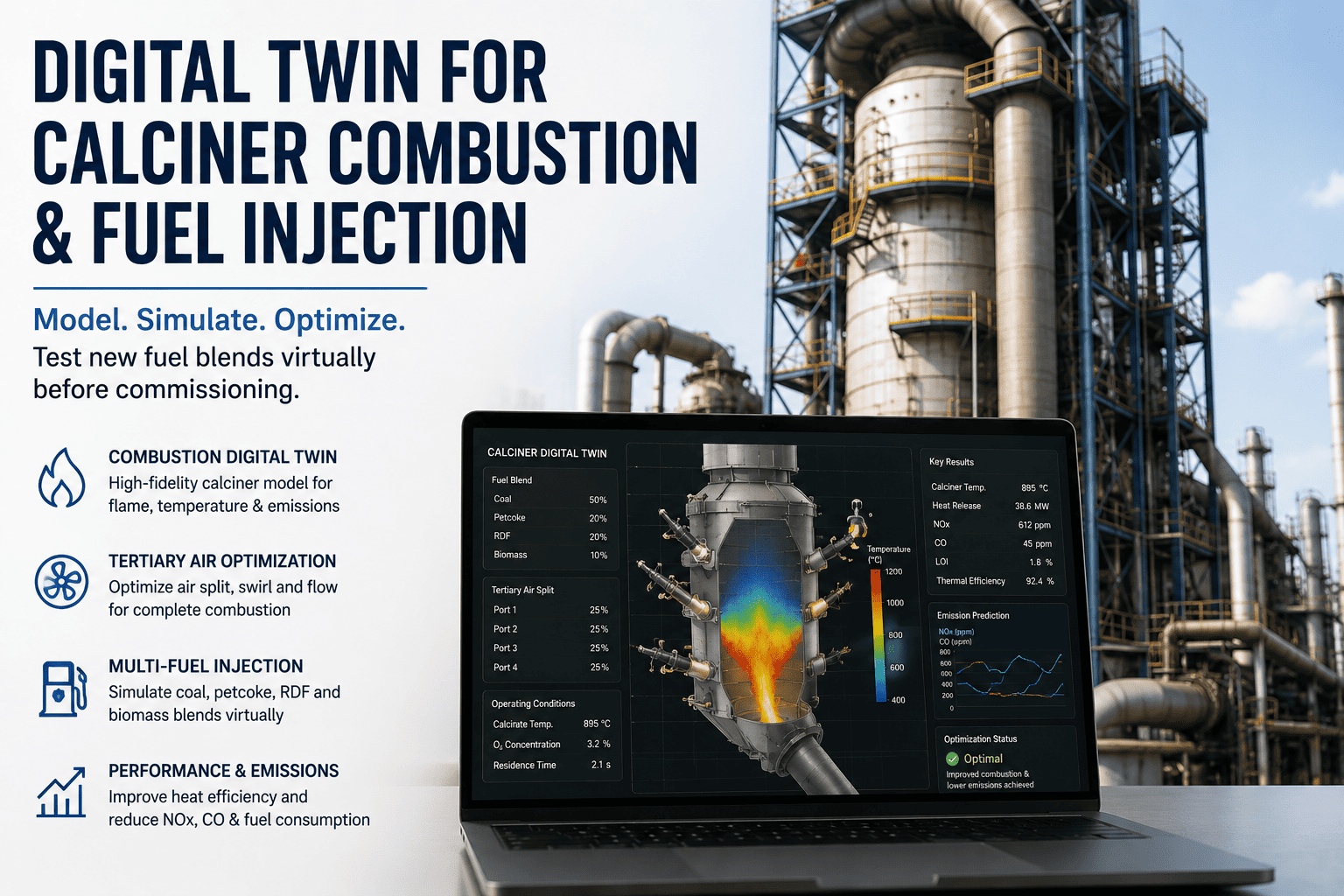
New fuel blends, higher alternative fuel rates and kiln-to-calciner firing splits, with burnout and gas chemistry predicted first.
Throughput and kiln speed
How far feed can rise before free lime, draft or cooler capacity becomes the limit, and which constraint actually binds.
Draft and air balance
ID fan, tertiary air and false air effects across the tower, including the excess air you are paying to heat.
Raw mix and stability
How a change in LSF, burnability or moisture propagates to burning zone and clinker quality before the mix is produced.
What the Pyro Twin Delivers
Moving the trial into the model changes both what you are willing to try and how quickly you learn from it.
Minutes
Per what-if run
instead of a trial shift
Zero
Production risk
upsets happen in the model
Known
Limits
the real constraint identified
Lower
Heat consumption
better settings, found safely
Frequently Asked Questions
What is a cement digital twin, in practical terms?
It is a running model of your pyroprocessing line that reproduces how the preheater, calciner, kiln and cooler behave together. It combines a physics representation of heat, mass, gas flow and clinker chemistry with AI tuned on your plant's historian. In use, it is a place to ask questions: if we change this fuel, this feed rate or this kiln speed, where does the line end up, what moves first, and what breaks before we get there.
How accurate is virtual kiln testing?
Accurate enough to make decisions with, and the calibration report tells you how accurate on your line. We validate against historical periods the model was not tuned on, including feed changes and fuel switches, and report the error on the variables you care about — burning zone, free lime, back-end temperature, oxygen and specific heat consumption. The twin is a decision tool rather than a replacement for a confirmation trial: it tells you which changes are worth trialling and which would have failed.
What plant data do you need to build it?
Historian tags for the pyro line over a reasonable period, typically a year, covering feed, fuel, kiln speed, temperatures, pressures, draft, gas analysis and cooler data, plus the equipment configuration and the lab record of clinker quality. Where alternative fuels are used, their properties matter. We can start with what is available and identify gaps as part of the build rather than waiting for a perfect data set.
How is a twin different from the expert system or APC we already run?
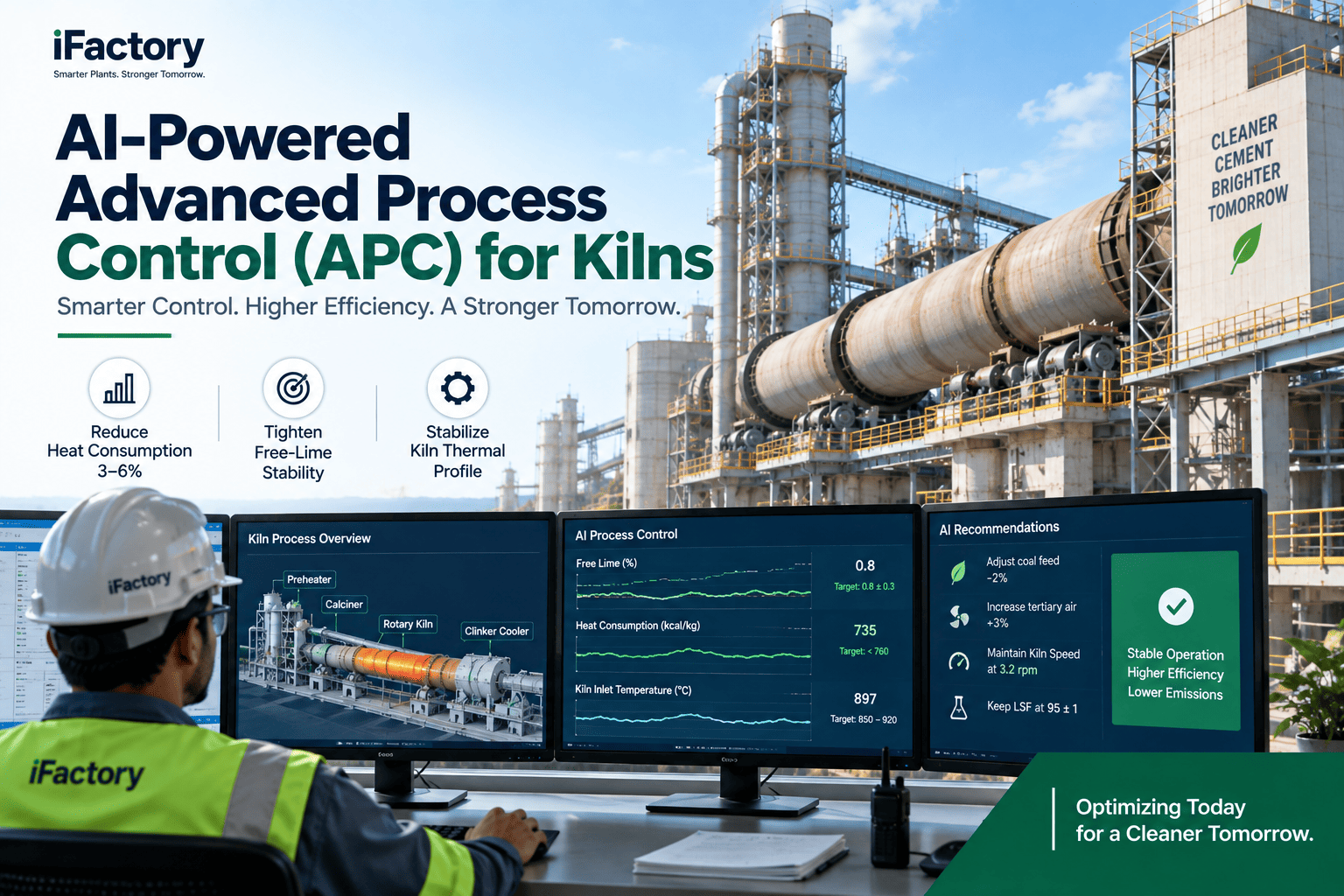
They answer different questions. An expert system or APC controls the line inside a region it knows, keeping it stable around current targets. A twin explores outside that region, which is exactly where the untested changes live. In practice they work well together: the twin identifies a better operating point and the consequences of getting there, and the control layer holds the line at it once you decide to move.
How long before we can run our first what-if?
The usual path is a scoped build on one pyro line, where we stand up the twin on your historical data, validate it against known periods, and run the first what-if on a change you already have in mind. The fastest way to see it is a demo on your own data: bring the change you have been debating and we will show what the model predicts, including the constraint that decides the answer.
Test the Change in the Model, Not on the Line.
Run Your First What-If on a Twin of Your Own Kiln
Bring the operating change you have been hesitant to make and your pyro line data. We'll build the twin, validate it against your history, and show what the change does to throughput, free lime, draft and heat consumption.