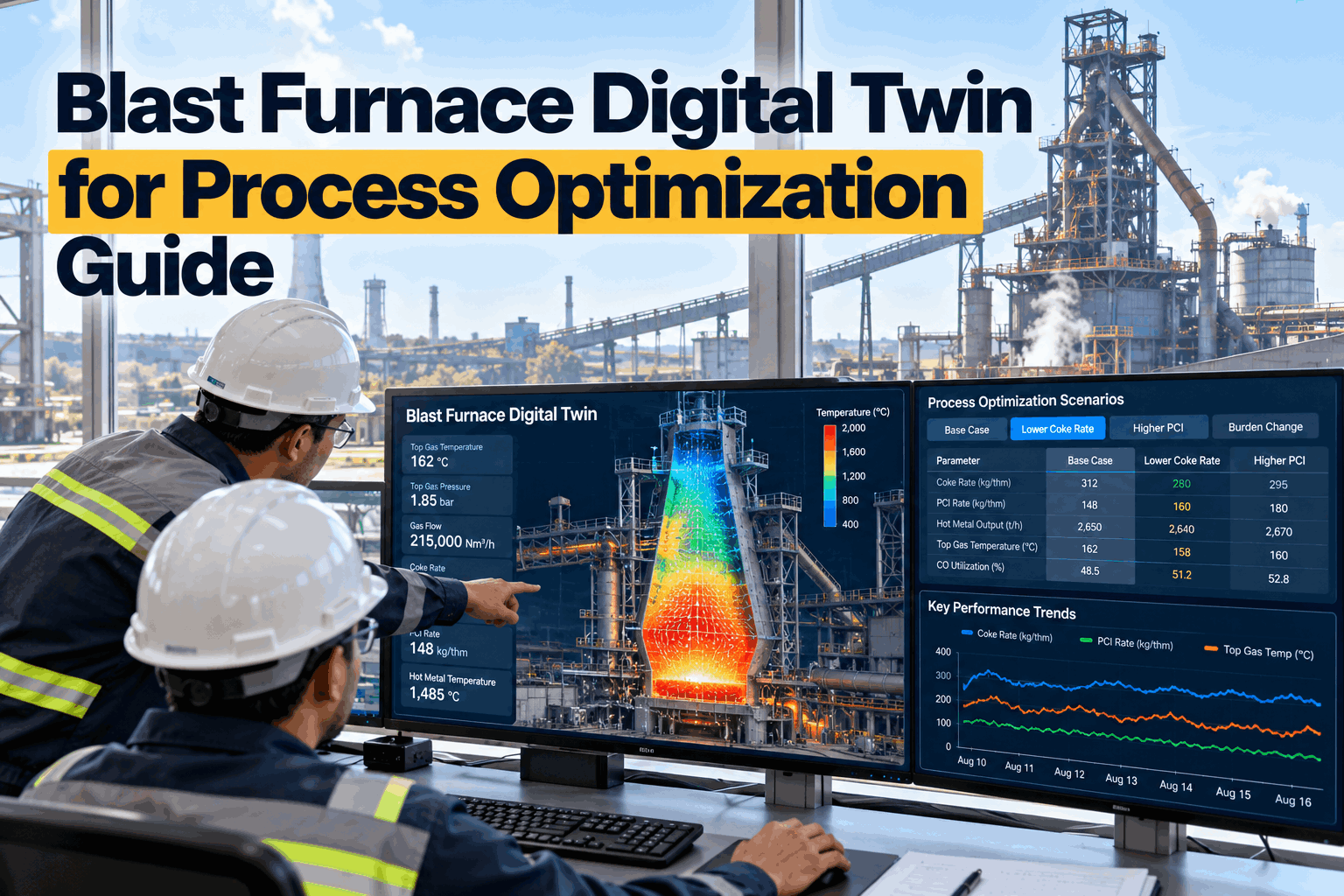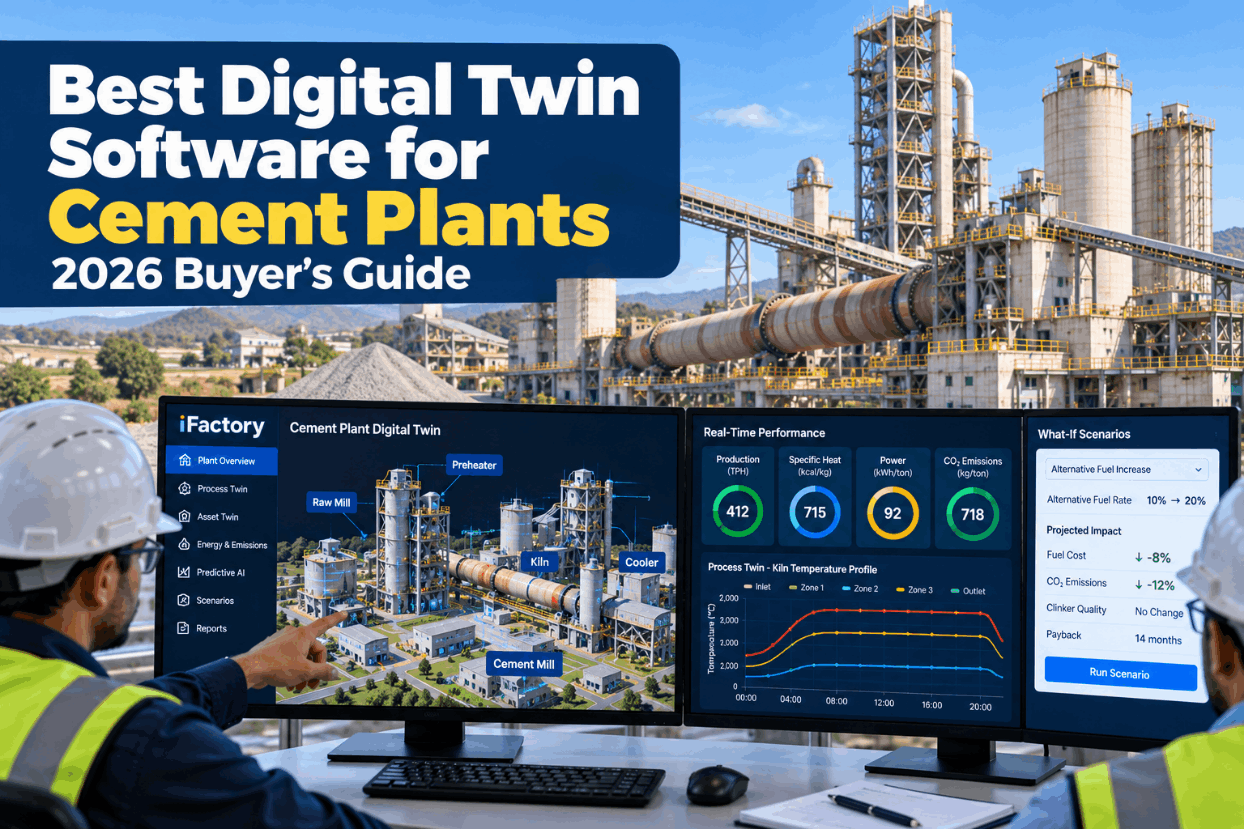
"Digital twin" covers very different products in cement. One vendor means a model of kiln chemistry that feeds advanced control, another means a health model of a mill gearbox, and a third means a fleet view across several plants or a model of a carbon capture retrofit. This buyer's guide separates those layers, notes what real vendors say on their public pages, and lists the ROI evidence to ask for before any claim reaches your board. To compare twin options for your own kiln line, book a short call.
Compare Cement Digital Twins Layer by Layer, From Kiln to Plant Network
Process, asset and network twins answer different questions and need different data. Know which layer you are buying before you compare prices. iFactory's Digital Twin and AI Platform is one option, delivered on a turnkey on-site server in 6 to 12 weeks.
Three Kinds of Twin, Three Different Jobs
Each twin layer runs on different data, answers different questions and serves a different team. A process twin is judged on how well it predicts clinker quality and fuel use. An asset twin is judged on warning lead time. A network twin is judged on whether plants can be compared fairly. A carbon capture twin is a fourth case. Map your own questions to a layer with our support team.
What to Look For in a Kiln and Calciner Twin
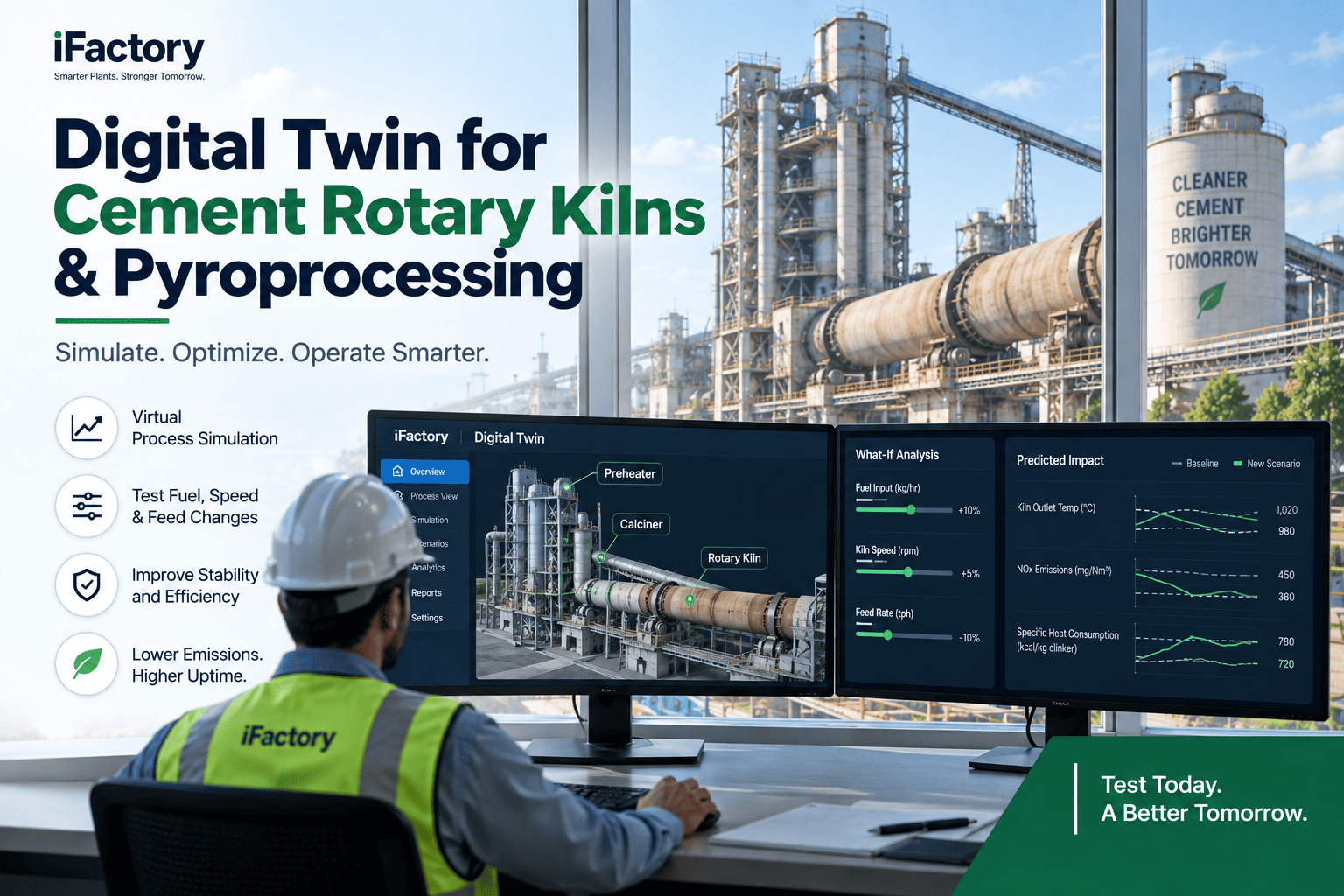
Process twins differ most in how they are built and what they connect to. ABB, for example, describes the model inside its Expert Optimizer control package as effectively a digital twin of the plant or process. Fuller Technologies lists AI soft sensors, built with Imubit, that predict free lime and Blaine from plant data. Test any process twin against your own lab results in a live session.
Asset Twins for Mills, Fans and the Kiln Drive
An asset twin follows the condition of one machine over time and compares it with its own healthy behaviour. In cement, the hardest assets to cover are the big mechanical systems around the kiln. Fuller's online kiln monitoring, for example, lists shell ovality, live ring migration, roller deflection and girth gear condition. Ask each vendor which of these signals their twin actually uses. Our support team can check your signal coverage.
From One Plant to a Fleet of Plants
A network twin is only as good as its common definitions. Before comparing plants, agree how each one counts a stop, a tonne of clinker and a kilowatt-hour. Public examples show the pattern: OYAK Cement described rolling out AVEVA PI System across seven integrated and three grinding plants, and ABB and Fuller both offer tools that pull data from several sites. Plan a shared data model with our team in a working session.
- Deep detail on one kiln line and its mills
- Local tags and local naming are fine
- Value shows up as better running of that plant
- Owned by the plant's process and reliability teams
- Same KPIs and definitions at every site
- Needs a shared asset and tag naming model
- Value shows up as best practice copied across plants
- Owned by group operations, with plant input
Ask the Twin a Question Before You Buy It
A good twin answers plant questions in plain language and shows its working. iFactory's Digital Twin and AI Platform joins process and asset layers, so a question about a mill can take the kiln into account.
Carbon Capture Retrofits Need a Twin of Their Own
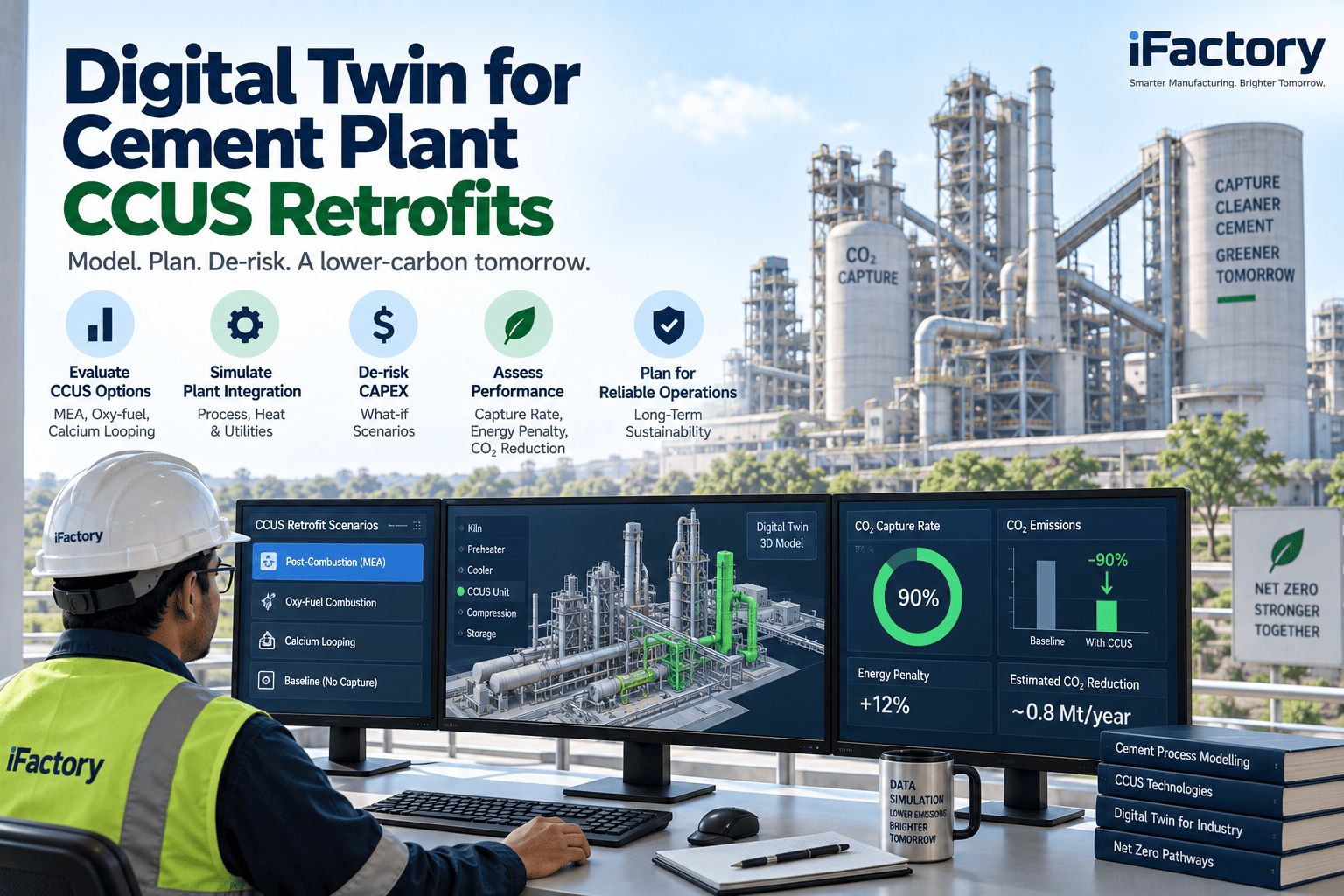
Capture at cement plants is now operating at industrial scale. A capture plant changes the kiln's gas path and adds a large heat demand, because amine solvents need heat to release the captured CO₂. A twin used here has to model the kiln and the capture plant together. Siemens says it has been a pioneer in modelling tools for carbon capture with gPROMS, and AspenTech has long offered amine solvent models in Aspen Plus. Our support team can explain where plant data fits in.
Vendor Notes by Twin Layer
These notes come from each vendor's own public pages and case studies, checked in October 2026. They are not rankings. "Ask" means we found nothing to cite for that layer, not that the vendor cannot do it. Confirm every cell in your RFP and ask for a demonstration on cement data. See iFactory's layers side by side in a twin demo.
Evidence to Request Before You Believe an ROI Claim
Twin vendors publish impressive percentages, and most cannot be checked from outside. Treat any claim as a question until the vendor shows how it was measured. Tick off each item as the evidence arrives, and give more weight to the vendors who answer them all. Our support team will answer the same list for iFactory.
Four Steps From Longlist to Signed Twin
Buy the layer that pays first, prove it on one kiln line, then extend. A network or capture twin is easier to justify once process and asset layers are trusted at one site. Plan the order with our team in a short planning call.
Process and Asset Layers on One Server at the Plant
iFactory delivers its Digital Twin and AI Platform as a turnkey package. A pre-configured NVIDIA AI server ships racked and ready, with the platform pre-loaded and your kiln, mill and fan tags mapped during setup. You rack it, plug in power and Ethernet, and the AI is live. Plant data stays on site. Ask our support team for a turnkey quote.
- Pre-configured NVIDIA AI server, racked and ready
- Links to DCS, historian and lab system
- Process twin of kiln, calciner and cooler
- Asset models for mills, fans and kiln drive
- Plain-language questions to the twin
- Engineer and operator training
- 24×7 remote monitoring of models and hardware
Server installed, data links made, tag names and lab data mapped.
Twin trained on your history and checked against lab results and failures.
Twin opened to process and reliability teams, with training and review.
A Cement Plant AI Digital Twin That Starts at the Kiln
iFactory is one option on your shortlist. Here is how it lines up with the layers above. See it working in a 30-minute demo.
What Cement Teams Ask When Buying a Digital Twin
Buy the Layer That Pays First
Start with a process or asset twin on one kiln line, judge it on evidence, then extend to more plants and to capture when the time comes. iFactory delivers on a turnkey on-site server in 6 to 12 weeks.