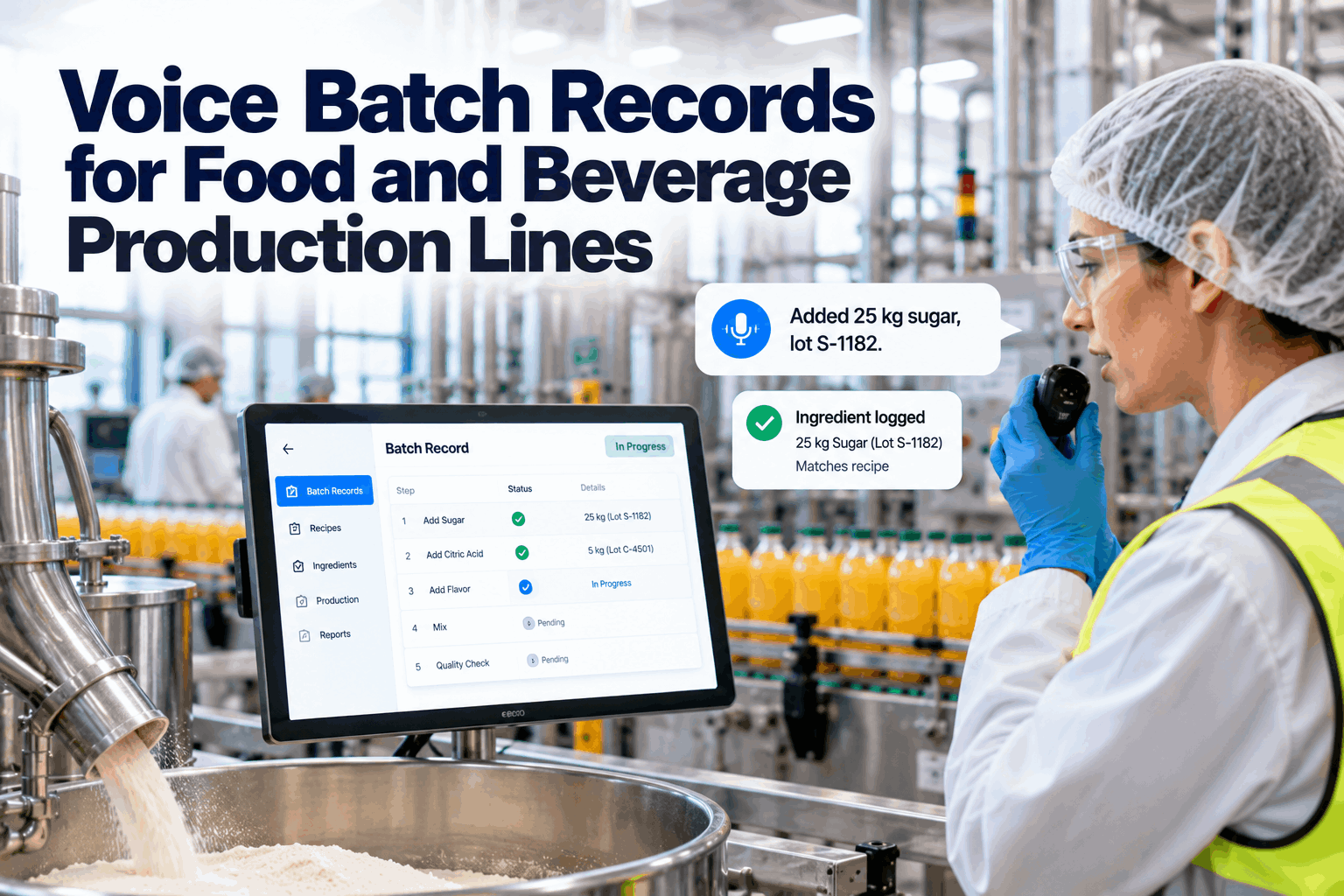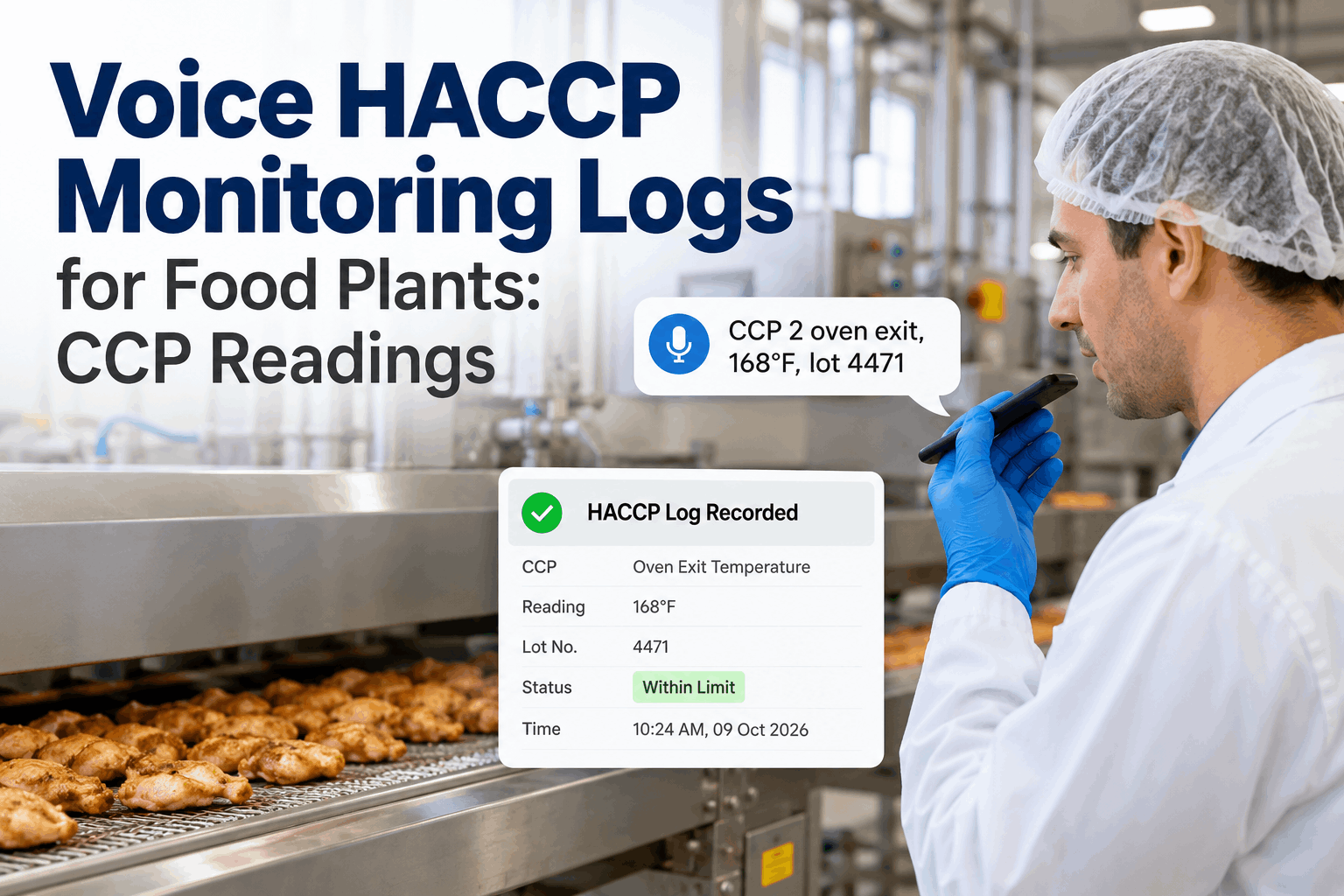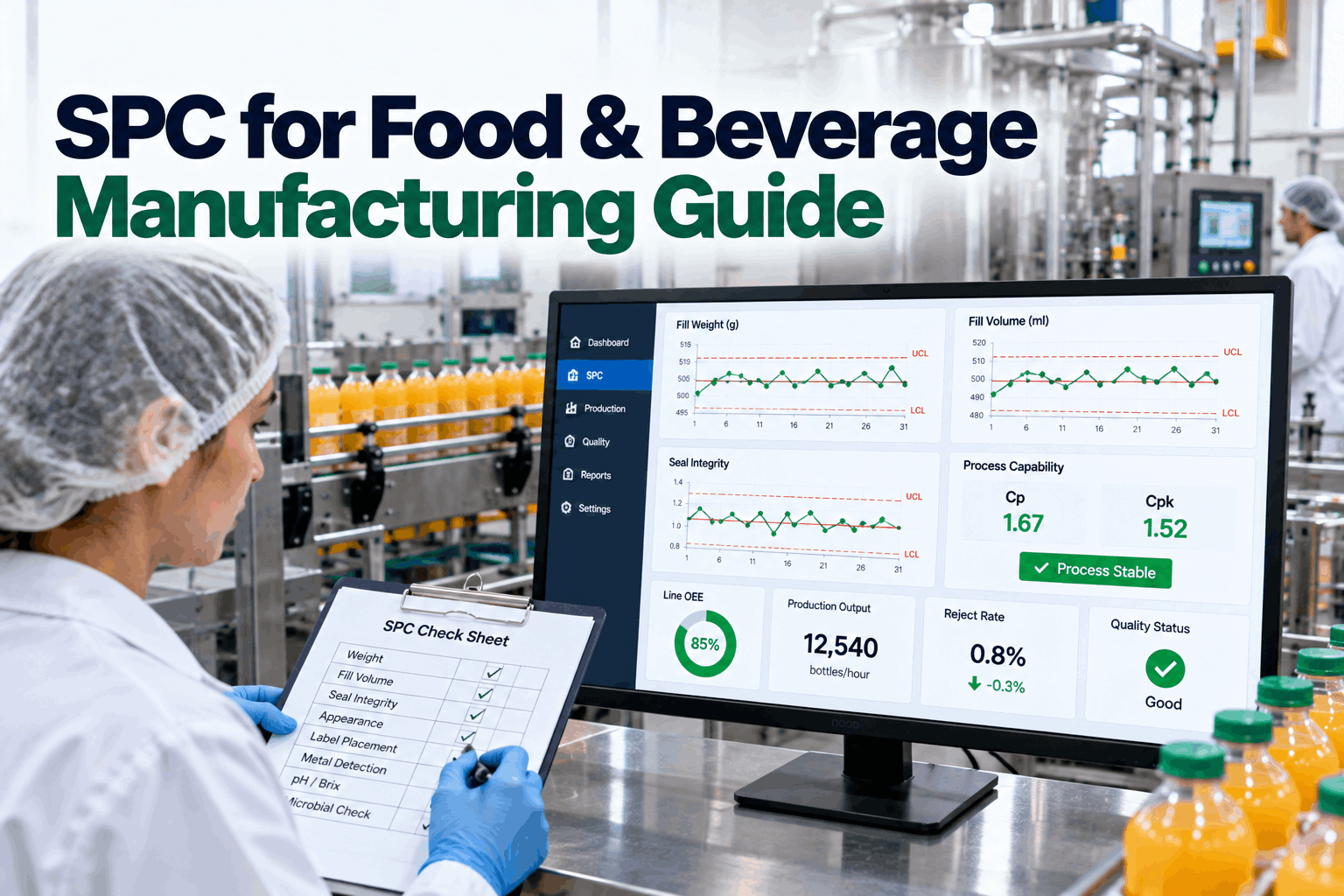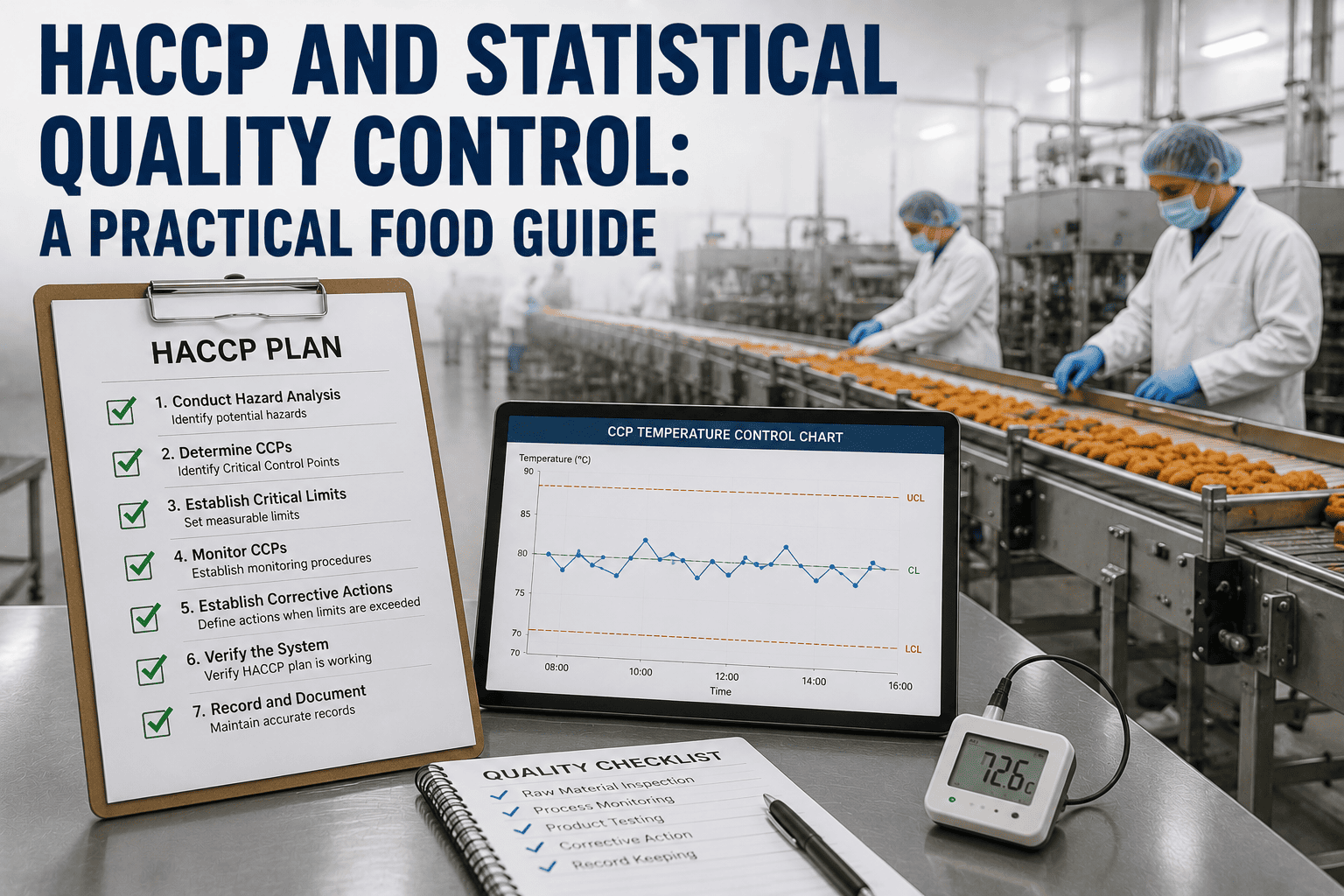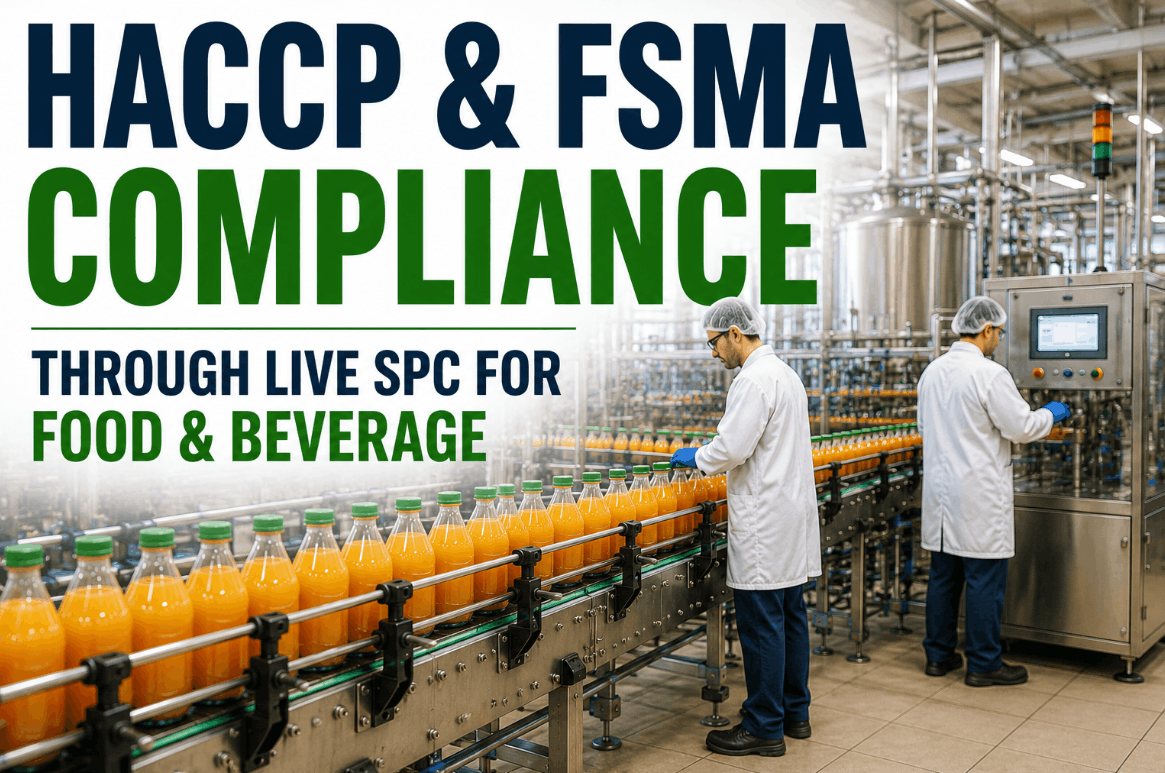
Food and beverage manufacturers live under a compliance regime that never sleeps. Your HACCP plan demands continuous CCP monitoring, your FSMA food safety plan requires documented preventive controls for every lot, and your next FDA inspection could arrive with 72 hours' notice. Yet most facilities are still running their critical control points on manual temperature logs, clipboard check sheets, and Excel files assembled the night before an audit. iFactory changes that architecture entirely. By applying live Statistical Process Control directly to your CCPs—pasteurization temperatures, cook hold times, pH levels, water activity, metal detection thresholds—iFactory auto-builds your HACCP monitoring records and FSMA corrective action evidence per lot, in real time, the moment each data point is captured. Book a Demo to see how your compliance posture transforms when SPC feeds your audit pack automatically.
Why Manual CCP Monitoring Is a Compliance Liability in 2026
HACCP and FSMA are not documentation exercises—they are active monitoring obligations. FDA's Preventive Controls for Human Food rule requires that every identified process control have defined critical limits, a real-time monitoring method, documented corrective actions, and verification records that are legible, attributable, and retained for at least two years. The moment an inspector finds a temperature log with a blank cell, or a corrective action record dated after the deviation, your facility is exposed.
The deeper problem is velocity. A pasteurizer running at 800 units per hour generates a deviation risk every few seconds. A manual operator writing temperatures every 15 minutes on a clipboard is not monitoring a CCP—they are sampling it with enormous gaps. iFactory's live SPC engine samples every tagged sensor continuously, applies your defined critical limits and control chart rules (Western Electric, Nelson, or custom), and fires a deviation alert within seconds of a breach—not at the end of the shift.
How iFactory Turns Live SPC Into HACCP and FSMA Evidence
Most SPC tools chart data. iFactory goes a step further—it turns every SPC signal into a structured compliance artifact. Here is how the platform closes the loop from sensor reading to audit-ready documentation, automatically, for every production lot. Book a Demo to walk through the workflow with an iFactory food safety engineer.
Live CCP Tag Ingestion
iFactory's edge connectors pull continuous sensor readings from your pasteurizers, retorts, chillers, and packaging lines via OPC-UA or direct PLC integration. Every tag is mapped to a specific CCP in your digital HACCP plan.
Real-Time Control Chart Execution
The platform applies your defined critical limits and SPC run rules against the live data stream. Xbar-R, individual-moving range, and attribute charts run continuously—not on a per-batch sample, but on every data point as it arrives.
Instant Deviation Alert & Corrective Action Trigger
When a CCP breaches its critical limit, iFactory fires a mobile alert to the line supervisor and quality manager within seconds. The alert includes the specific parameter, the magnitude of the deviation, and a pre-configured corrective action checklist tied to that CCP.
Lot-Stamped FSMA Record Auto-Build
Every SPC observation, deviation event, and corrective action response is automatically written to a structured FSMA record linked to the active lot number. The record captures who, what, when, and why—meeting FDA's attributability and reviewability standards with no manual data entry.
One-Click Audit Pack Export
When an auditor or FDA investigator requests documentation, iFactory generates a complete, date-ranged audit package for any lot or CCP—including control charts, deviation logs, corrective action records, and verification sign-offs—in a single exportable file.
CCP Monitoring Coverage: Traditional vs. iFactory Live SPC
The gap between manual monitoring and continuous SPC is not incremental—it is categorical. This comparison illustrates the difference across the metrics that matter most to a Food Safety Manager facing an FDA inspection or a third-party GFSI audit.
| Monitoring Dimension | Manual / Clipboard-Based | iFactory Live SPC |
|---|---|---|
| CCP Sampling Frequency | Every 15–30 minutes by operator | Continuous — every sensor reading, every second |
| Deviation Detection Speed | End of shift or manual walkthrough | Within seconds of threshold breach |
| Corrective Action Trigger | Verbal notification; radio call to supervisor | Auto-dispatched mobile alert with CA checklist |
| FSMA Record Format | Paper binders; retroactive Excel assembly | Timestamped digital record, lot-linked, immutable |
| Audit Pack Assembly Time | Hours to days of manual compilation | One-click export for any date range or lot |
| Lot-Level Traceability | Fragmented across shift logs and ERP | Unified per-lot SPC record from intake to pack-out |
| FDA 21 CFR Part 11 Readiness | Not applicable; paper records | Attributable, reviewable, and accessible electronic records |
Critical Control Points iFactory Monitors Across Food & Beverage Operations
iFactory's platform is configured to the specific CCP profile of your facility and product category. The system supports any sensor-based parameter that can be expressed as a numerical tag—covering the full range of biological, chemical, and physical hazard controls required under HACCP and FSMA. Book a Demo to see how iFactory maps to your specific HACCP plan.
Thermal Process CCPs
- Pasteurization hold temperature & time
- Retort process temperature profile
- Cook-chill internal product temperature
- Cold storage and transport chain temps
Chemical Control CCPs
- pH monitoring for acidified foods
- Water activity (Aw) for shelf-stable products
- Sanitizer concentration at CIP endpoints
- Chlorine residuals in process water
Physical Hazard CCPs
- Metal detector sensitivity & rejection confirmation
- X-ray system rejection gate verification
- Checkweigher UCL/LCL compliance
- Screen / filter integrity differential pressure
Process Control Parameters
- Filling line pressure & flow rate
- Packaging seal temperature & dwell time
- Headspace gas composition (MAP lines)
- Brix / sugar content at blending CCP
FSMA Record Architecture: What Gets Built Per Lot
FSMA's Preventive Controls rule requires that monitoring records be created contemporaneously with the monitoring activity, be accurate, and be retained for at least two years in accessible form. iFactory structures every lot record to meet these requirements without any action from your quality team. Book a Demo to review a sample FSMA lot record from iFactory's platform.
| Record Component | FSMA / HACCP Requirement | How iFactory Builds It |
|---|---|---|
| CCP Monitoring Log | Contemporaneous, attributable readings at defined frequency | Continuous sensor stream written to lot record with timestamps and operator ID |
| Critical Limit Deviation Record | Document each instance where CL was breached | Auto-captured at moment of breach; includes parameter value, time, and duration |
| Corrective Action Record | Describe action taken, disposition of affected product, and person responsible | CA checklist response digitally captured, signed, and linked to the deviation event |
| Verification Records | Evidence that monitoring activities are being performed as scheduled | System-generated verification reports showing monitoring uptime and calibration status |
| Supplier / Ingredient Records | Traceability of incoming materials per FSMA Traceability Rule | Lot record links incoming ingredient lot codes to finished goods lot ID |
An FDA warning letter citing inadequate CCP monitoring records can trigger mandatory facility re-inspection, a consent decree, or voluntary recall coordination—costs that routinely exceed $500,000 before legal and remediation fees are considered. More immediately, a single import alert or retail partner audit failure from missing FSMA documentation can suspend a production line for weeks. iFactory eliminates this exposure by ensuring that every lot leaves your facility with a complete, defensible FSMA evidence package already assembled—not scrambled together the week of an audit.
Expert Review: What Food Safety Managers Are Saying
"Before iFactory, our HACCP monitoring records were a liability. Operators were filling in temperatures at the end of a four-hour window, and if FDA had walked in, we could not have demonstrated contemporaneous monitoring for half our CCPs. Since connecting iFactory's live SPC to our pasteurizers and pH dosing lines, every reading is time-stamped and lot-linked the second it's captured. Our last third-party GFSI audit took two days off the documentation review because the auditor could pull everything from a single export. The shift from reactive to continuous compliance has been significant for our team." — Quality Systems Director, Regional Beverage Manufacturer
Conclusion: Continuous SPC Is the Foundation of Modern HACCP Compliance
HACCP and FSMA are not static paperwork exercises—they are living monitoring obligations that require continuous data capture, immediate deviation response, and lot-traceable records that can survive FDA scrutiny. Manual systems built on clipboards, spreadsheets, and end-of-shift log compilation cannot meet that standard reliably or defensibly.
iFactory AI provides food and beverage manufacturers with the infrastructure to run HACCP monitoring the way the regulation actually requires: continuously, at every CCP, with automated corrective action workflows and per-lot FSMA records that are assembled in real time—not the night before an audit. The result is a compliance posture that is always current, always documentable, and never dependent on a single operator's vigilance.
Frequently Asked Questions
Does iFactory replace our existing HACCP plan, or does it integrate with it?
iFactory integrates directly with your existing HACCP plan. Your CCPs, critical limits, and corrective action procedures are configured inside the platform so the system monitors and documents exactly what your approved food safety plan requires.
How quickly does iFactory alert us when a CCP deviation occurs?
Alerts are dispatched within seconds of a threshold breach via mobile push notification and dashboard flag—well within any production window where corrective action can prevent product loss or safety risk.
Are the FSMA records iFactory generates acceptable for FDA inspections?
Yes. iFactory's electronic records are attributable, timestamped at the point of capture, and retained in a reviewable format—meeting FDA's requirements for electronic monitoring records under 21 CFR Part 117.
Can iFactory monitor CCPs on legacy equipment that lacks modern PLCs?
Yes. For legacy lines without networked sensors, iFactory provides IoT edge kits that retrofit temperature, pH, and pressure sensing directly to older equipment, streaming data to the platform over Wi-Fi or cellular.
How long does it take to go live with iFactory's CCP monitoring on an existing food line?
Most facilities complete initial CCP configuration and begin generating live lot records within two to four weeks, depending on the number of lines and sensor integration complexity.