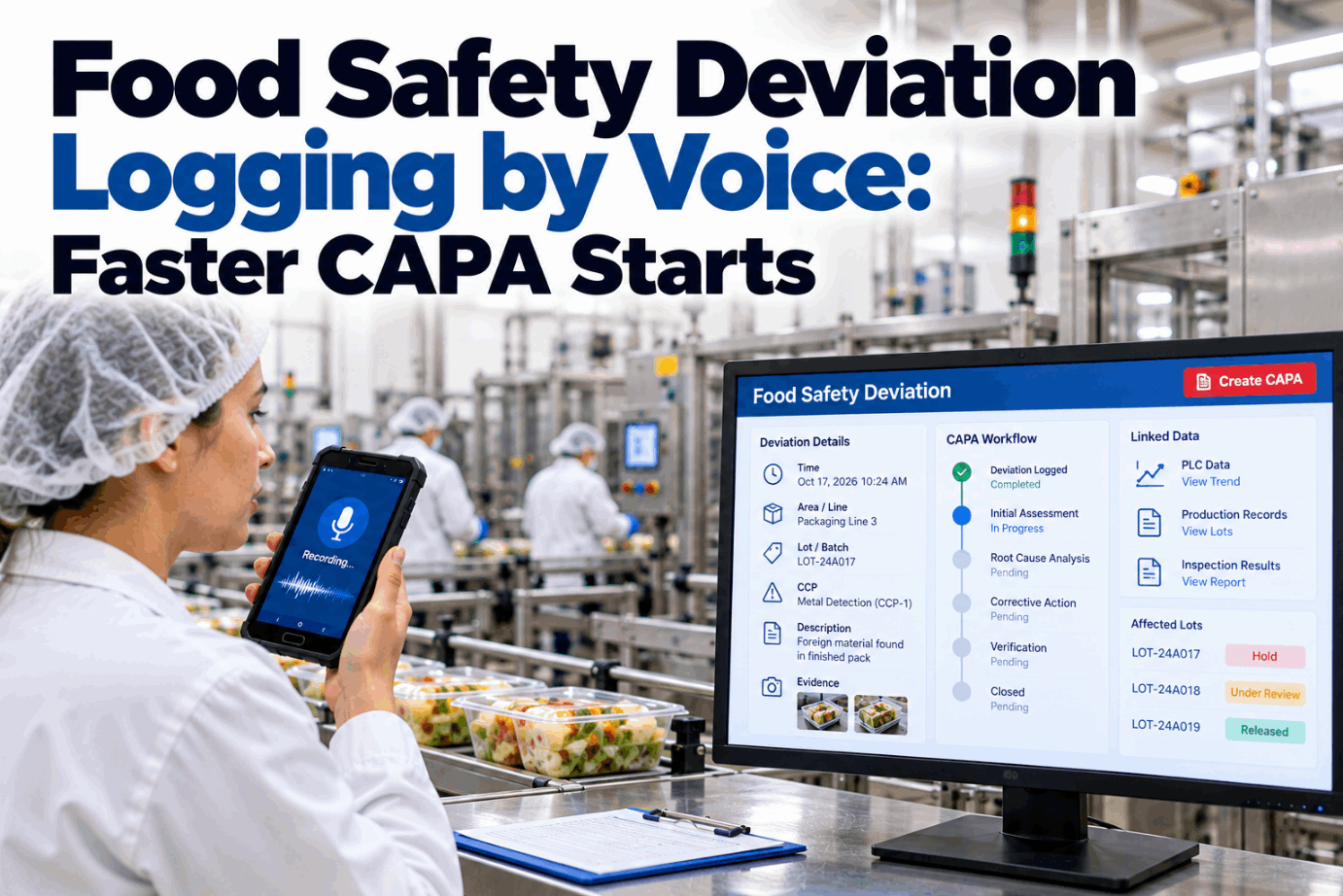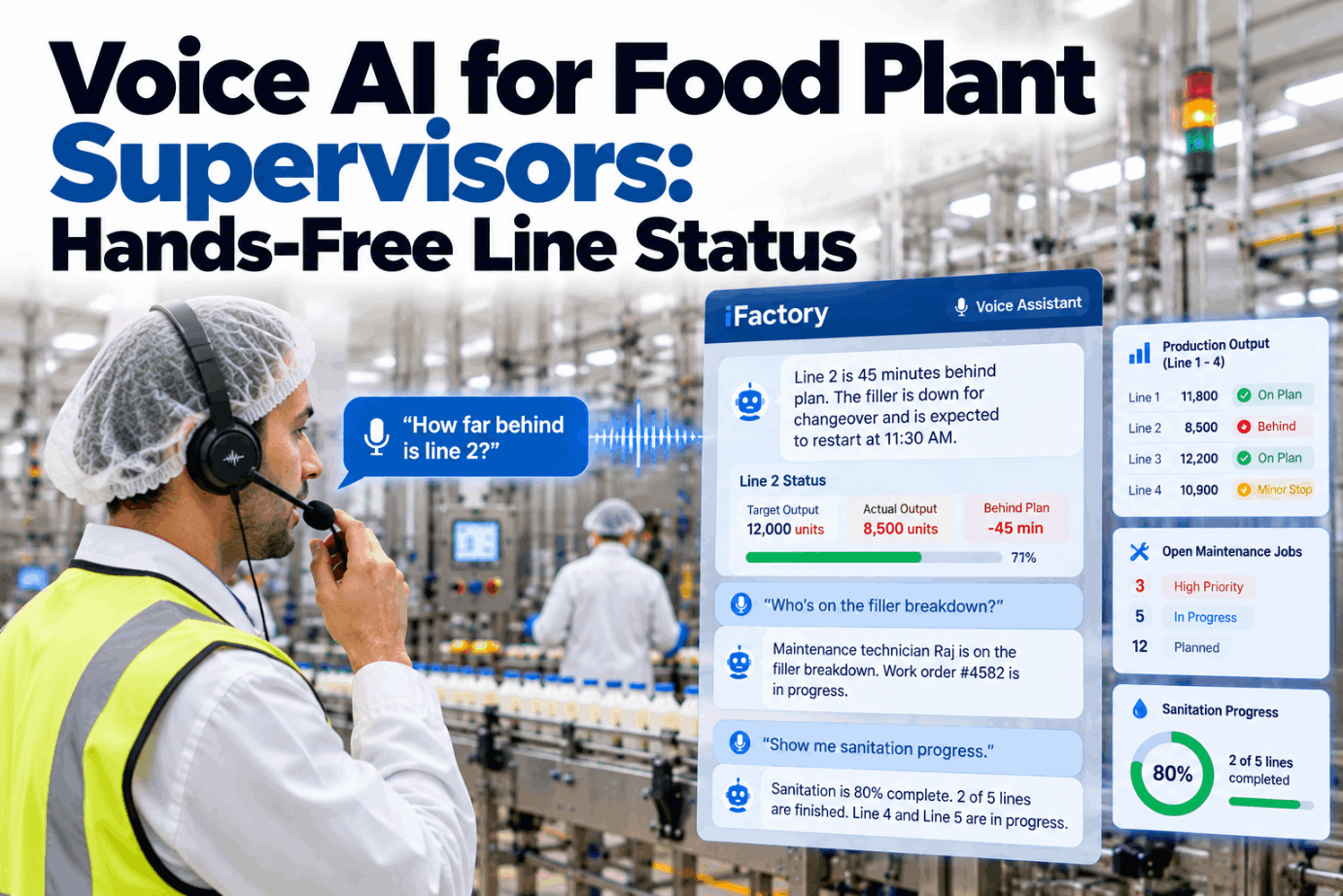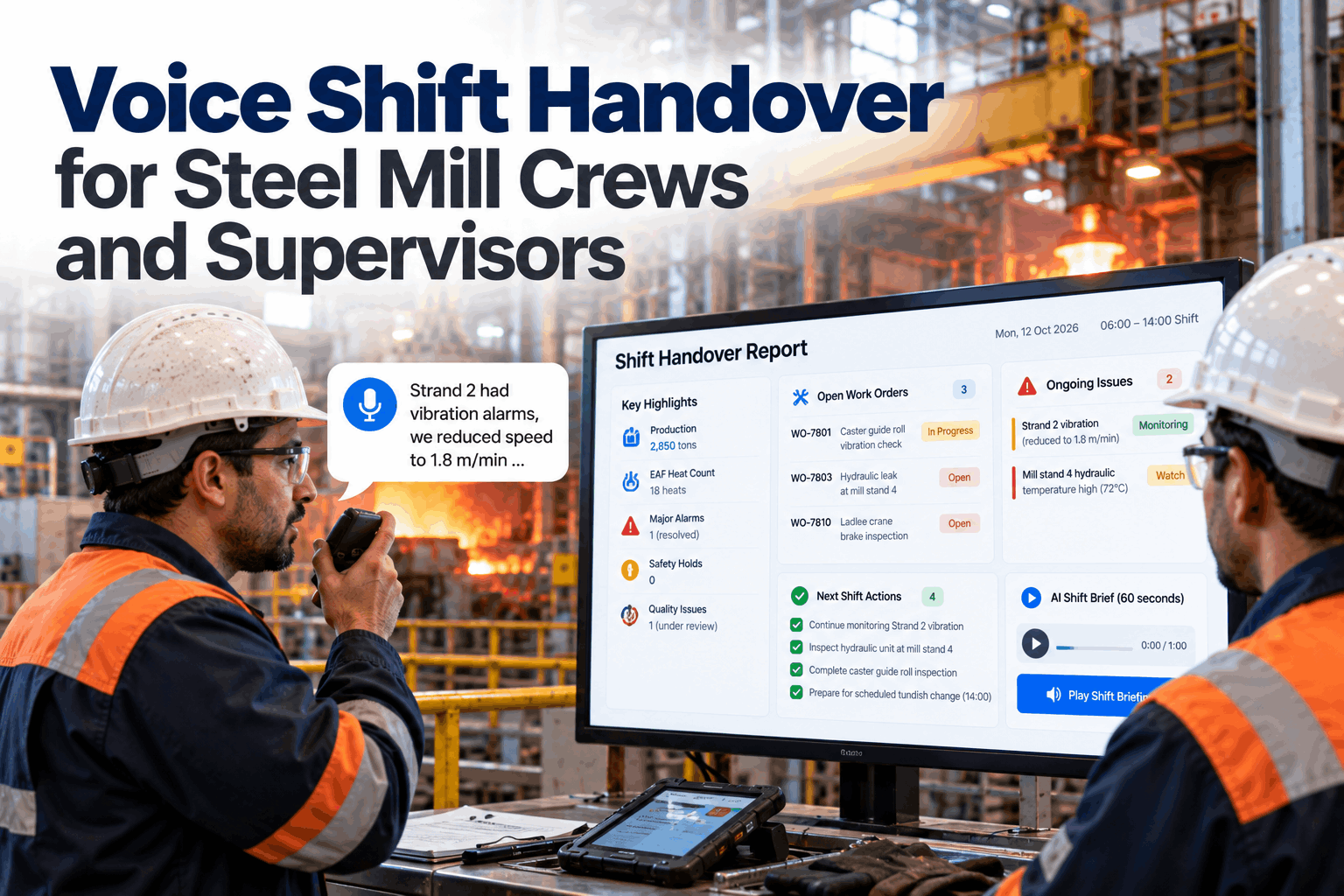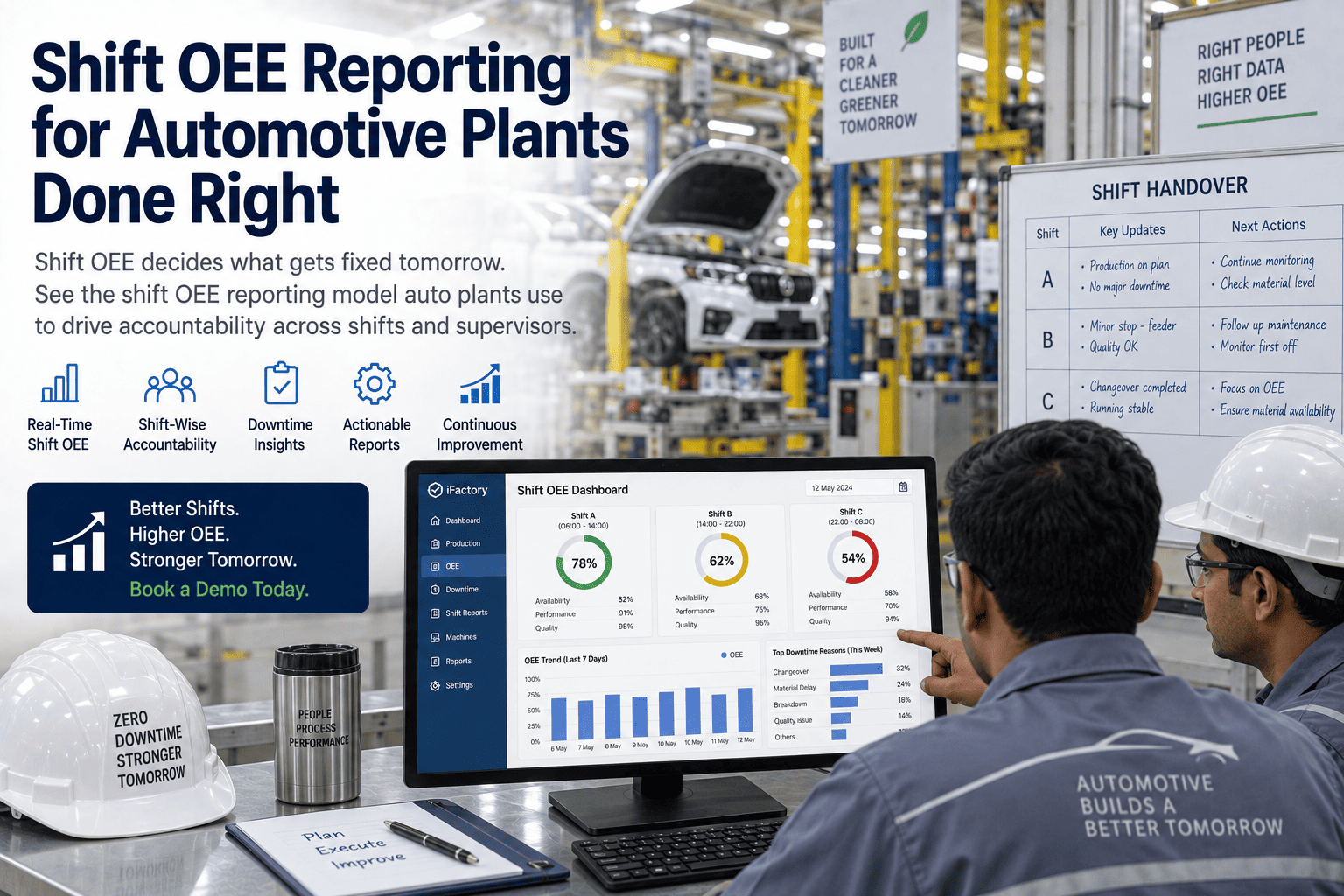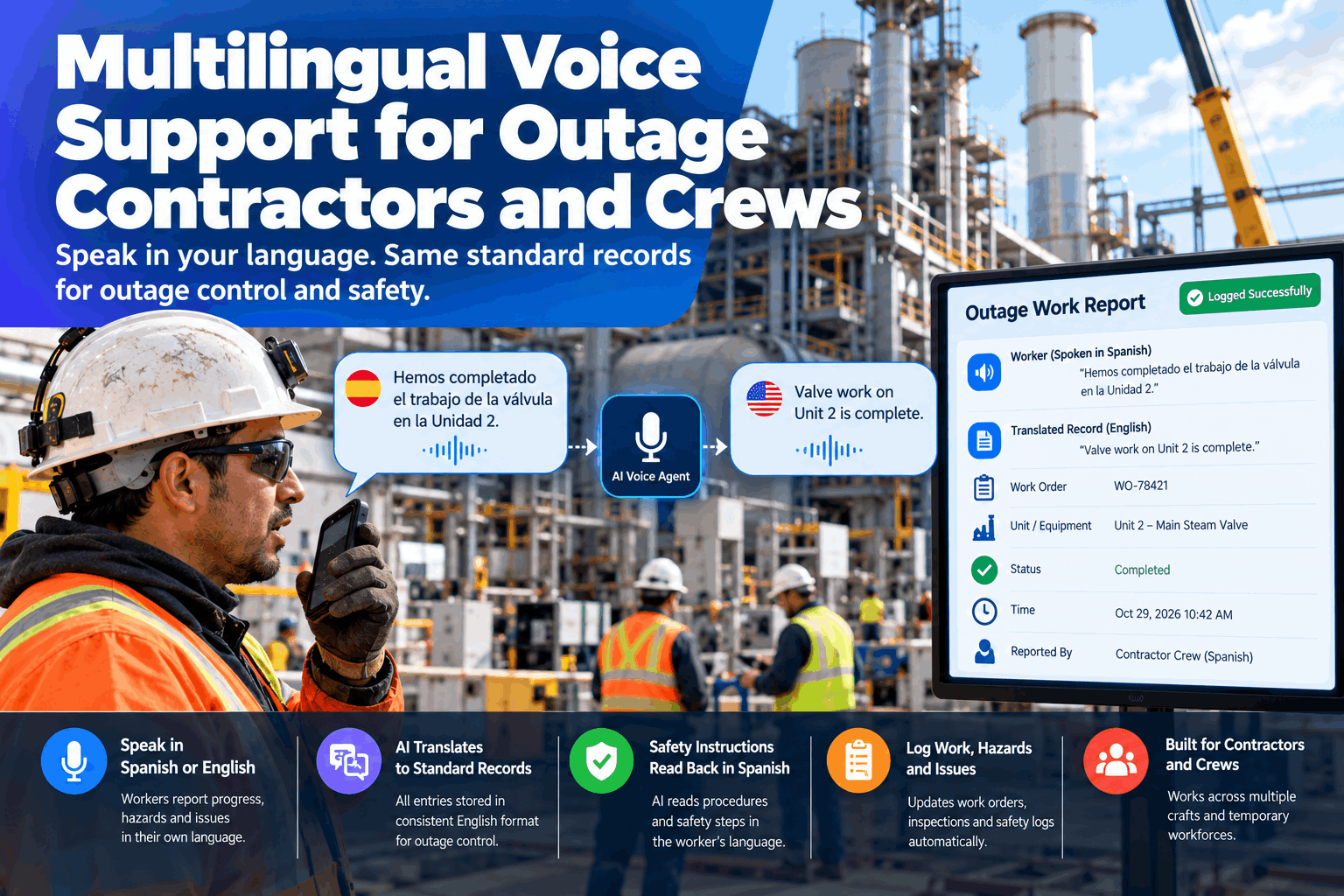
An outage can bring hundreds of contractors onto site in a few days, and many of them work best in Spanish. When progress reports, hazard warnings and handover notes depend on a few bilingual leads relaying what they hear, details get delayed, softened or lost. A multilingual voice agent lets each worker speak in their own language and gives outage control one standard English record, with safety instructions read back in Spanish. This page shows where it fits in the outage day, a worked example and how to plan it. Outage managers can see it on their own crews in a multilingual voice walk-through.
Multilingual Voice Support for Outage Contractors and Crews
Let workers report progress and hazards in Spanish or English, get safety instructions read back in their language and see every report logged in one standard format, on a turnkey on-prem server.
- Speak in Spanish or English, no forms to fill
- One standard English record for outage control
- Safety instructions read back in the worker's language
Why Language Gaps Slow Down an Outage
Information passes through too many hands.
A crew member sees a problem, tells a bilingual lead, who tells a supervisor, who updates the schedule. Each step costs time and can change the message. The result is late status, hazards reported after the shift and records in a different style from every crew. Our outage workforce specialists can map where your reports slow down.
Relay by a few leads
Bilingual leads become the bottleneck.
Late hazard reports
Warnings wait until someone can translate.
Mixed formats
Every crew writes status differently.
Missed instructions
Briefings understood in part.
Where Voice Support Fits in the Outage Day
Five moments where language matters most.
The table is the template for a language support plan. Each line names a moment in the outage day, what the worker does and what outage control receives. Start with the moments where a missed word costs the most, which are usually hazards and safety instructions. See it built around your crews in a working session.
Safety instructions, permit conditions and warnings should be read from text your safety team has approved in each language, not improvised. The agent reads them back and records the confirmation, and anything unclear goes to a person.
A Worked Example: Relay Time Given Back to Supervisors
Count the hours crews spend passing messages.
Take an outage with 300 contractor workers, 90 of them (30 percent) working mainly in Spanish. Six bilingual leads spend about 45 minutes per shift relaying reports, across 2 shifts a day for a 28-day outage. If voice reports replace most of that relay, the hours go back to supervision. All figures are illustrative.
Hear Your Crews' Reports in One Format
Bring your language mix and your current reporting method, and we show how a Spanish and English report would reach outage control.
Three Moments Where It Helps Most
Start where a missed word costs the most.
You do not need to cover every conversation on day one. Many plants begin with the briefing and the hazard report, then add progress and handover once crews are comfortable speaking to the agent.
Safety briefing
Approved instructions read in the worker's language, with confirmation recorded.
Progress and hazards
Status and hazards spoken once, logged in a standard format.
Handover
Spoken notes turned into a written handover for the next crew.
Ask in Your Language, Answer in Both
Workers speak naturally and outage control reads one record.
The agent confirms what it understood before it logs anything, and outage control can ask the same record questions in English. Watch it on your own scenarios in a live walk-through.
From Spoken Report to Standard Record
Each report follows the same short path.
Every report goes through the same five steps, and anything the agent is unsure about is handed to a person instead of guessed. Plan the routine with our implementation team.
Speak
The worker reports in Spanish or English.
Transcribe
Speech becomes text in the same language.
Standardize
Text becomes one English record format.
Confirm
The agent reads it back to the worker.
Route
Hazards go to safety, status to the schedule.
Multilingual Outage Support Best Practices
Accuracy and trust matter more than coverage.
These are common gaps when plants add language support. A short readiness review can catch them before the outage starts.
What works
- Approved safety wording in each language
- Read-back before anything is logged
- Hazard reports routed straight to safety
- A trial with real crews before the outage
What fails
- Generic translation for safety instructions
- No confirmation step for the worker
- Relying on one or two bilingual leads
- Introducing it on the first day of the outage
How iFactory Runs the Multilingual Voice Agent
Speech, records and safety read-back on one server.
iFactory runs the voice agent on your on-prem server, links records to your outage schedule and work orders, and sends hazards to your safety team. Language lists, approved safety wording and routing rules are set with you before the pilot. Fit questions go to our solutions team.
Multilingual voice
Speech in the worker's language.
Standard records
One English format for outage control.
Hazard routing
Reports sent to the safety desk.
Safety read-back
Instructions confirmed and recorded.
Outage schedule link
Status and delays land on the job.
On-prem
Voice and safety data stay in the plant.
The figures and exchanges on this page are illustrative. Language coverage, accuracy and results depend on your crews, site noise, equipment and practices, and we test them with your workers during the pilot.
Turnkey AI: Delivered, Connected and Live in 6–12 Weeks
You do not build this. It arrives ready.
iFactory ships as a pre-configured NVIDIA AI server with the software pre-loaded, racked and ready. Rack it, plug in power and Ethernet, and the AI is live on your network. Our team handles cabling, network setup, PLC, SCADA, DCS and CMMS integration, crew training and 24×7 remote monitoring. Data stays on your network. For an implementation guide and a quote matched to your outage plans, request a turnkey quote.
Ship, network and set languages
Server installed. Language list, safety wording and routing agreed.
Setup and crew pilot
Voice agent configured. Live pilot runs with a few crews.
Go-live and review
Roll-out across contractors. Leads trained. Reports reviewed with outage control.
Frequently Asked Questions
What does multilingual voice support for outage contractors do?
It lets workers speak progress updates, hazards and handover notes in Spanish or English, turns each into one standard English record and reads safety instructions back in the worker's language.
Which languages are supported?
This page covers Spanish and English. If your crews speak other languages, raise them during scoping and we will confirm what is available and test it with your workers.
How do you handle accuracy and safety-critical wording?
The agent reads back what it understood before logging it, flags low-confidence reports for a person to review and reads safety instructions from text your team has approved in each language.
Does it replace bilingual leads?
No. It reduces the time they spend relaying routine reports so they can supervise, and they remain the people who resolve unclear or sensitive cases.
Is there a template for a language support plan?
Yes. The five-moment table on this page is the template, and we complete it with your crews, languages and approved safety wording in a working session.
What are the best practices for plant managers?
Start with briefings and hazard reports, use approved wording for safety content, confirm every report with a read-back and trial it with real crews before the outage starts.
What does it cost and what is the return?
Cost depends on the number of sites, languages and integrations, so we issue a turnkey quote after a short scoping call. The return comes from less relay time and faster hazard reporting, and the pilot measures both on your crews.
How do we start?
Start with a short session on your language mix and reporting method. A 6-week pilot then connects your records, agrees the wording and runs the voice agent with a few crews. To plan it, contact our team.
Give Every Crew a Voice in One Format
In thirty minutes we take your language mix and reporting method and show how Spanish and English reports would reach outage control. You keep the plan either way.
- 1Contractor roster by language
- 2How status is reported today
- 3Your hazard report log or form
- 4Shift handover format
- 5Approved safety briefing wording