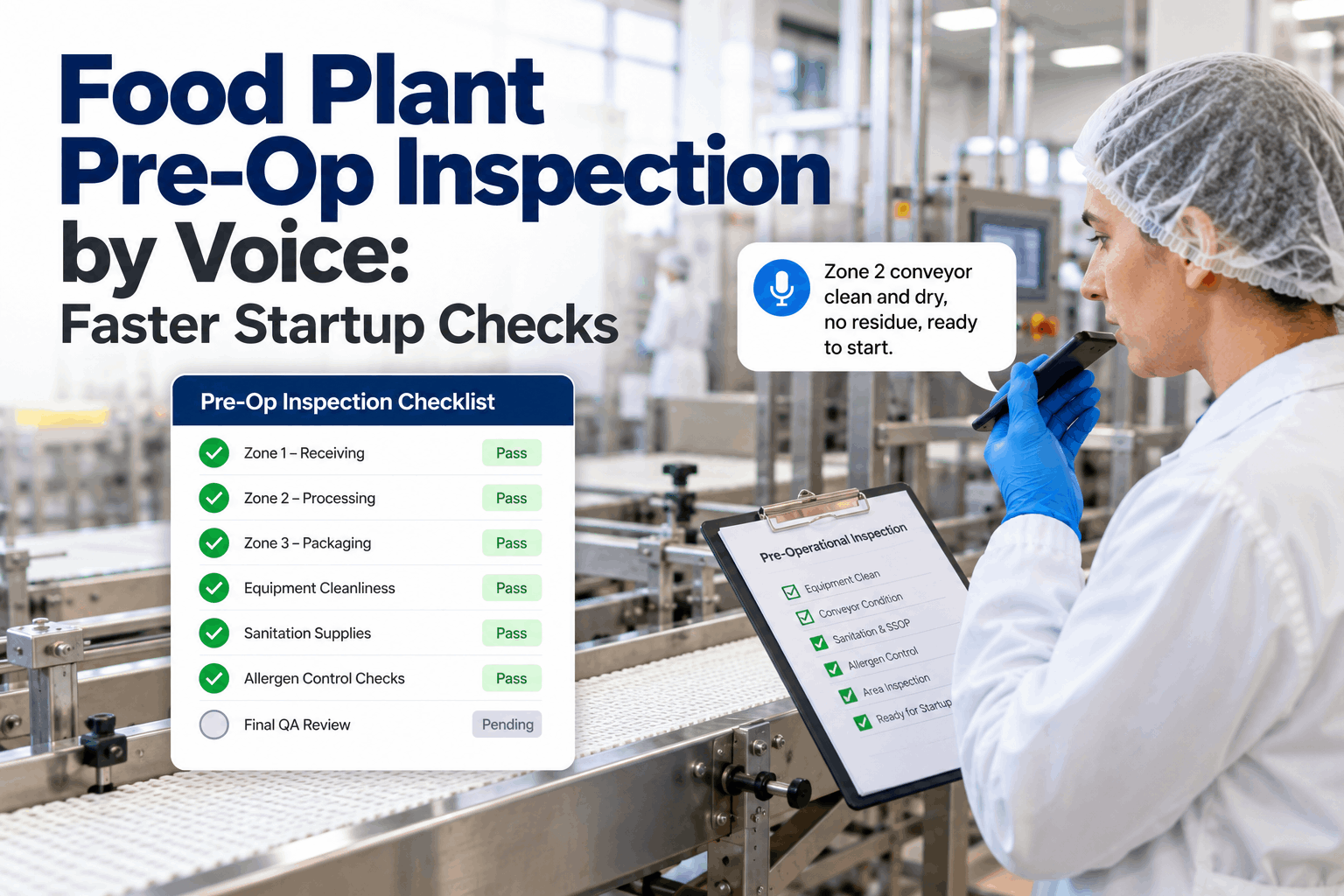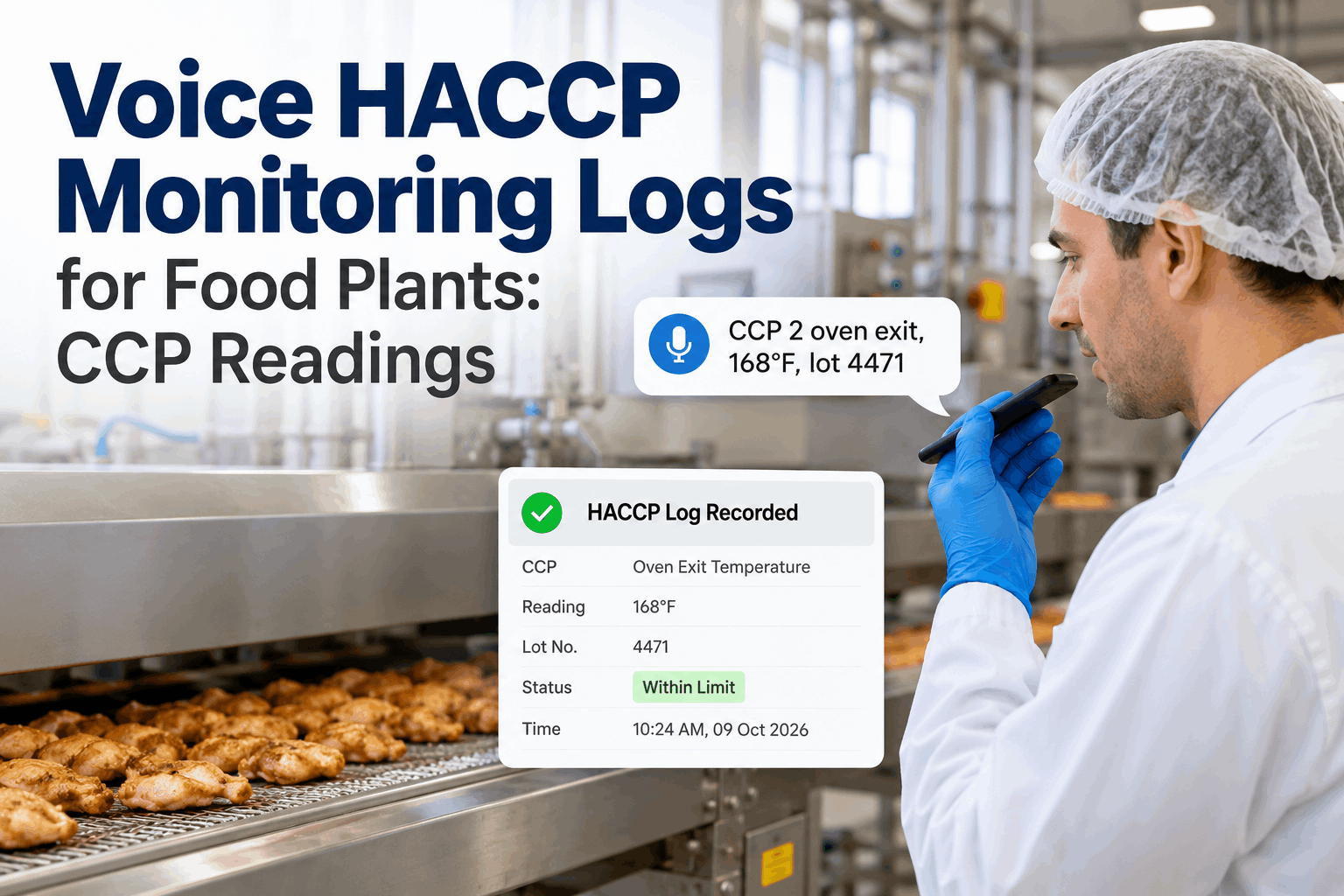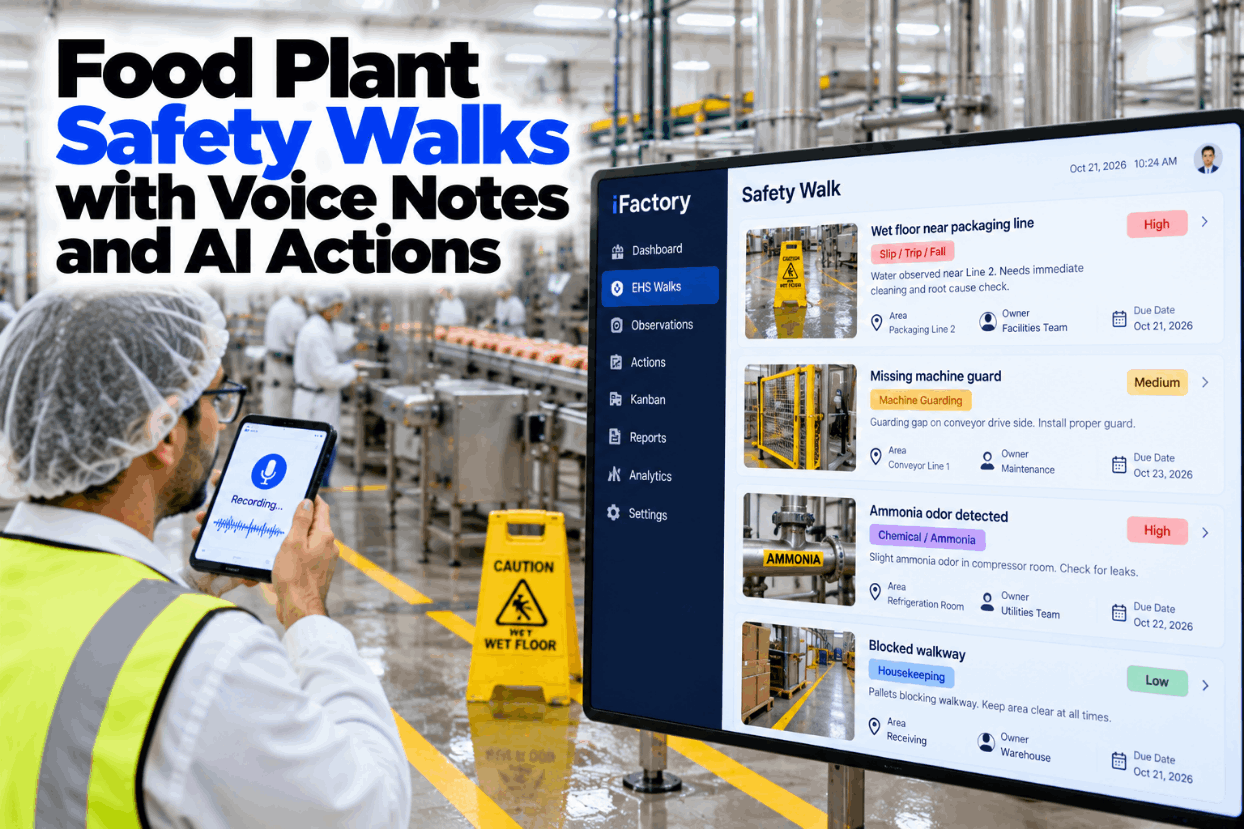
Food Plant Safety Walks with Voice Notes and AI Actions

By David Cook on October 24, 2026

food-plant-safety-walks-voice-notes-ai-actions

A safety walk in a food plant covers more ground than most. In one loop a leader can pass a wet floor at the freezer exit, a guard left off after sanitation, a forklift aisle shared with people on foot and a faint smell near the engine room. Most of those observations end up in a notebook, and many never reach the person who can fix them. Voice notes change that: say what you see, confirm it, and it becomes an action with an owner and a date. See a walk captured end to end in a short safety walk demo.

VOICE NOTES · FOOD PLANT SAFETY WALKS

Say What You See on the Walk, and Every Hazard Gets an Owner

With iFactory Voice Notes and the EHS Kanban, each spoken observation becomes a tagged card with an owner and a due date. Repeat hazards such as wet floors or guarding gaps are trended by area, so the walk shows patterns, not just one-offs.

Safety walk · Freezer dockVoice note
Plant manager said"Wet floor at the spiral freezer exit, no sign out, water from the defrost drain."
iFactory confirmedSlip hazard, freezer dock. Owner sanitation lead, due today 14:00. Correct?
TagSlip, trip, fall
CardEHS Kanban · To do
3rd wet-floor note at this exit in 14 days · trend flagged
FOOD PLANT SAFETY WALKS

Three Kinds of Walk, Each With Its Own Job

The Lean Enterprise Institute describes a gemba walk as a management practice for grasping the current situation through direct observation and inquiry before taking action. A leadership safety walk applies that idea to hazards. No OSHA rule sets how often walks happen, so the rhythm below is a common pattern, not a requirement. Most plants run all three, at different depths. Set your own rhythm with our EHS team.

Every shift
Supervisor walkTen to fifteen minutes in the supervisor's own area. Floors, guards, trucks, PPE and anything that changed since the last shift
Weekly
Leadership safety walkPlant manager or department head walks with a supervisor, talks with crews and asks what slows safe work down
Monthly
EHS deep diveOne theme at a time, such as guarding, lockout or forklift traffic, walked with a checklist and the area owner
HAZARD TAGGING

Seven Food Plant Hazards and the Rule Behind Each

Tags only help if they are consistent. Each tag below maps to the OSHA general industry rule most walks reference, so trends can be read across areas and shifts. Your own hazard assessment and state plan rules may add more. Treat this as a starting set and add plant-specific tags as patterns appear. Build your tag list in a tag setup session.

Tag
Where it shows up
What the walker looks for
Rule most often cited
Slip, trip, fall
Wash-down areas, freezer exits, docks
Standing water, ice, hoses across walkways, missing mats
29 CFR 1910.22
Machine guarding
Slicers, conveyors, mixers, packers
Guards off or loose, open nip points, bypassed interlocks
29 CFR 1910.212
Lockout
Sanitation, jam clearing, maintenance
Work inside guards without locks, missing procedures at the machine
29 CFR 1910.147
Knives and cuts
Deboning, trimming, case opening
Cut-resistant gloves, blunt knives, knives left loose on benches
29 CFR 1910.138
Forklifts
Docks, cold stores, shared aisles
People on foot in truck routes, speed, blind corners, pre-use checks
29 CFR 1910.178
Cold stress
Freezers, blast chillers, cold rooms
Time in the cold, wet clothing, insulated PPE, warm breaks
General Duty Clause
Ammonia odor
Near the engine room, evaporators, valve groups
Any smell of ammonia, alarms, frost on valves or piping
Emergency plan · PSM
AMMONIA ODOR

An Ammonia Smell Is a Report, Not a Task

Ammonia is the one hazard on this walk that a walker should never investigate. People can smell it at very low levels, which USDA FSIS puts at about 0.037 to 1.0 ppm, long before it is dangerous, but nobody can judge a leak's size by smell. FSIS tells its own staff to leave the area immediately and report every odor, even a minor one. Plants with 10,000 lb or more of anhydrous ammonia in a process fall under OSHA Process Safety Management, 29 CFR 1910.119, and IIAR standards cover design, operating procedures and inspection of ammonia systems. Check your response steps with our safety team.

Ammonia odorWhat the walker does, in this order
1Leave the area at once, moving away from the smell and upwind if you can
2Follow the site ammonia emergency plan: alarm, evacuation route and muster point
3Report it to the person the plan names, even if the smell is faint or seems normal
4Do not look for the source, touch valves or go back in. Only trained responders act
How the voice note handles it

When a walker says "ammonia", iFactory does not open a routine card. It shows the emergency plan steps, alerts the contacts the plan names and logs the time and place for the follow-up review.

SLIP TRIP FALL

Wet Floors Need a Source, Not Just a Sign

OSHA 1910.22 says workroom floors must be kept clean and, as far as feasible, dry, and that hazardous conditions must be corrected before employees use the surface again. In a food plant, water is part of the process, so the useful observation is where it comes from. A sign controls the next hour. Fixing the source stops the same note appearing every week. Review your wet areas in a floor review.

Defrost and condensateEvaporator drains and doorways where cold air meets warm, often forming ice on the cold side
Wash-down oversprayHoses running during production, water carried into walkways on boots and trolleys
Blocked drainsDebris in floor drains, uneven floors that pond water away from the drain
Product and fatSpilled product, oil and fat that water alone does not remove
Hoses and cablesTrip points left across aisles after sanitation or maintenance

Keep Your Eyes on the Floor, Not on a Clipboard

Walkers wear gloves, hairnets and often hearing protection. Voice notes let them keep looking and talking with crews while each observation is captured, read back for confirmation and turned into a card with an owner.

Packaging hall · Plant manager and iFactory
Plant managerFlow wrapper 2, side guard off, the crew says it was left off after sanitation.
iFactoryLogged as machine guarding, packaging hall, flow wrapper 2. Is the machine running?
Plant managerYes, the line lead stopped it. Give it to maintenance, due before restart.
iFactoryDone. Card assigned to the maintenance lead, due before restart. This is the second guard left off after sanitation this month.
FOOD PLANT SAFETY WALKS SOFTWARE

From Spoken Observation to Closed Action

The walker talks the way they would to a colleague. The voice agent picks out the area, the hazard and any action already taken, reads it back and waits for a yes before it saves anything. Then it proposes a tag, an owner and a due date. The walker can accept or change them in a word. Ask our support team how it handles plant noise and local terms.

1SpeakArea, what you see, what you did
2ConfirmRead back, saved only on a yes
3TagHazard type and rule proposed
4AssignOne owner and one due date
5VerifyClosed only after someone checks the fix
ACTION OWNERSHIP

What Every Observation Card Should Carry

An observation without an owner is a complaint. A card with one named owner, one date and a check that the fix worked is an action. These fields work as a template whether the card comes from a voice note or a paper form. See a full card in a card walkthrough.

Area and timeFreezer dock, 10:42, day shift
Hazard tagSlip, trip, fall
What was seenWalker's words, as confirmed
Immediate actionSign placed, area squeegeed
OwnerOne named person, not a team
DueSet by severity of the hazard
Verified bySomeone other than the owner
Repeat countSame tag, same area, last 30 days
LEADING INDICATORS FOOD

Leading vs Lagging: Measure the Walk, Not Just the Injuries

OSHA's guide on leading indicators, publication 3970, describes them as proactive, preventive and predictive measures, while lagging indicators count injuries and illnesses that have already happened. Walk data is a ready source of leading indicators. OSHA's own examples include the share of planned inspections completed and the share of past-due action items, with a sample goal of no more than 10%. Choose your measures with our EHS team.

LEADING: FROM THE WALKS
  • Walks done against walks planned, by area and shift
  • Observations per walk, including positive ones
  • Actions closed by their due date
  • Past-due actions as a share of all open actions
  • Repeat hazards by area over 30 days
LAGGING: AFTER THE FACT
  • Recordable injury and illness rate
  • Days away, restricted or transferred cases
  • First aid cases
  • Lost workdays
  • Workers' compensation claims
FOOD PLANT SAFETY WALKS FOR PLANT MANAGERS

Repeat Hazards by Area Show Where to Spend

One wet floor is a housekeeping fix. Nine at the same freezer exit in a month is an engineering problem with a drain, a door or a defrost cycle. Trending by area and tag turns many small observations into one decision. The figures below are an illustration, not plant data. See trends on your own areas in a trend review.

Last 30 days · repeat observationsSame tag, same area
Freezer dock · wet floor9
Packaging · guards off6
Deboning · glove or knife5
Dock aisle · people and trucks4
Engine room · odor reports2
Biggest repeatFreezer dock wet floor
Likely causeDefrost drain at exit
DecisionEngineering fix, not more signs
FOOD PLANT SAFETY WALKS BEST PRACTICES

Six Habits That Keep Walks Worth Doing

A walk fails when crews see it as an inspection of them rather than of the conditions they work in. These habits keep the focus on the work and keep people talking. Get a short walker briefing from our support team.

Go where the work isWalk the floor during production and sanitation, not just quiet hours
Ask before you tellStart with "what makes this job hard to do safely?"
One owner, one dateEvery action has a named person, never "maintenance" or "everyone"
Fix now when you canLog the immediate action as well as the permanent one
Walk every shiftRotate routes so nights and weekends are walked too
Close the loopTell the person who raised it what was done
FOOD PLANT SAFETY WALKS IMPLEMENTATION GUIDE

From Notebook Walks to Voice Walks in Four Stages

Start with two areas that produce the most observations, usually wash-down and cold storage, and expand once walkers trust the read-back. Plan your first stage in a rollout call.

Stage 1
Areas and tagsName every area as walkers say it, agree the tag list and owners by area
Stage 2
Pilot two areasSupervisors walk by voice, EHS checks every card against what was said
Stage 3
All areas and shiftsLeadership walks added, due-date rules set by severity
Ongoing
Monthly reviewRepeat hazards and past-due actions reviewed by the plant team
FOOD PLANT SAFETY WALKS COST AND ROI

A Simple Way to Size the Time Saved

The clearest value is in time: less writing up after each walk and less chasing of open actions. The figures below are assumed inputs to show the arithmetic, so replace each one with your own. Keep injury cost out of the sum unless your own records support a figure. Our team can help you build the full case.

Walks per week, all levels15, assumed
Write-up time saved per walk12 min, assumed
Write-up time saved per week15 × 12 = 180 min
Actions raised per week60, assumed
Chasing time saved per action3 min, assumed
Leader and EHS time freed per week180 + 60 × 3 = 360 min, or 6 h
TURNKEY AI DEPLOYMENT

Voice Notes, EHS Kanban and AI Server in One Package

iFactory delivers Voice Notes and the EHS Kanban as a turnkey bundle. A pre-configured NVIDIA AI server ships racked and ready with the voice agent, hazard tags and board pre-loaded, so speech is processed on site even in cold stores with weak coverage. You rack it, plug in power and Ethernet, and the AI is live. To scope it for your plant, request a turnkey quote.

What's Included
  • Pre-configured NVIDIA AI edge server, racked and ready
  • Voice agent tuned for plant noise and local area names
  • Food plant hazard tags mapped to OSHA rules
  • EHS Kanban with owners, due dates and verification
  • Ammonia odor path linked to your emergency plan contacts
  • Repeat hazard trends by area, tag and shift
  • 24×7 remote monitoring of software and hardware
Live in 6–12 weeks
Wk 1–4
Install and Load

Server installed, areas, tags, owners and emergency contacts loaded.

Wk 5–8
Pilot Walks

Voice walks in two areas, every card checked by EHS against the walker's words.

Wk 9–12
Go-Live and Training

All areas and shifts live, walkers and owners trained, trend review started.

HOW iFACTORY FITS

Safety Walks Built for the Food Plant Floor

iFactory turns what leaders see and say on a walk into owned, tracked actions, and shows where hazards keep coming back. Our support team can walk you through a pilot plan.

1
Hands-free notes. Walkers speak observations and confirm the read-back.
2
Tagged by hazard. Wet floors, guarding gaps, knives, trucks, cold and lockout tagged the same way.
3
Owned on the EHS Kanban. Every card has one owner, a due date and a verification step.
4
Repeat hazards trended. Observations are grouped by area, so patterns lead to permanent fixes.
1000+
Industrial clients running iFactory
99.9%
Platform uptime for round-the-clock plants
6-12 wks
From racked server to live voice walks
FREQUENTLY ASKED QUESTIONS

What Plant Managers Ask About Food Plant Safety Walks

How often should food plant safety walks happen?
No OSHA rule sets a frequency. A common pattern is a short supervisor walk every shift, a weekly leadership safety walk and a monthly EHS deep dive on one theme. What matters more than the number is that every area and every shift gets walked, and that actions are closed.
What should a walker do if they smell ammonia?
Leave the area, follow the site ammonia emergency plan and report it, even if the smell is faint. Do not look for the source or touch valves. Ammonia can be smelled at levels far below those that harm health, but smell cannot tell you how big a leak is. Only trained responders should act.
What are leading indicators for food plant safety?
Measures that show whether prevention is working before anyone is hurt. From walks, that includes walks done against plan, observations per walk, actions closed on time, past-due actions and repeat hazards by area. Lagging indicators, such as recordable injuries, count harm that has already happened.
How is a safety walk different from an EHS audit?
A walk is short, frequent and conversational, done by leaders and supervisors to see conditions and talk with crews. An audit is a planned, structured check against a standard or procedure, with scoring and formal findings. Walks feed audits with day-to-day evidence.
Does voice capture work in a loud, cold plant?
Yes, with the right setup. iFactory uses noise-cancelling headsets and a voice model tuned to your area names and terms. Every note is read back before it is saved, so a misheard word is corrected on the spot rather than becoming a wrong card.
How do we stop actions going overdue?
Give each action one named owner and a due date set by severity, show open cards on the EHS Kanban and review past-due actions every week. Repeat hazards in one area should become a single engineering action rather than many small ones. Our support team can help set up the rules.

Every Walk Recorded, Every Hazard Owned

Capture observations by voice, tag them by hazard, give each one an owner on the EHS Kanban and see where hazards keep returning. The full system is delivered turnkey and goes live in 6 to 12 weeks.
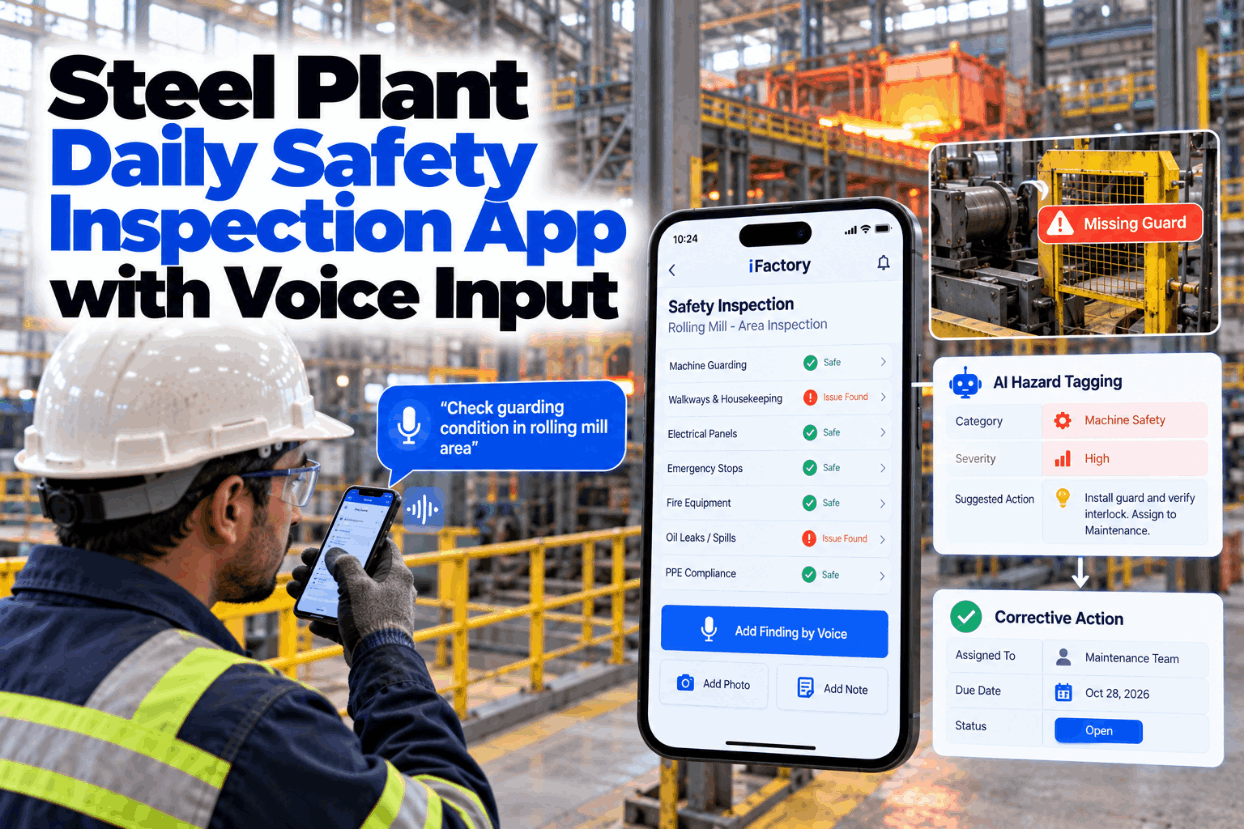
Example week summary · Food plant walks
WalksEvery area, every shift
ObservationsSpoken, confirmed, tagged
ActionsOne owner and one due date
Repeat hazardsTrended by area
Every observation traceable to a walk

Share This Story, Choose Your Platform!