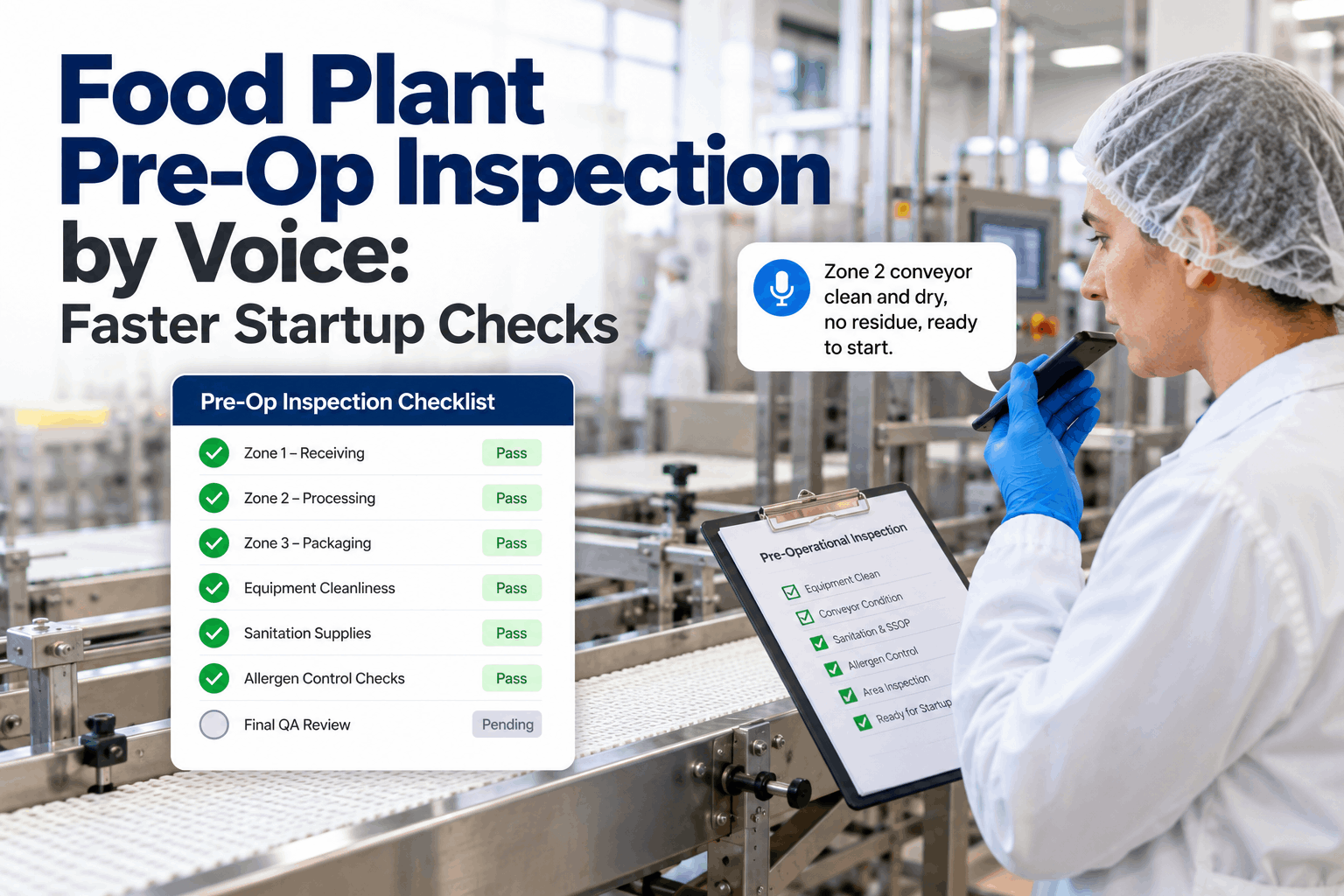
A daily area check in a steel plant has to cover molten metal, gas, cranes, guarding and walkways, often in heat and noise and with gloves on. On paper, findings get shortened, photos get lost and the fix waits until someone types it up. A voice-first inspection app lets the inspector say what they see, hear it read back and move on while the action reaches its owner. Hear a full area round in a short voice inspection demo.
VOICE AGENT · DAILY EHS INSPECTIONS
Say the Hazard, Confirm It, and the Fix Has an Owner
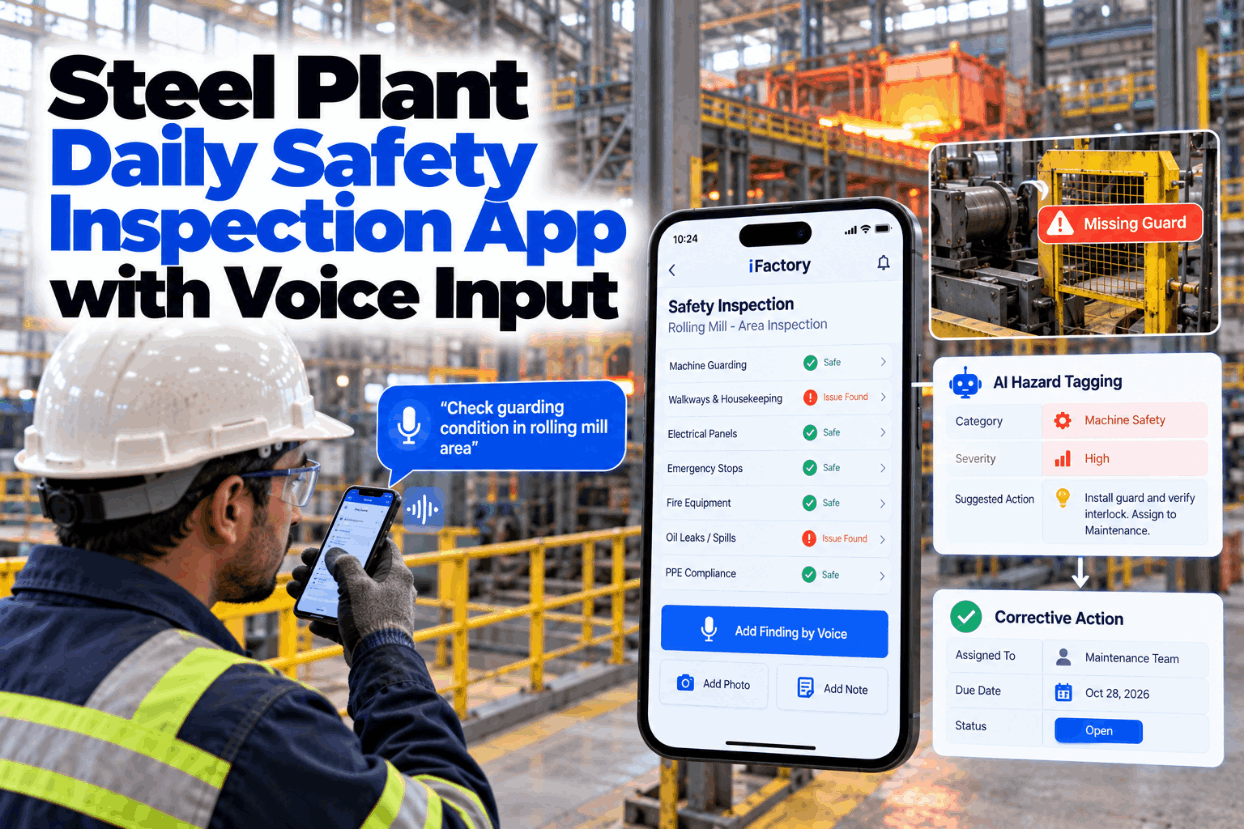
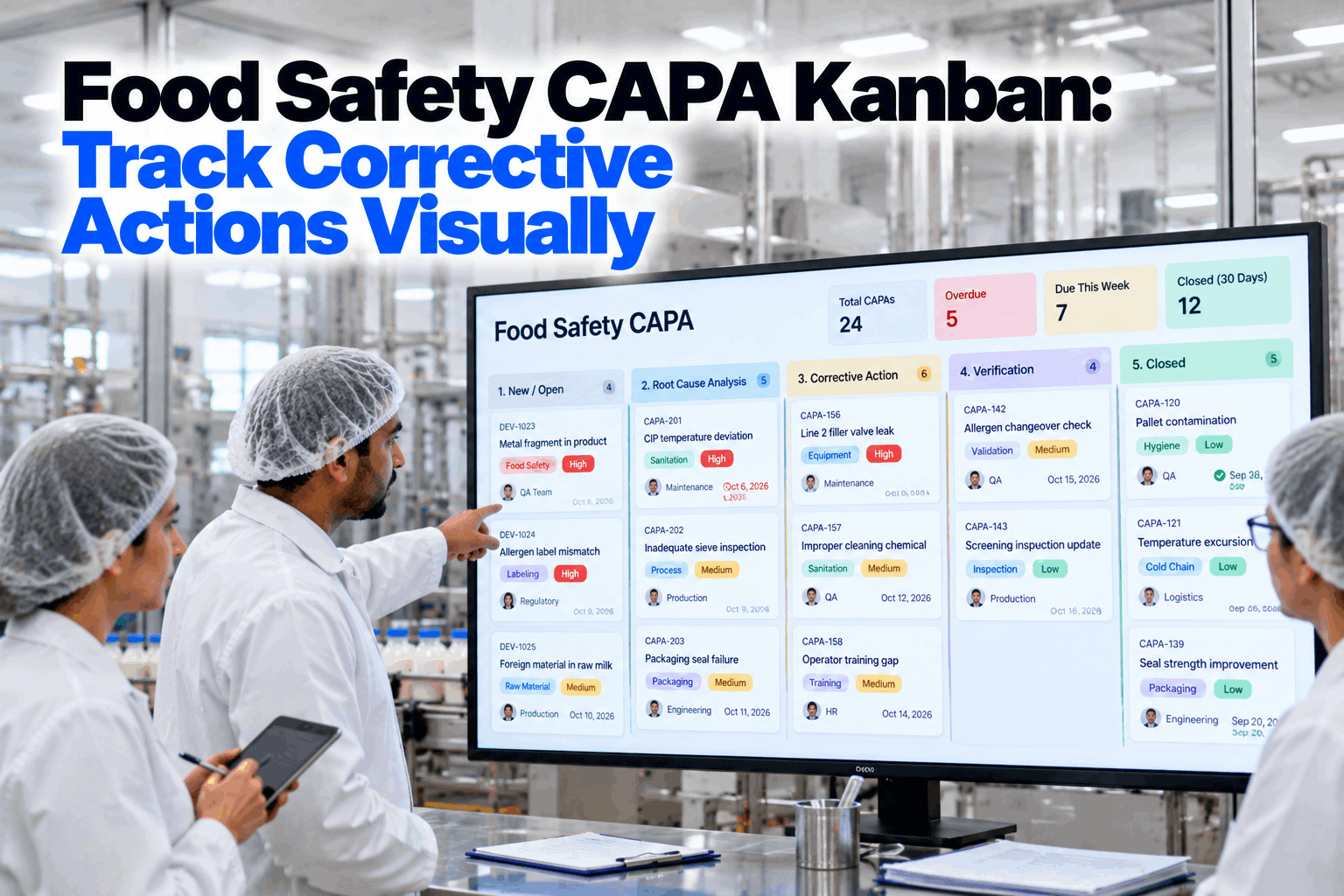
With the iFactory Safety Inspection Module, inspectors walk an area template and speak each finding. AI tags the hazard category and severity, reads it back for confirmation, and the corrective action lands on the EHS kanban with an owner and due date.
Daily area check · BOF shopVoice
Inspector said"Ladle bay walkway, grating lifted by column twelve, trip hazard."
iFactory read back"Lifted grating, walking surface, high. Guard it now, area maintenance by end of shift. Confirm?"
CategoryWalking-working surface
SeverityHigh
OwnerArea maintenance
DueEnd of shift
STEEL PLANT HAZARDS
Nine Hazards a Daily Area Check Should Cover
General plant checklists miss what makes a steel plant different. Water near molten metal can cause a violent steam explosion, blast furnace gas is roughly 20 to 28% carbon monoxide and has no reliable smell, and hot product looks the same as cold. Several of these hazards also have their own OSHA rules. Review your own area hazards with our safety team.
Melt
Molten metal and splashNo water, damp scrap or wet tools near furnaces, ladles and tap areas
CO
Gas in BF and BOF areasFixed CO monitors working, personal detectors worn, low spots checked
Slag
Slag pitsDry, barricaded, no standing water and no vehicles parked at the edge
Hot
Hot surfaces and productHot slabs, coils, pipes and ladles marked, barricaded or insulated
Crane
Crane areasLoad paths clear, warnings working, nobody under a suspended load
.212
Machine guardingOSHA 1910.212: nip points and rotating parts guarded, guards fixed to the machine
.22
Housekeeping and walkwaysOSHA 1910.22: surfaces clean, orderly and free of loose plates, leaks and spills
.147
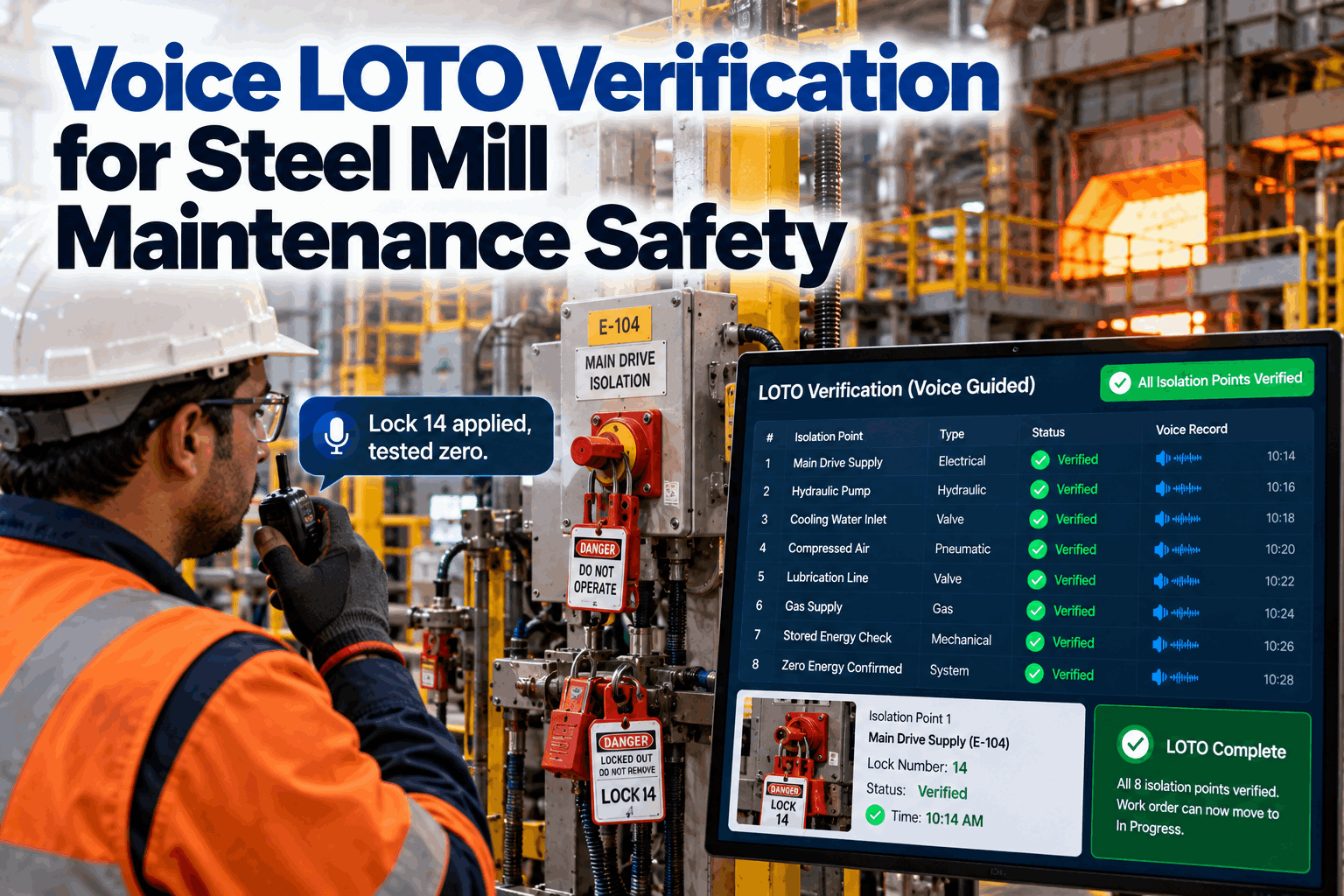
LockoutOSHA 1910.147: locks and tags in use, identified and used only for isolation
.146
Confined spacesOSHA 1910.146: permit spaces signed and closed against unplanned entry
AREA SAFETY INSPECTION
How Often Each Check Runs
OSHA does not set one frequency for general area inspections. For walking-working surfaces, 1910.22 asks for inspection "regularly and as necessary", and some items carry their own intervals. Most mills run a short check every shift, a fuller area round daily and deeper walks weekly and monthly. Set intervals per area in a round planning session.
Every shift
Pre-shift lookCrew lead checks the work area and gas detectors before startingDaily
Area roundSupervisor walks the area template below, by voiceWeekly
Manager walkArea manager and EHS review open findings on the spotMonthly
Equipment checksPortable extinguishers get a visual check under OSHA 1910.157Yearly
Lockout reviewPeriodic inspection of each energy control procedure, 1910.147
DAILY SAFETY INSPECTION APP STEEL TEMPLATE
A Daily Area Checklist by Steel Plant Zone
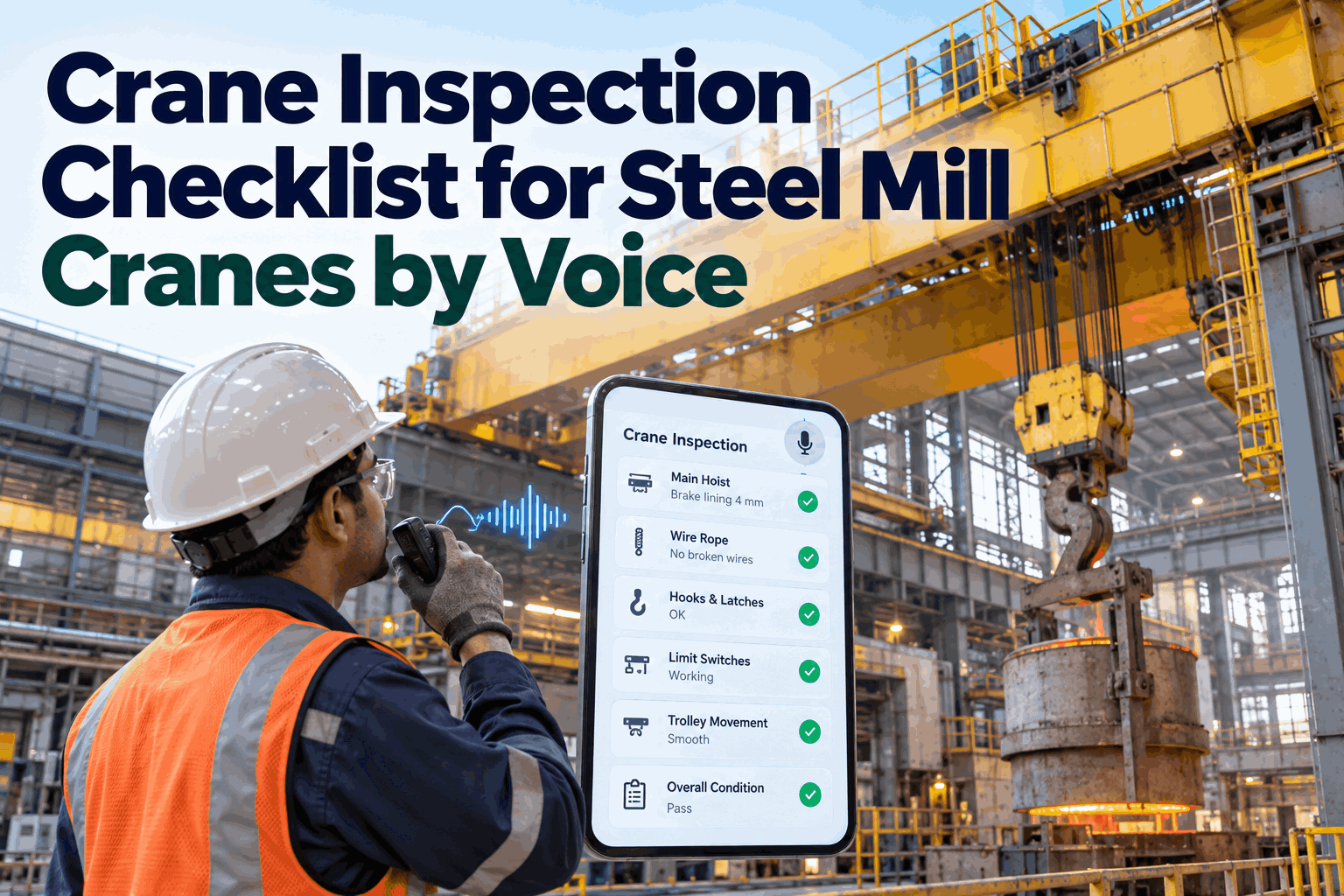
Use this checklist as a starting point and adjust it to your own risk assessment and procedures. Each box can be ticked here, or spoken item by item on a voice round. Anything that fails becomes a finding with a category, severity and owner. For a version loaded with your own areas, contact our support team.
DAILY SAFETY INSPECTION APP STEEL SOFTWARE
What Happens to a Spoken Finding
The inspector talks as they would to a colleague. The voice agent picks out the area, the hazard and the detail, proposes a category and severity, and reads the finding back before saving. Nothing is filed on a guess. If the inspector corrects a word, the record changes before it reaches anyone. The rows are illustrative. Try it with your own area names in a voice round trial.
Gloves On, Eyes on the Area
Inspectors in a steel plant can't stop to type. iFactory captures each spoken finding, reads it back for a yes or a correction, adds the photo and puts the action on the EHS kanban before the inspector reaches the next item.
LF platform · Inspector and iFactory
InspectorStair up to the LF platform, handrail loose at the top.
iFactoryLoose handrail, LF stair, walking-working surface, high. Guard the stair until repaired, area maintenance, end of shift. Correct?
InspectorCorrect. Adding a photo.
iFactoryPhoto attached. The card is on the EHS kanban. Next item: crane bay 3 walkways.
HAZARD TAGGING AI
Severity Sets the Owner and the Clock
Many inspection programmes grade hazards in classes. Class A could cause death or permanent disability, Class B serious injury and Class C injury that is not disabling. The AI proposes a level and the inspector confirms it. For walking-working surfaces, 1910.22 requires hazards to be fixed, or guarded, before the surface is used again. Due dates beyond that follow your own procedure. Agree your severity rules with our EHS specialists.
Stop work
Could kill or disable. Make safe on the spot.Supervisor nowHigh
Serious injury possible. Guard now, fix this shift.Area owner, same shiftMedium
Injury that is not disabling. Planned repair.Area owner, within daysLow
Housekeeping or minor issue. Fix and trend.Area crew, next round
DAILY SAFETY INSPECTION APP STEEL EXAMPLES
Three Findings, Three Responses
These illustrations show how a voice round typically handles common steel plant findings. They are not case studies, and the right response always follows your own procedures. Walk through your own scenarios in a scenario review.
Lifted grating, ladle bay
Guarded at once, fixed by end of shiftTagged as a walking-working surface hazard. The barrier photo and repair photo close the card.CO monitor fault, gas valve station
Entry with personal detectors onlyThe instrument tech gets a high-severity card. The area stays restricted until the monitor is tested and back in service.Water near a slag pit
Pours held until the ramp is dryA stop-work tag alerts the slag yard lead. A second card asks maintenance to fix the drainage.
DAILY SAFETY INSPECTION APP STEEL BEST PRACTICES
Paper Rounds and Voice Rounds Side by Side
The checklist content matters more than the tool, but the tool decides how fast a finding becomes a fix. Keep templates short, area-specific and owned by the area manager. Rotate inspectors between areas now and then, because a fresh pair of eyes notices what a regular walker has stopped seeing. Close each finding with a photo of the fix, not just a tick. Ask our support team for a sample area template.
Paper clipboard round
- Findings written short with gloves off
- Photos on a personal phone, if at all
- Severity left to each inspector's habit
- Actions typed up later, owners unclear
- Repeat findings hard to spot
Voice round with iFactory
- Findings spoken and read back on the spot
- Photos attached to the finding
- Category and severity proposed the same way every time
- Owner and due date set before the next item
- Repeat findings flagged by area and hazard
DAILY SAFETY INSPECTION APP STEEL FOR PLANT MANAGERS
Six Measures Worth a Weekly Look
Inspections are leading indicators. They show where the next incident is likely to come from, long before an injury report does. Record a baseline before go-live, then review these measures weekly with area managers and EHS, and treat a rise in findings after go-live as better reporting rather than a worse plant. Set them up in a dashboard session.
Rounds on timeDaily rounds completed as planned, by area
Findings per roundBy area and hazard category
Open stop-work itemsShould be zero at the end of every shift
Time to closeMedian days from finding to verified fix, by severity
Repeat findingsSame hazard, same spot, within 30 days
Overdue actionsPast due date, by owner
TURNKEY AI DEPLOYMENT
Voice Agent, Templates and AI Server in One Package
iFactory delivers the Safety Inspection Module as a turnkey bundle. A pre-configured NVIDIA AI server ships racked and ready with the voice agent, steel area templates and hazard tagging models pre-loaded, so speech is processed on site even where coverage is weak. You rack it, plug in power and Ethernet, and the AI is live. To scope it for your plant, request a turnkey quote.
What's Included
- Pre-configured NVIDIA AI edge server, racked and ready
- Voice agent tuned for mill noise and plant area names
- Steel area templates for melt shop, gas, cranes and mills
- AI hazard category and severity tagging
- EHS kanban with owners, due dates and photo close-out
- Rugged headsets or handheld setup for inspectors
- 24×7 remote monitoring of software and hardware
Live in 6–12 weeks
Wk 1–4
Install and Map
Server installed, areas, owners and templates loaded, severity rules agreed.
Wk 5–8
Pilot Rounds
Voice rounds in two areas, run alongside paper to compare findings.
Wk 9–12
Go-Live and Training
All areas switched over, inspectors and owners trained, weekly review started.
HOW iFACTORY FITS
Daily Inspections Built for the Steel Plant Floor
iFactory is designed for inspectors who work in heat, noise and full protective gear. Our support team can walk you through a pilot plan.
1
Area templates. Each zone has its own steel-specific checklist.
2
Voice findings. Inspectors speak, hear the read-back and confirm.
3
AI hazard tags. Category and severity are proposed the same way every time.
4
Actions with owners. Each fix lands on the EHS kanban with a due date.
1000+
Industrial clients running iFactory
99.9%
Platform uptime for round-the-clock plants
6-12 wks
From racked server to live voice rounds
FREQUENTLY ASKED QUESTIONS
What Plant Managers Ask About Daily Safety Inspection Apps
What should a daily safety inspection in a steel plant cover?
At minimum: molten metal and water risks, gas in blast furnace and BOF areas, slag pits, hot surfaces, crane load paths, machine guarding, housekeeping and walkways, lockout and confined spaces. Each area gets its own short template, so a melt shop round looks different from a coil yard round.
How often should area safety inspections be done?
OSHA does not set one frequency for general area inspections. Walking-working surfaces must be inspected regularly and as necessary under 1910.22, and items such as portable extinguishers and lockout procedures have their own intervals. Most steel plants combine a pre-shift look, a daily area round and weekly management walks.
Does voice input work in a noisy mill?
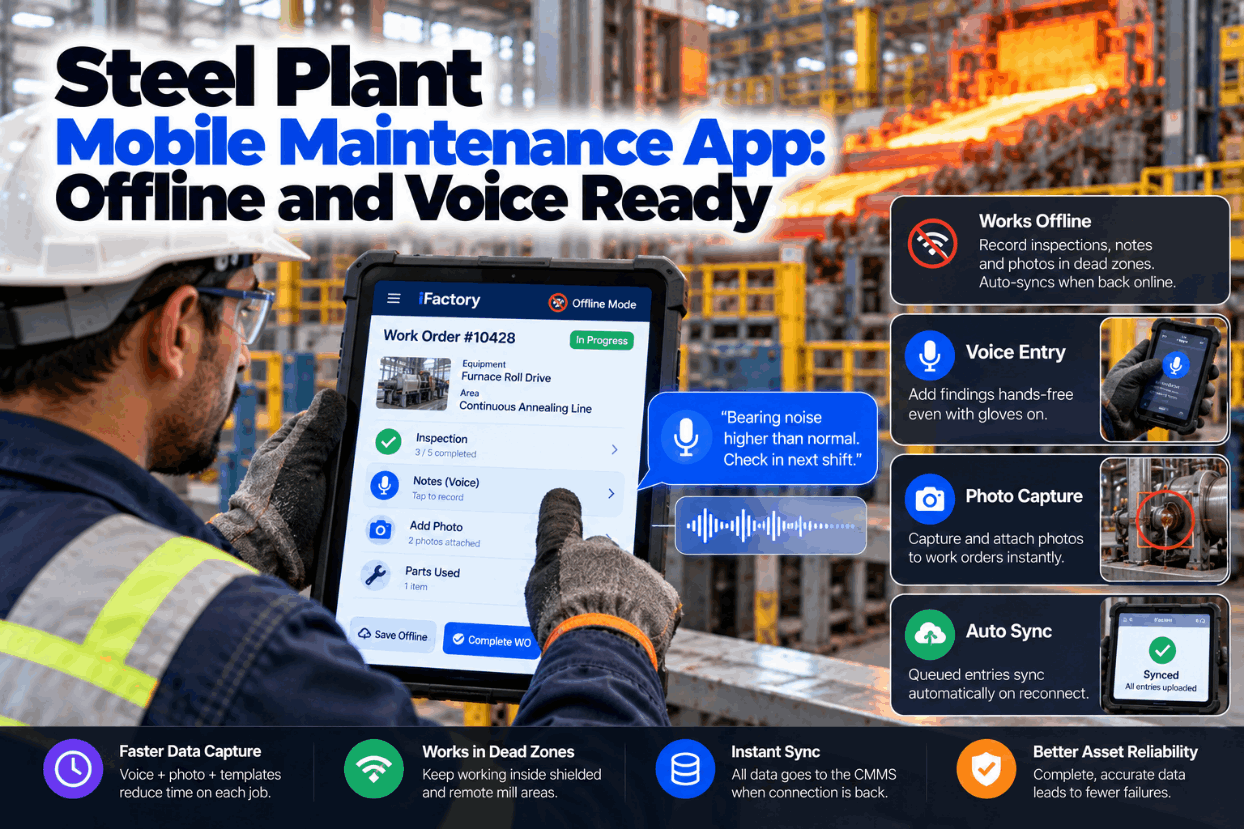
Yes, with noise-cancelling headsets and a voice model tuned to your area names and plant terms. Every finding is read back before it is saved, so the inspector can correct a word or a severity on the spot. If the agent is unsure, it asks again.
Who decides the hazard category and severity?
The AI proposes them from the spoken finding and your severity rules, and the inspector confirms or changes them. This keeps grading consistent across inspectors while leaving the final call with a person who has seen the hazard.
How does the app handle carbon monoxide areas?
It checks that fixed monitors are working and personal detectors are worn, and logs any fault as a finding. It does not replace gas detection. For reference, the OSHA PEL for CO is 50 ppm as an 8-hour average, and the NIOSH REL is 35 ppm with a 200 ppm ceiling.
How do we get started?
Start with two high-risk areas, such as the BOF shop and a crane bay. Load the area templates, agree severity rules and owners, and run voice rounds alongside paper for a few weeks. Our
support team can plan that pilot with you.
Every Area Checked, Every Finding Owned
Give inspectors steel-specific area templates and a headset, and let each spoken finding become a tagged, owned action. The full system is delivered turnkey and goes live in 6 to 12 weeks.
Example daily summary · BOF shop
Areas inspectedTap floor, gas area, crane bay
FindingsSpoken, read back, confirmed
Hazard tagsCategory and severity on each
ActionsOn the EHS kanban with due dates
Every finding traceable to an inspector