In a chemical plant, the most dangerous jobs are rarely the routine ones. They are the hot work on a pipe rack, the vessel entry and the line break, done while the rest of the unit keeps running. A permit-to-work system is what keeps those jobs controlled, but paper permits can't see each other, can't confirm a gas test is still valid and can't stop two conflicting jobs starting side by side. Digital permit-to-work fixes that, and you can see it in a short live demo.
Mobile Permit-to-Work That Sees Every Job, Every Isolation and Every Conflict
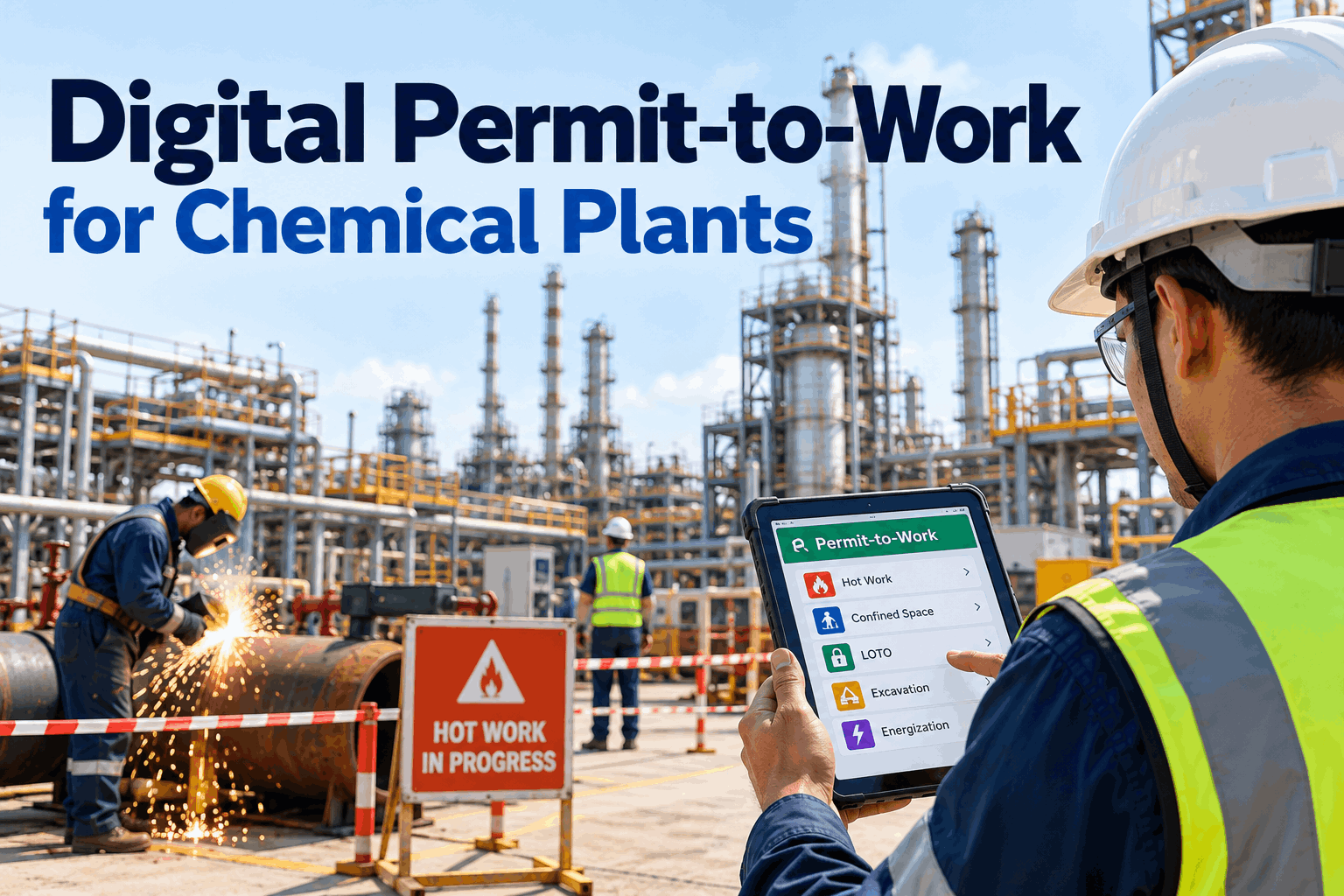
iFactory's PTW Digital Suite runs hot work, confined space, excavation, LOTO and energization permits on mobile devices at the point of work. It links isolation certificates and gas tests, checks for conflicting jobs nearby, and keeps the whole system on your own site.
A Permit Doesn't Make a Job Safe. The System Behind It Does.
The UK HSE makes the point plainly in its guidance on permit-to-work systems: issuing a permit does not, on its own, make a job safe. The permit is a communication and control tool. It defines exactly what work will be done, where, when and under what precautions, and coordinates it with everything else happening on the plant. HSE also links failures in isolating and reinstating process plant to many loss-of-containment incidents. Our safety specialists can help assess your current system.
The best-known permit failure. A pump was restarted while its relief valve was out for maintenance under a permit that hadn't been communicated at shift handover. 167 people died.
Many loss-of-containment events happen when plant is isolated for work or returned to service, the two moments a permit system is meant to control.
Two individually safe jobs can become dangerous together, such as hot work beside a vessel being opened. Permits must be able to see each other.
The Permits a Chemical Plant Runs, and What Each Controls
Each permit type addresses a different hazard and draws on different regulations and site rules. A digital system holds a template for each, with the right fields, checks and sign-offs, so nothing depends on which form the requester happened to pick up. Many jobs need more than one permit, such as a hot work permit that relies on an isolation certificate, so the system links them and won't let the dependent permit stay live once its isolation is removed. We can load your existing permit templates in a setup session.
Seven Stages From Request to Reinstatement
A permit is a process, not a single signature. Each stage has its own owner and its own checks, and the riskiest moments, isolation, shift handover and return to service, are where paper systems most often break down. A digital flow makes each stage explicit and impossible to skip, and it shows the permit coordinator exactly where every live permit stands at any moment. Our support team can map these stages to your current procedure.
See Every Live Permit on the Plot Plan, and the Conflicts Between Them
On paper, permits sit in a rack in the control room, and nobody can see at a glance that a hot work permit is about to be issued 12 metres from a vessel entry. A digital system places every permit on the plot plan and checks it against defined conflict rules before issue. You can see the conflict checks running in a short demo.
Know Exactly What's Live on the Plant, Right Now
The permit coordinator can ask what's open, what's isolated and what conflicts, and get answers from the live permit system instead of walking the plant or searching the permit rack.
Mobile Permits, Geofences and Live Gas Tests
The best permit decisions are made standing at the job, not at a desk in the control room. Mobile permits move the key steps to where the work is and capture evidence as it happens rather than afterwards. Crews see the same permit the issuer signed, on site, before they start. Our support team can help choose devices for your hazardous areas.
The permit can only be issued or accepted when the issuer's device is at the work location, which confirms that a site visit actually happened.
Scanning the tag on the equipment pulls up its isolation points, live permits and history, so the right asset is always on the permit.
Readings are recorded with time, location and instrument, and the system prompts for a re-test when the validity period runs out.
Photos of isolations, barriers and the work area are attached to the permit at issue and at close-out.
In classified areas, mobile devices must be rated for the zone. Many sites use intrinsically safe handhelds for work inside classified zones and standard devices at the boundary. The permit system runs the same on either.
What Changes When Permits Go Digital
Paper permits have worked for decades, and the discipline behind them is what really matters. Digital doesn't replace that discipline. It removes the blind spots that paper can't avoid, and makes the system easier to audit. You can compare both approaches on your own permits in a working session.
- Permits in a rack, invisible to each other
- Gas test validity tracked by memory
- Isolations cross-referenced by hand
- Shift handover depends on conversation
- Audits mean searching through filed forms
- Every live permit shown on the plot plan
- Re-tests prompted when validity runs out
- Isolations linked automatically to permits
- Handover status recorded and acknowledged
- Complete audit trail, searchable in seconds
Handover and Suspension: The Moments That Matter Most
Jobs that run across shifts are where permit systems are most vulnerable, as Piper Alpha showed. A digital system makes handover an explicit step with a recorded status and an acknowledgement from the incoming team, rather than a conversation that may or may not happen. Our safety specialists can help define your handover rules.
Four Measures That Show Whether the System Is Working
A permit system can look fine on paper and still be drifting in practice. Tracking a few simple measures shows where discipline is slipping before it shows up as an incident. Because every step is recorded digitally, these numbers come straight from the system instead of a manual audit. Our safety specialists can help set targets for each.
PTW Suite, Mobile Devices and Server on Your Own Site
Permit systems must keep working when the internet doesn't. iFactory delivers the PTW Digital Suite on-premise as a turnkey bundle. A pre-configured NVIDIA AI server ships racked and ready with the software pre-loaded. You rack it, plug in power and Ethernet, and the AI is live. To scope it for your plant, request a turnkey quote.
- Pre-configured NVIDIA AI edge server, racked and ready
- Permit templates for hot work, confined space, excavation, LOTO and energization
- Plot plan with geofences and conflict rules
- Cabling, plant Wi-Fi and network setup
- CMMS and gas detector integration
- Training for permit issuers, area authorities and crews
- 24×7 remote monitoring
Server installed, plot plan and equipment loaded, permit templates configured.
One unit runs digital permits alongside paper while conflict rules are tuned.
Plant-wide rollout, paper retired unit by unit, crews trained.
A PTW Digital Suite Built for Process Plants
iFactory brings permits, isolations, gas tests and conflict checks into one live picture of the plant. Our support team can review your current permit procedure before a pilot.
What Permit Coordinators Ask About Digital PTW
Control Every High-Risk Job From One Live View
Run all permit types on mobile devices, link isolations and gas tests, catch conflicting work before it starts and make shift handover a recorded step, all on your own site. The full system is delivered turnkey and goes live in 6 to 12 weeks.