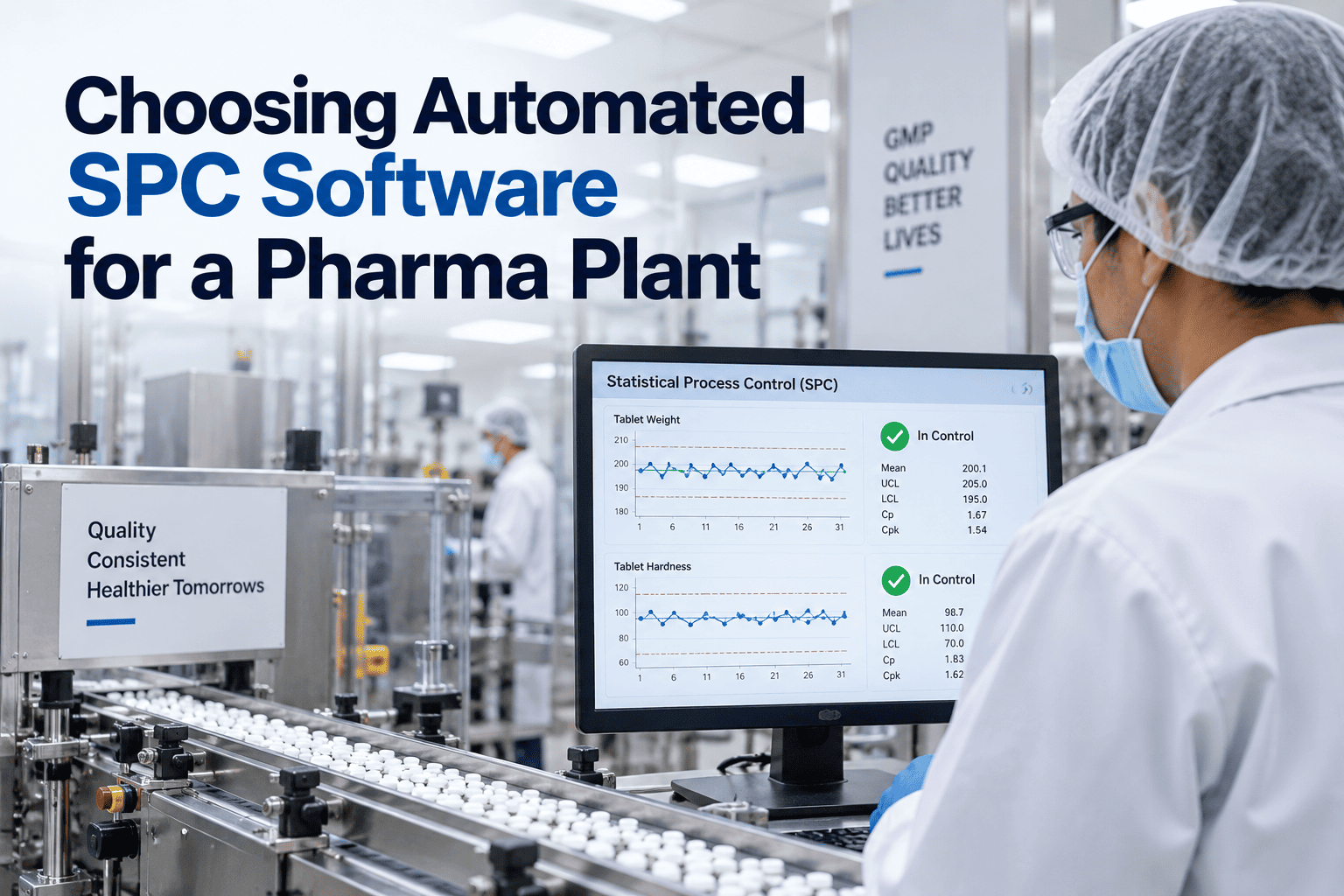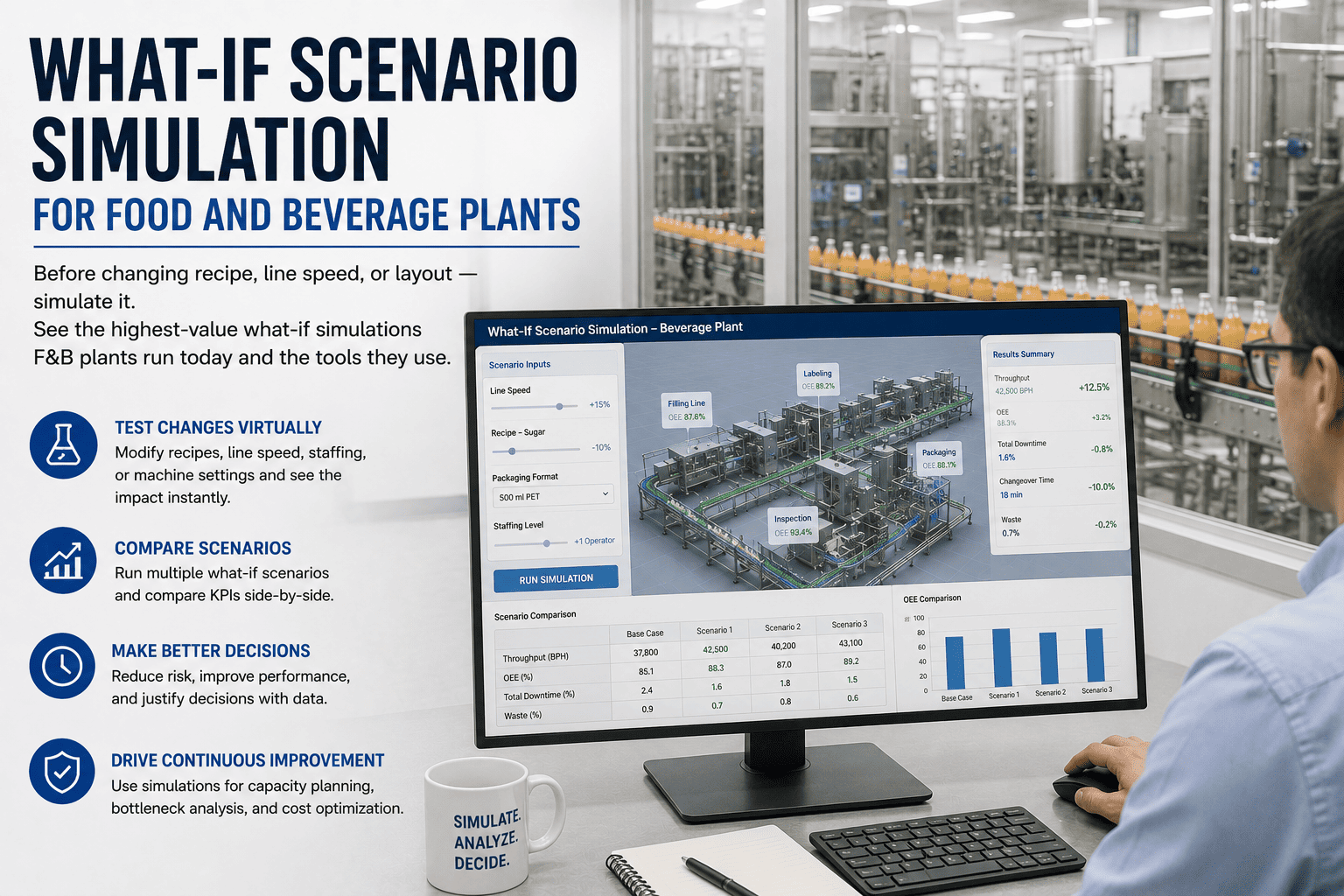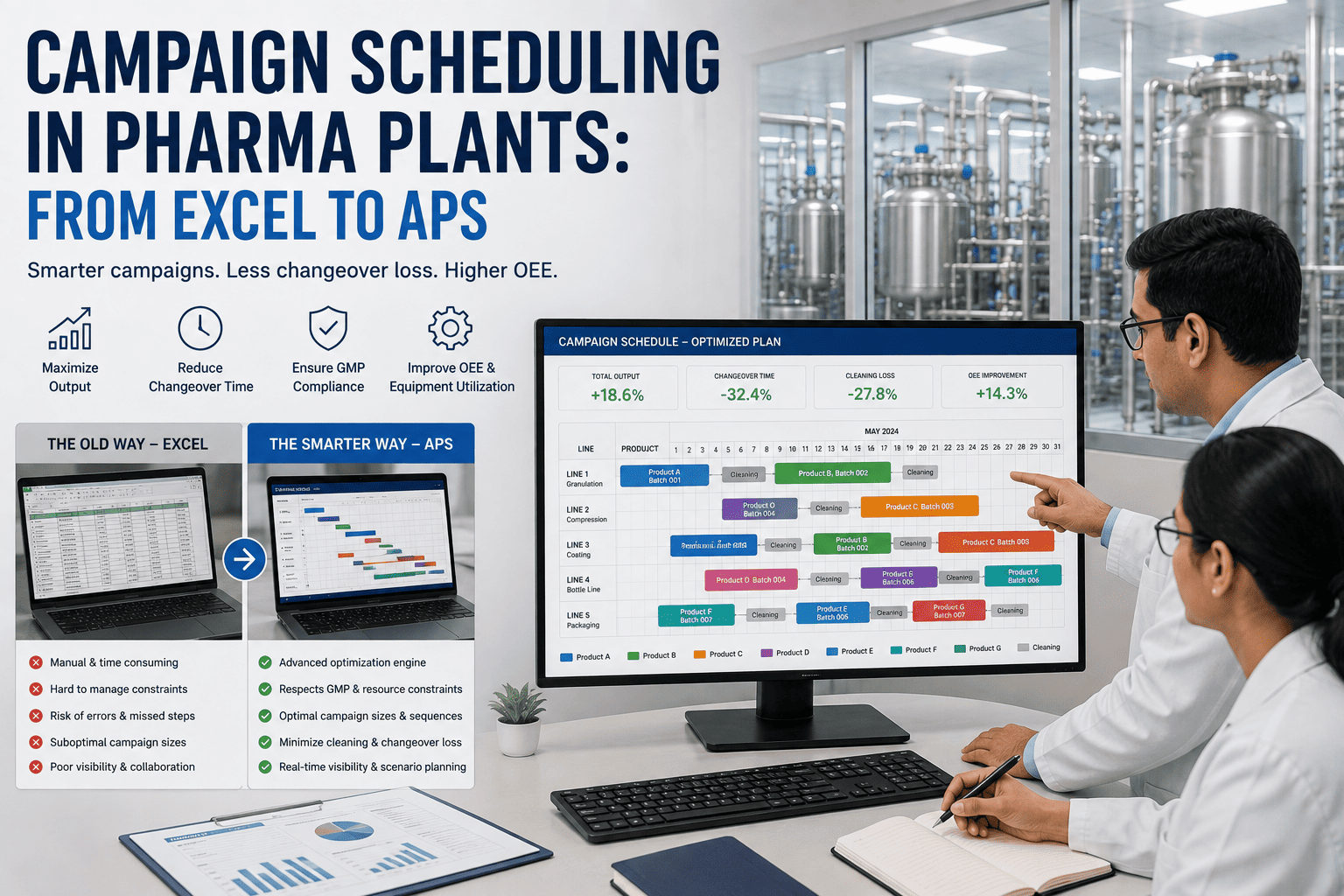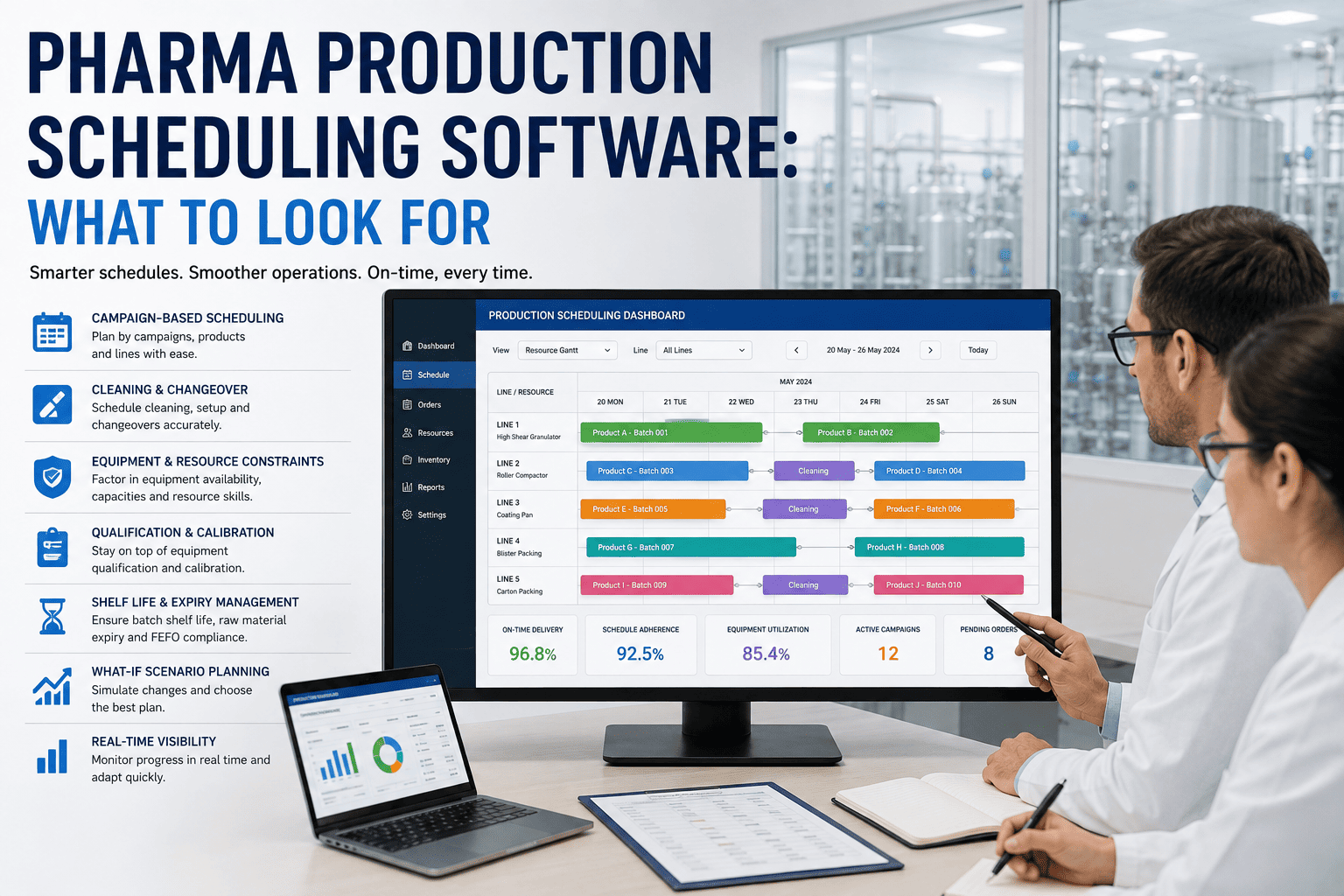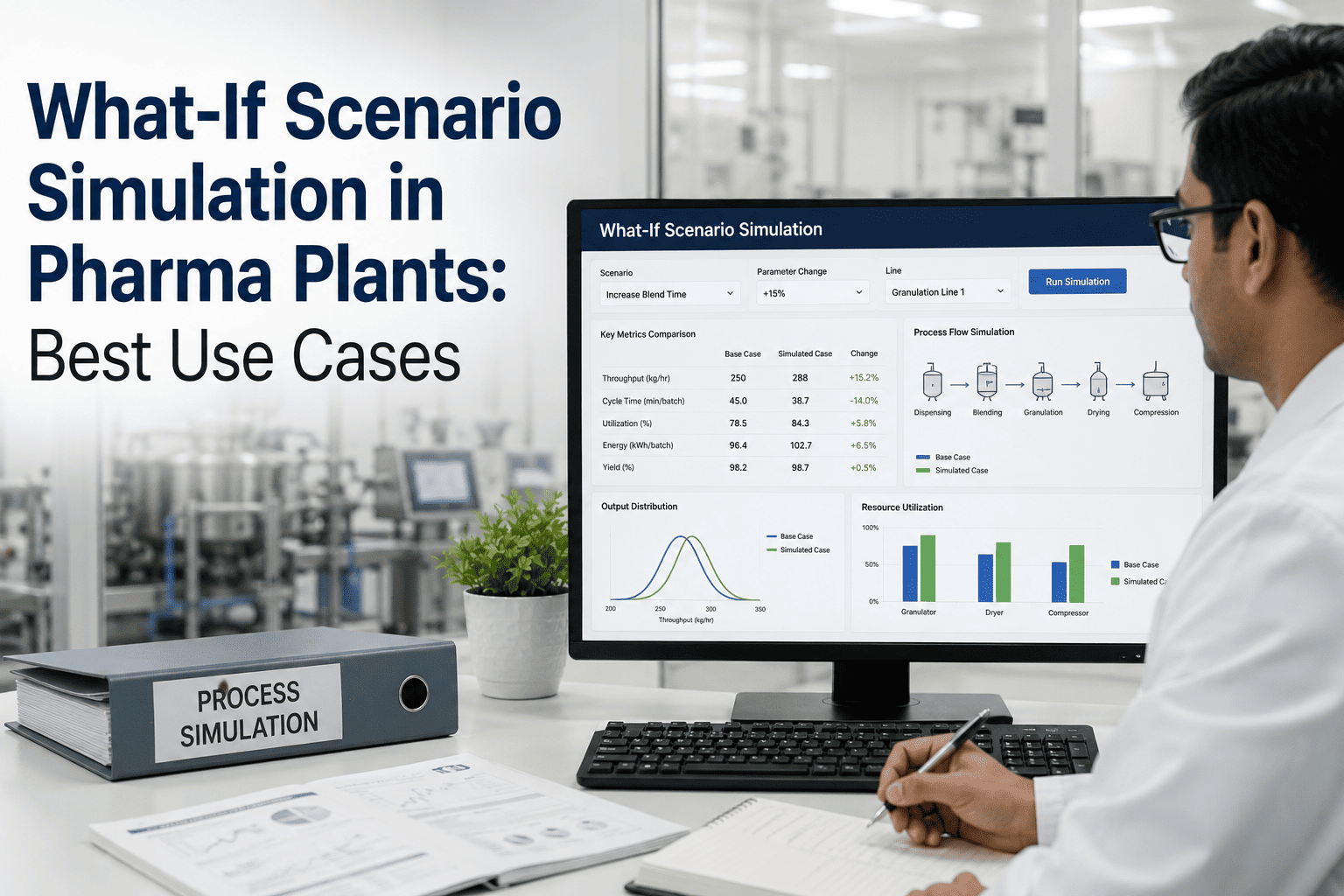
Every pharma plant runs the same expensive experiment over and over — changing a critical process parameter, moving a piece of equipment, adjusting a recipe, adding capacity — and finding out whether it worked by watching the next few batches. The batches that follow that change are the ones that either confirm the decision or become deviations, and by the time the deviation report is written, the change control has already been signed and the capex has already been spent. What-if scenario simulation moves that experiment off the production floor and into a digital twin, where a change can be tested against thousands of virtual batches before a single physical batch is affected. The plants that use this well identify their real bottlenecks correctly, avoid capex on the wrong equipment, and land process changes on the first attempt instead of the third. If you want to see what the highest-value simulations look like on your specific plant, the fastest way to start is to book a demo.
Simulate the Change Before You Sign the Change Control
iFactory brings digital-twin-based what-if simulation to pharma process and plant decisions — bioreactor optimization, bottleneck identification, layout changes, and recipe modifications tested virtually before a single physical batch is affected.
Utilization Is Not Bottleneck — the Most Expensive Misconception in Pharma Capex
Capacity planning teams look at the equipment running flat-out and assume that is the constraint. So they buy a second one — a second reactor, a second column, a second filler. And throughput barely moves. The real bottleneck is whatever forces every other step to wait, and it is often a low-utilization shared resource nobody was watching: a CIP skid used 20% of the time, a WFI loop, a transfer panel, a quality analyst. Simulation finds the true constraint by perturbing the model — reducing each step's time to zero one at a time and watching what actually moves overall throughput. A utilization chart cannot show this.
Nine Highest-Value Simulations Pharma Plants Run Today
Not every plant question benefits from simulation. The scenarios below are the ones where the cost of getting it wrong is high, the physical experiment is slow or risky, and the decision compounds — where simulating the answer before committing is the difference between a working change and a documented deviation. Each is a real category of what-if that pharma teams run in production twins today.
Pick One Scenario. See the Answer in a Week.
Most teams start with a bottleneck identification or a capex trade-off — the two scenarios where the decision-quality-per-hour of simulation is highest and the payoff is easiest to prove.
What Actually Happens Inside a Scenario Simulation
A what-if simulation is not one calculation — it is a five-stage loop that feeds a model of your plant, perturbs the variable in question, and measures the outcome. Every serious scenario tool follows this pattern; the difference between a useful tool and a useless one is the fidelity at each stage.
How Simulation Fits Inside GMP — the Frameworks It Validates Against
There is no digital-twin-specific regulation yet, and that has been a hesitation for pharma quality organizations approaching simulation. In practice, what-if simulation validates against established frameworks the industry already knows well — the same frameworks that govern any computerized system used to inform GMP decisions.
Why Simulation Deployments Actually Take Time — and What to Fix First
The hard part of digital twin deployment is almost never the model. The hard part is aggregating and cleaning the data that feeds the model — historical batch records fragmented across multiple MES instances, PAT sensor streams that were never harmonized, equipment logs that live in vendor-specific silos, and paper batch records that have not been digitized. Every mature deployment has a story about the integration month that took three months. Planning for it up front is what separates successful pilots from stalled ones.
Pharma What-If Simulation — Questions Process and Engineering Teams Ask
Every Change Deserves a Simulation Before It Deserves a Batch
iFactory brings pharma-grade what-if scenario simulation together with the validation framework, data integration, and change-control alignment your quality organization already knows — so process decisions are proven virtually before they touch a production batch.