Bottleneck Simulation for Pharma Plant Debottlenecking
By Josh Brook on June 1, 2026
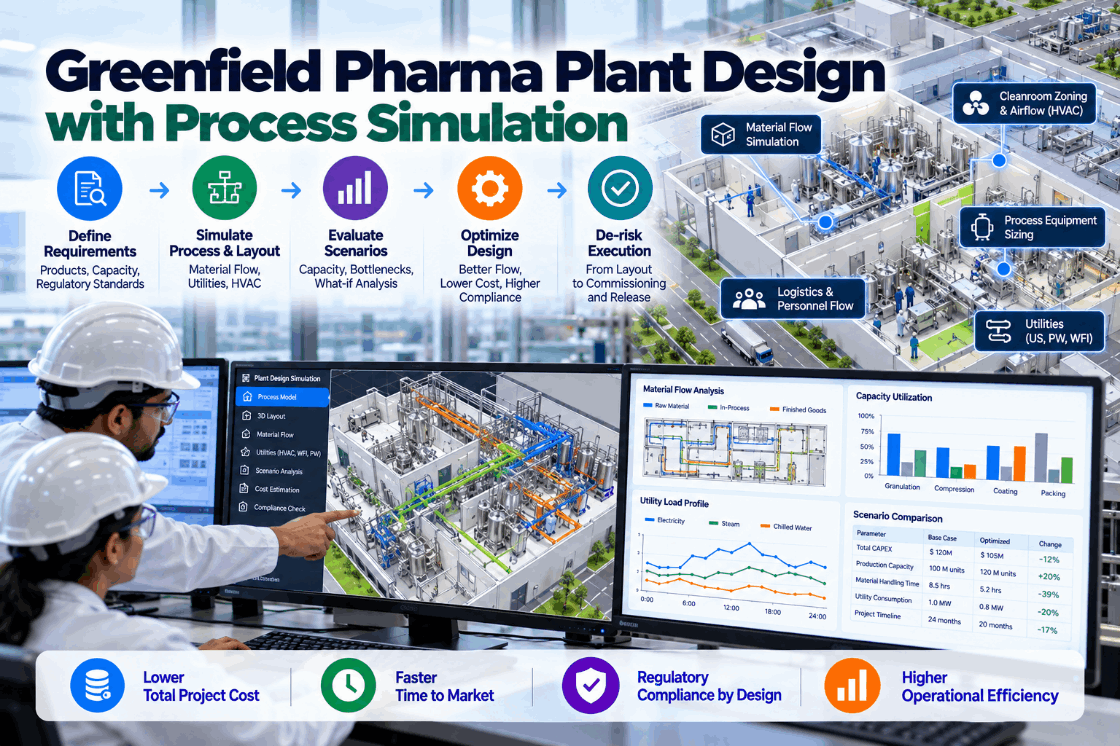
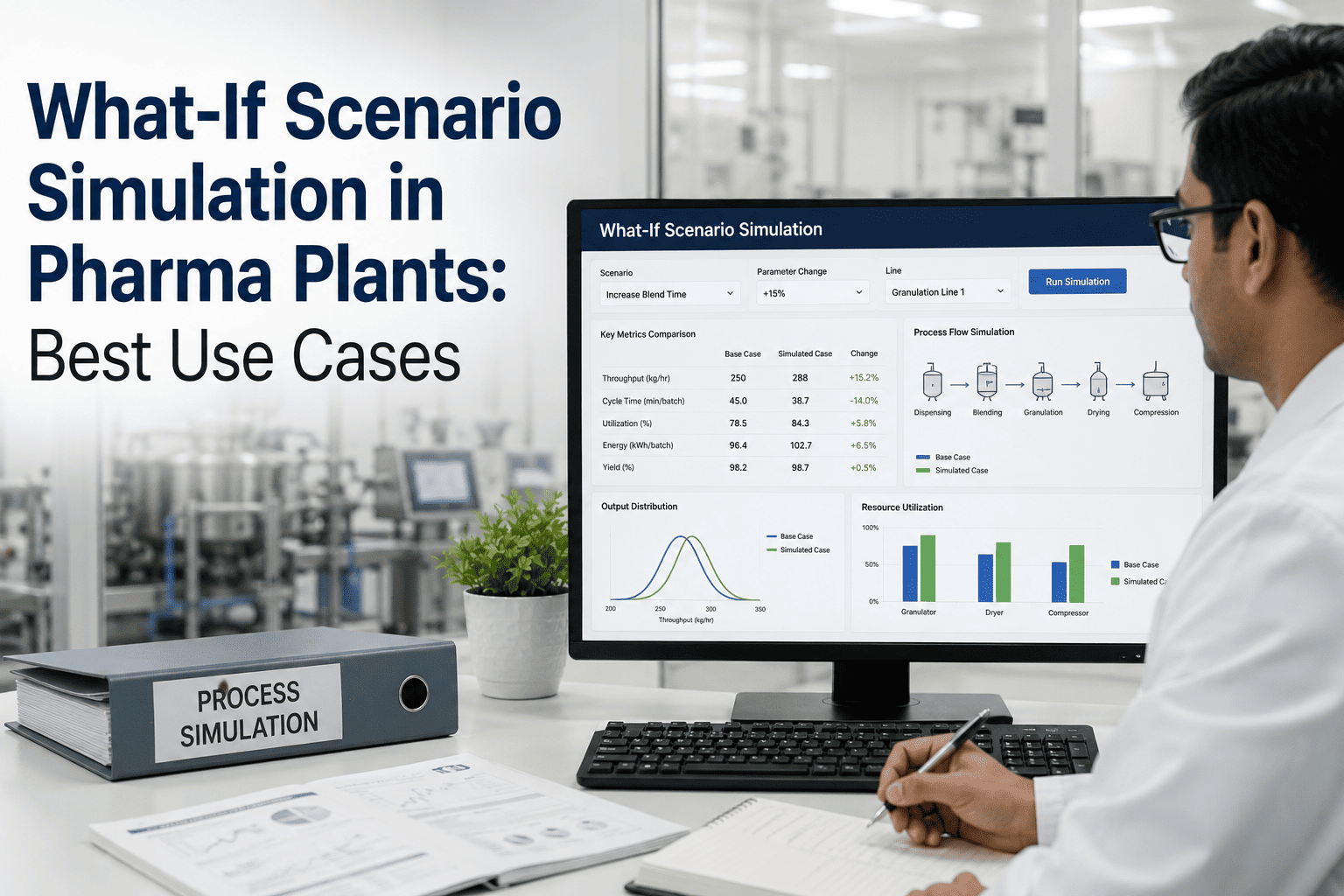
Most pharma plants are running closer to a wall than they think — and the wall is rarely where anyone looks. Industry experience puts 10 to 20% of usable capacity locked behind hidden bottlenecks that never show up on a utilization report, because the constraint is almost never the equipment that looks busiest. A buffer tank used only 20% of the time can be the thing throttling the entire line, simply because everything waits on it at the wrong moment. The instinct, when demand rises, is to spend: buy a bigger vessel, add a suite, scope a capital project. But retrofitting an existing facility can be an order of magnitude cheaper than building new capacity, and done in under a year instead of the four to six a greenfield plant takes. The catch is knowing exactly which constraint to attack — because fixing the wrong one improves nothing, and the moment you relieve the real bottleneck, a new one appears somewhere else. Process simulation is how you find the true constraint, test the fix in a virtual plant before spending a rupee, and watch where the bottleneck moves next. iFactory builds that living model from your real recipes, changeover times, CIP regimes, and utility limits — so capacity decisions stop being guesses.
Bottleneck Simulation & Debottlenecking
Find the Hidden 10-20% Before You Spend on Capex
Your real bottleneck is rarely your busiest machine. iFactory builds a digital twin of your plant, finds the true constraint, and lets you test the fix virtually — recovering capacity at a fraction of new-build cost.
Sources: Pharmaceutical Technology (KBI Biopharma) · BioProcess International · BioPharm International · PROCESS Worldwide · Intelligen SuperPro · iFactory Deployment Data 2026
The Busiest Machine Is Almost Never the Bottleneck
This is the single most expensive misconception in capacity planning. Teams look at the equipment running flat-out and assume that is the constraint — so they buy a second one, and throughput barely moves. The real bottleneck is whatever forces everything else to wait, and that is often a low-utilization shared resource: a CIP skid, a transfer panel, a WFI loop, an analyst. A tank used 20% of the time can be the true constraint if every step queues behind it at the same moment.
The Trap
Utilization = Bottleneck
Look at the equipment running at 95%, buy another one. Spend the capex, gain almost nothing — because that step was never what everything waited on.
Fixing the wrong area will not improve run rate no matter how much you improve it.
The Reality
Wait-time = Bottleneck
The constraint is whatever delays the next step. A CIP skid or shared tank at 20% use can throttle the whole line if everything queues on it at the critical moment.
Simulation finds the constraint by perturbing the model, not by reading a utilization chart.
Where Pharma Plants Actually Choke
Bottlenecks come in two families, and simulation is the only practical way to tell them apart. Equipment bottlenecks can usually be eased by adding or staggering equipment. Resource bottlenecks — shared utilities, labor, cleaning capacity — are sneakier, often unavoidable, and frequently the real ceiling on the plant. Here is where they hide.
01
Equipment Time Bottleneck
A single long-cycle step — a bioreactor, a chromatography column, a dryer — sets the plant cycle time and caps batches per year. Relieve it and the next-slowest step immediately takes its place.
Fix: add, stagger, or move secondary ops off it
02
Shared Equipment Conflict
One vessel or skid serves two steps in the same batch, or two campaigns collide on the same asset. Low total utilization, but it stalls production every time two demands overlap.
Fix: resequence, or de-share the asset
03
CIP, Changeover & Cleaning
Clean-in-place skids, changeover, and cleaning regimes are classic invisible constraints. The product isn't moving and nobody logs it as a bottleneck, yet it gates every campaign transition.
Fix: model zero-CIP-time to size the prize
04
Utilities & Labor
WFI, clean steam, chilled water, a transfer panel, or simply an available qualified operator. Resource constraints that no equipment list shows but that quietly delay the start of the next critical step.
This is what makes simulation indispensable: bottlenecks shift. The moment you relieve the binding constraint, the ceiling jumps to the next step — and the optimal action changes with it. Spending capex without modeling this is how plants buy a bigger reactor only to discover the dryer was the real wall all along. The chart below shows capacity climbing as each successive constraint is found and relieved in the virtual plant, before a single piece of equipment is touched.
Throughput vs Successive Debottlenecking Steps
Baseline = 100%Simulated, no capex yet
The first three gains here cost scheduling and process changes, not capital. Only the last step needs equipment — and now you know it's the right equipment.
Simulate It, or Spend and Hope
A validated facility is an expensive place to experiment. Every physical trial risks a batch and ties up the line; a wrong capex decision is locked in for the life of the plant. A digital twin lets you run every what-if safely, in a virtual environment, and implement only the changes that actually move throughput.
Decision
Spreadsheet & Instinct
iFactory Plant Simulation
Which step is the real constraint?
Guessed from utilization, often wrong
Found by perturbing the model step by step
Will this capex actually help?
Found out after the money is spent
Tested virtually before any PO is raised
Where does the bottleneck move next?
Discovered as a nasty surprise
Predicted in the same run, ranked in order
Can we hit demand without new equipment?
Default answer is "build more"
Smart scheduling tested first, capex last
Does variability change the answer?
Averages hide the real constraint
Modeled with variability, true bottleneck surfaces
From Capex Request to Capacity Recovered
A representative mid-size API plant facing rising demand had a capital request on the table for a second reaction vessel — a multi-crore line item with a long lead time. Before signing, the team built a digital twin and ran the constraint analysis. The vessel was not the bottleneck.
Before · Capex Path
Planned fixNew reaction vessel
Assumed constraintBusiest reactor
Lead time12-18 months
SpendMulti-crore capex
The fix everyone agreed on, before anyone modeled it.
Simulate first
After · Simulation Path
Real constraintCIP skid & sequencing
Throughput recovered~15%
Time to realizeWeeks, not months
CapexDeferred indefinitely
The vessel was real headroom for later — just not the bottleneck today.
What the Digital Twin Gives You
10-20%
Hidden capacity surfaced and recovered
0 Risk
What-ifs run virtually, never on a live batch
Ranked
Constraints in order, with the next one named
Capex
Justified or avoided, on evidence not instinct
Frequently Asked Questions
Why can't we just look at utilization reports to find our bottleneck?
Because the true constraint is whatever forces other steps to wait, not whatever runs the most hours. A shared tank or CIP skid used only 20% of the time can cap the whole plant if every step queues on it at the wrong moment, while your busiest reactor may have slack in the schedule. Simulation finds the real constraint by perturbing the model — reducing each step's time to zero one at a time and watching what actually moves throughput — which a utilization chart can never show. Book a demo to see the perturbation analysis on your plant.
How much capacity can we realistically recover without buying equipment?
Industry experience puts hidden capacity at roughly 10-20%, and a large share of it is unlocked through scheduling, resequencing, and process changes rather than capital — debottlenecking commonly adds capacity at a fraction of new-build cost. The exact figure depends on how well your plant is already run, which is precisely what the model tells you before you commit to anything.
We're about to approve a capital project. Is it too late to simulate?
That is the best possible moment. A digital twin lets you confirm the proposed equipment actually relieves the binding constraint — and shows where the bottleneck moves next, so you don't spend on a vessel only to find the dryer was the real wall. Either the simulation justifies the capex with evidence, or it surfaces a far cheaper fix and defers the spend. Ask support how fast a pre-capex model can be stood up.
What does iFactory need to build a model of our plant?
The digital twin is built from what you already have: actual recipes, equipment lists, changeover and CIP times, utility and labor constraints, and campaign sequences. Because it reflects your real operation rather than a textbook flowsheet, the constraints it finds are the ones genuinely limiting you. The model then stays live, so it keeps answering new capacity questions as your product mix changes.
Does process variability change which step is the bottleneck?
Often, yes — and this is a common trap. Running a model on average times alone can point to the wrong constraint; the same model run with realistic variability frequently identifies a different bottleneck. iFactory models the variability so you fix the step that actually limits the plant in practice, not the one that looks limiting on paper.
Before You Sign That Capital Request
Find Your Real Bottleneck — and the Capacity Hiding Behind It
Book a 30-minute session with a simulation specialist. We will build a constraint model from a sample of your real recipe and schedule, rank your hidden bottlenecks, and show you how much capacity is recoverable before any capex — and exactly which spend is actually worth it.