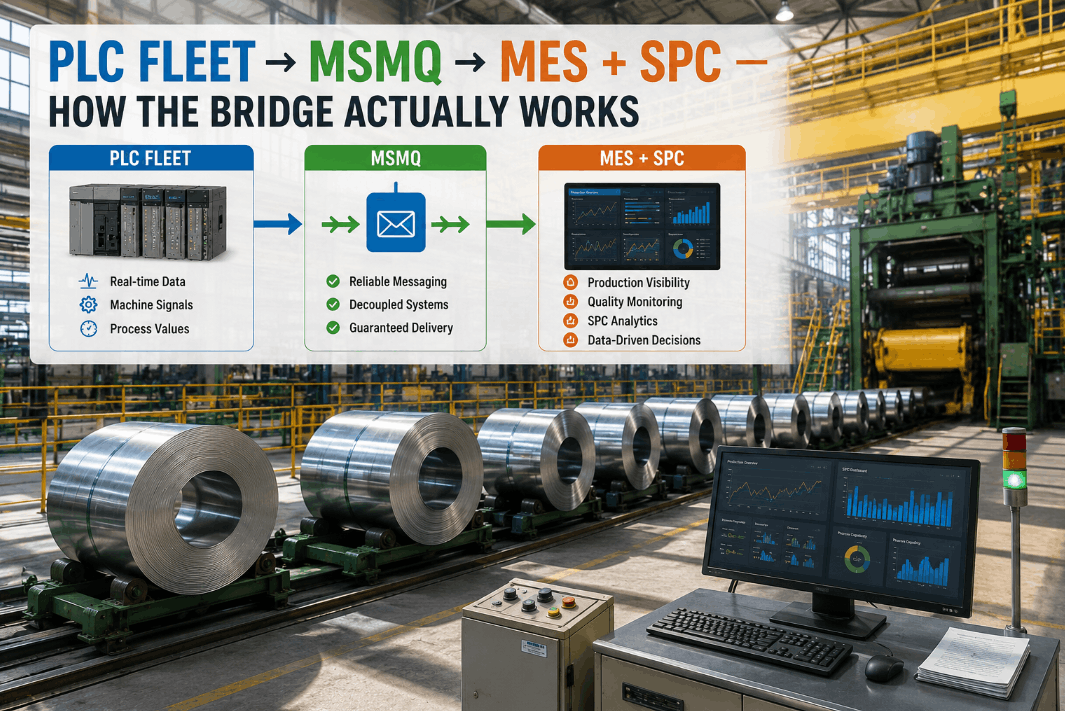
Most OT architects have seen the architecture diagram a hundred times — PLC fleet on one side, MES and SPC systems on the other, and a box in the middle labeled "integration layer" that glosses over everything that actually matters. The real engineering question is not whether you can bridge plant-floor PLCs to an MES. It is whether the bridge handles 2,884 live tags across a 5-PLC EtherNet/IP fleet at an 18-millisecond scan cycle without dropping data, introduces no write-back risk to the control layer, and delivers a timestamped, normalized tag stream that your SPC engine can consume without additional transformation. At Plant Foxtrot, iFactory built exactly that bridge — 5 Allen-Bradley PLCs, 18 ms scan, 20 ms RPI, 27 discrete operations, all bridged to MSMQ with full fleet online and confirmed tag fidelity before the MES integration handshake was completed. This page explains the plumbing end-to-end so OT architects can evaluate the architecture against their own fleet requirements before committing to a design.
Why the OT-IT Bridge Is Always the Hardest Part of the Integration
Every MES vendor promises seamless plant-floor connectivity. Every SPC platform says it can consume real-time PLC data. What neither of them fully addresses is the boundary problem — the specific engineering challenge of extracting a high-frequency, multi-controller tag stream from a live OT network without disrupting the scan cycle, without introducing write-back paths to the control layer, and without requiring the kind of historian infrastructure that adds three months and a capital approval to the project timeline.
The OT-IT bridge is hard because it sits at the intersection of two networks with fundamentally different design priorities. The OT network is designed for determinism and safety — every millisecond of scan cycle jitter is a potential quality or safety event. The IT network is designed for throughput and interoperability — retransmission, buffering, and asynchronous delivery are normal behaviors. Bridging them requires an architecture that respects both constraints simultaneously. Book a Demo to walk through how iFactory's bridge architecture handles this constraint at the network level before any tag configuration begins.
- Historian-first architecture adds latency between PLC event and SPC visibility
- OPC-DA polling loops degrade PLC scan performance at high tag counts
- Write-back paths to PLC exposed during MES integration testing
- Tag normalization handled in MES — inconsistent naming across controllers
- No buffering at the bridge — tag drops during IT network congestion events
- Fleet status invisible — single PLC offline undetected until data gap appears in SPC
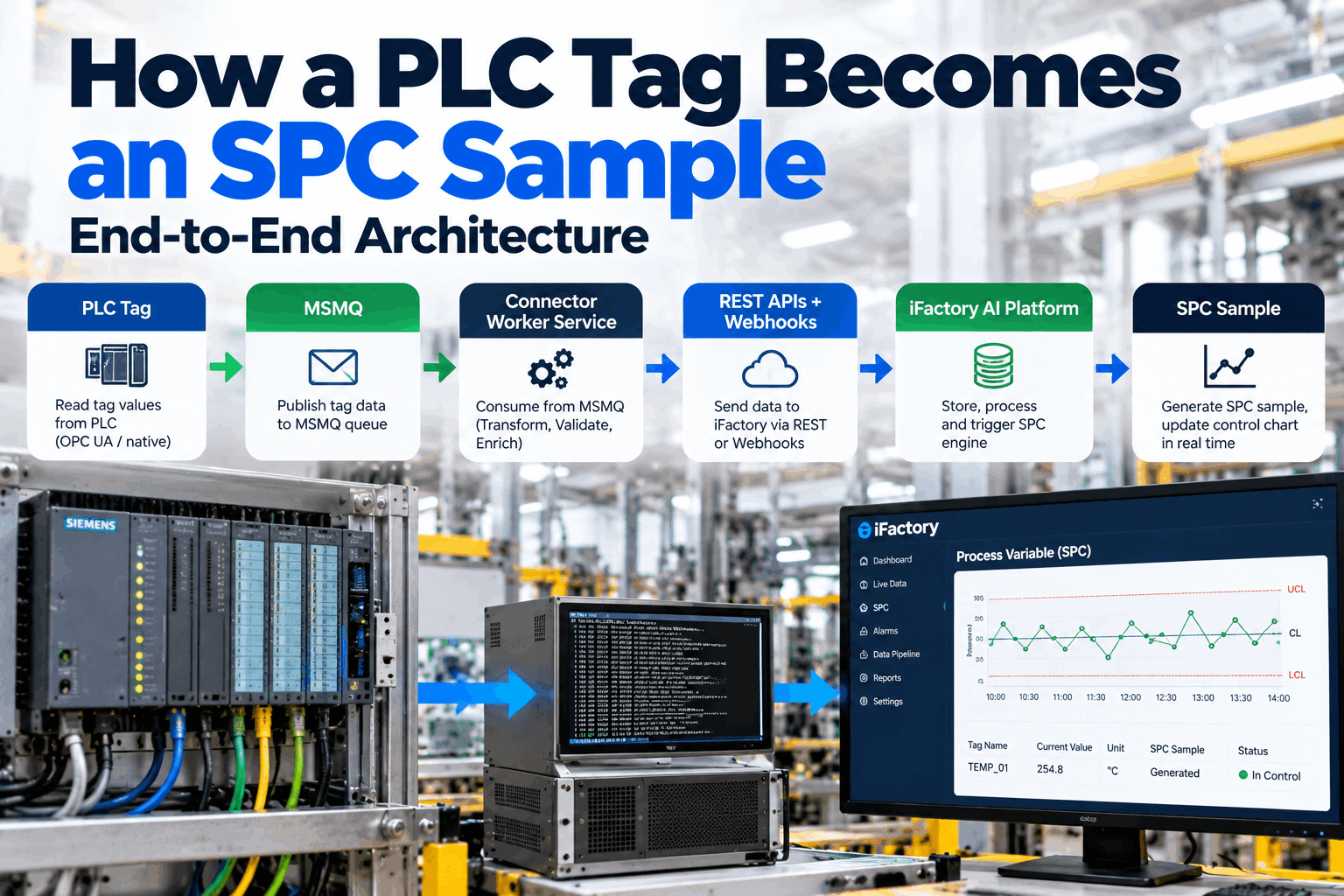
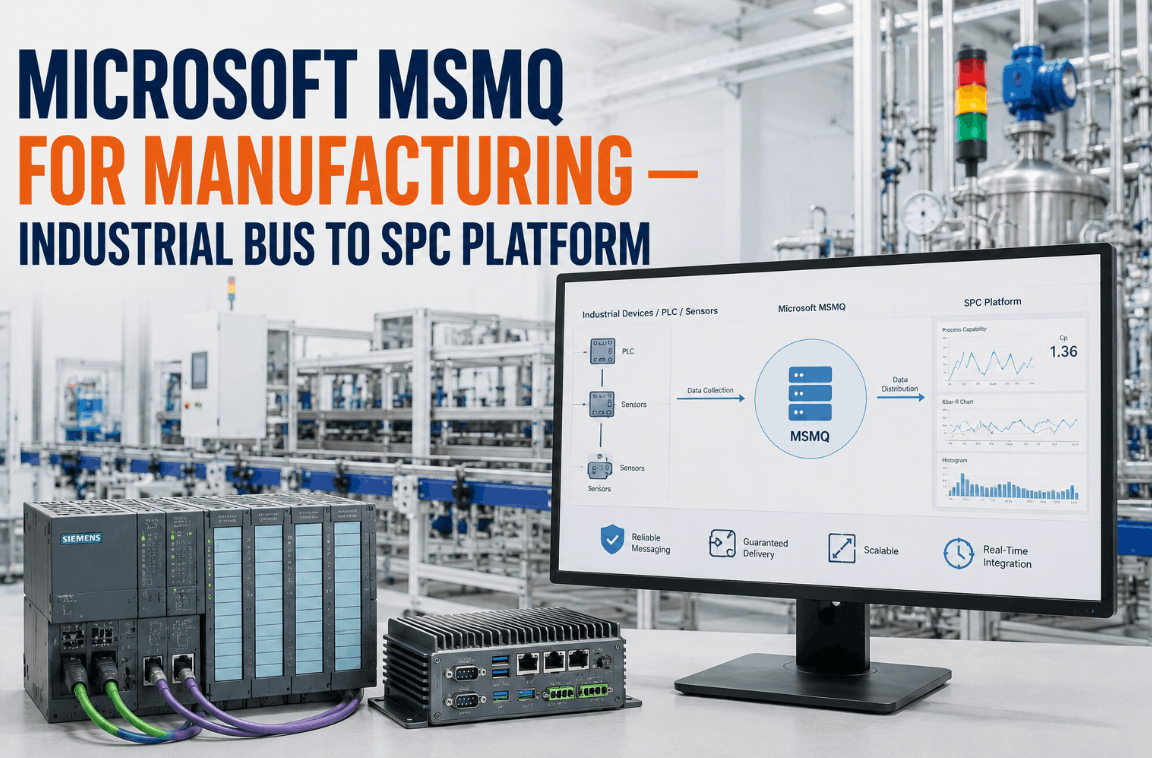
- Direct MSMQ publish from edge node — no historian in the critical path
- EtherNet/IP CIP with 20 ms RPI — zero impact on PLC scan cycle
- Read-only by design — no write-back path exists in the bridge layer
- Tag normalization at the edge node — unified namespace before MSMQ publish
- MSMQ persistent queue — no tag drop during IT network interruption
- Fleet health dashboard — per-PLC online status, scan fidelity, and tag count live
The Plant Foxtrot Architecture: 5-PLC EtherNet/IP Fleet Bridged to MSMQ
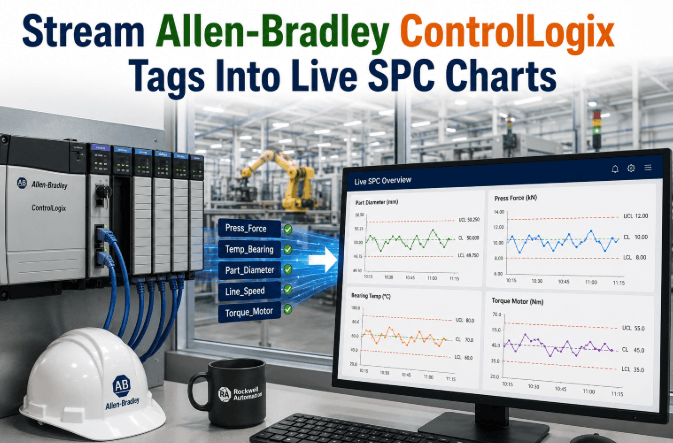
Plant Foxtrot is a mid-size discrete manufacturing facility running a fleet of five Allen-Bradley ControlLogix PLCs across 27 operations — press cells, conveyor zones, assembly stations, and two environmental control loops. The OT architect's requirement was straightforward: deliver all 2,884 process tags to the MES and SPC systems in real time, with no historian intermediary, no write-back exposure, and a scan fidelity guarantee that could be demonstrated to the operations team before the bridge went into production service. iFactory met that requirement with the following architecture, which is documented here as a reference for OT architects designing equivalent deployments. Book a Demo to review this architecture against your own fleet configuration.
Tag Engineering: Configuring 2,884 Tags Across a 5-PLC Fleet Without Data Chaos
The tag count at Plant Foxtrot — 2,884 across five controllers — is not unusual for a mid-size discrete manufacturing facility. What is unusual is having all of them normalized, timestamped, and flowing to MSMQ with confirmed fidelity before the MES integration team begins their configuration work. Most OT-IT integration projects fail at the tag engineering stage — not because the bridge technology doesn't work, but because the tag inventory is incomplete, the naming conventions are inconsistent across controllers, and the data quality validation step is skipped in the interest of schedule. iFactory's tag engineering process addresses each of these failure modes systematically.
MSMQ to SPC: Delivering Production-Context Data That Control Charts Can Actually Use
A PLC tag value without production context is a number without meaning in an SPC chart. Knowing that press cell 4 applied 47.3 kN of force at 14:22:08.441 is useful only when the SPC engine also knows that the force was applied to part number AS-7741-B, on work order WO-20260601-0047, during shift 2, by operator badge 1184. Without that context, the control chart cannot distinguish between a process deviation on a tight-tolerance aerospace part and the same force reading on a structural bracket with a 15% wider tolerance band. The MSMQ bridge architecture is what makes that context enrichment possible without adding latency to the critical data path. Book a Demo to see how the MES context join works against a live MSMQ stream.
Bridge Component Specification: What OT Architects Need to Validate Before Deployment
The following table documents the specific technical parameters that iFactory validated at Plant Foxtrot before the bridge was accepted into production service. OT architects evaluating the architecture for their own facilities should use this as a specification checklist — every parameter in this table should be verifiable by measurement, not assumed from vendor claims.
| Bridge Component | Parameter Measured | Plant Foxtrot Value | Acceptance Criterion | Validation Method |
|---|---|---|---|---|
| CIP Connection (per PLC) | Requested Packet Interval | 20 ms | ≥ PLC scan cycle (18 ms) | RSLogix 5000 connection properties verified |
| Edge Node Tag Acquisition | Total tags confirmed online | 2,884 / 2,884 | 100% fleet online at acceptance | iFactory fleet dashboard screenshot + log export |
| Tag Timestamp Resolution | Timestamp granularity | Microsecond (µs) | ≤ 1 ms resolution required for SPC | MSMQ message payload inspection |
| Unified Namespace | Tag mapping coverage | 2,884 of 3,196 (312 excluded) | All operational tags mapped; legacy tags documented and excluded | Namespace mapping file audit |
| MSMQ Queue Structure | Topic queue count | 27 queues | One queue per operation group | MSMQ management console queue list |
| Write-Back Isolation | OT-IT network segmentation | Read-only CIP; no return path | Zero write-back paths confirmed by network scan | Firewall rule audit + penetration test summary |
| Data Quality Validation | Tags passing 24-hour quality gate | 2,884 / 2,884 (post-exclusion) | Zero quarantined tags in production bridge | Quality validation report |
Expert Perspective: What the Bridge Architecture Gets Right That Others Miss
Every OT-IT integration project I've been involved in has had the same failure mode: the bridge gets built to pass a demo, and then it falls apart the first time the IT network has a bad hour or the MES goes down for a patch window. What iFactory got right at Plant Foxtrot was building the persistence layer first — the MSMQ queue structure with dead-letter handling — before they connected a single MES consumer. When our MES went offline for six hours during a SQL Server patching window, the MSMQ queues held every tag message for that entire period and replayed them in sequence when the MES came back online. The SPC trends had a six-hour gap on the screen while the MES was down, but the moment it reconnected, that gap filled in completely from the queue. No data loss, no manual recovery, no SPC baseline corruption. That is what a production-grade bridge looks like, and it's not something most integration vendors think about until after the first incident.
Conclusion: The Bridge Is the Foundation — Everything Else Depends on It
MES visibility, real-time SPC, AI-driven quality prediction — none of these capabilities deliver their promised value if the OT bridge underneath them is fragile, lossy, or architecturally exposed. The Plant Foxtrot deployment demonstrates what a production-grade PLC fleet bridge looks like when it is designed from the control layer outward rather than from the IT application layer down: EtherNet/IP CIP at the correct RPI for the scan cycle, read-only isolation enforced at every layer, tag normalization at the edge before MSMQ publish, persistent queuing that survives IT network events, and a data quality validation gate that prevents bad data from corrupting the SPC baseline. The result is a bridge that OT architects can defend to their operations teams, their cybersecurity teams, and their quality engineers simultaneously — because it was designed to satisfy all three audiences from the beginning. Plant yield engineers and OT architects ready to review this architecture against their own fleet requirements can Book a Demo and walk through the Plant Foxtrot configuration in detail with the iFactory integration team.
Frequently Asked Questions: PLC Fleet Bridge to MES + SPC
Yes. iFactory's edge node supports S7 via the S7comm protocol for S7-300/400 and OPC-UA for S7-1200/1500, in addition to EtherNet/IP CIP for Allen-Bradley and Modbus TCP for legacy controllers — multi-vendor fleets are handled in a single edge node configuration.
MSMQ's persistent queue retains all messages on disk until the consumer acknowledges receipt; when the MES reconnects, messages are delivered in sequence with original timestamps preserved, allowing the SPC trend to backfill the gap without manual recovery or data loss.
The edge node establishes outbound-only CIP class 1 connections to each PLC; there is no inbound connection path from the IT network to the OT segment, and firewall rules enforcing this segmentation are documented and auditable as part of the iFactory deployment package.
New operation queues can be added and tag-to-queue routing rules updated without restarting the edge node or disrupting existing CIP connections; changes take effect on the next edge node configuration reload cycle, typically under 30 seconds.
For a 5-PLC fleet with approximately 3,000 tags, iFactory's tag inventory audit, unified namespace mapping, and 24-hour data quality validation gate are typically completed within 5–8 business days, with the bridge ready for MES consumer connection at the end of that window.