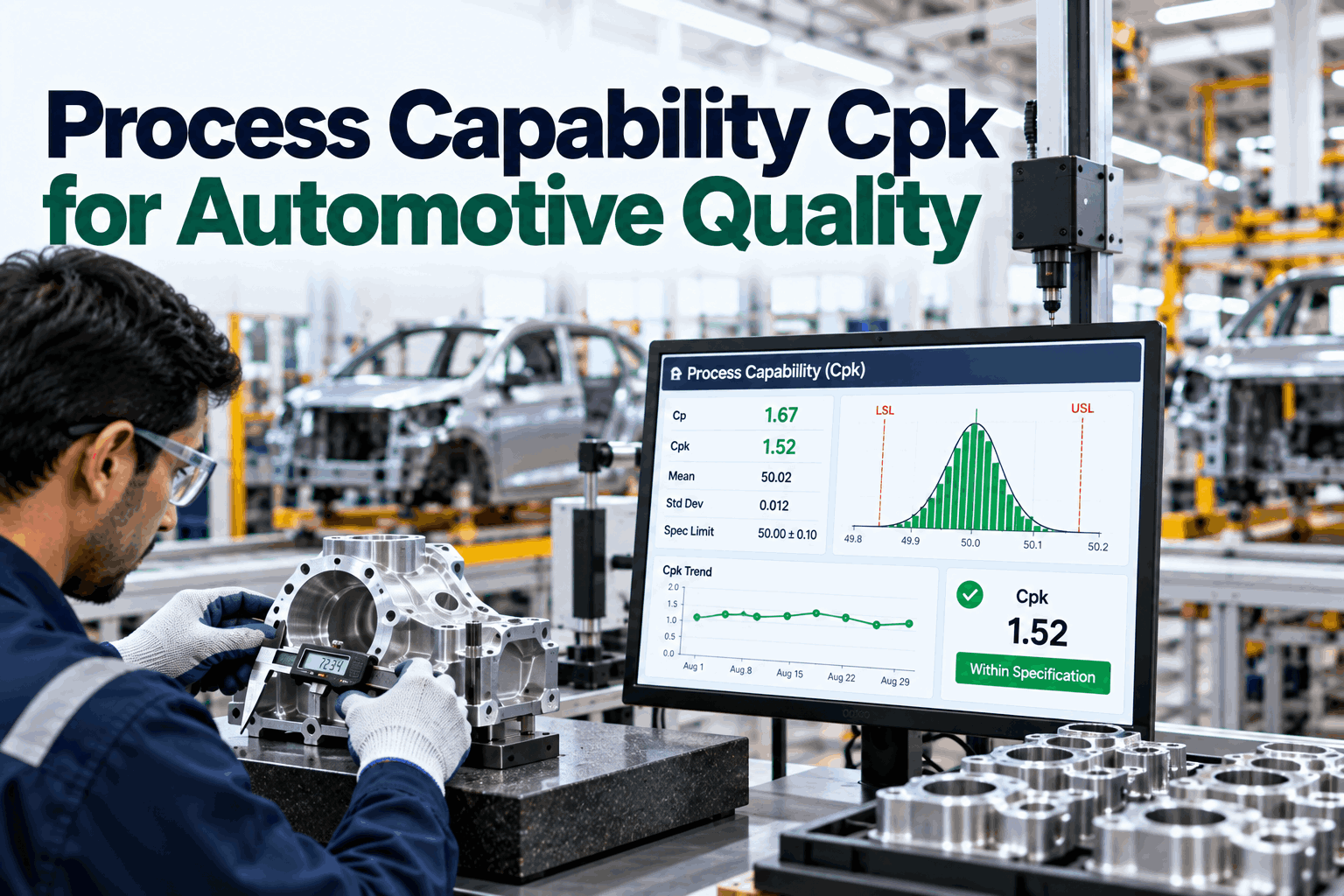
A Cpk study on a critical steering component shows 1.31 on paper, PPAP signs off, and eight months later a warranty claim traces back to that same characteristic drifting below Cpk 1.0 on a specific tool insert cycle nobody was monitoring. That is the process capability Cpk automotive blind spot the 2026 quality market is finally addressing — the calculation is right, the acceptance criterion is met, but the workflow that turns a capability gap into a CAPA and a genealogy anchor is often missing. iFactory AI overlays your MES, QMS, historian, SPC, and CMM stack so every capability signal opens a scoped hold, a CAPA draft with the actual measurement history and Cpk trend attached, verified recovery, and a genealogy trail that connects capability to real production parts. Book a 30-minute walkthrough of Cpk gap to CAPA closure.
The Cpk calculation is right. The workflow around a capability gap is what keeps the drift from becoming a warranty claim.
At a Glance
Why Cpk Alone Is Not a Quality Program
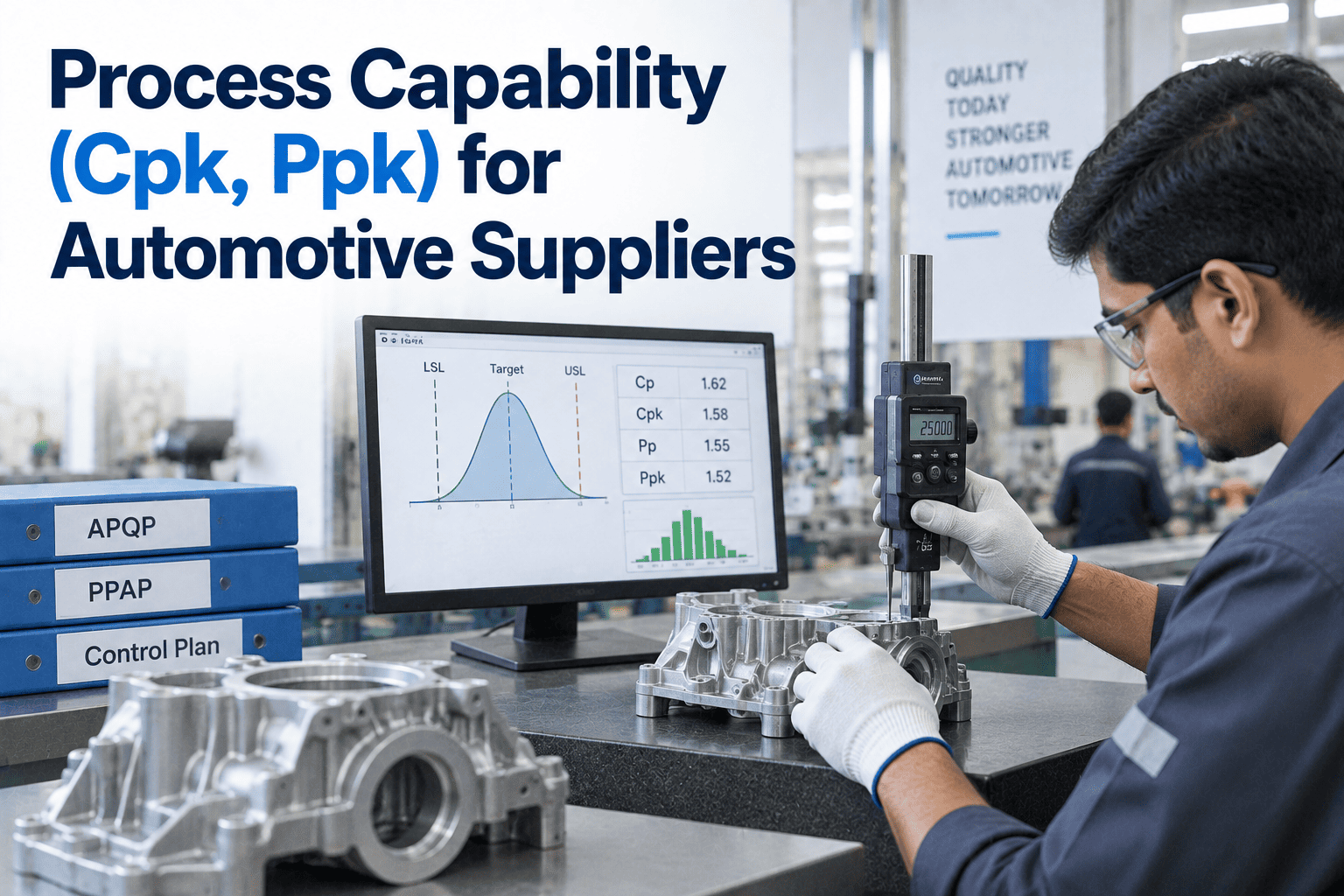
Automotive quality culture built process capability into the vocabulary of every plant floor. Cpk 1.33 for critical characteristics, Cpk 1.67 for safety-critical, PPAP submissions with capability studies, IATF 16949 audits that reference the same math — the calculation itself is one of the most standardized quality practices in industry. And yet the same plants still see capability drift into problems because the workflow between the calculation and the corrective action is often manual. A capability study runs quarterly, the number looks fine, and by the time the next study shows Cpk trending toward 1.0 the drift has been active for weeks.
The gap is not in the math. The gap is in the governance around the trend. When capability is calculated continuously from live SPC data and every meaningful decline opens a structured workflow — a scoped hold, a CAPA draft with the trend attached, a verified restart — the plant moves from periodic snapshots to real-time protection. That is where iFactory AI overlays the existing quality stack.
Capability Signals That Deserve a Workflow
Continuous capability calculation drops below the PPAP acceptance criterion — signal captured with characteristic and part-range context.
Capability declining across multiple subgroups even while still above threshold — early warning before the number crosses the line.
Spread widening or mean shifting — the gap between Cp and Cpk reveals whether centering or variation is the issue.
Capability drops that correlate with tool insert cycles — CAPA links to the insert history for root cause.
Capability drift on one machine that is not seen on parallel equipment — narrow root cause faster.
Capability drift tied to incoming material lot changes — supplier CAPA opens with the correlation as evidence.
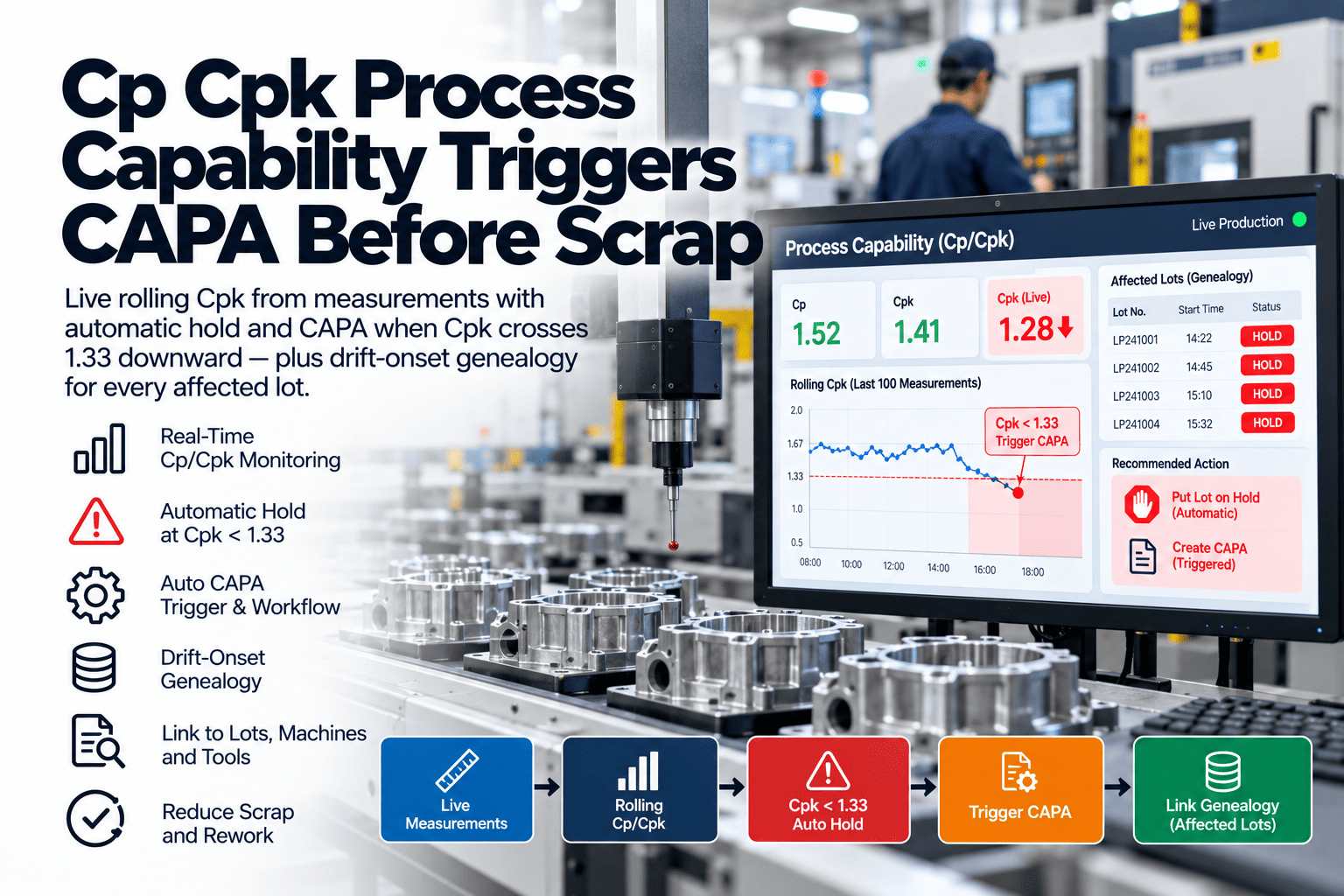
The Closed-Loop Path — Capability Gap to Verified Restart
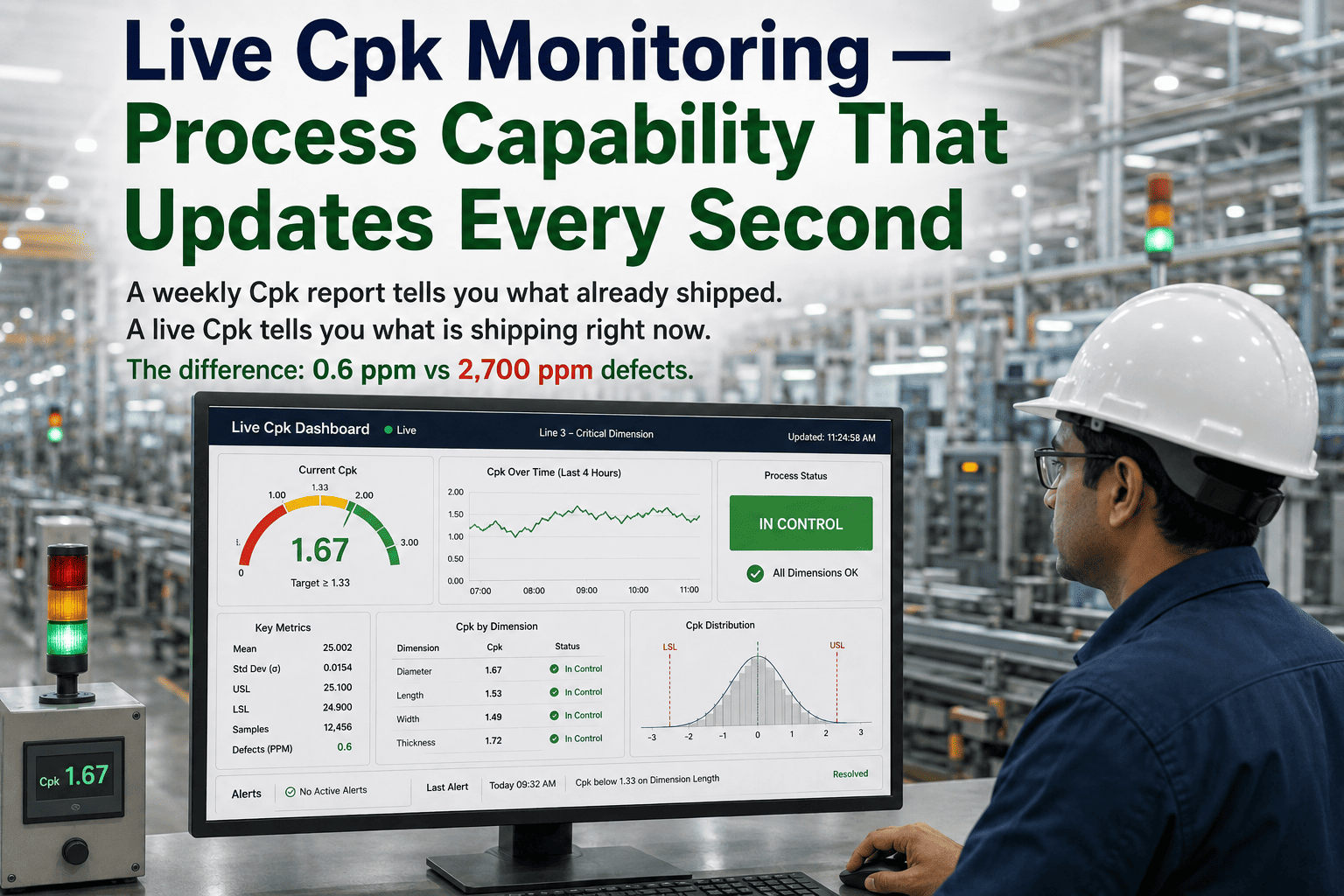
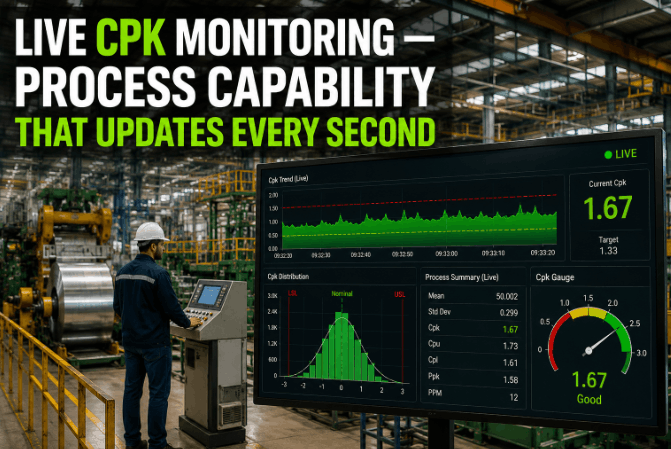
Rolling Cp and Cpk on every critical characteristic, updated with every subgroup, trended across the shift.
Structured event with the capability trend, the affected part range, and the tool and machine context routes to the reviewer.
Every part produced during the capability gap window is held until the corrective action is verified.
Cpk trend, subgroup data, tool history, and material lot context pre-populate the record for reviewer sign-off.
New capability study runs on post-correction subgroups. Human sign-off releases the hold with the evidence preserved.
Bring one critical characteristic and one Cpk history. We walk through live capability calculation, threshold flag, part-range hold, CAPA draft with trend evidence, and verified restart — all beside your existing SPC.
Where iFactory AI Fits in an Automotive Quality Stack
- SPC software of record
- CMM programs and measurement data
- PPAP packages and IATF documentation
- MES production tracking
- QMS approvals and audit trail
- Live capability calculation on every characteristic
- Structured event contracts on capability gaps
- Part-range hold logic tied to Cpk trends
- CAPA drafting with tool and material context
- Capability genealogy across production lots
Frequently Asked Questions
Live capability calculation catches drift between periodic studies. When paired with a governed workflow, a declining Cpk trend becomes a part-range hold and a CAPA draft in the same moment rather than a finding at the next audit.
No. Your SPC software stays as the record. iFactory AI overlays it and adds the capability calculation, event contracts, and CAPA workflow beside it.
That is one of the most valuable signals. Points can stay within limits while capability erodes because spread widens or the mean shifts. Live capability trending catches that before an OOC point does.
Every capability gap has a CAPA and a genealogy record tied to it. Audit questions about how a Cpk decline was detected and handled have documented answers rather than reconstructed narratives.
Yes. Capability trends correlate with incoming material lot changes. When the correlation is real, the supplier CAPA opens with the trend as evidence.
A capable process at PPAP is a starting point, not a guarantee. iFactory AI turns every capability gap into a governed hold, a CAPA draft with the Cpk trend, a verified restart, and a genealogy trail every auditor can follow.