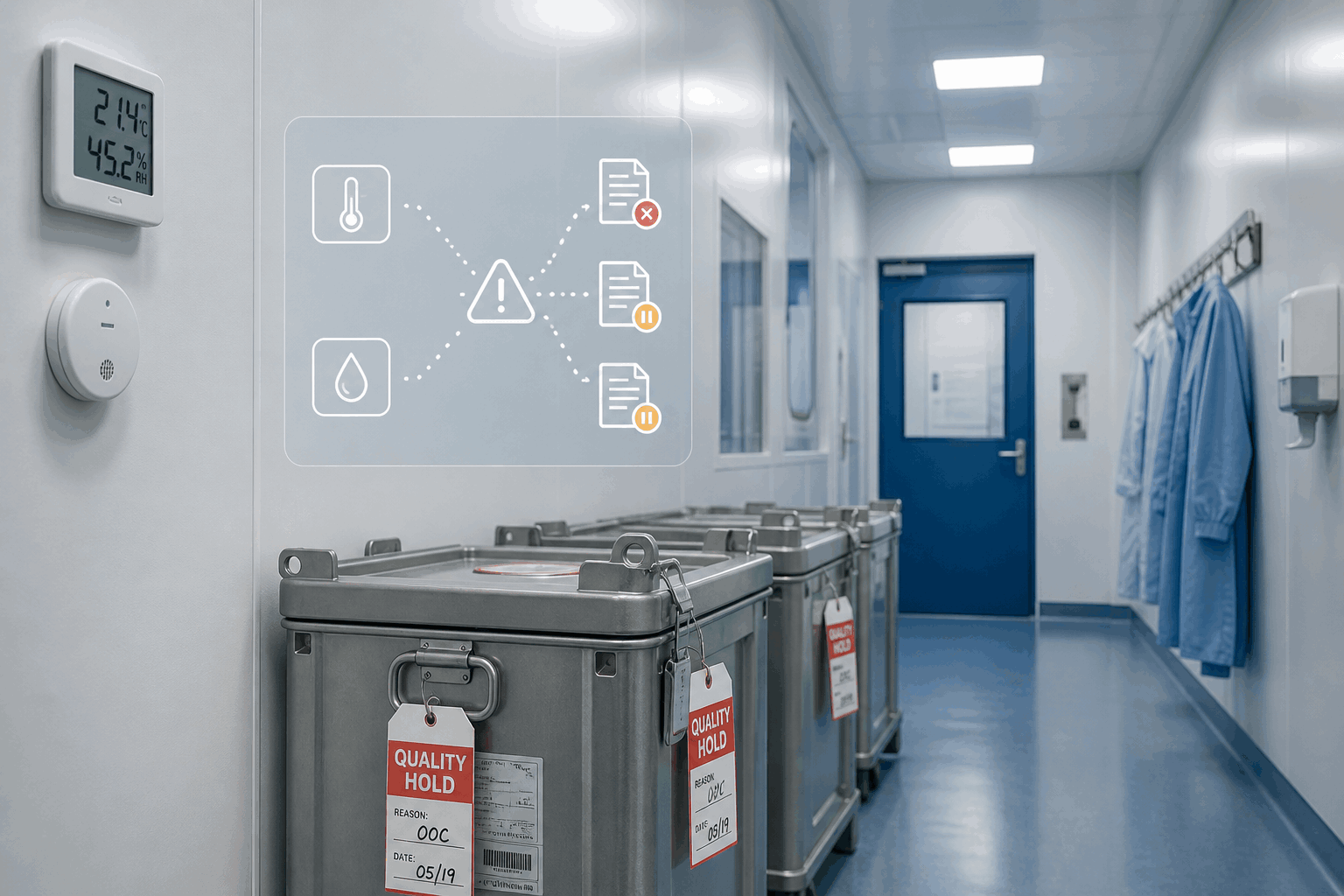
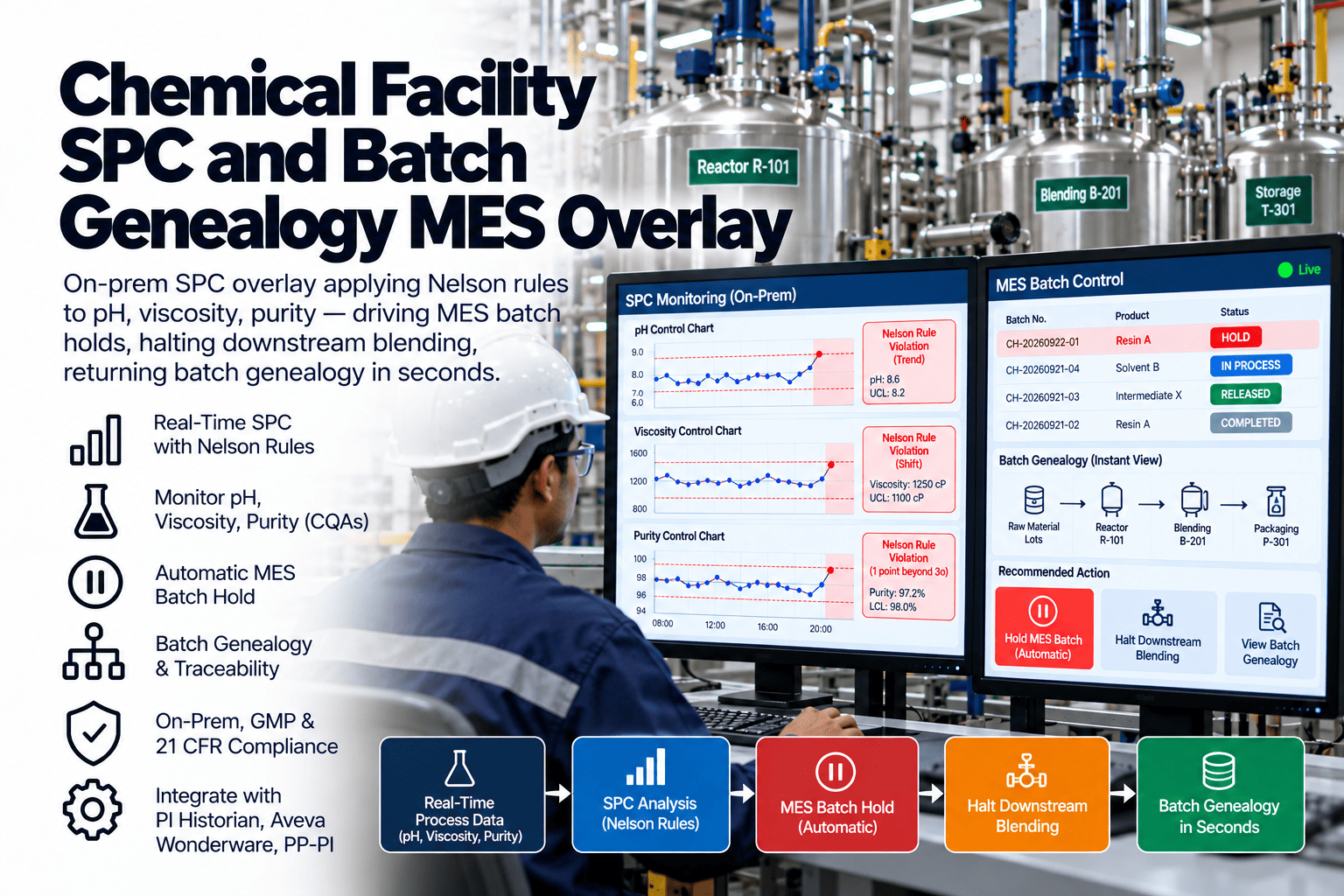
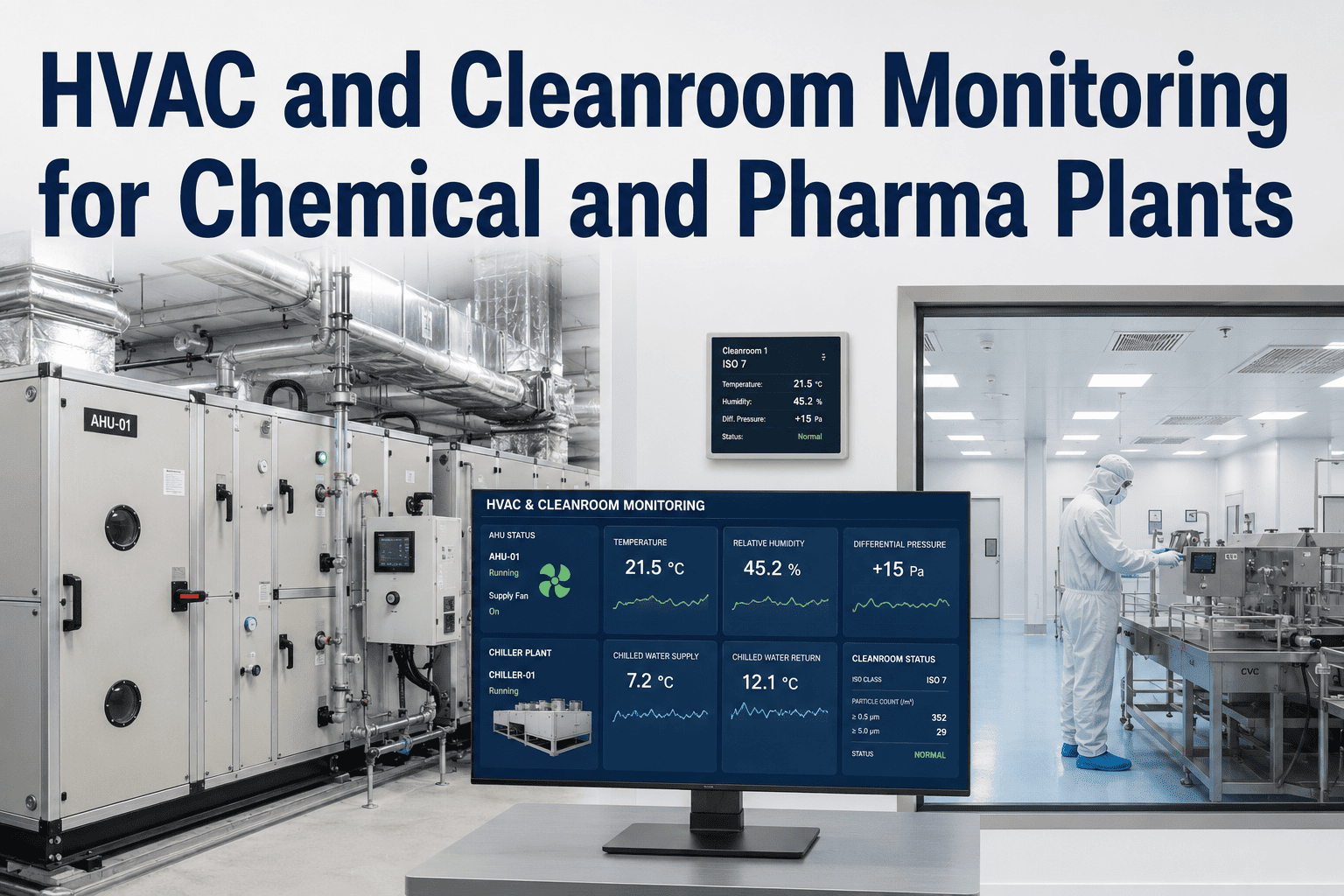
A pharma cleanroom differential pressure alarm at 02:15 is the moment the audit posture is either won or lost. What auditors want at inspection is a single query returning which lots were in the zone during the exposure window, what holds were applied, when they were applied, and what CAPA closed the loop with what verification. What most sites can produce is a paper trail across sensor logs, batch records, Excel hold registers, and CAPA workflows in separate systems — reconstructed over hours of forensic work while the auditor waits. Overlay on the historian and MES turns the 02:15 alarm into a 02:21 audit-ready record — lots in zone identified, digital holds posted, CAPA opened, everything queryable from one query.
iFactory / Pharma environment closed-loop
Turn Every HVAC Excursion Into an Audit-Ready Record — Before the Auditor Asks
Overlay on cleanroom historian and MES tying environment excursions (differential pressure, temperature, humidity, particle counts) to every lot in the zone during the exposure window — digital hold, CAPA workflow, verification gating, and single-query audit trail.
02:15
Differential pressure excursion · -18 Pa
02:19
Nelson rule fires · overlay reads historian
02:20
Lots in zone identified · 14 vials + 3 pooled bulk
02:21
Digital holds posted · CAPA opened · audit trail sealed
Zone + time
lot exposure window
The Problem in Environment-to-Audit Traceability
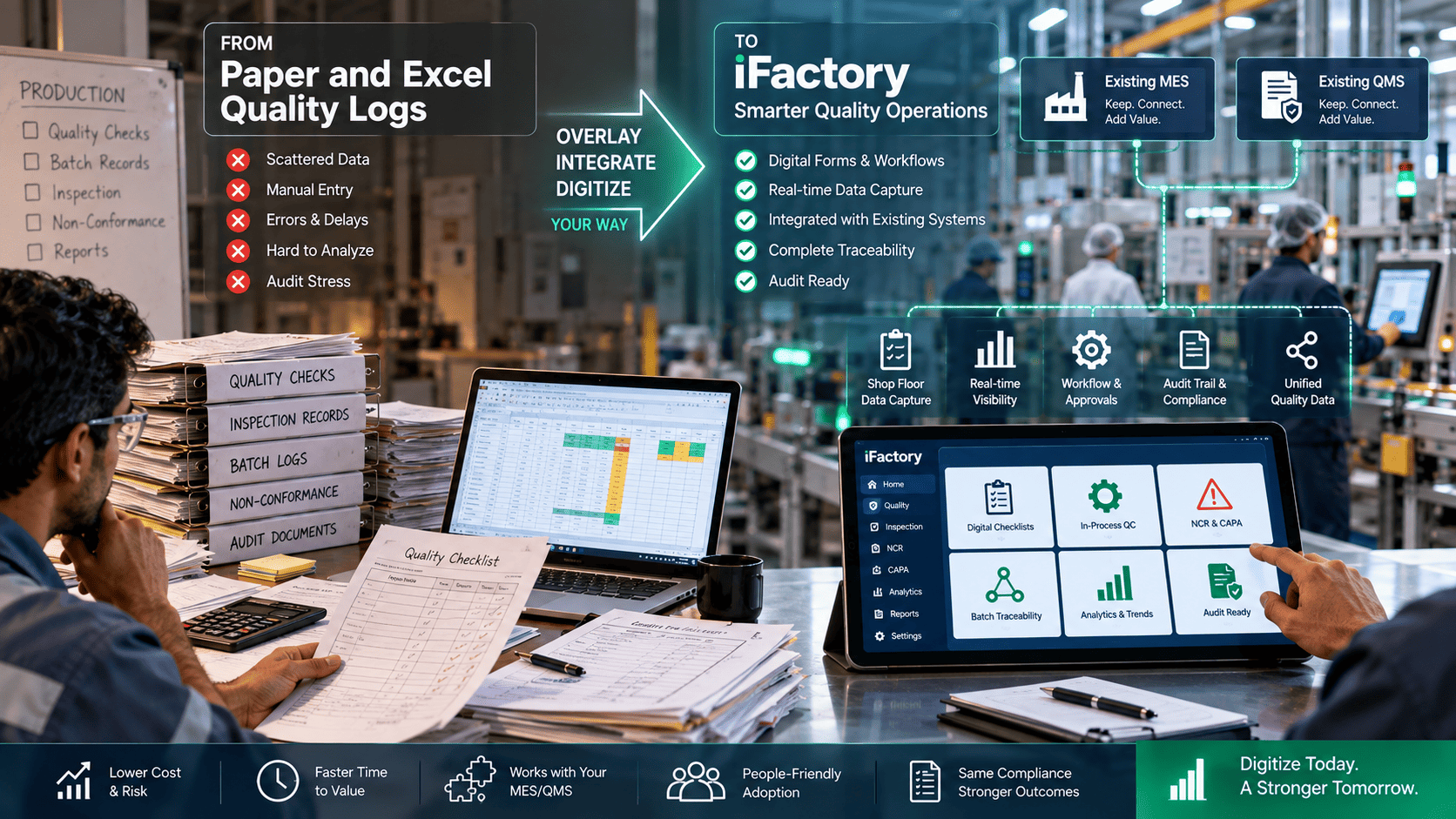
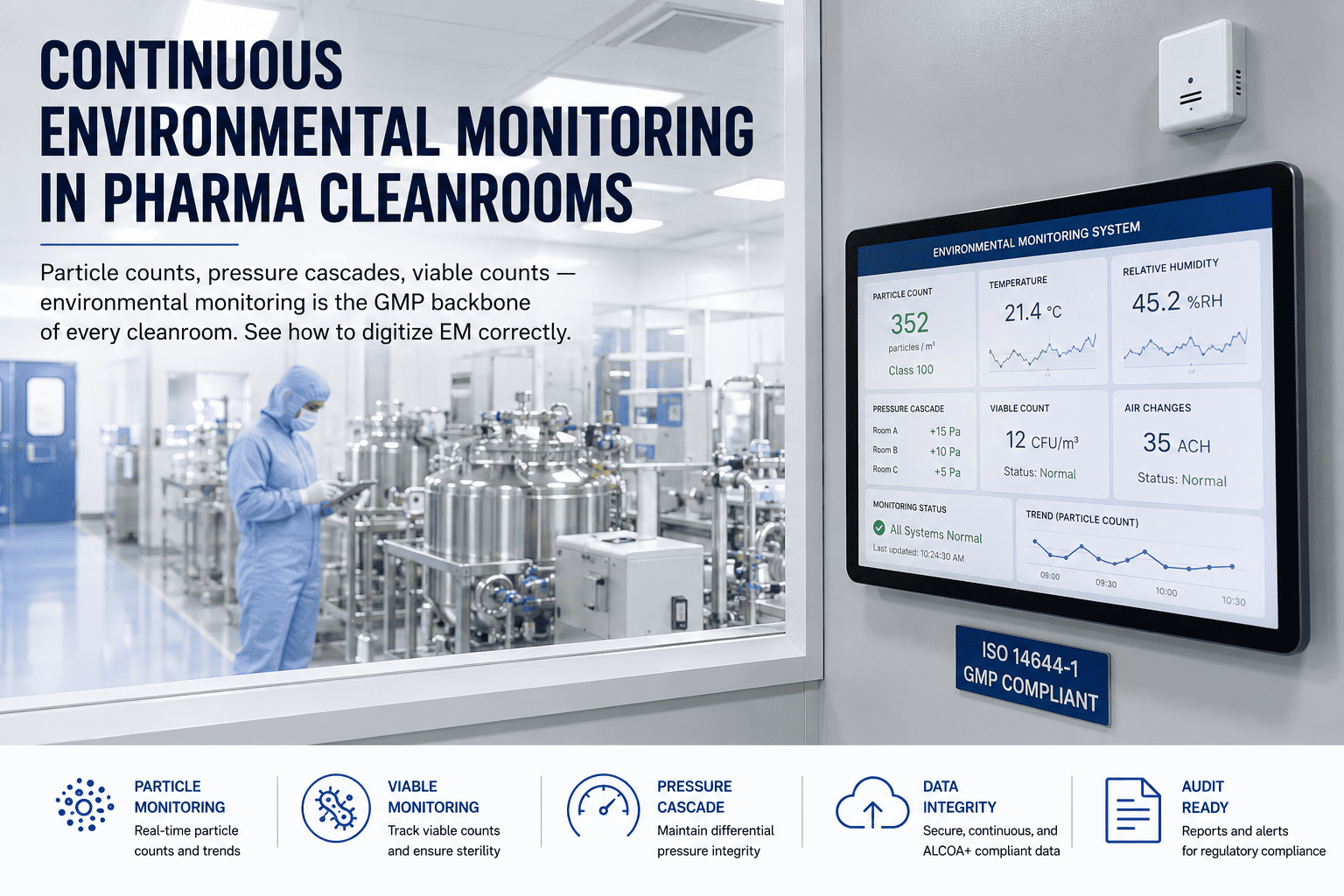
A typical pharma facility runs continuous cleanroom monitoring — differential pressure between suites (Grade A/B/C/D per EU GMP Annex 1, ISO 14644 classification), temperature and humidity in production and storage areas, non-viable particle counts at critical locations. Excursions get logged in the historian and often generate alarms via BMS or SCADA, but the loop between excursion and audit-ready hold record depends on manual steps — supervisor reads the alarm, quality assesses exposure, holds get applied on paper or in a spreadsheet, CAPA opens in the QMS separately. When an auditor asks 'which lots were in the zone,' the answer requires walking through sensor logs, batch records, hold registers, and CAPA records across four systems.
Where Environment-to-Hold Traceability Fails
Pharma physical environment loop failures are consistent across facilities running mature environmental monitoring. Each is a specific gap between excursion and audit-ready hold.
Alarm-to-hold lag
BMS alarm at 02:15 sits until supervisor reviews at 06:00 shift change. Lots in zone during those 4 hours moved to next stage. Hold applied after the fact.
Ambiguous scope
Hold applied to "batches in filling suite this shift" without specific lot IDs. Ambiguity opens audit findings and expands investigation scope beyond need.
Paper CAPA disconnect
Environmental CAPA in QMS not linked to specific batch records. Auditor asks for the linkage; team spends the audit gap reconstructing.
Verification undocumented
HVAC repaired and requalification sampling done, but verification evidence sits in facilities file not attached to CAPA. Release approved without audit-linked verification.
What Good Looks Like in Environment Loop
A working environment loop holds four disciplines together — real-time excursion detection, automatic lots-in-zone identification, verification gating, and single-query audit trail.
Real-Time Detection
Historian excursions surface within seconds via overlay. Not shift-change dependent. Nelson rules on trends catch drift before hard-limit alarm.
Seconds, not shifts
Lots in Zone
Lots produced or exposed in the affected zone during the exposure window auto-identified from MES batch execution records. No ambiguity.
Named lots
Verification Gate
Batch release blocked until CAPA verification evidence attached and signed. Facilities restoration proof, requalification sampling, retest results all gated.
Release gated
One-Query Audit
Auditor asks for the incident timeline; system returns signal, holds, CAPA steps, verification records, and genealogy in one report. No forensic reconstruction.
Query, not reconstruction
How iFactory AI Fits
iFactory AI overlays your cleanroom BMS/historian (JCI Metasys, Honeywell EBI, Siemens Desigo, Aveva PI), pharma MES (Werum PAS-X, Körber PAS-X, Rockwell PharmaSuite), and QMS (Sparta TrackWise, MasterControl, Veeva) — on-prem, closing the environment-to-audit loop.
Excursion Detection
Overlay + BMS
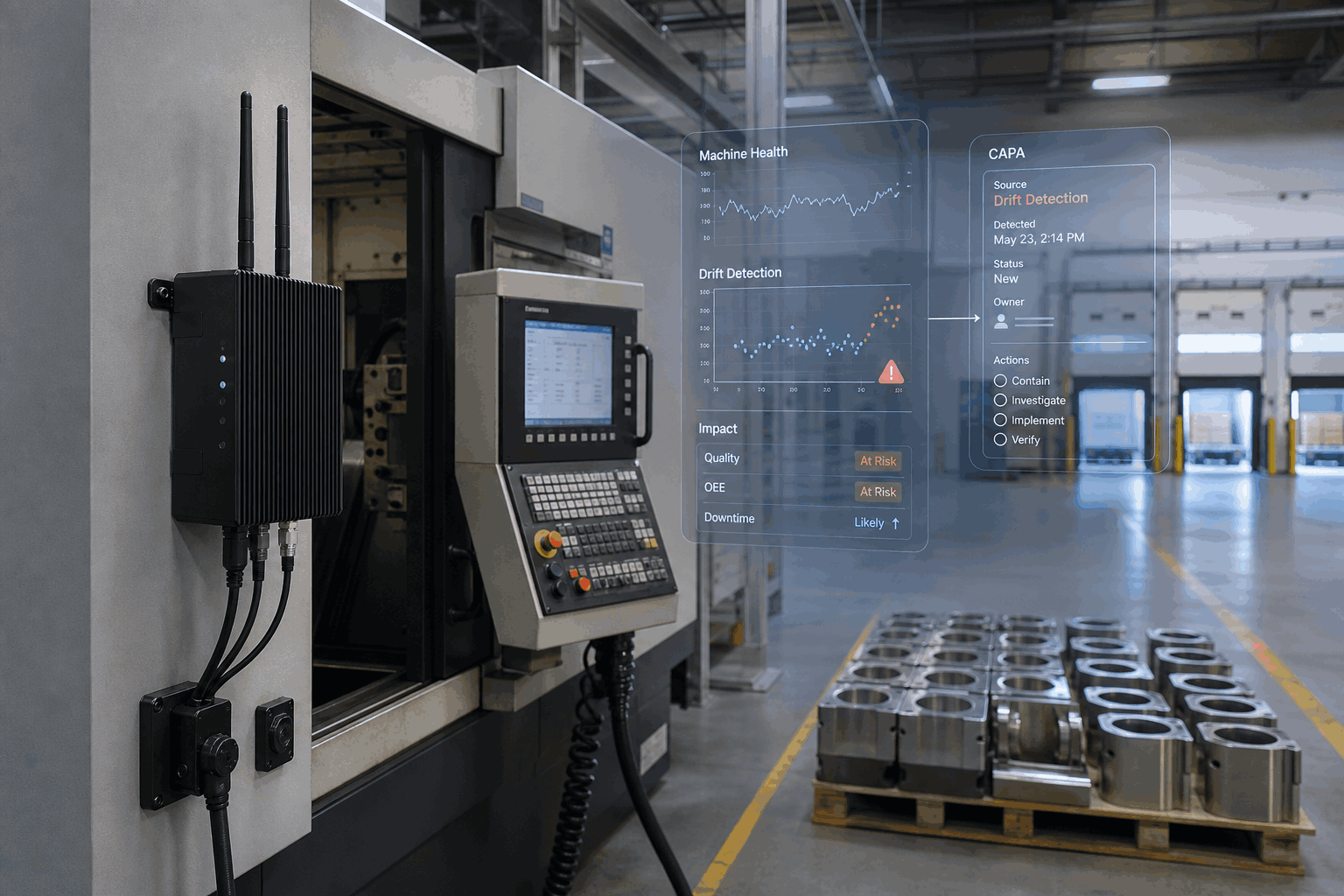
Continuous read of BMS/historian tags for pressure, temperature, humidity, particle count. Nelson and Western Electric rules applied per zone with configurable per-Grade thresholds.
Zone-Lot Matcher
Overlay + MES
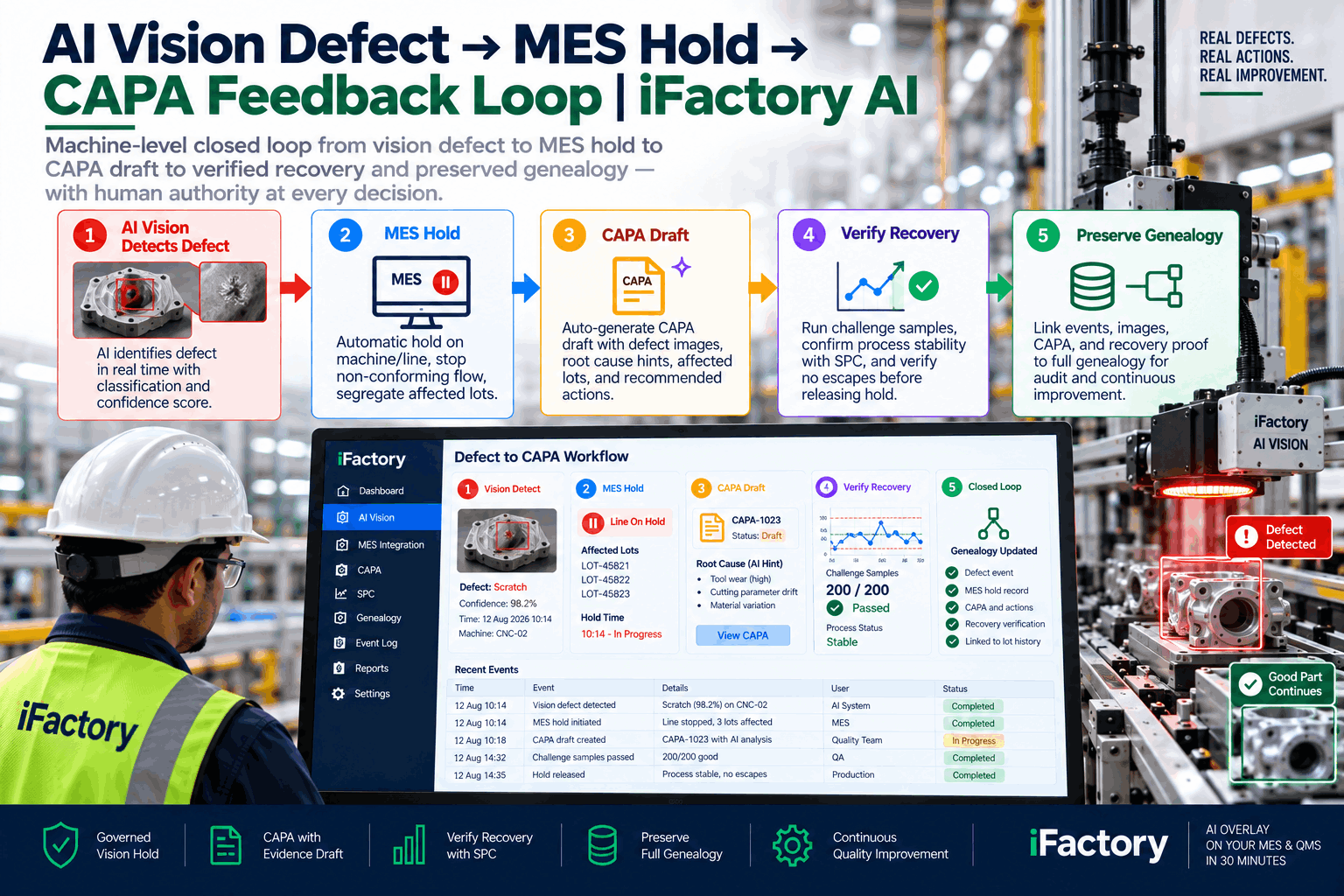
MES batch execution records queried for lots produced or exposed in affected zone during exposure window. Automatic identification of vials, bulk, pooled batches by time-and-place logic.
Hold + CAPA Bridge
Overlay + QMS
Digital holds posted to MES lot status; CAPA opened in QMS pre-populated with sensor data, lot list, and initial context. Release gated on verification signoff.
Audit Query
Overlay Layer
Single-query report returning signal timeline, hold history, CAPA progression, verification evidence, and full lot genealogy. Auditor-ready without forensic work.
Ask your pharma QA lead how the last cleanroom excursion audit response actually went — hours or days from finding the incident to producing the full lots-in-zone list with linked CAPA and verification. If the number is uncomfortable, the overlay closes exactly that gap. Book a pharma environment loop review.
12-Week Pharma Environment Loop Pilot
One critical suite (filling or aseptic), twelve weeks. The pilot deploys the overlay on-prem, connects to BMS/historian and MES, activates zone-lot matching, and closes the first month of audit-ready environment loop discipline.
Weeks 1–3
On-Prem Deploy
Overlay deployed inside site firewall. BMS/historian connections active. MES batch execution read-tested. Baseline current-state incident-to-audit-record cycle.
Weeks 4–6
Detection + Zone
Excursion detection live for pilot suite. Zone-lot matching accuracy verified against known past incidents. Rule tuning per Grade requirements.
Weeks 7–9
Hold + CAPA
Digital holds and CAPA workflow active for triggered excursions. Verification gating tested. First live incidents flow through the automated loop.
Weeks 10–12
Mock Audit
Mock audit exercise with the pilot suite's incident data. One-query report validated against auditor expectations. Rollout to remaining suites scoped.
Who Owns the KPI
Pharma environment loop crosses QA, facilities, MES/IT, and regulatory affairs. Each function owns a specific KPI or the audit posture depends on forensic reconstruction.
Pharma QA Lead
Incident-to-hold cycle
Owns the loop outcome — time from excursion to digital hold with named lots. Overlay drives cycle from hours to minutes.
Facilities Compliance
CAPA closure with verification
Owns the CAPA discipline — CAPA closure with verification evidence attached and signed before release gate opens.
Pharma IT / OT Lead
BMS-MES integration integrity
Owns the integration reliability — BMS/historian tag availability, MES batch record accuracy, overlay uptime.
Regulatory Affairs
Audit query response time
Owns the audit outcome — time to produce the incident-to-lot-to-CAPA-to-verification report. Seconds instead of days.
FAQ
Does this replace our BMS or MES?
No — pure overlay. BMS (Metasys, EBI, Desigo) continues to run cleanroom controls and alarms; MES (Werum PAS-X, PharmaSuite) continues to execute batch records. The overlay reads from both and orchestrates the loop between them.
How does this meet 21 CFR Part 11 and EU GMP Annex 11 requirements?
On-prem deployment inside the plant firewall is the baseline that makes Part 11 and Annex 11 compliance achievable. The overlay supports the site's CSV approach with IQ/OQ/PQ artifacts, unique user IDs, secure timestamps, tamper-evident audit trail, and electronic signature workflow for critical actions.
Book a demo to see the validation posture.
What about correlated excursions — one HVAC event affecting multiple suites?
The zone-lot matcher handles multi-suite events by identifying all zones affected by the correlated excursion and returning the union of lots in any affected zone during the exposure window. Configurable per-suite exposure logic accommodates different Grade requirements and different hold criteria per suite.
Stop reconstructing environment audit trails after the fact.
One-Query Environment Audit on One Suite — Live
Bring one cleanroom suite's last quarter of excursion history, one recent audit response cycle time, and the BMS/MES/QMS in use. We'll walk what the overlay would have made audit-ready, and demonstrate the one-query incident report.
Lots in zone
auto-identified
Verification
release-gated