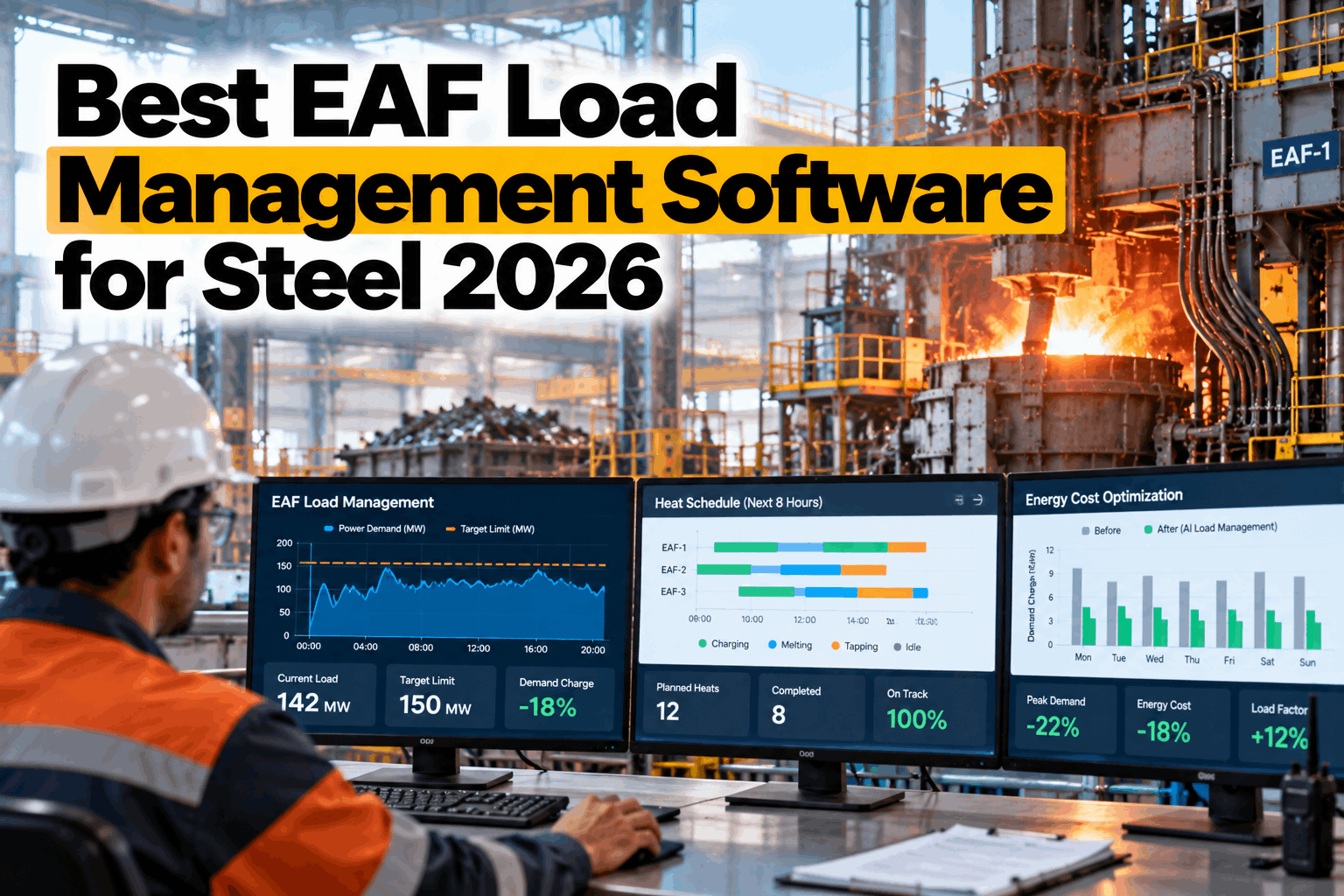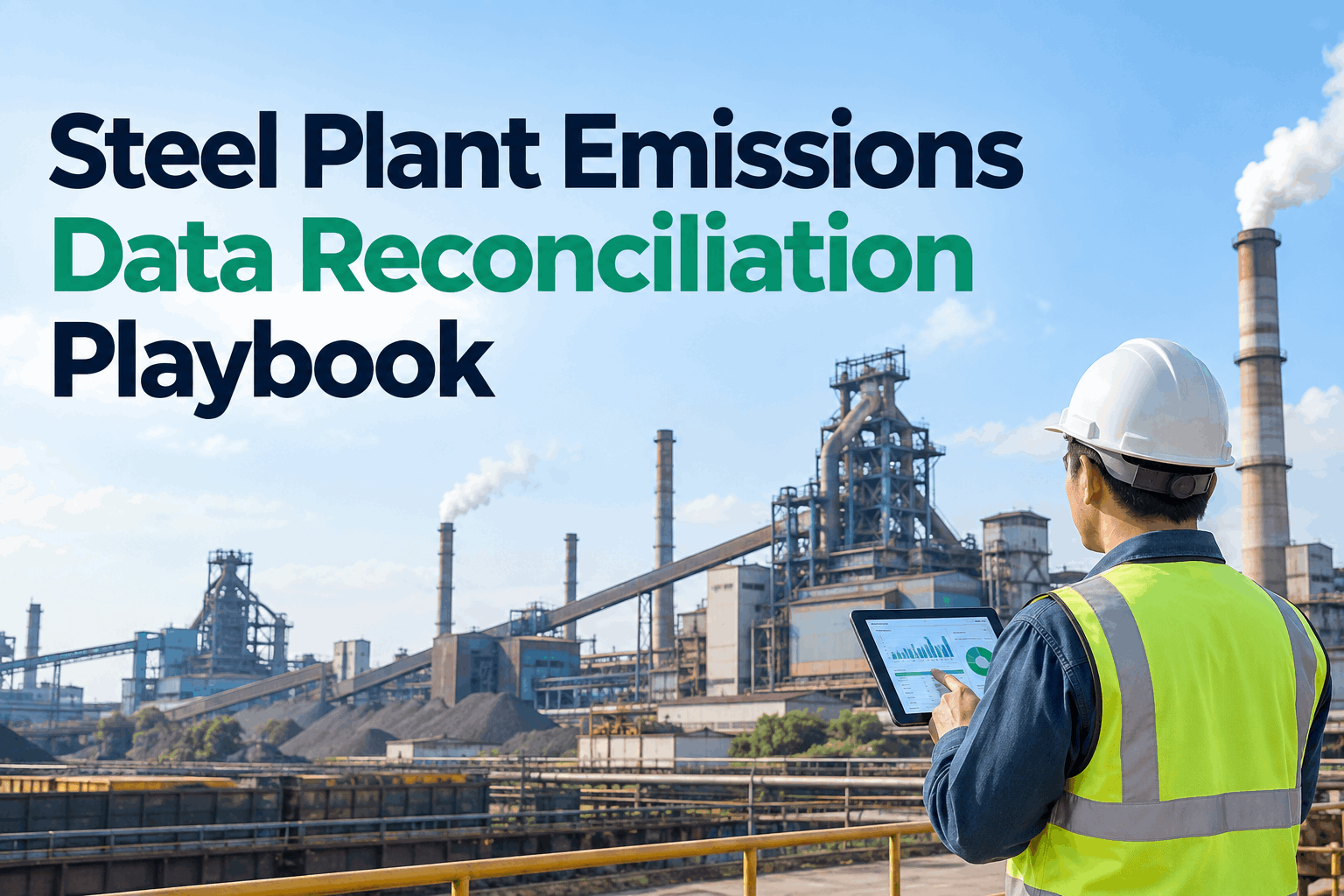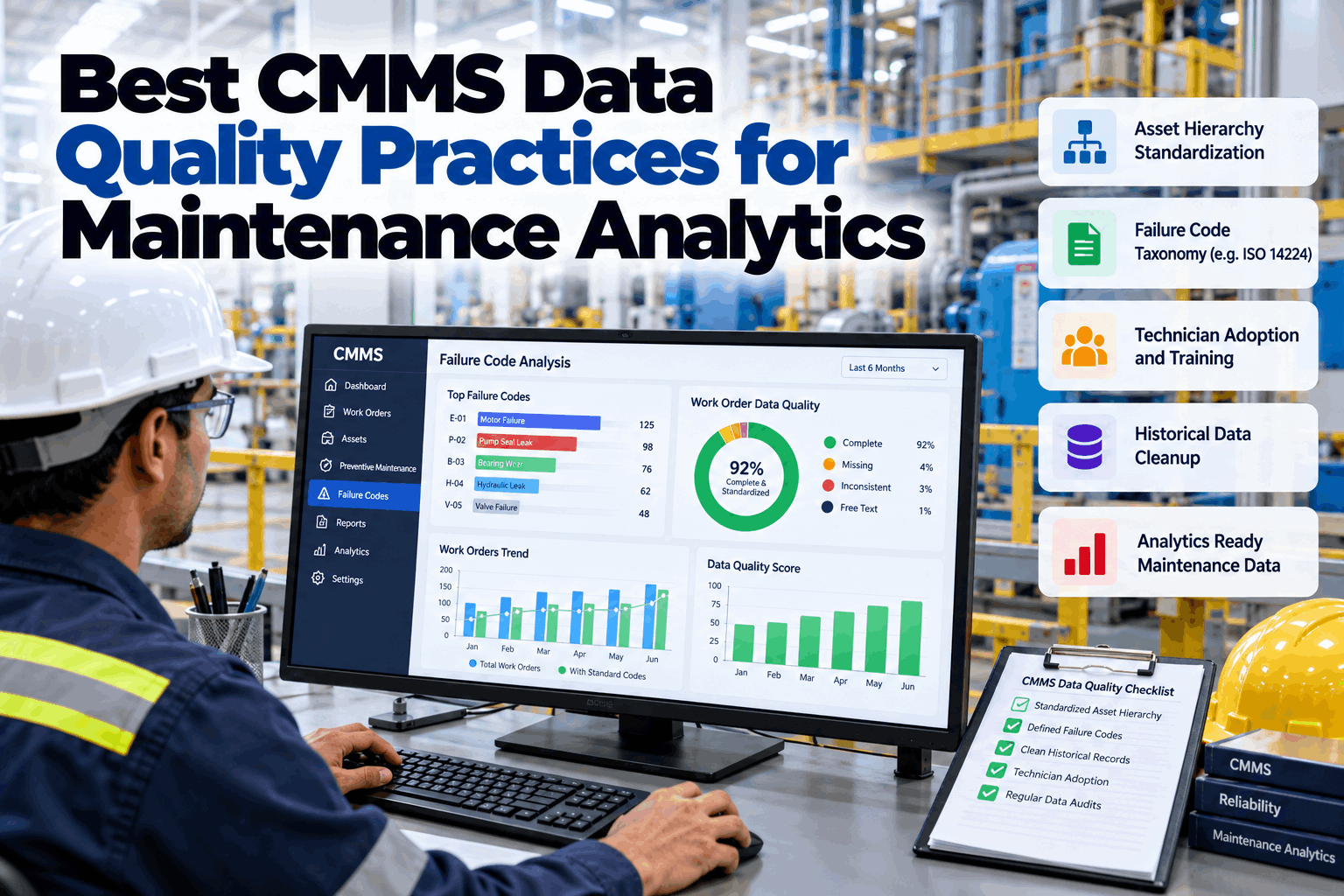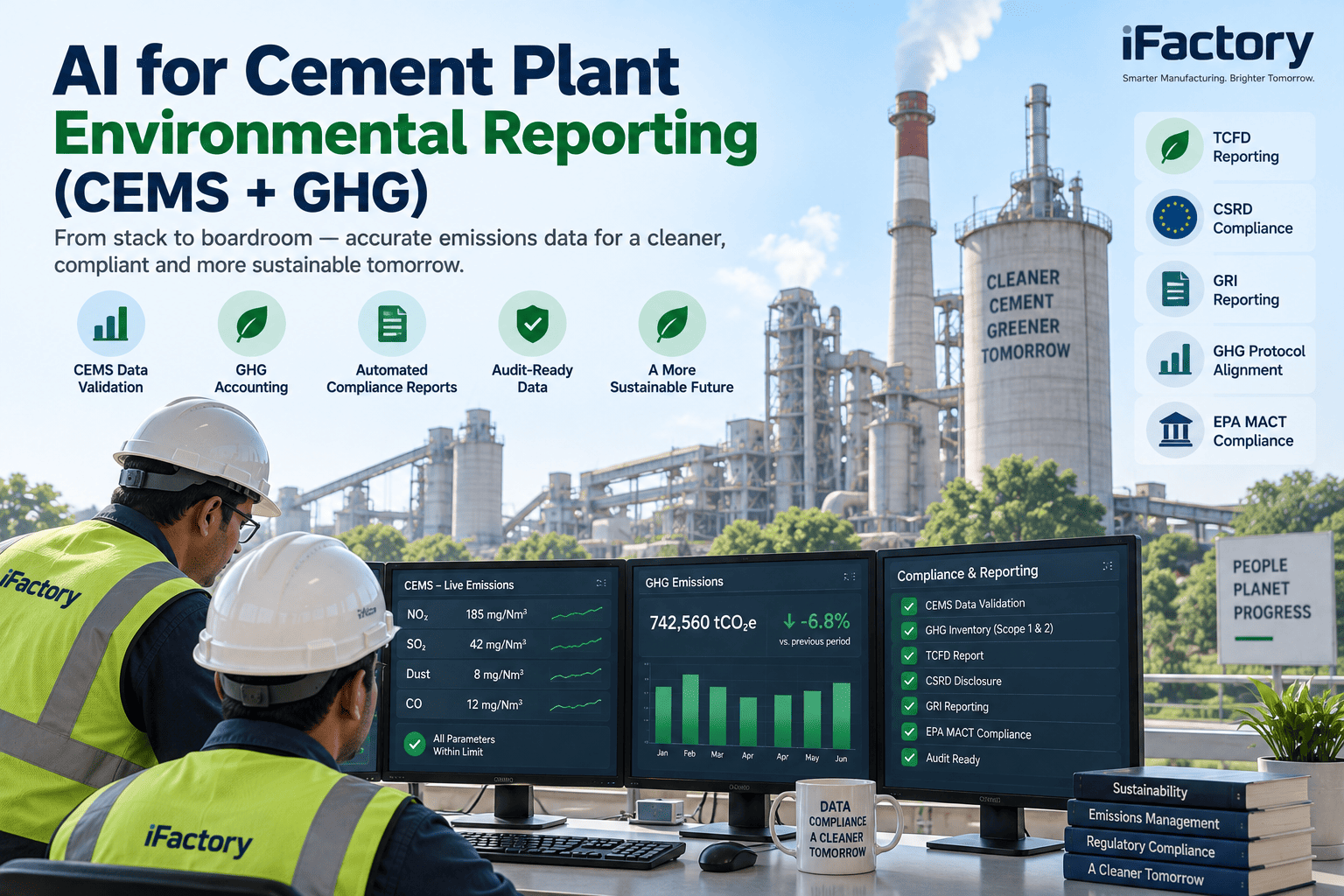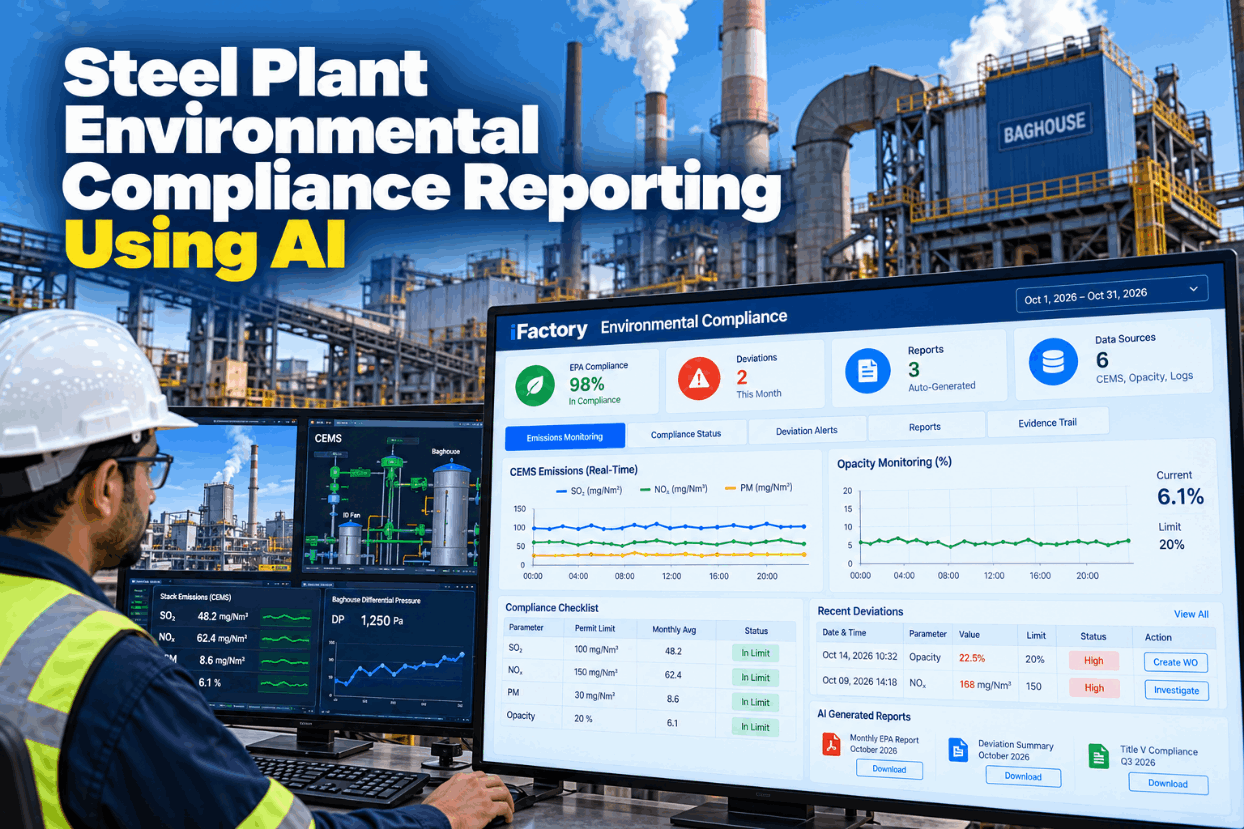
A steel plant's air permit is rarely put at risk by the big numbers. The trouble usually comes from a missing Method 9 sheet, a bag leak alarm nobody wrote up, or a CEMS outage that pushed monitor downtime past the line for a full excess emissions report. Most EHS teams still rebuild each monthly and semiannual report by hand from logbooks, historian exports and work orders. Environmental compliance reporting with AI gathers that evidence as it happens and drafts the report for a person to check. See a draft built from real melt shop data in a short compliance reporting demo.
Opacity, Baghouse and CEMS Records, Drafted Into the Report Before Month End
iFactory's Compliance Agent collects CEMS, opacity and baghouse logs, flags deviations and gaps as they occur, and drafts the monthly report. Every flagged item is tied to the maintenance action that closed it, so EHS reviews evidence instead of chasing it.
Four Reporting Duties a Major Source Steel Plant Carries
A Title V operating permit sets out how often you report and what each report must prove. Under 40 CFR 70.6, monitoring reports are due at least every six months, every deviation must be clearly identified in them, and a responsible official certifies each one. Deviations also need prompt reporting with their probable cause and the corrective action taken, on a timeline your permit defines. Once a year, the compliance certification states whether each permit term was met continuously or intermittently. Check how your permit deadlines map to your data with our support team.
Title V permits require monitoring data and support information to be kept for at least 5 years from the date of the sample, measurement or report. NSPS Subpart AAa sets the same 5-year retention for its required measurements, so one archive can serve both.
The Limits an Electric Arc Furnace Shop Reports Against
Many US electric arc furnace shops fall under 40 CFR 60 Subpart AAa. Its limits are low, and most of the reporting effort goes into proving them shift by shift: control device opacity, shop opacity from the furnace operations, and the capture readings that show fume is reaching the baghouse in the first place. The figures below come from the rule text, and your permit may add conditions on top. Walk through your own limits in a permit mapping session.
Method 9 Readings, COMS and Bag Leak Detectors Compared
Subpart AAa lets a shop prove baghouse performance in more than one way, and each route leaves a different paper trail. A continuous opacity monitoring system (COMS) on the control device is the default. Modular, multistack or pressure-type fabric filters can rely instead on a certified observer reading at least once per day, for three 6-minute periods during melting and refining, and single-stack filters add a bag leak detection system. Method 9 itself averages 24 readings taken at 15-second intervals, and observers must pass a field test every six months. Ask our air compliance team which records your monitoring route produces.
Ask What Is Missing Before the Auditor Does
The Compliance Agent answers in plain language from the same records it uses for the draft: which readings are missing, which alarms are still open and which deviations still need a cause.
The Quality Checks Behind Every CEMS Number
A CEMS figure only counts if the monitor was in control when it produced it. Part 60 Appendix F, Procedure 1, sets the routine: a calibration drift check at two levels every day, a relative accuracy test audit (RATA) at least once every four calendar quarters, and a cylinder gas audit or relative accuracy audit in the other quarters, never more than three in a row. Availability matters at report time too, because monitor downtime of 5% or more of operating time, or excess emissions of 1% or more, means a full excess emissions report instead of the summary form. See how QA status is tracked per monitor in a CEMS walkthrough.
Where the 2024 Subpart FFFFF Amendments Stand in Late 2026
Blast furnace and BOF sites follow 40 CFR 63 Subpart FFFFF. EPA's amendments of April 3, 2024 added limits for HAP that were previously unregulated, opacity limits and work practices for fugitive and intermittent sources such as bleeder valve openings, bell leaks and slag handling, and fenceline monitoring for chromium. Several deadlines have since moved and parts of the rule went into reconsideration, so check the current text before each reporting period. Review which dates apply to your site with our compliance specialists.
As promulgated, planned bleeder valve openings at existing furnaces carry an 8% opacity limit and slag processing, handling and storage a 10% limit, both as 6-minute averages. The fenceline program uses four monitors and a 0.1 µg/m³ chromium action level. Confirm each figure against any later reconsideration before you report on it.
A Deviation Is Only Closed When the Fix Is on Record
Title V asks for the probable cause of each deviation and the corrective or preventive action taken. In most plants the cause lives in a maintenance work order while the report lives in an EHS folder, and someone joins them by hand months later. Linking each deviation to its work order at the moment it is raised keeps the evidence trail intact, and it shows maintenance which equipment keeps producing compliance problems. See the link between alarm and work order in a deviation demo.
- Alarm noted in a shift log, cause added from memory at report time
- Work order closed in the CMMS with no reference to the permit
- Repeat bag failures in one compartment go unnoticed
- Responsible official signs without seeing the repair evidence
- Alarm opens a deviation record with its start time and data
- Work order raised from the record, cause and close-out flow back
- Repeats by baghouse, compartment or monitor show up in one view
- Responsible official sees the evidence next to each line
Fields Each Deviation Record Should Carry
Whatever system you use, the record should answer the questions an inspector or your responsible official will ask, without anyone digging. These eight fields cover what 70.6 asks for in deviation reports, plus the maintenance link that makes the trail complete. Ask our support team for a blank version.
Three Month-End Situations and What the Draft Shows
The three situations below illustrate how common gaps surface in a draft; none is a case study or a measured result. Talk through your own month-end issues in a report review.
Count the Hours Report Compilation Takes Today
The real value is a deviation caught and fixed before it becomes a finding, and that depends on your own history, so don't price it from industry averages. Compilation time is easier to measure. The worksheet below applies plain arithmetic to assumed inputs only. Build a fuller case with our team.
Set that against the review time a person still spends on every draft. The agent prepares the report; your responsible official still checks and certifies it.
Compliance Agent, Data Connectors and NVIDIA Server in One Package
iFactory delivers the Compliance Agent as a turnkey bundle. A pre-configured NVIDIA AI server ships racked and ready, with connectors for CEMS data systems, opacity monitors, bag leak detectors and historians, so emissions data stays on site. You rack it, plug in power and Ethernet, and the AI is live. To scope it for your permits, ask for a turnkey quote.
- Pre-configured NVIDIA AI server, racked and ready
- Connectors for CEMS, COMS, bag leak detectors and historians
- Permit terms mapped to monitoring data and limits
- Method 9 observation capture on handhelds
- Deviation records linked to maintenance work orders
- Monthly, semiannual and annual report drafts
- 24×7 remote monitoring of models and hardware
Permit terms listed, monitors and historians connected, the past six months loaded.
Your last semiannual report rebuilt by the agent and checked against the filed version.
Monthly drafts switched on, EHS and maintenance trained on the deviation workflow.
Environmental Compliance Reporting Software That Starts at the Monitor
iFactory joins the monitors, the observers and the maintenance system that together make up your compliance evidence. Our support team can scope a first pilot around one permit.
What EHS and Plant Leaders Ask About EPA Reporting in Steel
Close Every Month With the Evidence Already in Place
Collect CEMS, opacity and baghouse records automatically, flag deviations the day they happen and review drafts tied to the maintenance work behind them. Delivered turnkey and live in 6 to 12 weeks.