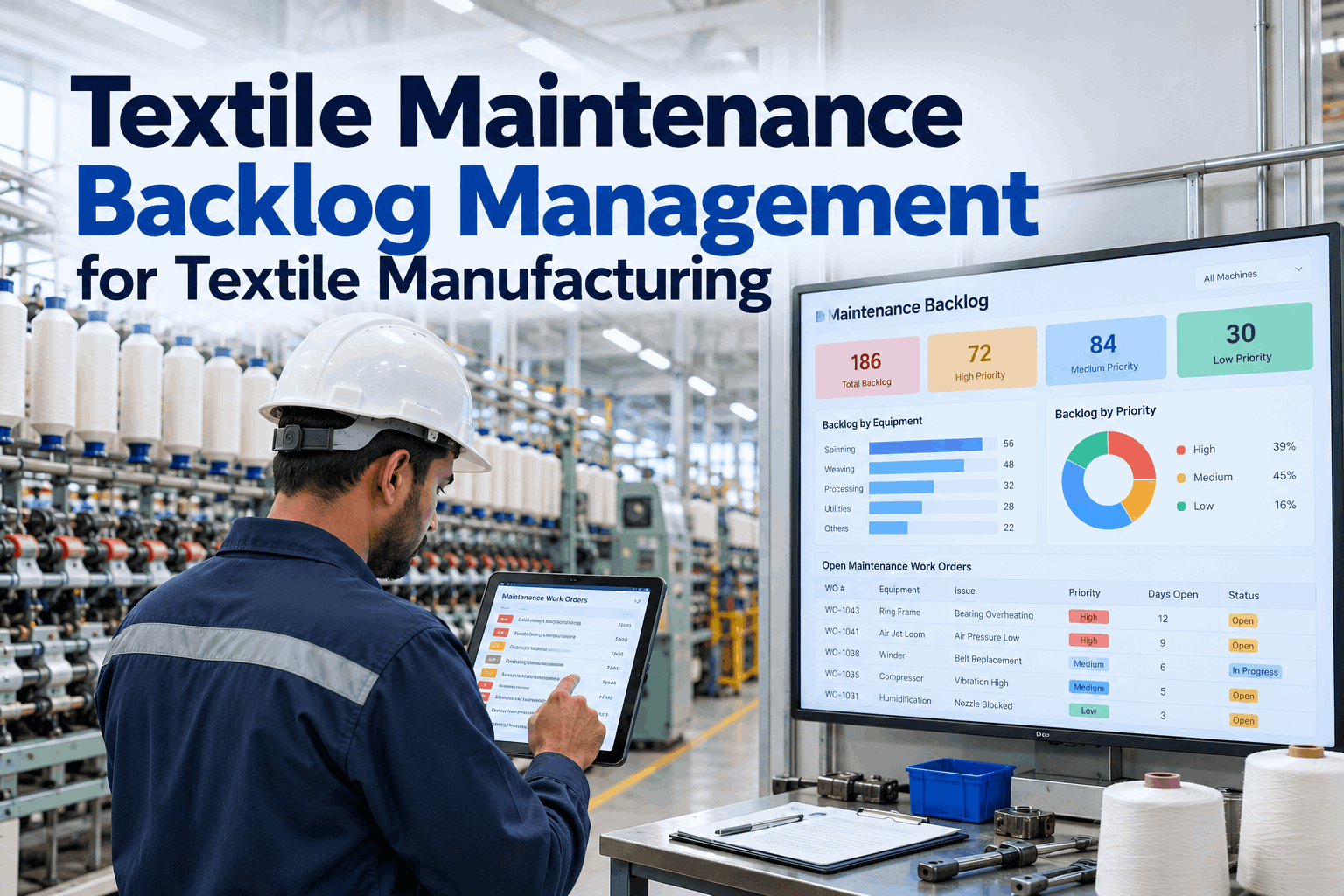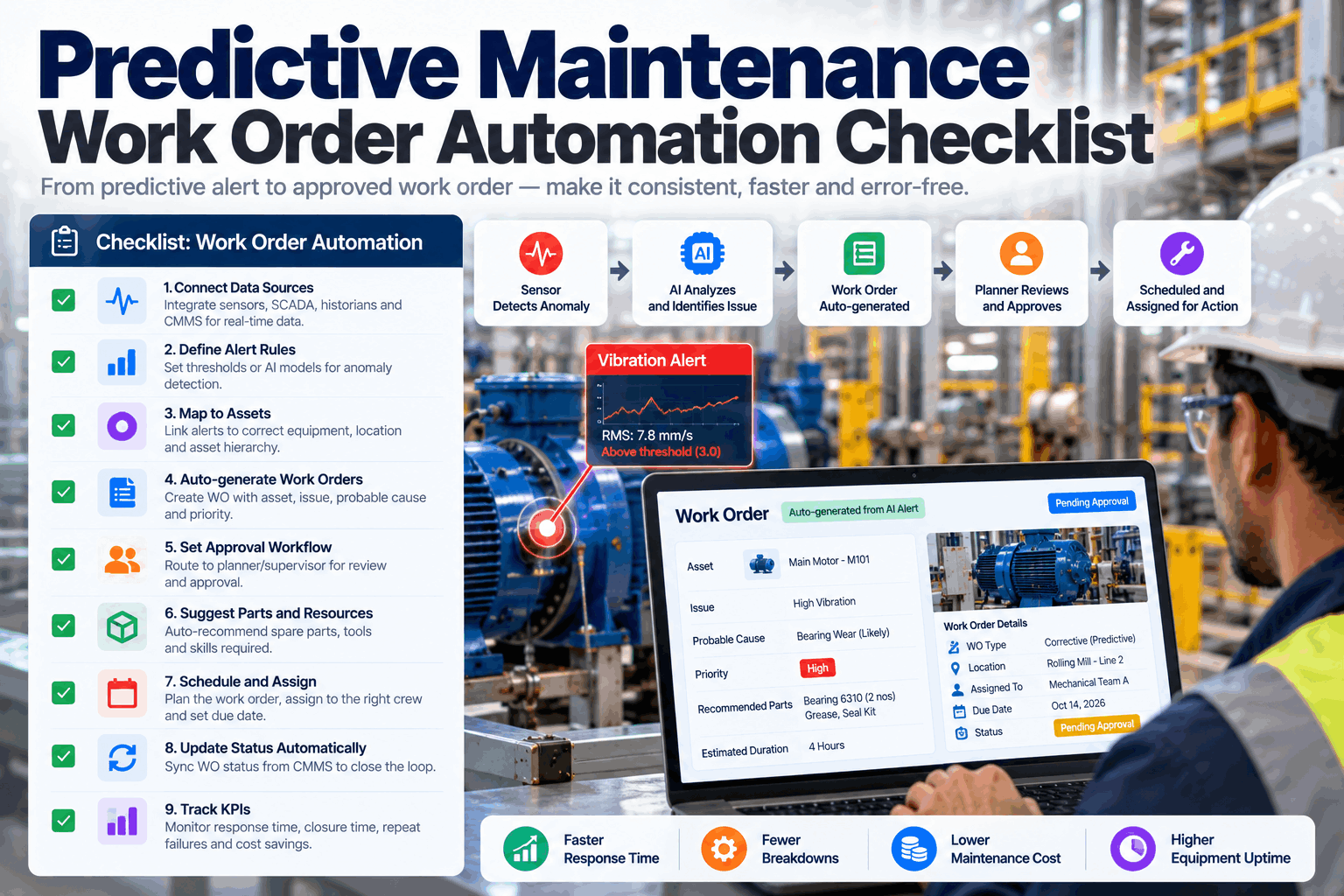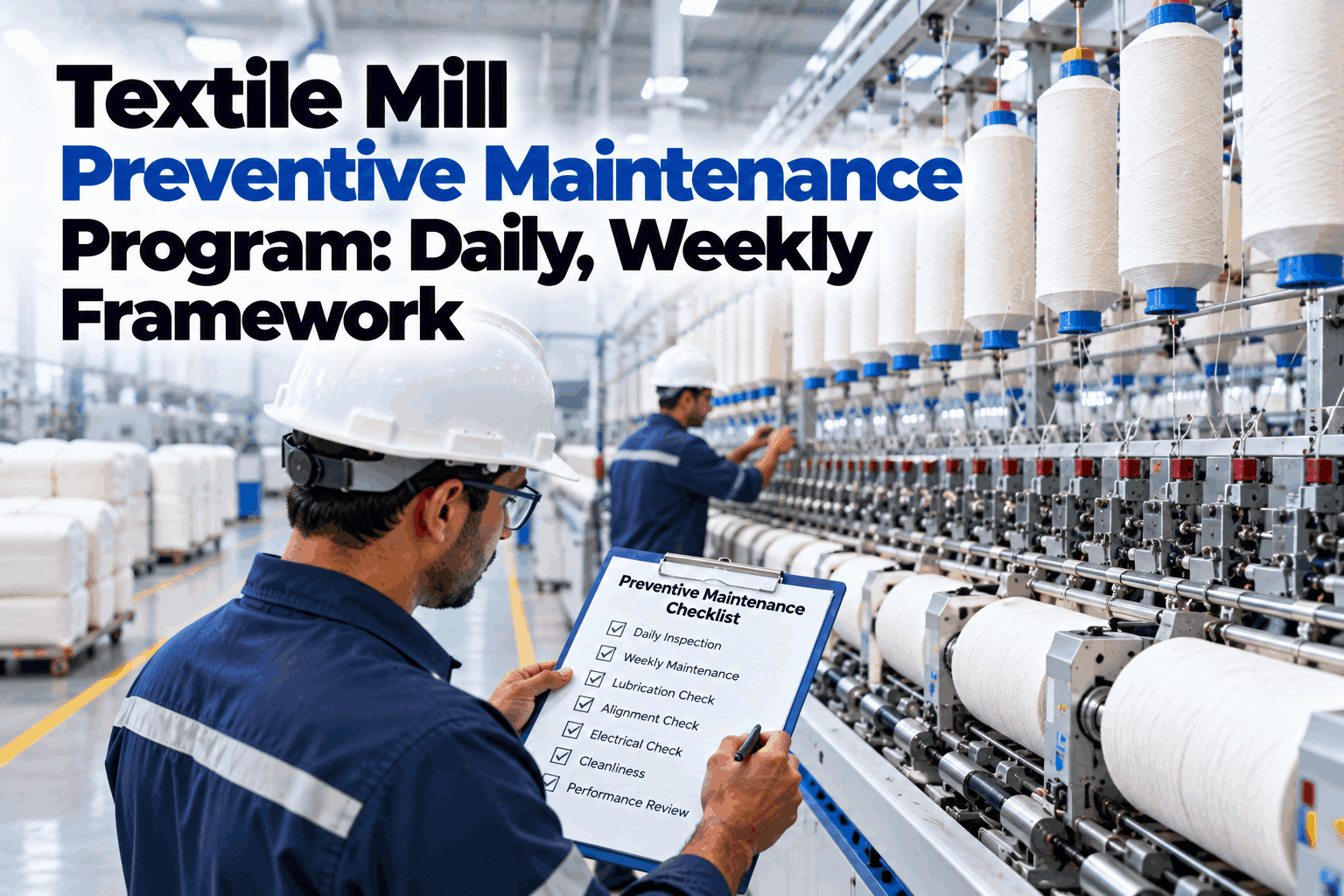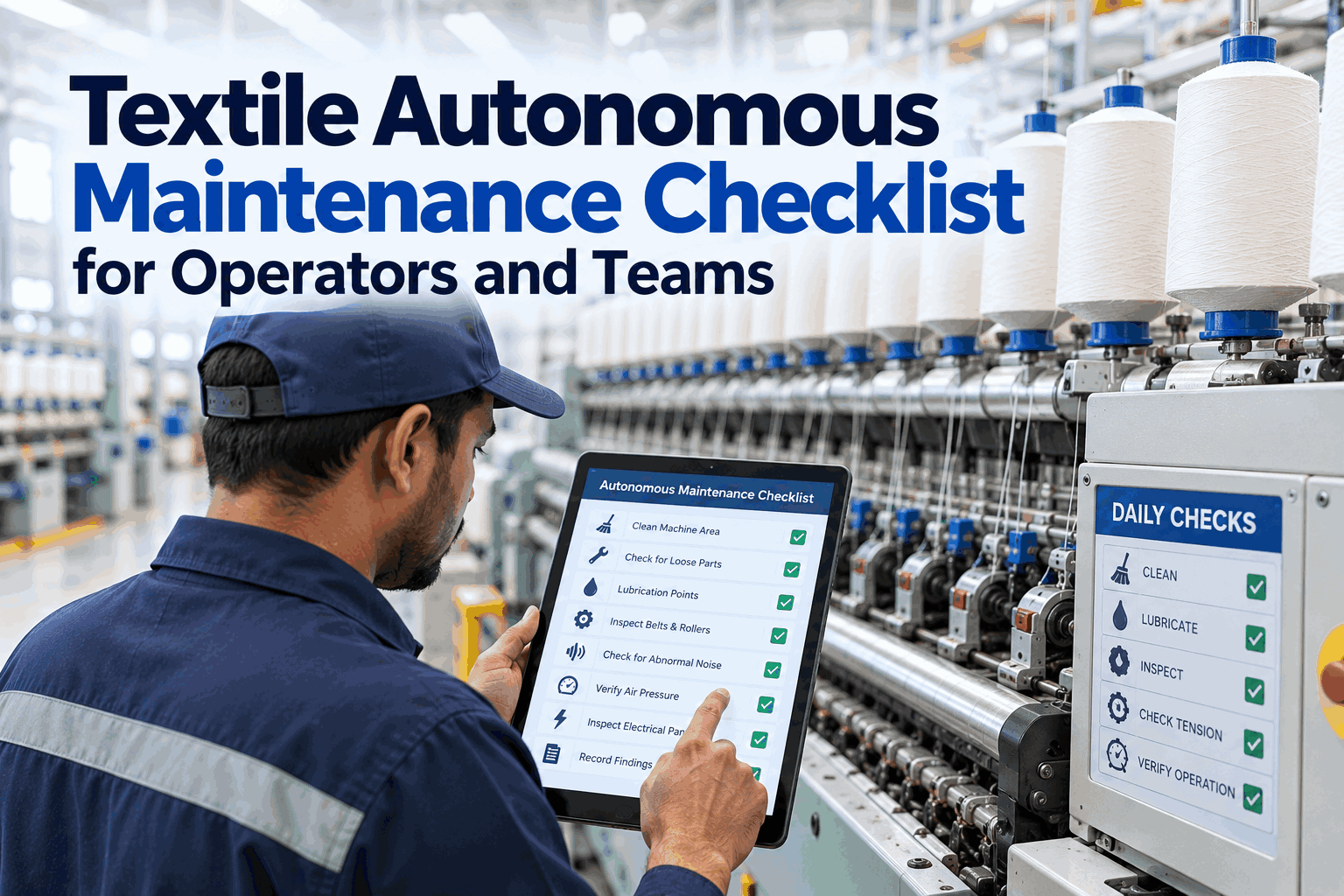
Operators spend more time with textile machines than anyone else. They hear a ring frame spindle start to hum, see fly building up around a drafting zone and feel a loom running rougher than yesterday. Autonomous maintenance turns that attention into a routine of cleaning, lubrication and inspection that catches problems early and frees technicians for skilled work. Below is a practical checklist by machine, with 30 tickable items across six machine groups, and you can see it running digitally in a short live demo.
A Daily Autonomous Maintenance Checklist Operators Will Actually Use
Short, machine-specific checks for ring frames, cards, draw frames, looms, winders and knitting machines. iFactory puts them on a phone or handheld at the machine, records every abnormality and sends the ones that need a technician straight to maintenance.
"I Operate and I Maintain": The Seven Steps Behind the Checklist
Autonomous maintenance, or Jishu Hozen, is one of the pillars of Total Productive Maintenance. It moves routine care, cleaning, lubrication, inspection and minor adjustment, to the people who run the machines every day. That shifts the mindset from "I operate, you maintain" to "I operate and I maintain". The Japan Institute of Plant Maintenance sets it out in seven steps. A daily checklist is the working tool of steps 3 to 5. Our TPM specialists can help you plan a rollout.
Operator Tasks and Maintenance Tasks, Clearly Separated
Autonomous maintenance only works when the line between operator care and technician work is clear. When the boundary is vague, operators either do too little for fear of overstepping or attempt repairs they aren't trained for. Operators handle routine, low-risk tasks they are trained for. Anything that needs tools, isolation or specialist skill goes to maintenance as a tagged request. We can help you define this split for each machine type in a working session.
- Clean fly, lint and dust at set points
- Check visible condition: belts, tapes, guides, suction
- Top up lubrication at marked points with the right oil
- Listen and look for abnormal noise, heat or vibration
- Tag and report anything outside standard
- Repairs that need tools, isolation or dismantling
- Bearing, gearbox and drive work
- Settings, timings and calibrations
- Vibration, thermal and oil analysis
- Training operators and approving standards
Autonomous Maintenance Checklist by Machine
Tick each item as you complete it. If something is outside standard, raise a tag rather than trying to fix it beyond your training. These items are typical starting points for spinning, weaving and knitting mills. Adapt them to your machine models and your manufacturers' manuals, and only add lubrication or adjustment tasks that operators have been trained and authorized to do. Our support team can help you tailor the list.
What a Good Cleaning, Lubrication and Inspection Standard Looks Like
Each checklist item should be backed by a standard that tells the operator exactly what to do, how, how often, how long it should take and what "good" looks like. Standards are written jointly by operators and technicians during step 3, tested on the floor and revised as the team learns. Without acceptance criteria, two operators will judge the same machine differently. You can see standards attached to digital checklists in a short demo.
Put the Checklist on the Machine, Not on a Clipboard
iFactory runs AM checklists on phones or handhelds at each machine, records who checked what and when, and turns every abnormality tag into a work request with the machine, location and photo attached.
Tag It, Don't Ignore It: How to Report What You Find
A checklist is only valuable if abnormalities are reported and fixed. Many sites use two colours of tag: one for problems the operator team can fix and one for problems that need maintenance. In a digital system, the tag becomes a record with a photo, the machine and the location, and its status is visible until it is closed. Operators can see their own tags move through the system, which is the single biggest factor in keeping them reporting. Our TPM specialists can help you set up tagging rules.
Teach One Thing at a Time, at the Machine
One-point lessons are single-page visual guides that teach one skill or fact, such as how to recognize a damaged cot or the correct way to clean a weft feeder. They are written by experienced operators and technicians and kept close to the machine. In a digital checklist, the lesson can be linked directly to the item it explains, so help is one tap away. You can see lessons linked to checklist items in a guided demo.
Four Reasons Autonomous Maintenance Fades Out
Many mills start autonomous maintenance with enthusiasm, then see completion rates slide over a few months. The decline is rarely about operator attitude. It is almost always about how the program was set up and supported. These are the usual causes, and each one can be prevented. Our support team can help you design the program to last.
Four Measures That Show Autonomous Maintenance Is Working
Completion rate alone can be misleading, because a checklist can be ticked without looking. These four measures together show whether checks are being done properly and whether they are making a difference. You can see them on a live dashboard in a short session.
Digital Checklists, Devices and AI Server in One Package
iFactory delivers digital autonomous maintenance as a turnkey bundle. A pre-configured NVIDIA AI server ships racked and ready with the software pre-loaded. You rack it, plug in power and Ethernet, and the AI is live. To scope it for your mill, request a turnkey quote.
- Pre-configured NVIDIA AI edge server, racked and ready
- Machine-specific checklists and CLI standards loaded
- QR codes for each machine to open its checklist
- Cabling, plant Wi-Fi and network setup
- Tag-to-work-request link with your CMMS
- Training for operators, supervisors and technicians
- 24×7 remote monitoring
Server installed, machines registered, checklists and standards drafted with operators.
One department runs digital checks, and tag flow to maintenance is tested.
All departments live, completion dashboards on, paper checklists retired.
Autonomous Maintenance That Closes the Loop
iFactory makes checks quick for operators and makes sure every abnormality reaches someone who can fix it. Our support team can review your current TPM program before a pilot.
What Textile Supervisors Ask About Autonomous Maintenance
Make Every Shift's Checks Count
Put short, machine-specific checklists in operators' hands, turn every abnormality into a tracked request and spot repeat problems to eliminate. The full system is delivered turnkey and goes live in 6 to 12 weeks.