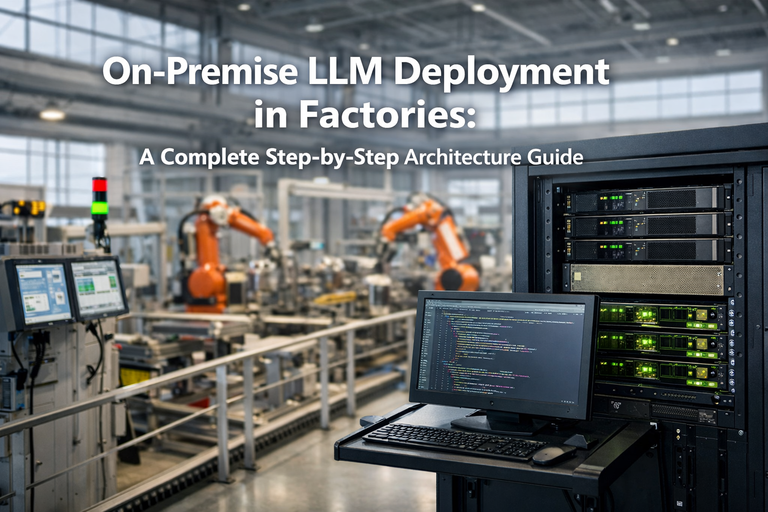
Every plant that decides to run AI vision, predictive maintenance, or OEE analytics eventually hits the same question: does this data go to the cloud, or does it stay on a rack sitting somewhere in the building. For workloads that need millisecond decisions, handle sensitive process data, or simply need to keep running when the internet connection hiccups, the answer is usually an on-premise GPU deployment. An AI Tower is a pre-configured compute rack built specifically for that job — sized, wired, and tuned for vision, predictive, and OEE workloads without requiring your IT team to design a GPU cluster from scratch. Learn how a deployment is scoped at iFactory's AI Tower page.
On-Premise AI Infrastructure
A GPU Rack Built For The Factory Floor, Not A Data Center
The AI Tower is a pre-configured, NVIDIA-powered on-prem compute deployment sized for vision, predictive maintenance, and OEE workloads — installed without building a data center from scratch.
Why Plants Choose On-Prem Over Cloud GPU
Cloud GPU instances are a reasonable choice for training a model once and running occasional batch jobs, but they start to break down as the primary infrastructure for continuous, real-time production workloads. A vision system inspecting parts around the clock generates enormous continuous bandwidth if every frame has to travel to a remote data center, the latency of that round trip is often too slow for a hard real-time reject decision, and the recurring cloud compute bill for that volume of continuous inference frequently ends up costing more over three years than owning the hardware outright.
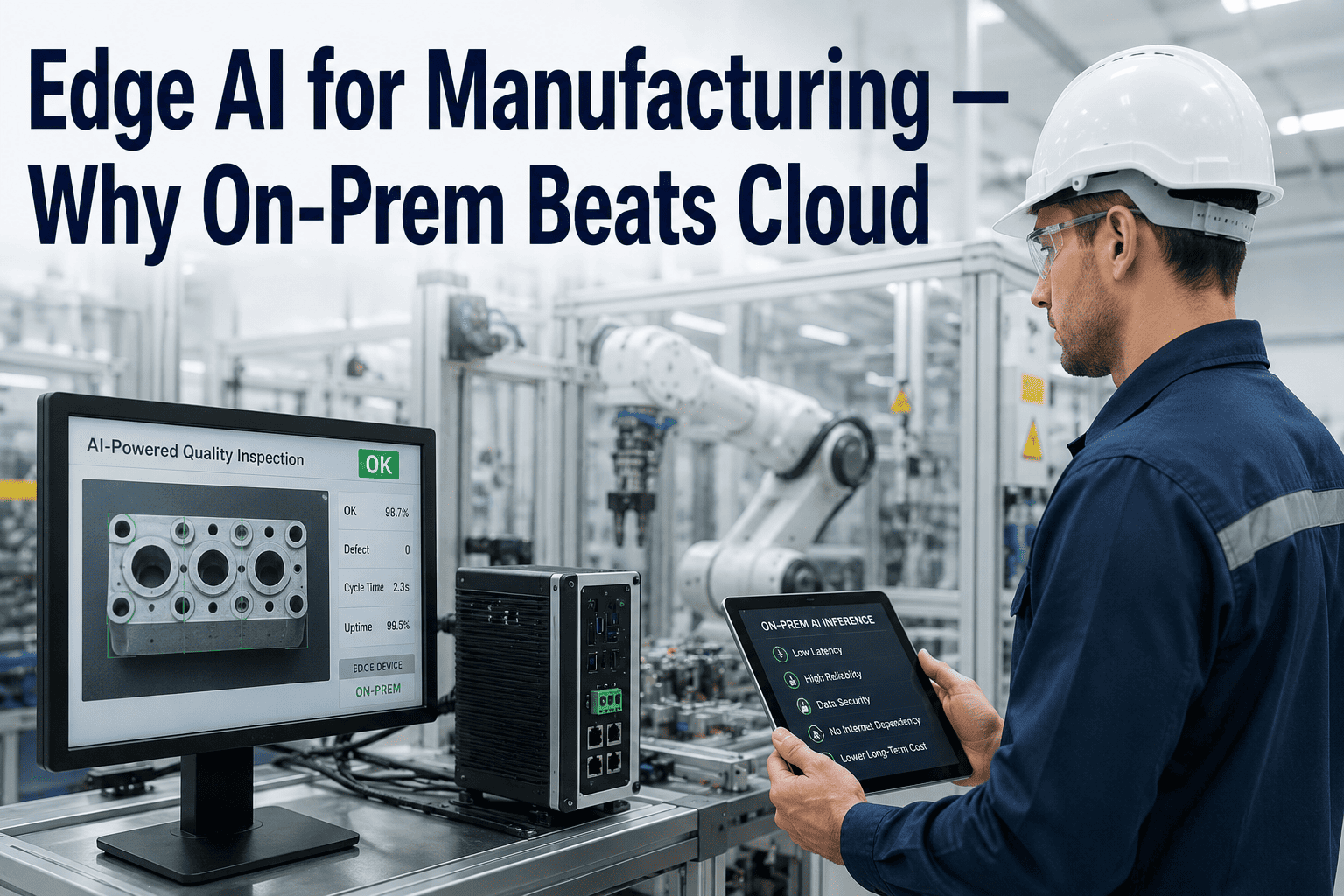
On top of the cost and latency argument, many manufacturers have data governance requirements — proprietary process parameters, customer-specific quality data, video footage of production lines — that make keeping raw data on-site a hard requirement rather than a preference. An AI Tower deployment addresses all three concerns simultaneously: lower long-term cost for continuous workloads, deterministic low latency, and data that never leaves the building unless someone deliberately exports it.
Predictable Cost
A fixed hardware investment replaces an open-ended cloud GPU bill that scales with usage and rarely goes down once workloads are running continuously.
Deterministic Latency
Inference happens on the same local network as the equipment generating the data, avoiding the variable round-trip delay of a cloud connection.
Data Stays On-Site
Raw video and process data never has to leave the facility, simplifying compliance with customer contracts and internal data governance policy.
What's Actually Inside an AI Tower
The AI Tower is built around NVIDIA GPU hardware sized to the specific workload mix a plant needs to run, paired with the storage, networking, and cooling required to run continuously in a factory environment rather than a climate-controlled server room. Configuration varies by workload, but the components below represent the core building blocks common to most deployments.
GPU Compute
NVIDIA RTX Pro 6000 or comparable class hardware, sized to concurrent inference load and model complexity
Storage
High-throughput local storage for buffering video streams and retaining evidence data on-site
Networking
Industrial-rated switching to handle continuous multi-camera and sensor traffic without dropped frames
Enclosure and Cooling
Rack-mount enclosure rated for plant floor conditions, with cooling sized to sustained GPU load rather than burst usage
Pre-Loaded Software Stack
Vision, predictive maintenance, and OEE inference pipelines configured and validated before the rack ships to site
Want a spec sized to your actual camera count and sensor list? Book a demo and we'll scope it together.
Matching Workloads to the Right GPU Tier
Not every plant needs the same amount of GPU horsepower, and over-provisioning is just as costly a mistake as under-provisioning. The right tier depends on how many concurrent camera streams need real-time inference, how complex the underlying models are, and whether predictive maintenance and OEE workloads are running on the same rack. The table below is a directional guide to help frame that conversation before a formal sizing assessment.
| Deployment Size | Typical Camera / Sensor Count | Workload Mix | Recommended GPU Tier |
| Small pilot line |
4-8 cameras |
Vision inspection only |
Single mid-tier GPU |
| Single production line |
8-20 cameras/sensors |
Vision plus predictive maintenance |
Single high-tier GPU |
| Multi-line plant floor |
20-50 cameras/sensors |
Vision, predictive, and OEE combined |
Multi-GPU rack |
| Full facility deployment |
50+ cameras/sensors |
All workloads plus future expansion headroom |
Clustered multi-GPU rack |
From Order to Live Inference: The Deployment Path
A common misconception is that on-prem GPU deployment means a lengthy custom build project. In practice, because the AI Tower is pre-configured before it arrives on-site, the path from initial site assessment to live inference is considerably shorter than a from-scratch build, since most of the configuration work happens off-site before the hardware ever ships.
1
Site Assessment. Camera and sensor inventory, network conditions, and workload priorities are reviewed to size the right configuration.
2
Rack Configuration. Hardware is assembled, GPU-sized, and pre-loaded with the relevant inference pipelines before shipping.
3
On-Site Installation. The rack is installed in existing IT space or a dedicated enclosure, connected to power, network, and camera feeds.
4
Model Tuning. Vision and predictive models are calibrated against your specific parts, equipment, and operating conditions.
5
Go-Live and Handoff. The system runs in production with a validation period before full handoff to your operations team.
Get a configuration and cost estimate scoped to your specific plant.
Frequently Asked Questions
Do we need a dedicated server room, or can this sit on the plant floor?
The AI Tower enclosure is designed to tolerate factory floor conditions and does not require a climate-controlled data center, though it does need adequate power, ventilation, and protection from dust and vibration consistent with any sensitive electronic equipment. Many plants install it in existing IT closets or server rooms where available, while others set up a dedicated enclosure near the production area it serves to minimize cable runs.
Talk to our team about the specific site requirements for your facility.
What happens if we need to add more cameras or workloads later?
Most deployments are sized with some headroom above initial requirements specifically to accommodate near-term expansion, and additional GPU capacity can be added incrementally as workloads grow rather than requiring a full replacement. Significant expansion beyond the original sizing, such as adding a second production line's worth of cameras, typically involves adding a second rack or upgrading the GPU tier rather than starting over.
Book a demo to discuss headroom planning for your growth timeline.
How is this different from just buying GPU servers ourselves?
Buying raw GPU servers is possible, but it leaves your team responsible for correctly sizing GPU tier to workload, configuring the inference pipelines, validating model performance, and troubleshooting an unfamiliar stack without vendor support. The AI Tower ships pre-configured and validated for vision, predictive maintenance, and OEE workloads specifically, which removes most of the integration risk that comes with assembling a custom GPU deployment from scratch.
Reach out to our team to compare the two approaches for your specific situation.
Can the AI Tower run alongside cloud-based tools we already use?
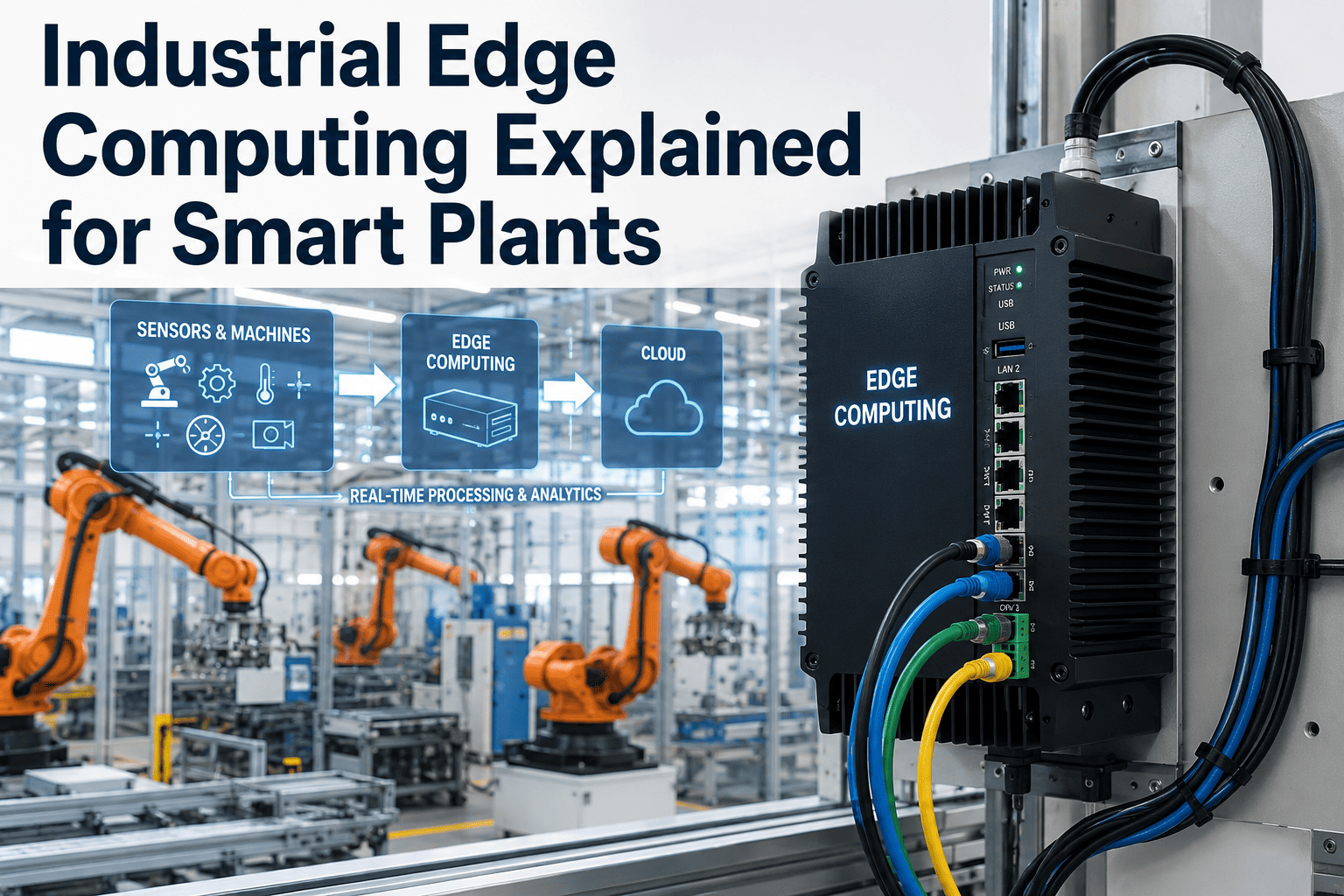
Yes. The typical architecture keeps real-time inference local on the AI Tower while sending summarized results, alerts, and aggregated data up to cloud-based dashboards or enterprise systems you already rely on. This hybrid approach is the norm rather than the exception, since very few plants want to give up cloud-based reporting entirely — the AI Tower simply handles the workloads that genuinely need local, low-latency processing.
What is the typical timeline from order to going live?
For a single production line deployment with a straightforward site assessment, the path from order to live inference typically runs six to ten weeks, covering configuration, shipping, installation, and model tuning against your specific equipment. Larger multi-line or full-facility deployments take longer given the additional camera and sensor integration work involved, and legacy network environments that need remediation first can extend the timeline further.
Book a demo for a timeline scoped to your facility.
Size An AI Tower Deployment For Your Actual Plant Floor
Share your camera count, sensor list, and priority workloads. We'll come back with a configuration and realistic cost range.