A bottling line running at 1,200 bottles per minute gives every single container about 50 milliseconds under the camera before it moves on toward the case packer. A human inspector on that same line, watching bottles blur past for an eight-hour shift, catches roughly 80% of visible defects on a good day and far less after the third hour of fatigue. A cocked cap becomes a leaking bottle in a distribution truck. A skewed label becomes a pallet a retailer refuses at the dock. A missed date code becomes a recall notice. This is why AI vision inspection has moved from pilot project to production requirement on nearly every high-speed bottling line competing at scale today.
iFactory's AI vision stations inspect every bottle at full line speed — no sampling, no blind spots, no fatigue.
Why Sampling Inspection Fails at Modern Line Speeds
Traditional quality control checks a statistical sample, maybe one bottle in fifty, and assumes the batch passes if the sample does. That assumption collapses the moment a capping head drifts out of torque spec, a label roll runs low on adhesive, or a filler valve starts under-dosing by a few milliliters. None of those problems announce themselves; they creep in gradually across a run, and by the time a sampled bottle shows the defect, thousands of out-of-spec containers have already left the plant. AI vision closes that gap by inspecting 100% of production instead of a slice of it.
The Four Inspection Stations Every Bottling Line Needs
Each defect type behaves differently under a camera, which is why a single generic vision check misses more than it catches. iFactory runs four purpose-built inspection stations in sequence, each tuned to the physics of what it is looking for, so a bottle that clears the line has been checked at every point where a filling and capping process typically fails.
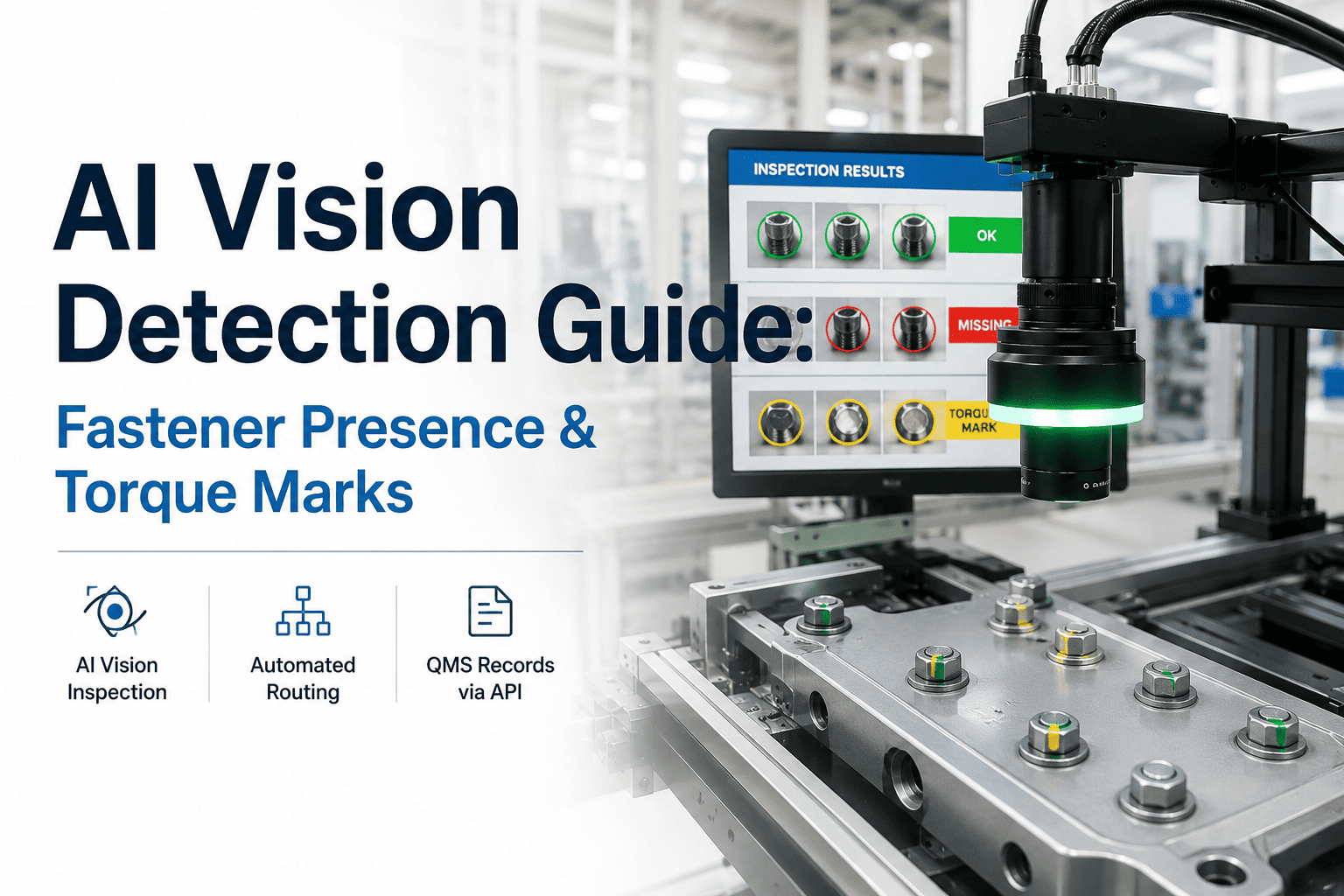
Cap Presence & Torque Verification
A diffuse dome light reveals cap seating angle and thread silhouette without glare. Tilt beyond 2 degrees or a missing cap triggers an immediate reject, catching torque drift before it produces a case full of leakers.
Label Placement & Skew Detection
Vision models trained on the correct label position flag skew, wrinkling, and misalignment down to a couple of millimeters, the tolerance most retailers enforce before rejecting an entire pallet at receiving.
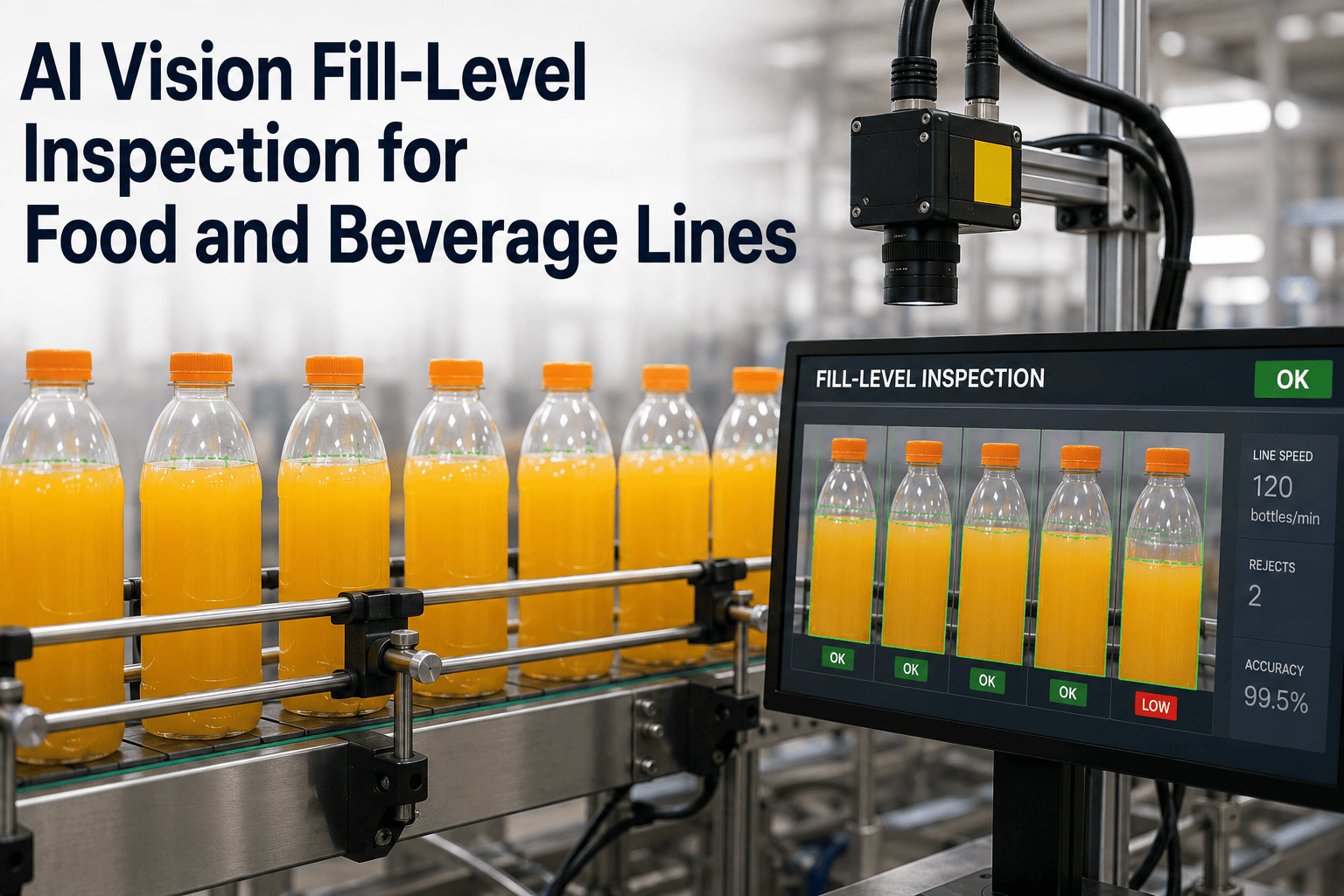
Fill Level Monitoring
A collimated backlight casts a sharp edge at the liquid meniscus, letting the model read true fill height even through carbonation foam, catching underfill before it becomes a regulatory complaint and overfill before it gives away product margin.
Date Code & Lot Legibility
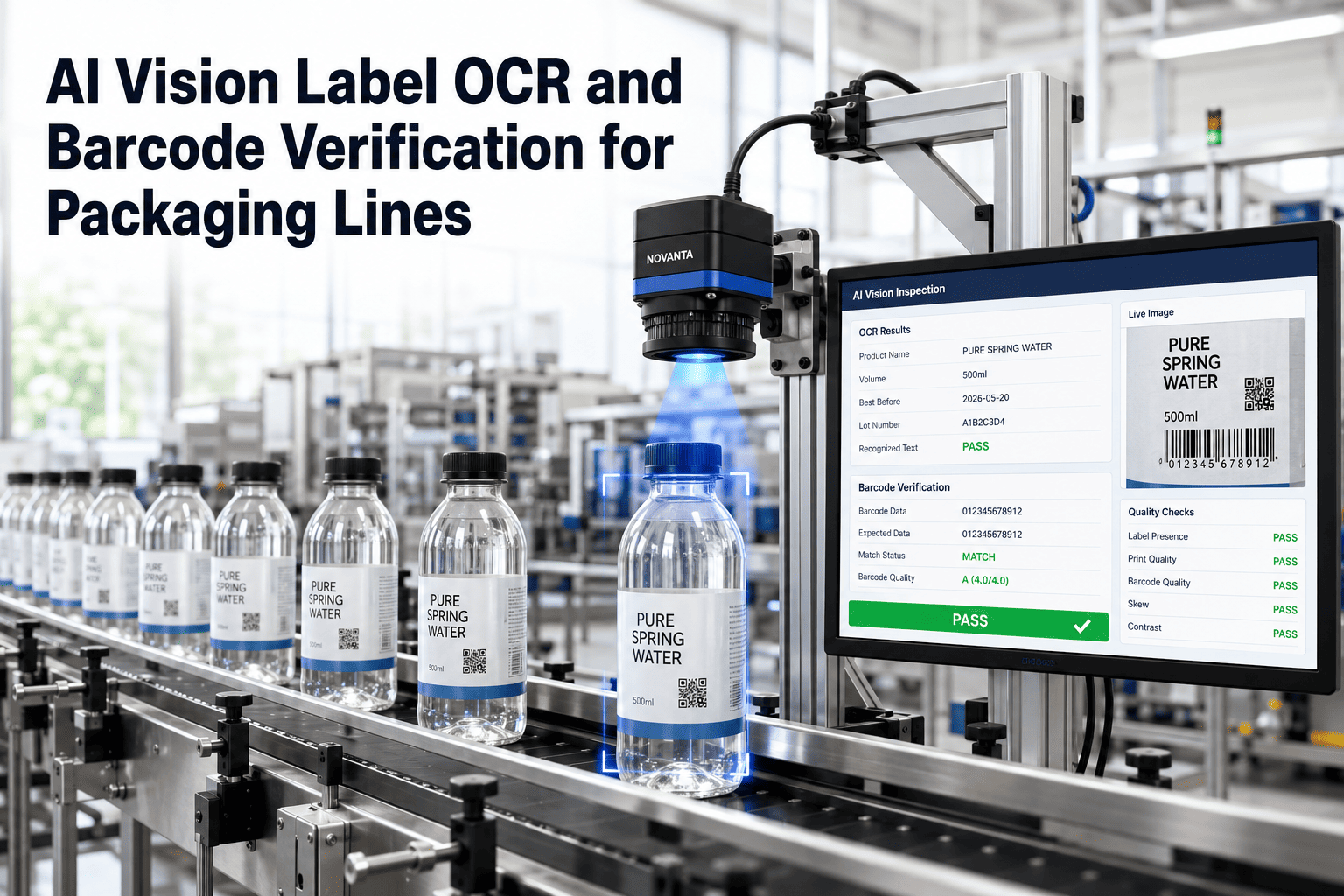
OCR verification confirms the date code is present, correctly printed, and legible, closing the single most common root cause of a full-scale product recall: an illegible or missing expiration date.
What Each Defect Actually Costs You
Not every defect carries the same downstream price tag. Understanding the cost class behind each inspection point makes it easier to prioritize which stations to deploy first if you are rolling out AI vision in phases rather than all at once. Book a demo to see the defect-to-cost mapping run against your own product line.
| Defect Type | Detection Signal | Typical Downstream Cost |
|---|---|---|
| Cocked or missing cap | Seating angle > 2°, thread silhouette gap | Leak claims, spoilage, distribution damage |
| Underfill | Meniscus height below target band | Regulatory exposure, customer complaints |
| Overfill | Meniscus height above target band | Direct margin giveaway on every bottle |
| Label skew | Placement offset beyond spec | Pallet rejection at retailer receiving |
| Illegible date code | OCR confidence below threshold | Full-batch recall exposure |
| Foreign particle | Anomalous shape inside container | Contamination recall, brand damage |
Sampling vs. 100% AI Vision Inspection
The comparison below is not a marginal improvement story. Statistical sampling and full-line AI vision represent two fundamentally different philosophies of quality control, and the gap between them widens as line speed increases.
- Checks roughly 1 in 50 bottles
- Misses gradual drift until it's severe
- Human fatigue lowers catch rate after hour one
- Defects discovered after the fact, often at retail
- Checks 100% of bottles, every run
- Flags drift the moment it starts
- Consistent accuracy across every shift
- Rejects the defective bottle before it leaves the line
iFactory configures cap, label, fill, and date code inspection to your exact container, closure, and line speed before you commit to anything.
Rolling Out AI Vision Without Stopping the Line
The most common objection to AI vision inspection is downtime risk during installation. In practice, deployment is staged so the line never stops for longer than a scheduled changeover, and the system runs in shadow mode before it is trusted to trigger a reject gate.
Camera and lighting mounted at existing inspection points during a planned changeover window, with no line modification required.
Shadow mode runs the AI model against live production without controlling the reject actuator, comparing its calls to your current QC results.
Model thresholds tuned against your specific container geometry, label stock, and cap type until false-reject rate drops to production-acceptable levels.
Reject gate control handed to the AI system once accuracy is validated, with full override and manual reset always available to line operators.
Frequently Asked Questions
Does AI vision inspection slow down a high-speed bottling line?
No. Edge AI processes each image and makes a reject decision in under 30 milliseconds, well within the window a bottle spends under the camera even at 1,200 bottles per minute. The inspection runs inline with your existing conveyor and reject gate, so there is no added cycle time. Processing happens on local hardware rather than in the cloud, which removes network latency as a bottleneck entirely.
Can the system handle multiple bottle shapes, colors, and label designs on the same line?
Yes. Deep learning models handle changeovers between SKUs without the manual reprogramming that older threshold-based vision systems required. Tinted glass, clear PET, and varying label artwork are each learned as part of the model's training rather than hard-coded rules, so a changeover is a configuration switch, not a re-engineering project.
What happens when the system flags a false reject?
False rejects are tracked and fed back into model tuning, which is why accuracy improves over the first few weeks of live operation rather than staying static. Operators retain a manual override at the reject gate at all times. Book a demo to see actual false-reject rates from lines running your bottle type.
Do we need to replace our existing cameras and reject mechanism?
In most deployments, no. The AI layer sits on top of the sensors, cameras, and reject actuators already installed on the line, adding an intelligence layer rather than requiring a hardware overhaul. Where lighting geometry needs adjustment for a specific inspection point, that is typically a minor fixture change rather than a full retrofit.
How long does it take to go from installation to full production use?
Most lines move from camera mounting to shadow-mode validation to full reject-gate control within a few production weeks, depending on how many SKUs need individual model tuning. Running in shadow mode first means the transition to live control happens only once accuracy has already been proven against your own product, not a generic benchmark.
Talk to iFactory about mapping AI vision inspection to your exact bottling line before your next changeover.