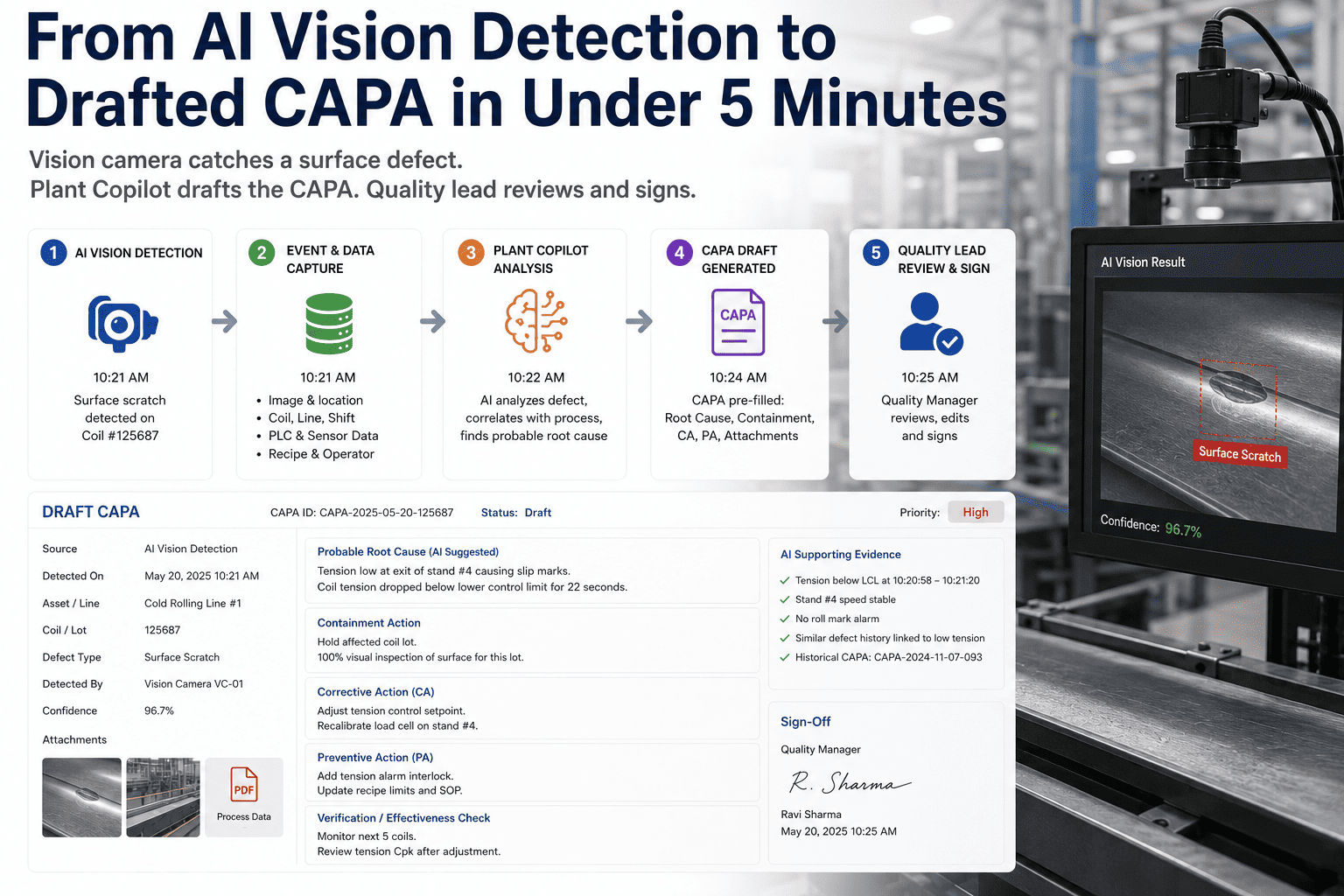
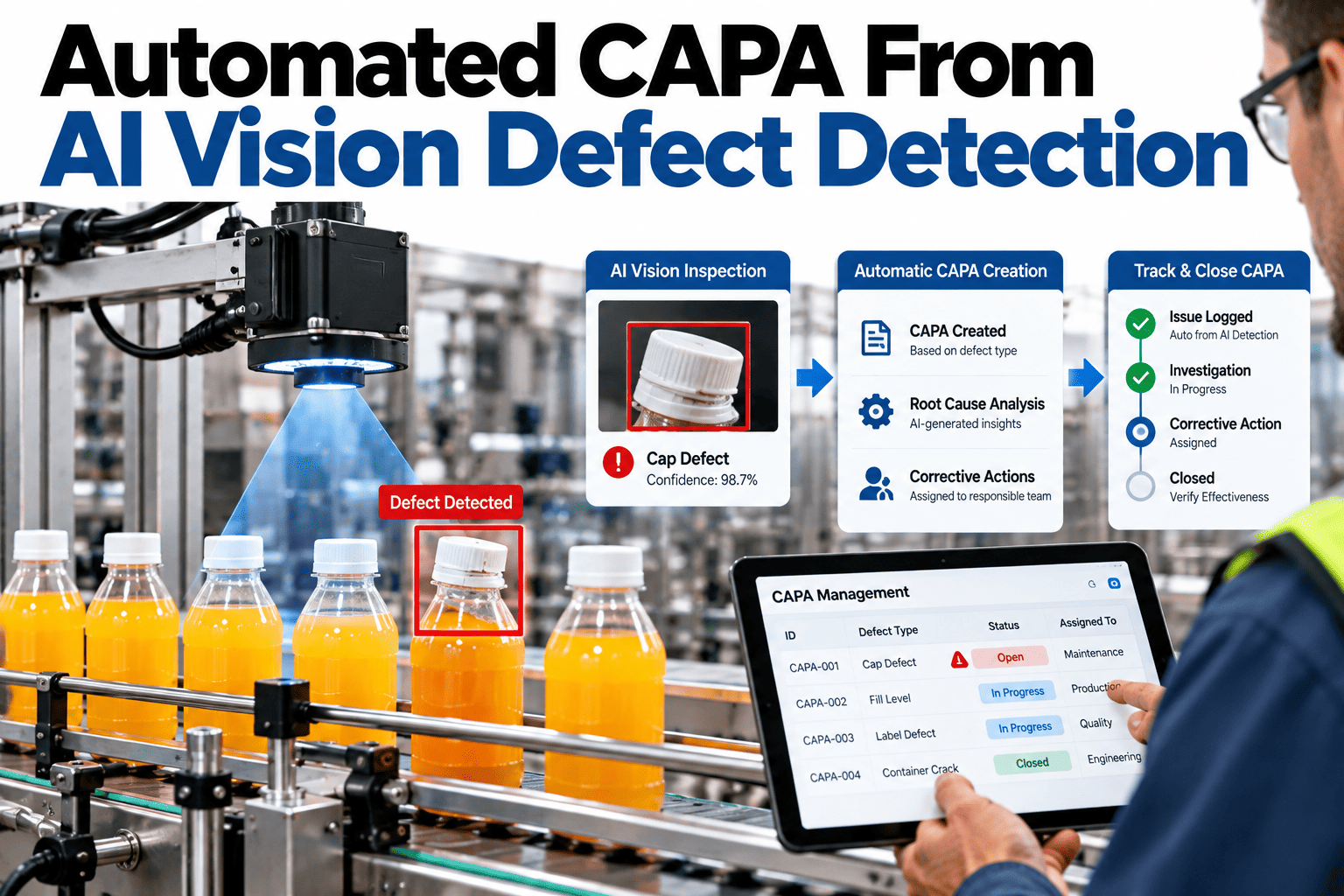
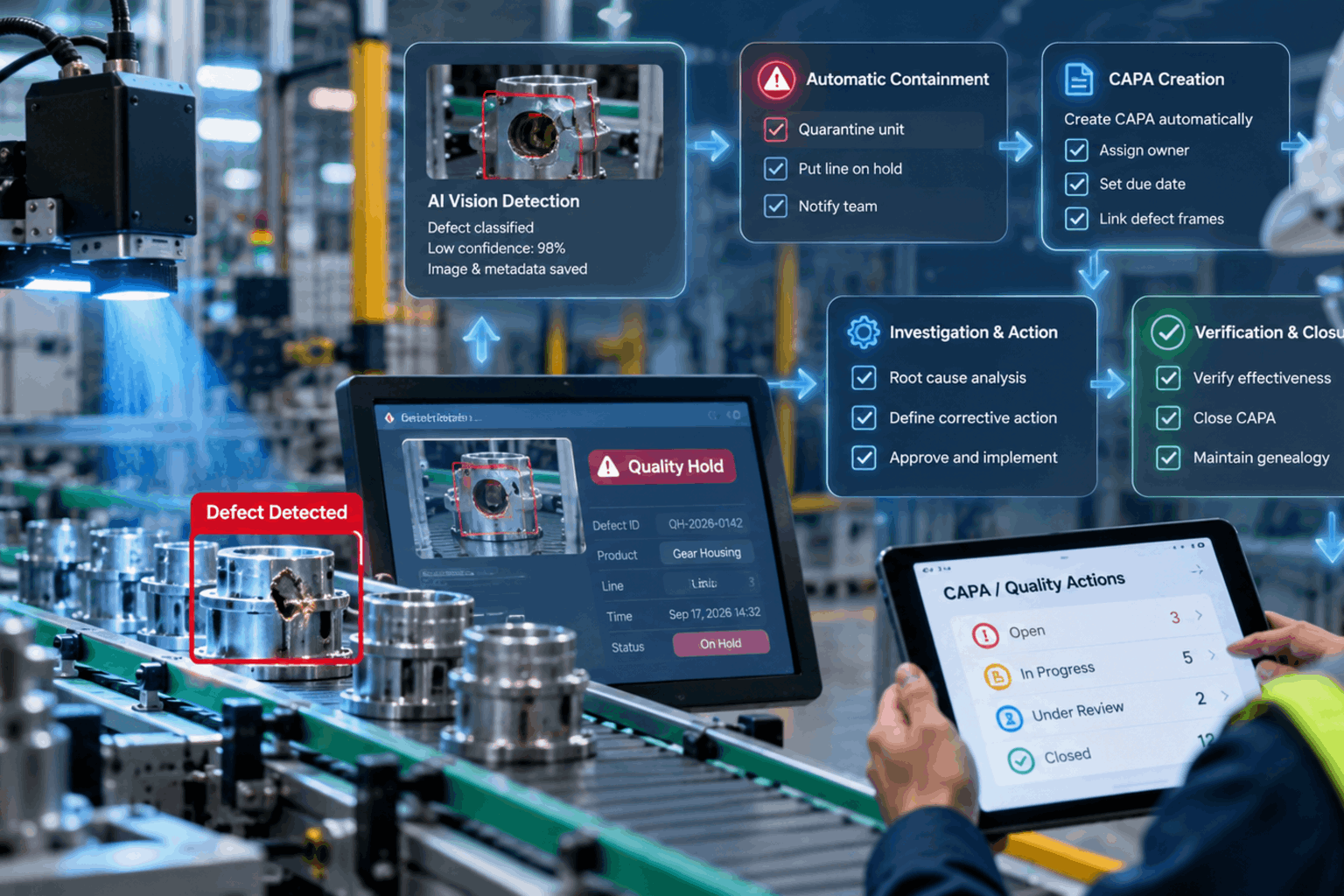
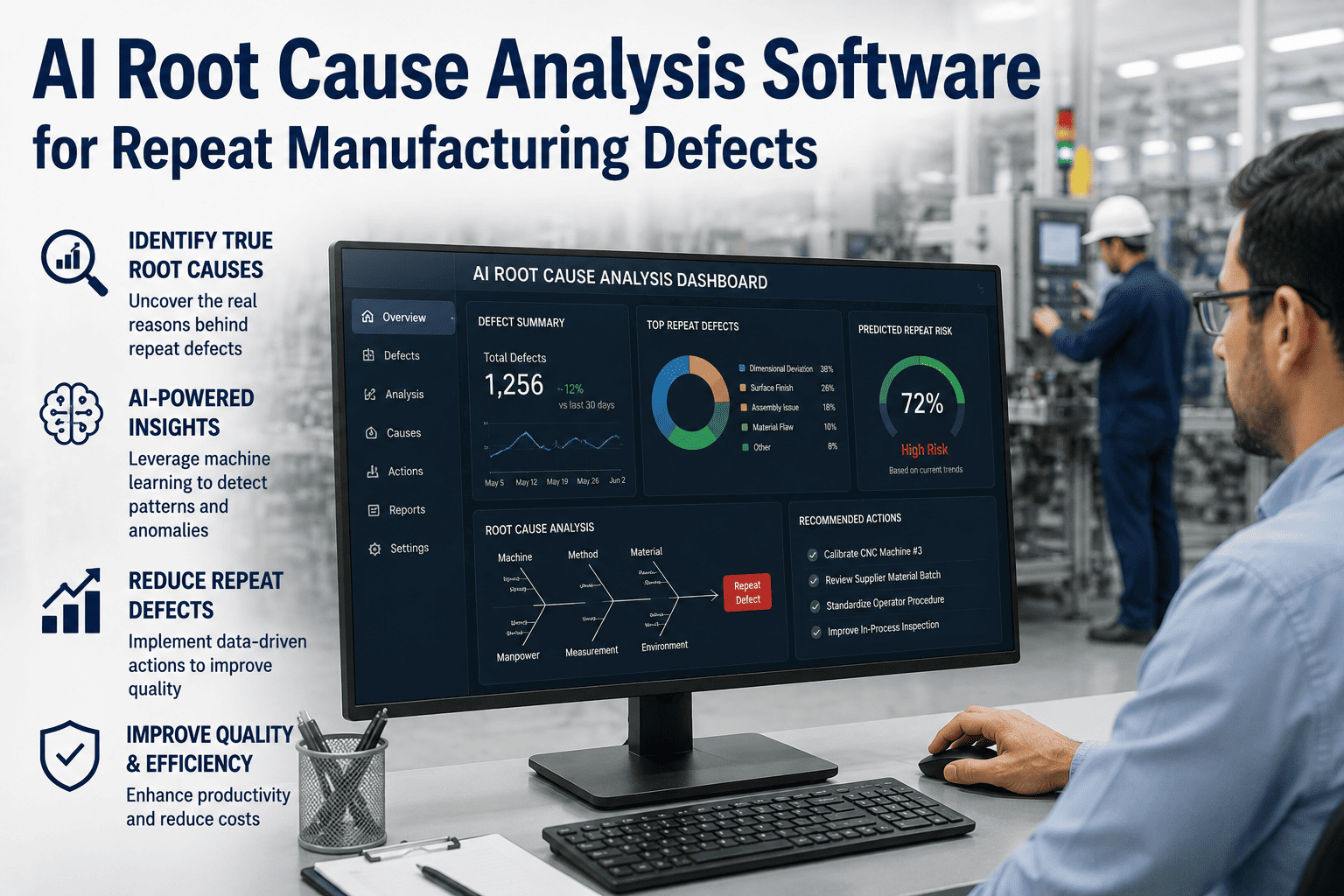
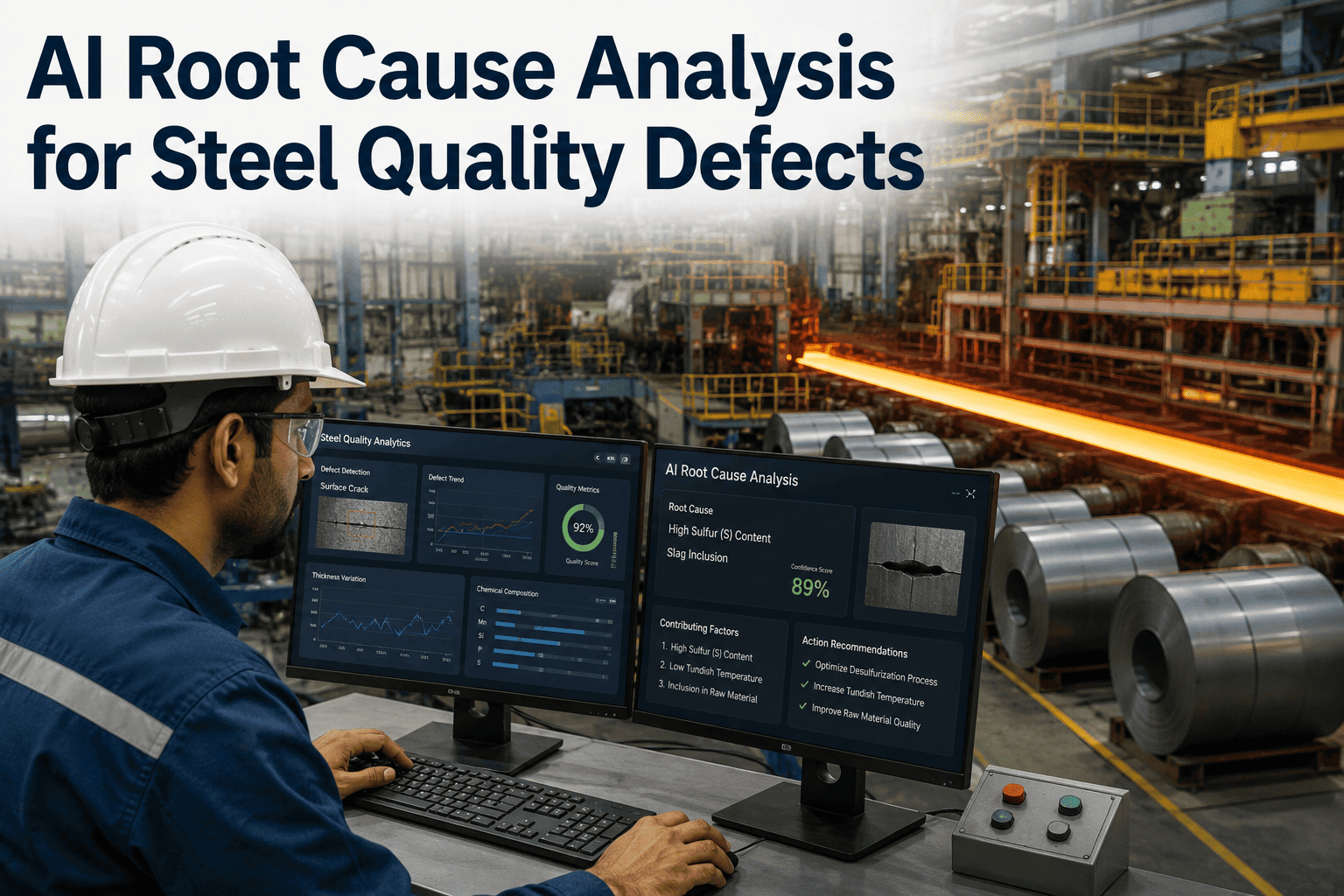
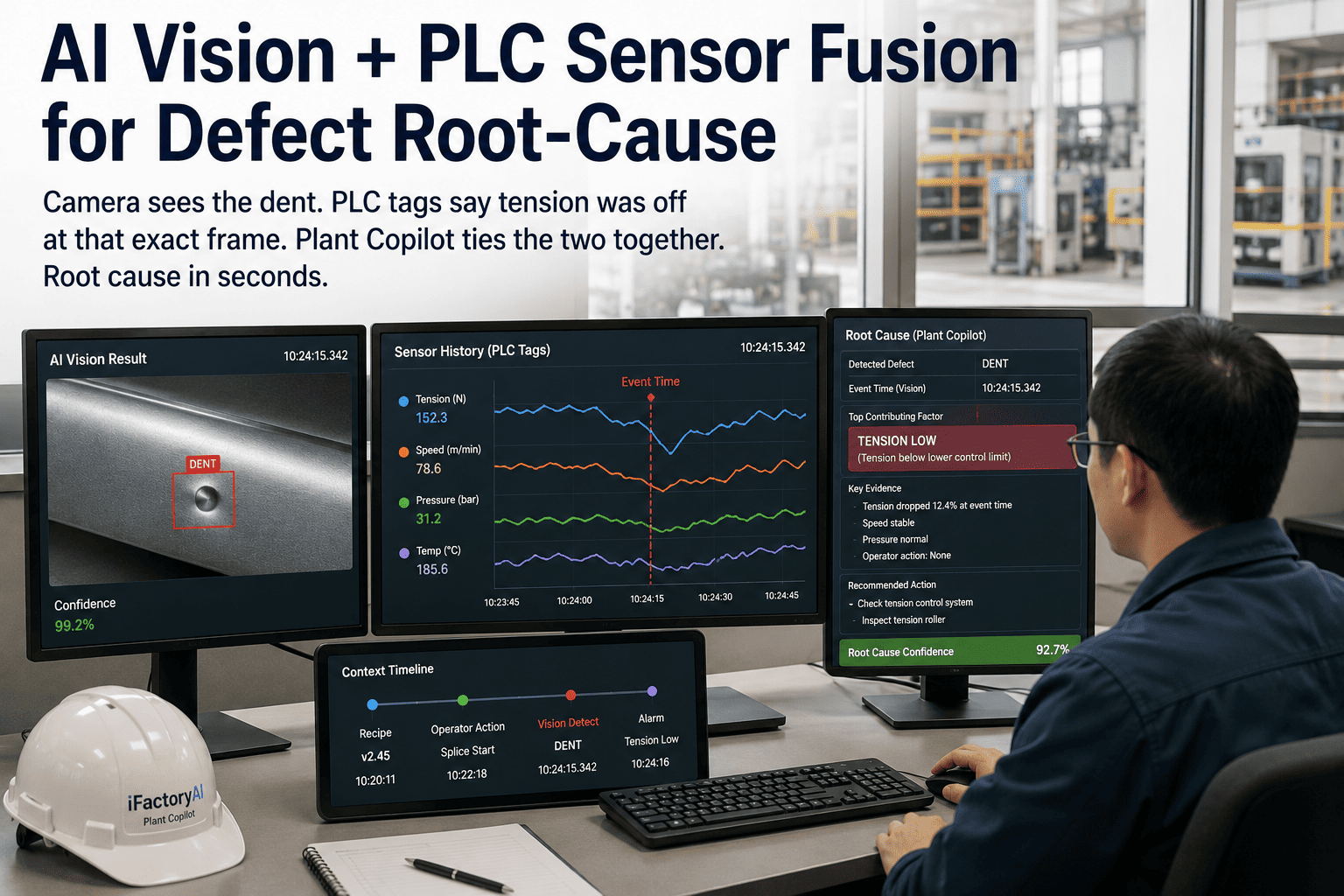
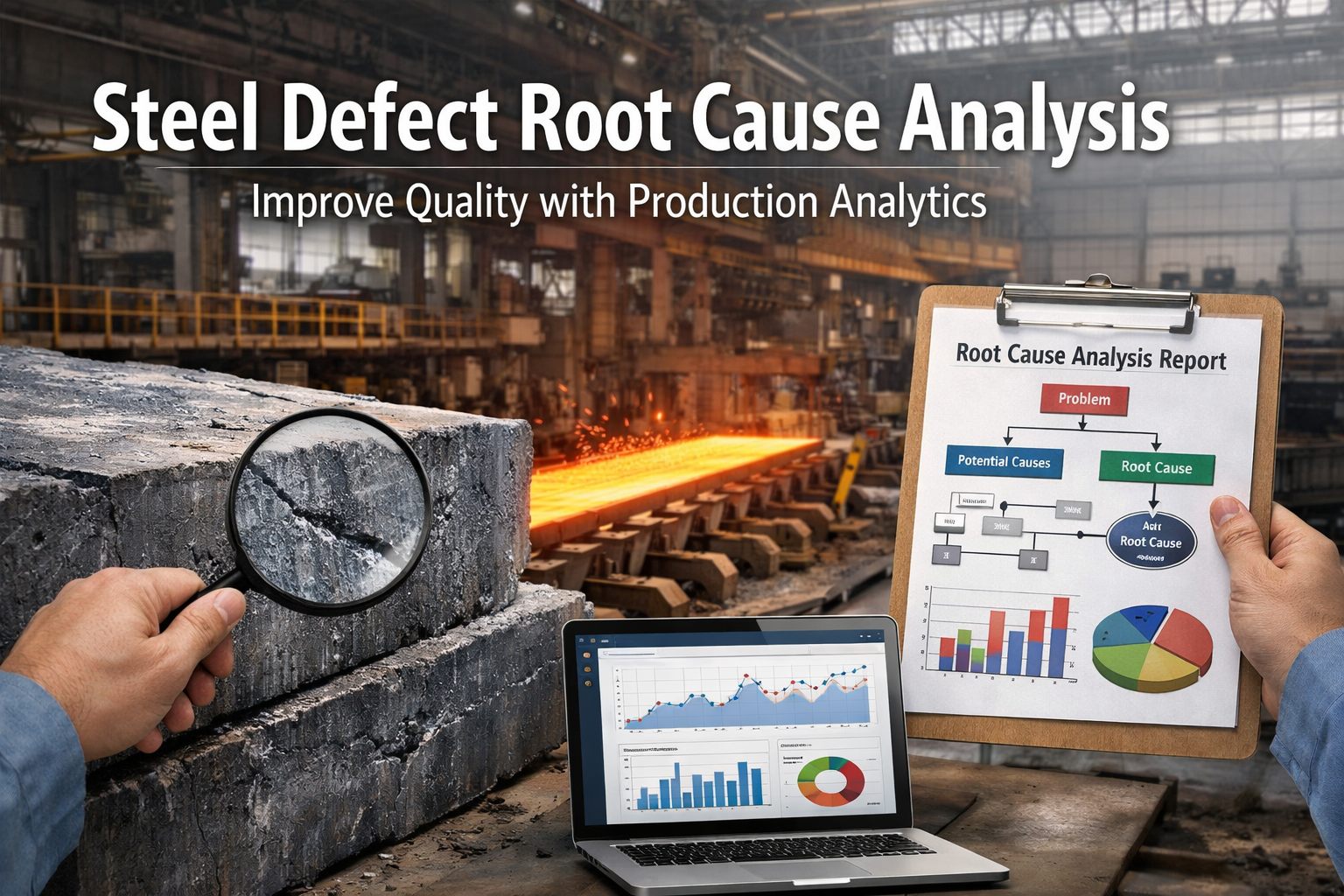
Here is the strangest gap in modern quality: the detection takes 100 milliseconds, and the paperwork takes 30 to 90 days. An AI vision camera classifies a surface defect with 95 to 99% accuracy before the part leaves the station — then the finding enters the human CAPA pipeline, where evidence gets gathered by email, root cause waits for a meeting, and the corrective action closes a month after everyone stopped thinking about it. No wonder inadequate CAPA shows up in over 60% of FDA warning letters. iFactory\'s Plant Copilot vision-to-CAPA workflow closes the gap: from any vision detection, the copilot drafts the full CAPA — root cause, containment, corrective and preventive actions — in under five minutes, with the evidence attached and the quality manager\'s signature as the only gate that matters.
iFactory Plant Copilot — Vision to CAPA
Camera Catches the Defect. Copilot Drafts the CAPA. You Sign.
Any AI vision detection becomes a fully drafted CAPA in under five minutes — root cause ranked with evidence, containment scoped by timestamp, corrective and preventive actions pre-filled — routed to the quality manager for review and signature.
<5 min
from detection to drafted CAPA
30-90 days
what a typical CAPA takes today
95-99%
AI vision detection accuracy, every shift
100%
of CAPAs signed by a human QM
Millisecond Detection, Month-Long Paperwork
The camera already did the hard part — 100% inspection at line rate, sub-100ms classification, no fatigue, no shift drift. What stretches the CAPA across weeks is everything after: assembling evidence from systems that don\'t talk, scheduling the root-cause meeting, writing the document nobody has time to write, and chasing signatures while the clock runs toward the audit.
Evidence by Email
Frames, process data, and lot records live in different systems — gathering them is days of work before analysis starts.
Root Cause by Meeting
The 5-Why session waits for calendars to align while the defect keeps running and memories of the shift fade.
Drafting by Overtime
The CAPA document is written at 7 p.m. by whoever lost the coin toss — boilerplate where evidence should be.
Closure by Deadline Panic
Overdue CAPAs are among the most-cited inspection findings — the backlog itself becomes the compliance risk.
The Five Minutes, Step by Step
The copilot doesn\'t skip stages — it runs them at machine speed against data it already has. Every step below is logged, and the output is a draft, not a decision: nothing executes until the quality manager signs.
T + 0 sec
Detection
Vision classifies the defect — type, zone, severity — and the frame is stored with the part and lot identity.
T + 30 sec
Evidence Assembled
Process parameters at the detection moment, recipe version, recent maintenance, and defect history pulled automatically.
T + 90 sec
Root Cause Ranked
Candidate causes scored against onset timing, location, and counterexamples — each with its evidence attached.
T + 3 min
CAPA Drafted
Containment scoped by timestamps, corrective and preventive actions proposed, verification plan written.
T + 5 min
In the QM\'s Queue
The draft arrives for review — edit, challenge, reassign, or sign. The human gate, with everything ready behind it.
Time your last CAPA from defect to draft. Get a turnkey AI quote and race it against five minutes.
What a Drafted CAPA Actually Looks Like
Not a template with blanks — a document with content, citations, and the two judgment calls flagged for the human. This is what lands in the quality manager\'s queue.
CAPA Draft — CA-0517 · Scratch cluster, Camera 2, Line 5
Awaiting QM Review
Root Cause
Guide-rail wear at station 5C. Evidence: 47 scratch detections in 6 hours, all zone D, all parts routed via 5C; parts via 5D clean. Rail last replaced 14 months ago against a 12-month PM interval; vibration trend rising since week 22. Confidence: high.
Containment
Hold applied to 312 parts produced via 5C since first detection at 06:14, bounded by timestamp. Routing shifted to 5D. Affected lots tagged for re-inspection.
Corrective Action
Replace 5C guide rail — work order WO-2291 drafted for maintenance with vibration trend and frames attached. Re-inspect held parts post-fix; release on clean vision pass.
Preventive Action
Shorten rail PM interval to 10 months across all five stations; add rail-wear vibration threshold as a standing alert. Verification: 30-day scratch-rate watch on Line 5, auto-reported.
Or Just Ask for It
The same workflow answers to plain language — for the QM reviewing from a phone between meetings, or the engineer who wants the reasoning challenged.
Plant Copilot — Quality
Quality Manager
Walk me through CA-0517. Why the guide rail and not the gripper?
Copilot
Three reasons the rail outranks the gripper. First, geography: all 47 scratches are zone D, which contacts the 5C rail, not the gripper path. Second, the counterexample: parts routed through 5D — same grippers, different rail — show zero detections. Third, the trend: 5C rail vibration has risen 31% since week 22, and it\'s 2 months past PM interval. The gripper hypothesis scored low: its last service was 3 weeks ago and its contact zone doesn\'t match. Both scorings are in the draft\'s evidence appendix.
Quality Manager
Good. Extend the hold to 05:50, keep the PM change to Line 5 for now, and route it back to me for signature.
Copilot
Done. Hold extended to 05:50 — 41 additional parts tagged. Preventive action scoped to Line 5 with a plant-wide review task in 60 days. The updated CAPA is in your queue; your edits and the reasons are logged in the record\'s history.
Bring your most recurring vision defect. Start a 6-week pilot and watch its CAPA draft itself.
The Quality Manager Stays the Quality Manager
Speed without authority would be a liability. The workflow is built so the human gate is real — and so the audit trail proves it was.
Nothing Executes Unsigned
Holds beyond automatic containment, action assignments, and closure all require the QM\'s signature — architecturally, not by policy.
Every Edit Is the Record
Draft, challenges, changes, and rationale are versioned — the 8D or audit pack shows the human judgment, not just the outcome.
Evidence, Not Boilerplate
Every claim in the draft cites frames, trends, and records — a reviewer can interrogate any line and reach the source in one click.
KPIs Move the Right Way
Backlog drains, the 85% on-time closure benchmark gets reachable, and overdue findings — a top inspection citation — shrink.
Turnkey: Hardware, Software, Live in 6-12 Weeks
iFactory ships a pre-configured NVIDIA AI server — racked, software pre-loaded. Rack it, plug in power and Ethernet, and the AI is live inside your firewall. The engagement covers cabling, network, PLC/SCADA and vision integration, operator training, and 24×7 remote monitoring.
Phase 1 · Weeks 1-2
Connect Vision & Context
Edge server on-prem; vision detections, process data, and quality records connected read-only.
Phase 2 · Weeks 3-6
Draft in Shadow
CAPAs draft on live defects while your team grades root causes and actions — trust earned on your own cases.
Phase 3 · Weeks 6-12
Live Sign-Off Flow
Vision-to-CAPA goes live with QM signature gating, backed by 24×7 remote monitoring and 99.9% uptime.
1000+
clients running iFactory
6-12 wks
to live operation
On-prem
inside your firewall
What the Quality Team Gets Back
Compressing detection-to-draft from weeks to minutes converts directly into a draining backlog, containments sized by data, and CAPAs whose evidence survives any audit.
<5 min
Detection to draft
against the 30-to-90-day industry norm for CAPA cycles
Bounded
Containments
holds scoped by detection timestamps — parts, not shifts, quarantined
85%+
On-time closure, reachable
the benchmark stops being aspirational once drafting takes minutes
Stronger
Audit posture
evidence-cited CAPAs against the gap behind 60%+ of warning letters
How many CAPAs are overdue in your system right now? Talk to our quality team and drain the backlog at machine speed.
Frequently Asked Questions
Does the copilot close CAPAs on its own?
No — by architecture. It drafts, assembles evidence, and routes; the quality manager reviews, edits, and signs. Holds beyond automatic containment, action assignments, and closure all require the human signature, and every edit with its rationale becomes part of the permanent record.
How does it pick a root cause from a single detection?
It rarely is a single detection — the draft considers the defect\'s full pattern: count, zones, timing, and which routes or tools the affected parts share, joined with process data, maintenance history, and recipe versions at those moments. Candidates are ranked by how well each explains the pattern including counterexamples, and the scoring ships with the draft so a reviewer can challenge it line by line.
What if the vision detection itself is a false positive?
The frames are in the draft, so the QM sees what the camera saw before anything is signed. Rejected drafts feed back into the vision model\'s training, and detection thresholds per defect class stay under your control — the workflow assumes the human can overrule the camera, because sometimes the human should.
Does this work with our existing vision systems, or only iFactory cameras?
Both. Existing vision systems are first-class sources — their detections trigger the same workflow. Where lines lack inspection, iFactory deploys AI vision as part of the engagement, with documented detection accuracy of 95 to 99% across shifts. Either way, the CAPA pipeline is the same.
What ships in the turnkey package, and where does our data live?
A pre-configured NVIDIA AI server with software pre-loaded — rack it, plug in power and Ethernet, and it\'s live. The engagement covers cabling, network, PLC/SCADA and vision integration, training, and 24×7 remote monitoring, with go-live in 6 to 12 weeks. Everything runs on-premise inside your firewall, read-only and inbound-only — frames and quality records never leave the plant.
Detected in Milliseconds. Drafted in Minutes. Signed by You.
Watch a CAPA Draft Itself From a Defect
Bring your most recurring vision defect and your current CAPA backlog count. We\'ll run the detection-to-draft pipeline live — root cause ranked, containment scoped, actions pre-filled — and scope the 6-to-12-week turnkey deployment, on-prem, inside your firewall.
4 sections
RC · contain · CA · PA
QM signs
every single one
1000+
clients · 99.9% uptime