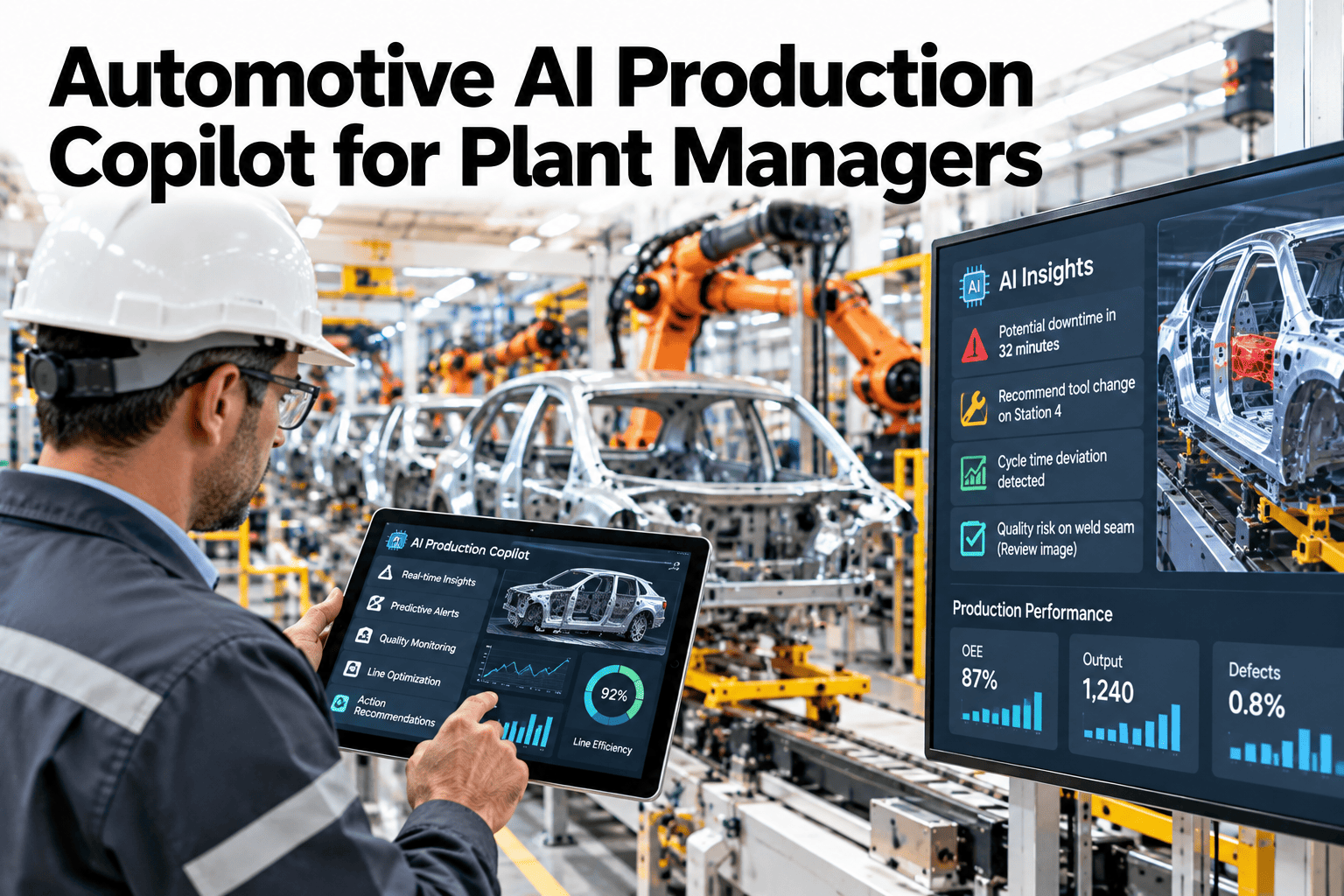
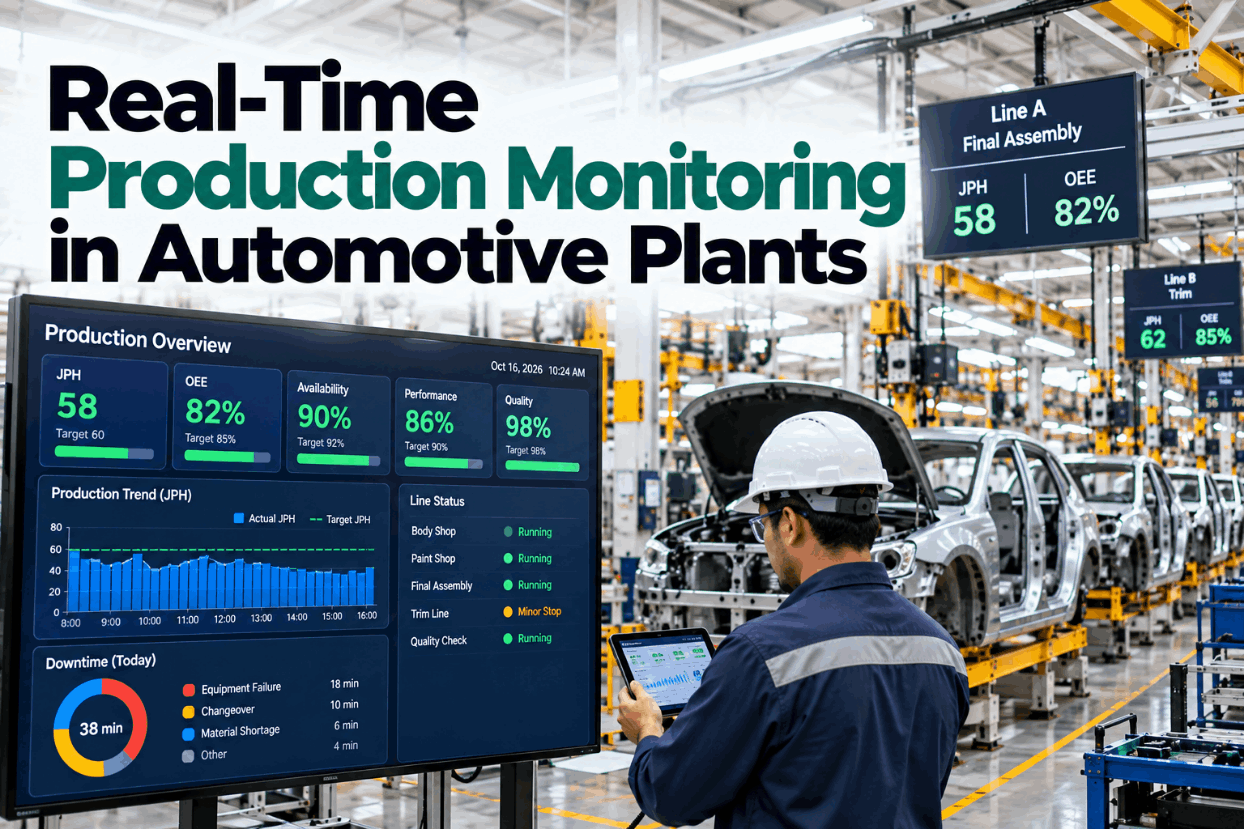
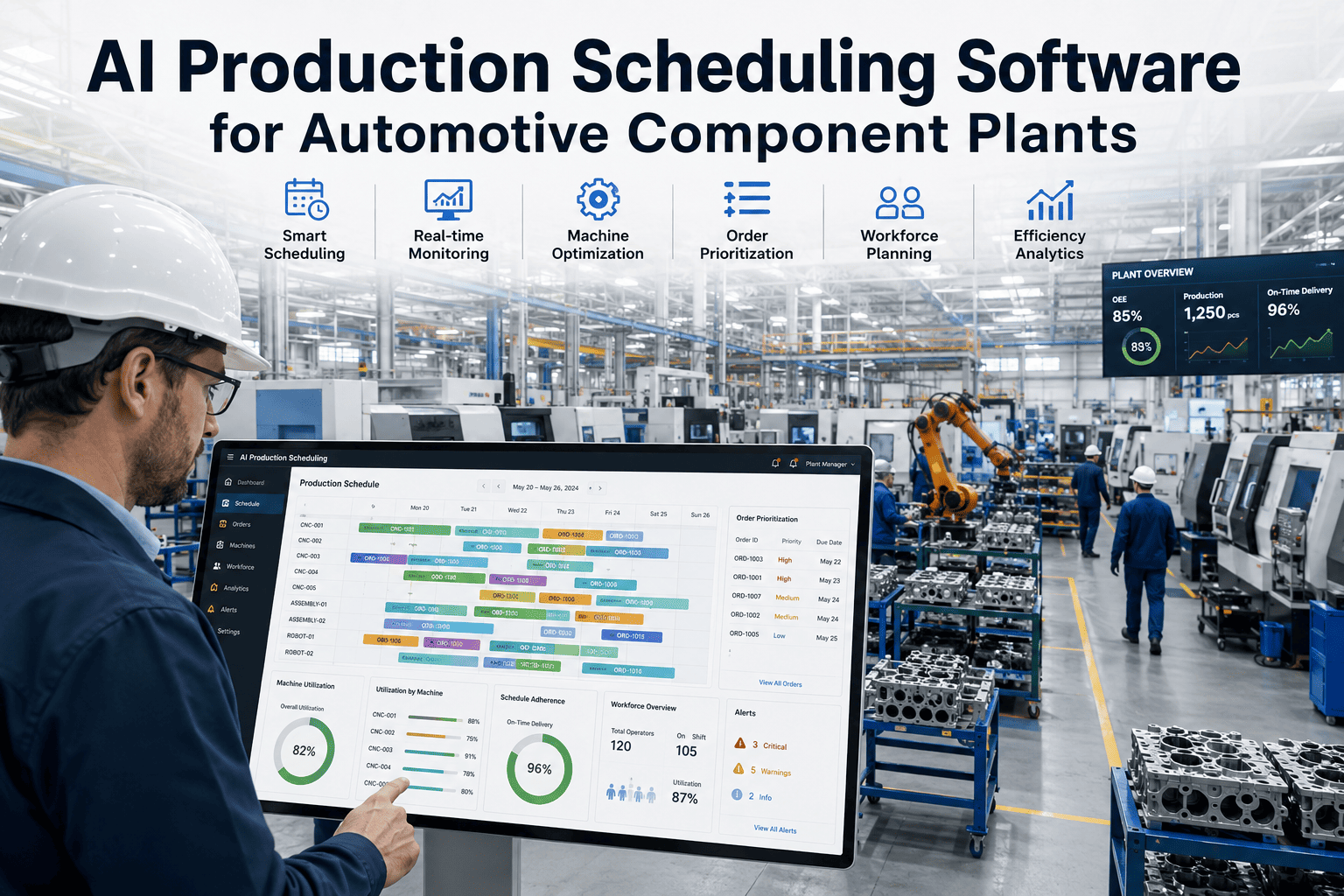
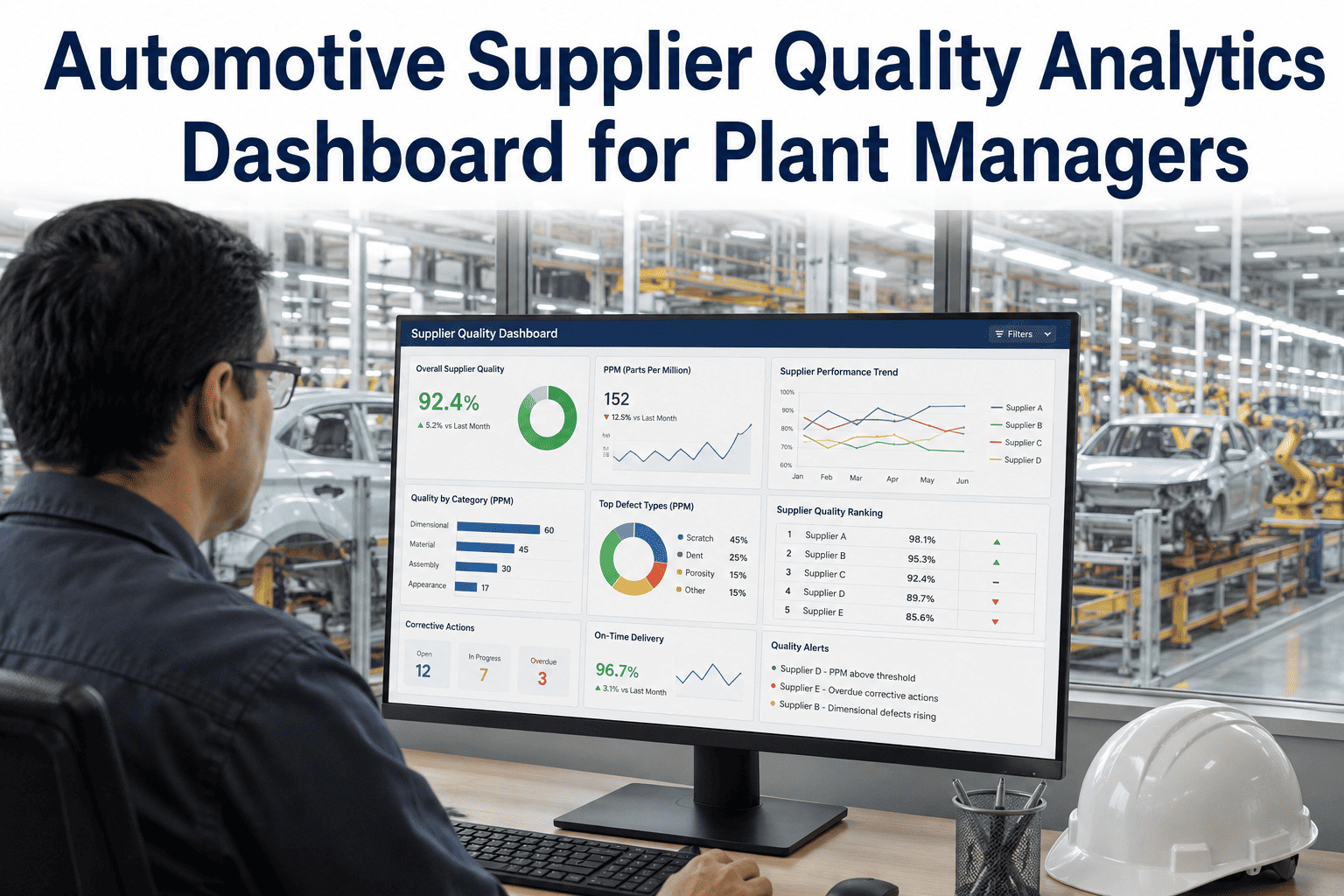
A plant manager needs answers quickly: why did we miss plan, where is the bottleneck and what needs attention before the next shift? In most automotive plants the data to answer these questions exists, but it sits in separate MES, ERP, quality and maintenance systems. An AI production copilot lets managers ask plain questions and receive answers drawn from those sources, with the evidence shown. To see how this could look for your plant, you can try sample questions with our team.
Automotive AI production copilot
Ask Your Plant a Question and Get an Answer You Can Act On
iFactory AI connects production, quality and maintenance data so plant managers can understand what happened, why and what to do next.
Why did Line 2 miss plan on the night shift?
Copilot answer
Output fell 8 percent after a robot fault stopped the line twice. Fixture changeover also ran long. Maintenance has a repair order open.
Source: MES and maintenanceConfidence: high
A manager's dayQuestions Arrive All Day, and Each One Needs a Quick Answer
The plant manager's day is a stream of questions from the floor, the head office and customers.
Before shift
What happened overnight?
Mid shift
Are we on track for today's plan?
Afternoon
Which problem should I escalate?
End of day
What do we hand over to the next shift?
A copilot answers in seconds, so managers spend their time deciding rather than hunting for data.
Questions it should answerFive Question Types Every Plant Manager Asks
Strong copilots handle the full range, from simple status to guidance on next steps.
1
What is happening now?
Line status, output against plan and active problems.
2
Why did we miss plan?
Loss causes across stops, speed, quality and changeovers.
3
Where is the bottleneck?
Stations, machines or materials limiting flow.
4
What is likely to go wrong?
Early warnings on equipment, quality and supply.
5
What should I do next?
Ranked actions with reasons and owners.
Data it needsA Copilot Is Only as Good as the Data It Can Reach
Answers improve as more connected systems feed the same view.
Production systemQuality systemMaintenance system
Plant knowledge layer
Manager questionsShift reportsAlerts and actions
Start with the two or three systems your teams trust most, then widen the circle. Clean, time-stamped data matters more than large volumes.
Test Real Plant Questions on Your Own Data
Send us the questions your managers ask every week and see how iFactory AI answers them using your own systems.
Anatomy of an answerFour Layers Make an Answer Worth Trusting
Direct answer
A short reply to the exact question asked.
Evidence
The data, events and records behind it.
Confidence
How sure the system is and what is missing.
Next step
One suggested action and who should take it.
When evidence is one click away, managers can verify an answer in seconds and build trust in the tool.
Deployment pathFive Steps From Idea to a Trusted Copilot
1
Connect data
Link the first two or three systems with agreed access.
2
Ground the model
Ensure answers come from your data, not from guesses.
3
Set permissions
Control who can see which plants, lines and measures.
4
Pilot with one team
Test with a few managers and collect feedback.
5
Expand step by step
Add systems, roles and plants as trust grows.
Treat the first months as learning. Feedback on wrong or unclear answers is the fastest route to quality.
GuardrailsSix Controls That Keep a Copilot Safe and Useful
Read-only to start
Begin with answers and explanations, not actions on live systems.
Role-based access
People see only the data their role allows.
Source citations
Every answer shows where its data came from.
Honest uncertainty
The copilot says when it does not know.
Audit trail
Questions and answers are logged for review.
Human approval
Any action that changes a process needs sign-off.
These controls build trust with operations, IT and security teams. To review them for your plant, ask our team about copilot controls.
Time savedWhat Changes in a Manager's Week
Much of a manager's time goes into gathering and reconciling data. This illustrative view shows how that can change.
Before a copilot
Time to answer a loss question
Time to prepare the daily review
Delay in escalating problems
With a copilot
Time to answer a loss question
Time to prepare the daily review
Delay in escalating problems
The bars are illustrative. Measure your own baseline before the pilot so improvements are credible.
One copilot, many rolesEach Role Asks Different Questions
Plant manager
Where are we losing the most output this week?
Production supervisor
What is stopping my line right now?
Maintenance lead
Which asset is most likely to fail soon?
Quality lead
Which defects are rising and where?
The same data answers all four. Role-based views make each answer relevant and keep the system easy to use.
Measuring valueFour Measures That Prove the Copilot Is Helping
Answer time
Minutes to answer common questions
Meeting prep
Hours spent preparing reviews
Escalation speed
Time from problem to decision
Adoption
Share of managers using it weekly
Top twenty manager questions listed
Two or three trusted data sources
Access rules and roles defined
Pilot team and success measures agreed
Feedback route for wrong answers
Owner from operations and IT
Expert reviewWhat a Manufacturing IT Leader Would Check First
Expert review
A production copilot succeeds when it is grounded in trusted data, shows its evidence and fits the daily routines of the plant. Technology alone does not create adoption.
VerdictValuable when answers are sourced, role-aware and easy to check.
Watch forConfident answers built on stale or incomplete data.
Do nextPilot with a few managers and measure time saved on real questions.
Frequently asked questionsWhat Plant Managers Ask About Production Copilots
Will a copilot replace our managers or analysts?
No. It speeds up finding and explaining information, so managers and analysts spend more time on decisions and improvement. People still own the decisions, especially any that change production or people. Its strongest benefit is reducing the hunt for data and the delay it causes.
See how teams use a copilot.
How do we know the answers are correct?
Good copilots show their sources and confidence with every answer, so managers can check the underlying data. Teams should also test answers against known events during the pilot and flag errors, which improves quality. Clear rules on what the copilot may not answer add safety.
Ask about answer checks.
What systems does it connect to?
Typical connections include production, quality, maintenance and ERP systems, plus data from lines and machines. The exact options depend on your current software and access rules. Starting with two or three systems makes the first pilot simpler and the answers more reliable.
Review your systems with us.
Is our plant data safe?
Data safety depends on access control, hosting choices and audit logging, which should be agreed with your IT and security teams. Role-based permissions, read-only access at the start and full logging are common safeguards. Discuss requirements early in the project.
Ask about security setup.
How long does a pilot take?
A focused pilot with a few managers and two or three data sources can often show value within weeks. Most of the time goes into connecting data, agreeing definitions and collecting feedback, not into technology. Set simple success measures before you begin.
Plan a pilot timeline.
Answers with evidence
Give Every Plant Manager a Faster Route to the Facts
Book a session with iFactory AI to test your real questions, review the data you have and plan a copilot pilot that your managers will actually use.