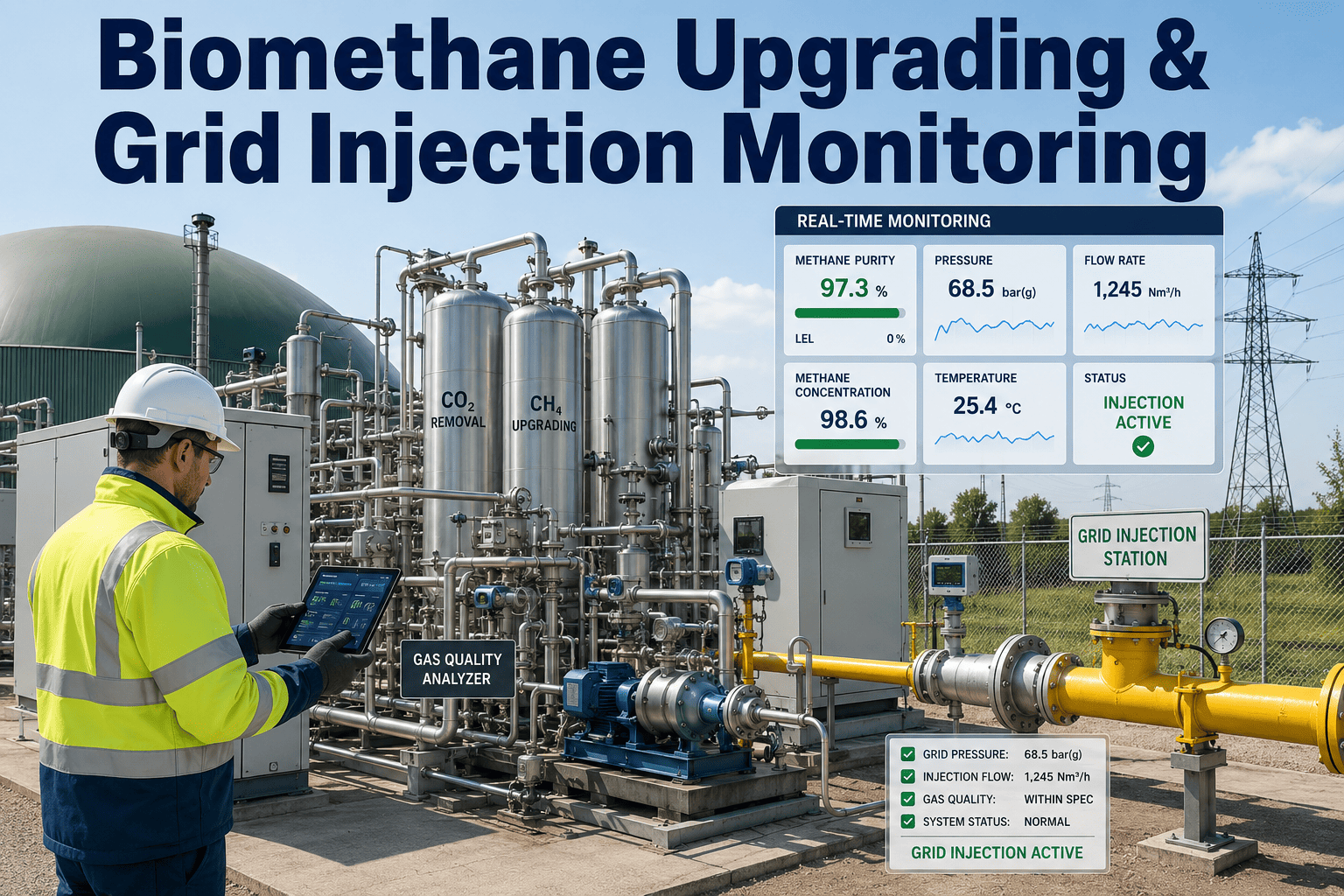
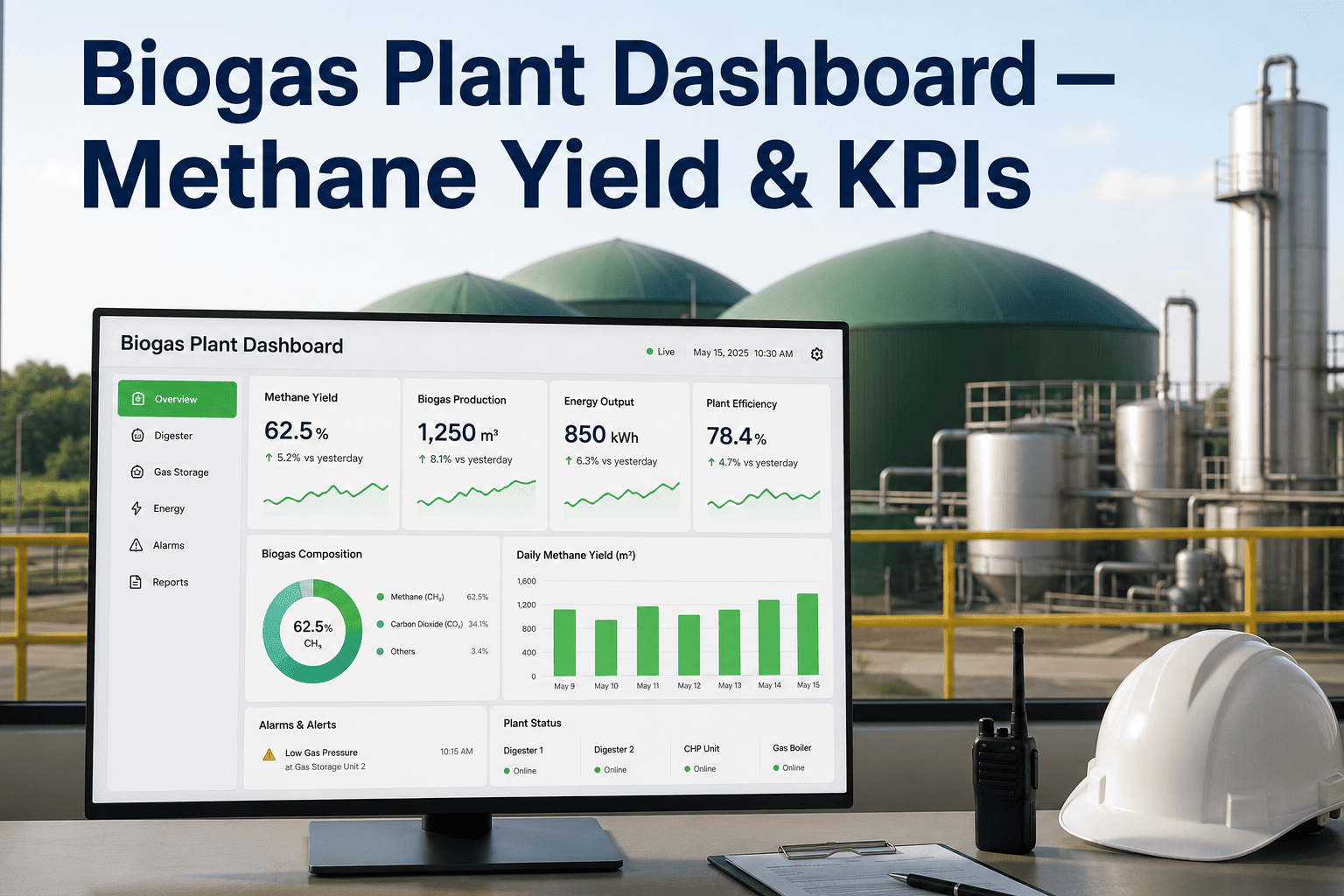
Biomethane upgrading is the critical process that transforms raw biogas into pipeline-quality renewable natural gas. With global biogas production exceeding 1.5 exajoules annually, the need for efficient upgrading technologies has never been greater. Operators face mounting pressure to meet strict grid injection specifications while maximizing methane recovery and minimizing operational costs. Traditional monitoring approaches often fall short, relying on periodic lab samples that miss real-time fluctuations in methane purity, CO2 removal efficiency, and contaminant levels. This is where artificial intelligence steps in, offering continuous, predictive oversight of upgrading systems like pressure swing adsorption (PSA), membrane separation, water scrubbing, and amine scrubbing. By leveraging AI-driven analytics, plant managers can detect methane slip, optimize energy consumption, and ensure compliance with biomethane certification standards. Our support team helps you integrate these advanced monitoring capabilities seamlessly.
Upgrading Intelligence
Real-Time AI Monitoring for Biomethane Upgrading
Maximize methane purity, reduce energy waste, and ensure grid compliance with predictive analytics across all upgrading technologies.
Why Upgrading Efficiency Matters
Every percentage point of methane recovery directly impacts your bottom line and carbon footprint. Inefficient upgrading leads to methane slip, wasted energy, and potential grid rejection penalties. Our data shows that optimized plants achieve over 98% methane recovery, while poorly monitored systems often fall below 90%.
98%
Optimal Methane Recovery
12%
Energy Savings with AI
3x
Faster Compliance Checks
99.9%
Grid Injection Purity Target
Upgrading Technology Performance Breakdown
Different upgrading technologies have distinct efficiency profiles and monitoring needs. The composition below represents typical performance distribution across PSA, membrane, and water scrubbing systems in European biogas plants.
High efficiency plants with continuous AI monitoring achieve 98% methane recovery and minimal energy use.
Moderate performers rely on periodic checks, resulting in 90-95% recovery and higher operational costs.
Low efficiency plants suffer from methane slip, frequent downtime, and grid injection rejections.
Core Upgrading Methods Monitored by AI
Each upgrading method has unique parameters that require continuous tracking. Our platform adapts to your specific technology stack, providing real-time insights and predictive alerts.
Pressure Swing Adsorption
Monitors adsorption cycle timing, pressure differentials, and methane breakthrough to optimize recovery and minimize energy per cubic meter.
PSA
Membrane Separation
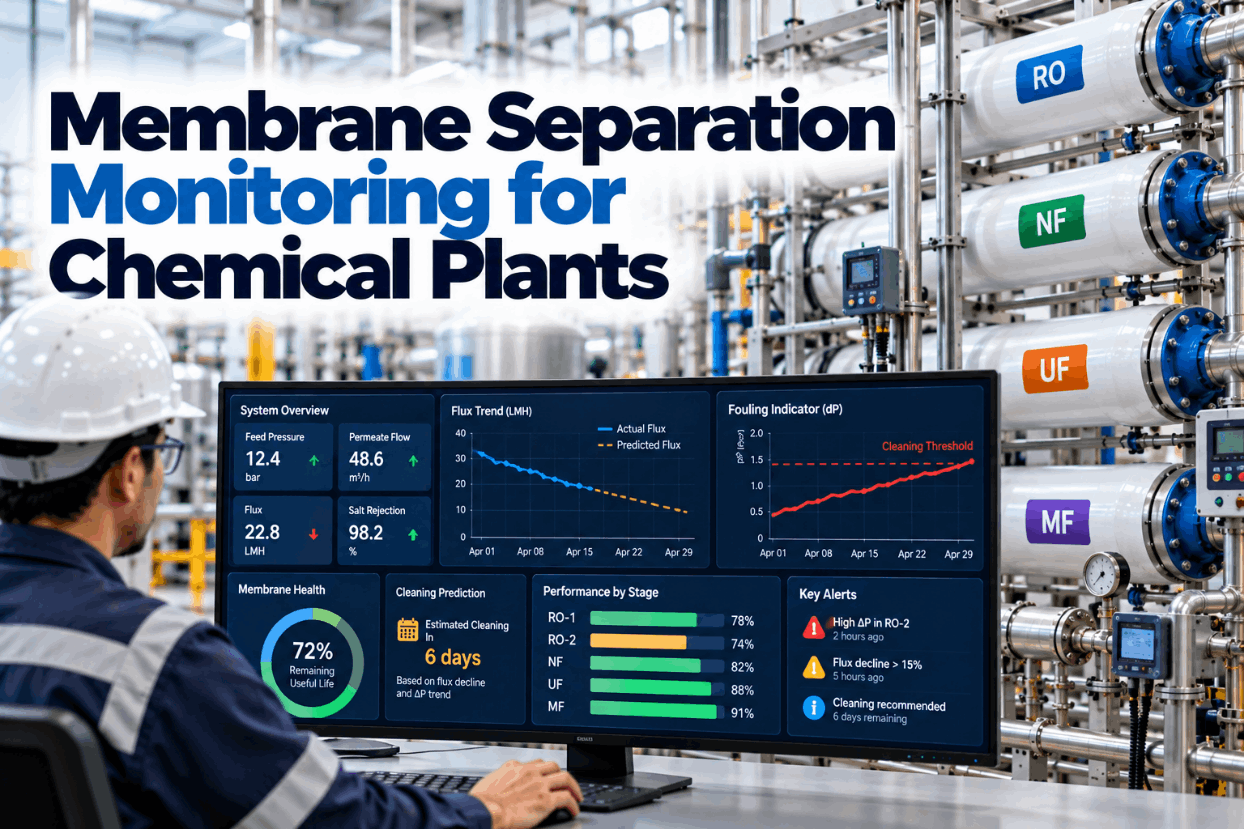
Tracks membrane permeability, CO2 concentration, and temperature effects to prevent fouling and maintain consistent methane purity.
Membrane
Water Scrubbing
Analyzes water flow rates, pressure drops, and dissolved CO2 levels to ensure efficient absorption and prevent scaling issues.
Water
Workflow for AI-Driven Upgrading Monitoring
Implementing AI monitoring follows a structured workflow that integrates with existing SCADA systems and delivers actionable insights without disrupting operations.
1
Sensor Integration
Connect existing methane, CO2, pressure, and flow sensors to the AI platform. No additional hardware is required for most modern plants.
2
Baseline Calibration
The AI learns your plant's normal operating parameters for each upgrading technology, establishing a performance baseline within 48 hours.
3
Real-Time Monitoring
Continuous tracking of methane purity, CO2 removal efficiency, methane slip, and energy consumption with alerts for deviations.
4
Predictive Optimization
AI models predict optimal operating points for each technology, reducing energy use by up to 12% while maintaining grid specification.
Ready to Optimize Your Upgrading Process?
See how AI monitoring can boost your methane recovery and grid compliance.
Common Mistakes in Upgrading Monitoring
Even experienced operators fall into traps that reduce efficiency and increase costs. Avoiding these mistakes is essential for maintaining optimal performance.
Ignoring Methane Slip
Failing to monitor methane slip in real time leads to significant gas loss. AI detection can reduce slip by up to 40% through early warning.
Neglecting Contaminant Tracking
Siloxanes and H2S can damage upgrading equipment. Continuous monitoring prevents costly repairs and ensures grid specification.
Overlooking Energy Consumption
Upgrading can consume up to 5% of the energy produced. AI optimization reduces this by adjusting parameters dynamically.
Relying Only on Lab Samples
Lab results are delayed and miss short-term fluctuations. Real-time AI monitoring provides instant visibility into purity changes.
Frequently Asked Questions
How does AI improve methane purity monitoring in PSA systems?
AI continuously analyzes pressure and flow data from PSA cycles to detect early signs of methane breakthrough or valve inefficiency. By comparing real-time readings against historical performance patterns, the system can predict when a column is nearing exhaustion and recommend optimal cycle switching times. This proactive approach helps maintain methane purity above 98% consistently, reduces energy consumption by optimizing purge gas flows, and minimizes methane slip that would otherwise be lost to the atmosphere. Operators receive instant alerts when purity drops below grid injection thresholds, allowing immediate corrective action.
Book a demo to see it in action.
What grid injection specifications must biomethane meet?
Grid injection requirements vary by country, but common specifications include methane content above 96%, CO2 below 2.5%, oxygen below 0.5%, and hydrogen sulfide below 5 mg/Nm3. Additionally, biomethane must be odorized and compressed to pipeline pressure, typically between 4 and 10 bar. Siloxane and moisture levels are also strictly regulated to protect pipeline infrastructure. Continuous monitoring ensures that every cubic meter of injected gas meets these standards, avoiding rejection penalties and maintaining certification under renewable gas schemes like the Green Gas Certification Scheme.
Contact support for guidance on compliance.
Can AI monitor membrane separation performance effectively?
Yes, AI is particularly effective for membrane systems because it can track subtle changes in permeability, selectivity, and temperature effects that human operators might miss. The platform monitors differential pressure across membranes, CO2 concentration in the permeate stream, and methane loss rates. When performance degrades due to fouling or aging, the AI alerts operators to schedule cleaning or replacement before efficiency drops significantly. It also optimizes operating pressure to balance methane recovery against energy use, extending membrane life and reducing operational costs.
Book a demo to see how.
What is methane slip and how is it measured?
Methane slip refers to the unintended release of methane during the upgrading process, typically through the off-gas stream. It represents lost product and a potent greenhouse gas emission. Measurement traditionally requires expensive gas analyzers, but AI can estimate slip using sensor data on flow rates, pressure, and gas composition. By correlating these variables with known slip patterns, the platform provides a continuous slip estimate accurate to within 2%. This allows operators to adjust process parameters immediately to minimize losses, improving both profitability and environmental performance.
Talk to support for integration details.
How does AI help with biomethane certification and traceability?
Certification bodies require detailed records of gas quality, mass balance, and environmental attributes. AI platforms automatically log all monitoring data, including methane purity, CO2 content, and energy consumption, with timestamps and batch IDs. This creates an auditable trail that satisfies requirements for schemes like the Renewable Energy Directive (RED II) and the Green Gas Certification Scheme. The system can generate compliance reports on demand, reducing administrative burden and ensuring that every unit of biomethane injected is fully traceable from production to grid.
Book a demo to learn more.
Transform Your Upgrading Operations Today
Achieve higher methane recovery and seamless grid compliance with AI.