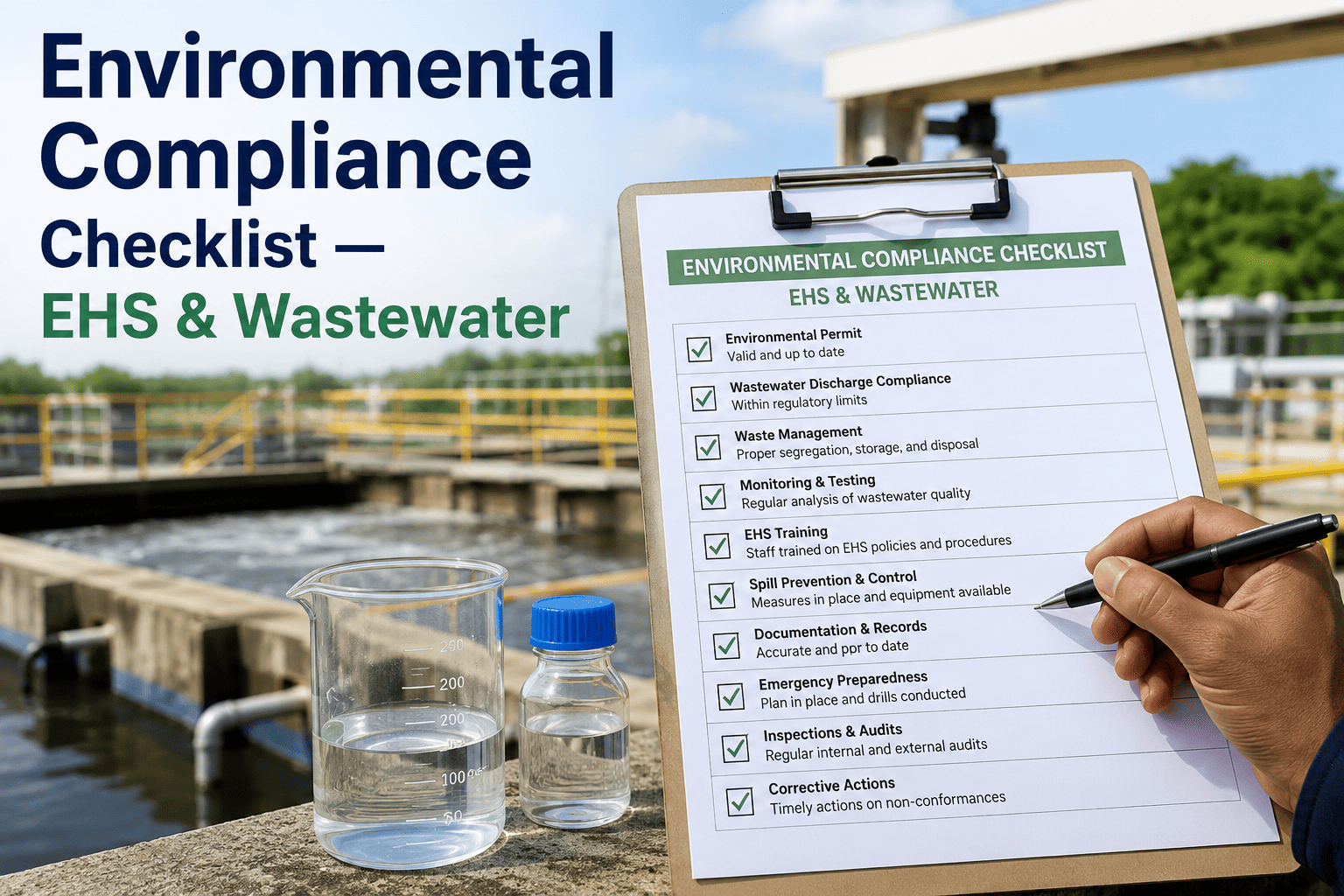
Environmental permits do not fail plants all at once, they fail one missed wastewater sample or one lapsed permit renewal at a time, months before anyone notices the gap. A digital environmental compliance checklist covering wastewater discharge, air emissions, hazardous waste, and spill prevention keeps every recurring EHS obligation visible instead of buried in a shared drive nobody checks until an inspector shows up. EHS teams ready to stop tracking permits by memory can book a demo to see how the tracking works.
ENVIRONMENTAL COMPLIANCE · EHS · 2026
Every Permit and Sample, Tracked Before It's Due
Wastewater discharge limits, air emission monitoring, hazardous waste logs, spill prevention checks, and permit renewals tracked on one digital calendar with automatic reminders.
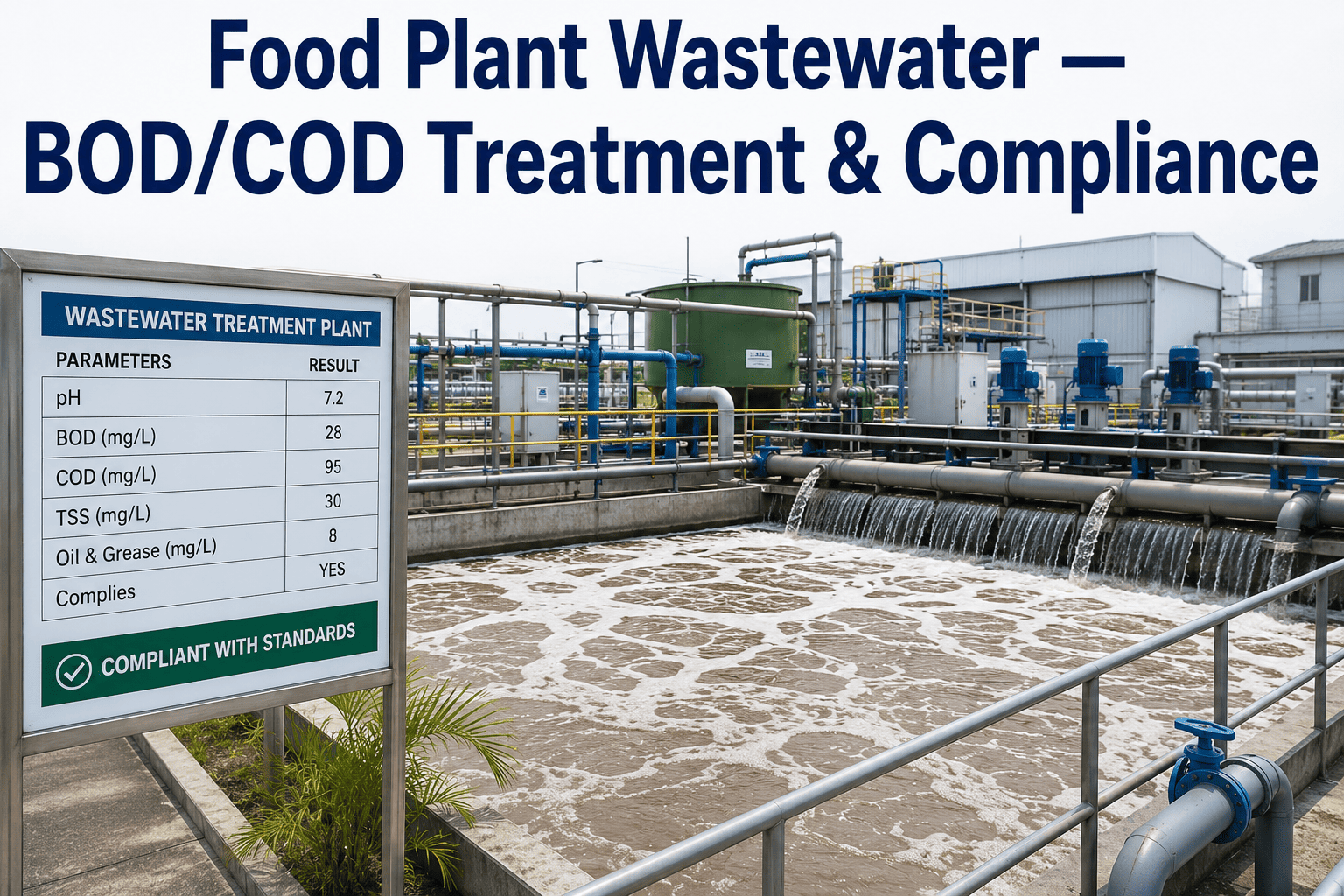
Wastewater Discharge
Discharge limits sampled and logged against permitted thresholds on the required schedule.
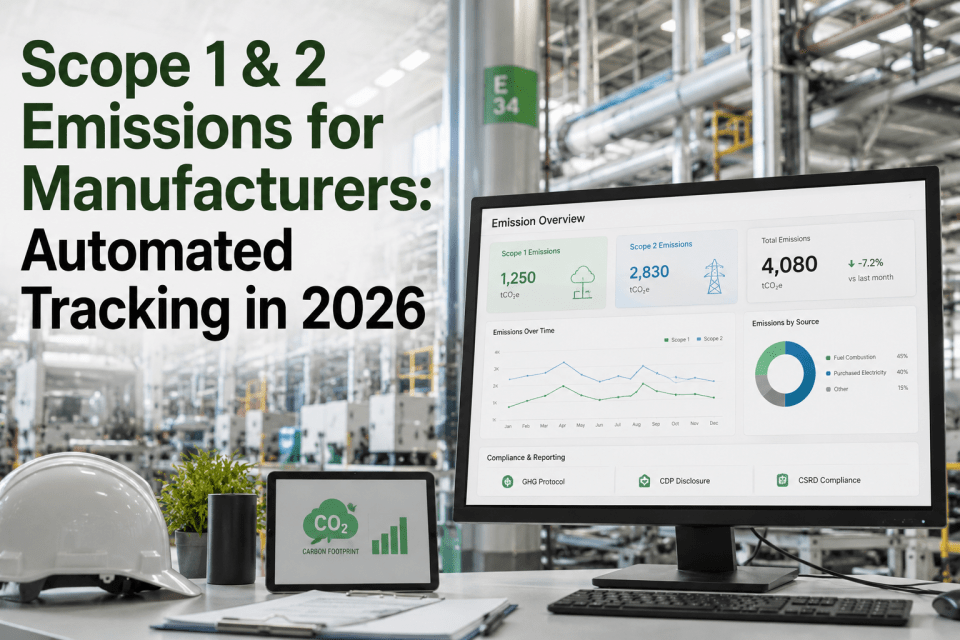
Air Emissions
Emission monitoring data recorded and compared against permit limits by source point.
Hazardous Waste
Generation, storage duration, and manifest records tracked to stay within accumulation limits.
Spill Prevention
SPCC plan checks and secondary containment inspections logged on a recurring basis.
Why Compliance Gaps Go Unnoticed for Months
Environmental compliance is unusual among plant obligations because the consequences of missing something rarely show up immediately. A wastewater sample that gets skipped one month does not cause a visible problem on the floor, and a hazardous waste accumulation date that quietly passes its limit does not stop production. The gap only becomes visible when a regulator requests records, and by then it might represent months of missed samples rather than a single oversight that could have been caught and corrected immediately.
Spreadsheet-based tracking makes this worse because it depends entirely on someone remembering to check the file, update the next due date, and follow up if a sample was missed. A digital compliance checklist removes that dependency by surfacing upcoming and overdue obligations automatically, the same way a calendar reminder works, except tied directly to the specific permit condition and regulatory deadline involved.
AUTOMATIC COMPLIANCE REMINDERS
Never Discover a Missed Sample After the Fact
See how automated reminders keep wastewater, emissions, and waste obligations on schedule.
Recurring Obligations Worth Tracking Digitally
| Obligation | Typical Frequency | Risk If Missed |
|---|---|---|
| Wastewater sampling | Weekly to monthly | Discharge violation, fines |
| Air emissions monitoring | Monthly to quarterly | Permit exceedance, reporting gap |
| Hazardous waste manifest review | Per shipment | Accumulation limit violation |
| SPCC containment inspection | Monthly | Spill response failure |
| Permit renewal filing | Annual to multi-year | Operating without valid permit |
Building a Tracking System That Actually Holds
1
Map Every Permit Condition
Each specific requirement from every permit is entered individually rather than tracked as one vague renewal date.
2
Assign an Owner
Every recurring task has a named person responsible, not a general EHS inbox nobody checks daily.
3
Set Escalating Reminders
Reminders fire well before a deadline and escalate to a manager if the task remains incomplete.
4
Keep an Audit-Ready Log
Every completed check, sample result, and renewal filing stays retrievable for the next inspection.
What EHS Managers Are Saying
We had a permit renewal buried in a shared drive that nobody had opened in over a year. Now every obligation across three sites shows up on one calendar with an owner attached, and nothing gets close to a deadline without someone getting flagged well in advance.
EHS Director, Multi-Site Manufacturing Group
Frequently Asked Questions
Can this track permits across multiple regulatory agencies at once?
Yes, most plants hold permits from several different agencies covering water discharge, air quality, and hazardous waste simultaneously, each with its own reporting frequency and format, and the checklist is built to track all of them in one place regardless of which agency issued the requirement. This matters most for multi-site operations where different facilities may fall under different regional or state agencies with slightly different rules, since a single dashboard still gives leadership a consistent view across the whole group.
What happens if a sample result comes back out of range?
An out-of-range result can be flagged immediately within the checklist, triggering a notification to the responsible EHS contact and, depending on how the workflow is configured, initiating any required corrective action or notification steps tied to that specific permit condition. Having the result logged with a timestamp the moment it is entered also creates a clear record of when the issue was identified and how quickly it was addressed, which matters significantly during a regulatory review.
Does this replace the need for an environmental consultant?
No, the checklist is a tracking and documentation tool rather than a source of regulatory interpretation, so plants still rely on environmental consultants or internal EHS expertise to determine specific permit conditions, sampling methods, and reporting requirements. What it changes is ensuring that whatever schedule and requirements the experts define actually gets followed consistently, since a well-designed compliance plan only works if the recurring tasks behind it are not forgotten.
Can reports be generated automatically for regulatory submissions?
Logged data such as sample results and inspection records can typically be exported into report formats that align with common regulatory submission requirements, reducing the manual work of pulling data from multiple sources before a filing deadline. Teams can review specific reporting formats and export options through support to confirm compatibility with their agency's requirements.
How long does it take to map all our permits into the system?
A single-site facility with a handful of permits is typically fully mapped and tracking within two to three weeks, while multi-site operations with several agencies involved usually take longer depending on how many distinct permit conditions need to be entered individually. EHS leaders can book a demo to get a realistic estimate based on their specific permit portfolio.
ENVIRONMENTAL COMPLIANCE · EHS
Track Every Permit Before It Becomes a Problem
Move wastewater, emissions, and hazardous waste tracking off spreadsheets and onto one reliable system.