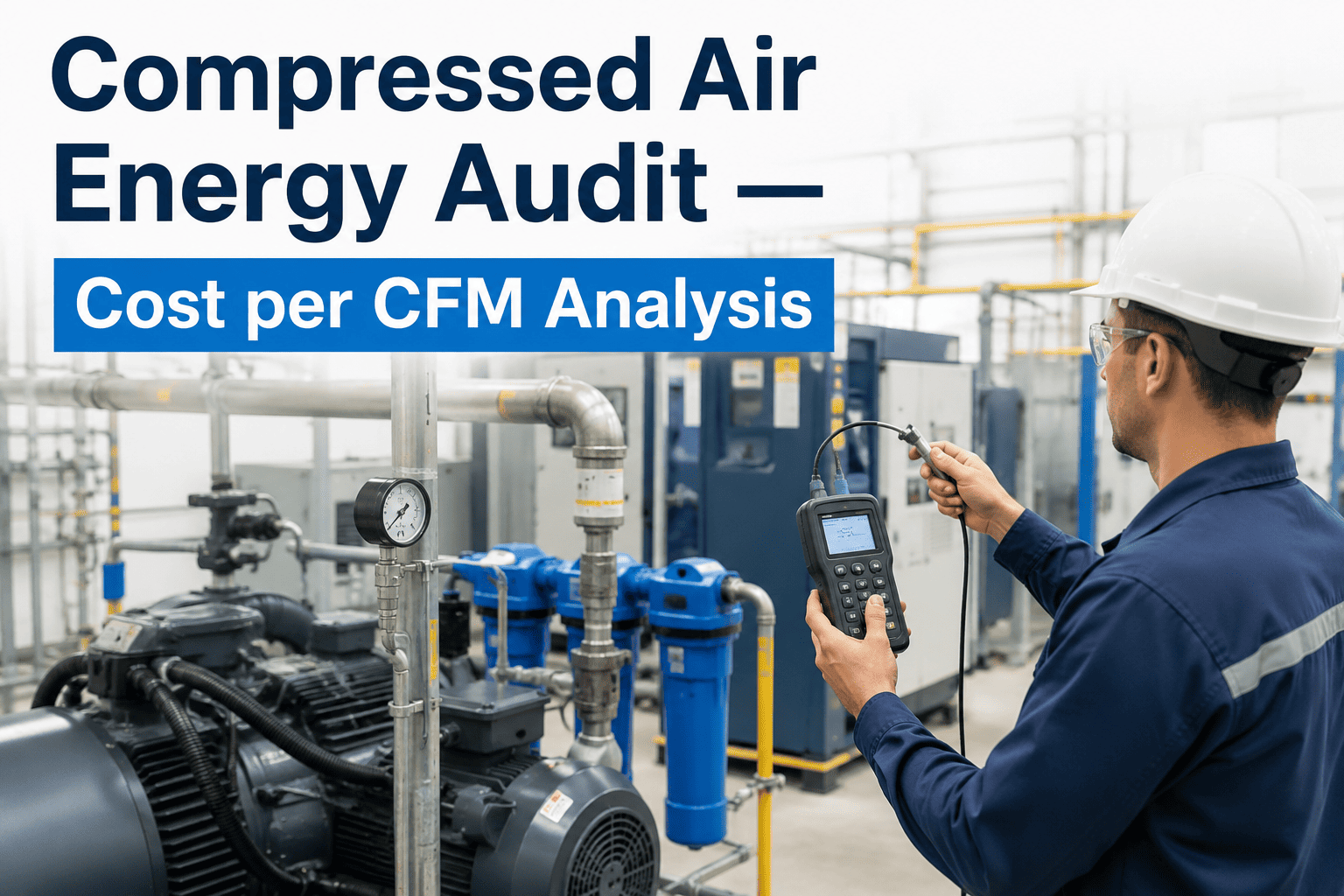
Compressed air has a reputation inside manufacturing plants as the utility nobody wants to own, and that's exactly why it quietly becomes one of the most expensive. At roughly $0.25 to $0.35 per kWh of delivered energy once generation inefficiency is factored in, compressed air is consistently the costliest utility per unit of useful work in a typical plant, yet it rarely gets the metering attention that electricity or natural gas receives at the main service level. A proper energy audit puts a real cost-per-CFM figure on your system and usually uncovers leak rates and pressure inefficiencies that have been quietly draining budget for years. iFactory's energy monitoring platform gives plants the continuous visibility a one-time audit can't, and you can book a demo to see it applied to a compressed air system.
What Is Your Compressed Air Actually Costing You?
Most plants have never calculated a true cost-per-CFM figure. Here's the audit methodology that puts a real number on your most expensive utility.
Why Compressed Air Is So Expensive Per Unit of Work
Compressed air generation is thermodynamically inefficient by nature. Only a small fraction of the electrical energy going into a compressor ends up as useful pneumatic work at the point of use, the rest is lost as heat during compression. Layer on distribution losses, pressure drop across long pipe runs, and leaks that develop continuously in fittings and hoses, and the effective cost of delivered compressed air climbs well above what most plants assume when they only look at the compressor's electrical draw.
The Cost-per-CFM Audit Methodology
A rigorous audit walks through the full system in a defined sequence rather than spot-checking a few obvious leaks. Each phase below builds toward a defensible cost-per-CFM figure you can use to justify capital or operational changes.
Baseline Power Measurement
Meter compressor input power over a representative production cycle, including nights and weekends, to capture true baseload and unloaded running costs that daytime-only readings miss entirely.
Demand Profiling
Map actual CFM demand against production schedule to distinguish real process demand from artificial demand created by excess system pressure and poor regulation at point of use.
Leak Detection Survey
Conduct an ultrasonic leak survey during a planned shutdown or low-demand period, since leaks are far easier to hear and quantify when background system noise is minimized.
Pressure Drop Mapping
Measure pressure at multiple points from the compressor room to the furthest point of use, identifying undersized piping, clogged filters, or restrictive fittings driving unnecessary compressor discharge pressure.
Specific Power Calculation
Divide measured input power by delivered CFM to calculate specific power in kW per 100 CFM, the metric that lets you benchmark your system against industry reference values.
Control Strategy Review
Evaluate whether current compressor sequencing and trim control matches actual demand variability, since oversized or poorly sequenced compressors waste energy running partially loaded.
Where the Waste Actually Hides
Across the audits our platform supports, waste consistently concentrates in a small number of areas rather than being evenly distributed across the system.
| Waste Source | Typical Share of System Loss | Fix Complexity |
|---|---|---|
| Leaks (fittings, hoses, quick disconnects) | 25-35% | Low |
| Artificial demand from excess pressure | 15-20% | Low to Medium |
| Inappropriate uses (blow-off, cooling) | 10-15% | Medium |
| Poor compressor sequencing | 10-20% | Medium |
| Undersized piping / pressure drop | 5-10% | High |
Stop Guessing at Your Air System's True Cost
Continuous monitoring catches leaks and pressure drift between audits, not just on the day someone walks the plant with an ultrasonic detector.
From One-Time Audit to Continuous Monitoring
A single audit gives you a snapshot, but compressed air systems drift constantly. New leaks develop the moment old ones are fixed, seasonal temperature changes shift demand patterns, and production changes alter point-of-use requirements. The plants that sustain audit-level savings are the ones that move from periodic surveys to continuous monitoring of key system metrics.
Trend Specific Power Over Time
Continuous metering shows specific power drifting upward as leaks accumulate, triggering a targeted leak survey before waste compounds for months unnoticed.
Alert on Off-Hours Demand
Unexpected air demand during nights or weekends when production is down is one of the clearest leak signals available, and it's invisible without continuous data.
Track Pressure at the Point of Use
Monitoring pressure where air is actually consumed, not just at the compressor discharge, reveals distribution losses that a single-point reading would never catch.
Frequently Asked Questions
How much does a professional compressed air audit typically cost?
Third-party audits for a mid-sized plant generally range from a few thousand dollars for a basic leak and pressure survey to a more thorough specific-power study with multi-day data logging. Most plants recover the audit cost within the first few months of implementing the leak repairs alone, since leaks are consistently the largest and cheapest-to-fix source of waste identified.
How often should a compressed air system be re-audited?
An annual formal audit is a reasonable baseline for most plants, but continuous monitoring of key metrics like specific power and off-hours demand catches drift between formal audits far more effectively than waiting a full year to notice a problem. Contact support to discuss a monitoring cadence that fits your system size.
Can we calculate cost-per-CFM without shutting down production?
Baseline power measurement and demand profiling can be done during normal operation, though the leak detection survey is most accurate during a planned shutdown or low-demand window when background noise is minimal. Many plants schedule the leak survey around an existing maintenance window to avoid additional downtime specifically for the audit.
Is reducing system pressure risky for production processes?
Pressure reductions should always be validated against the actual requirements of the most pressure-sensitive point of use in the system, not applied blindly across the board. A proper audit identifies the true minimum pressure needed and confirms it with the process owners before any system-wide pressure changes are implemented. Book a demo to see how monitoring supports safe pressure optimization.
What's a realistic payback period for compressed air improvements?
Leak repair programs typically pay back within months given how cheap the fixes usually are relative to the energy wasted. Control strategy upgrades and piping improvements have longer payback periods, often one to three years, but compound with the leak savings to produce a materially lower total cost per CFM delivered.
Put a Real Number on Your Compressed Air Costs
Stop treating compressed air as a fixed cost. Continuous monitoring turns your most expensive utility into your most controllable one.