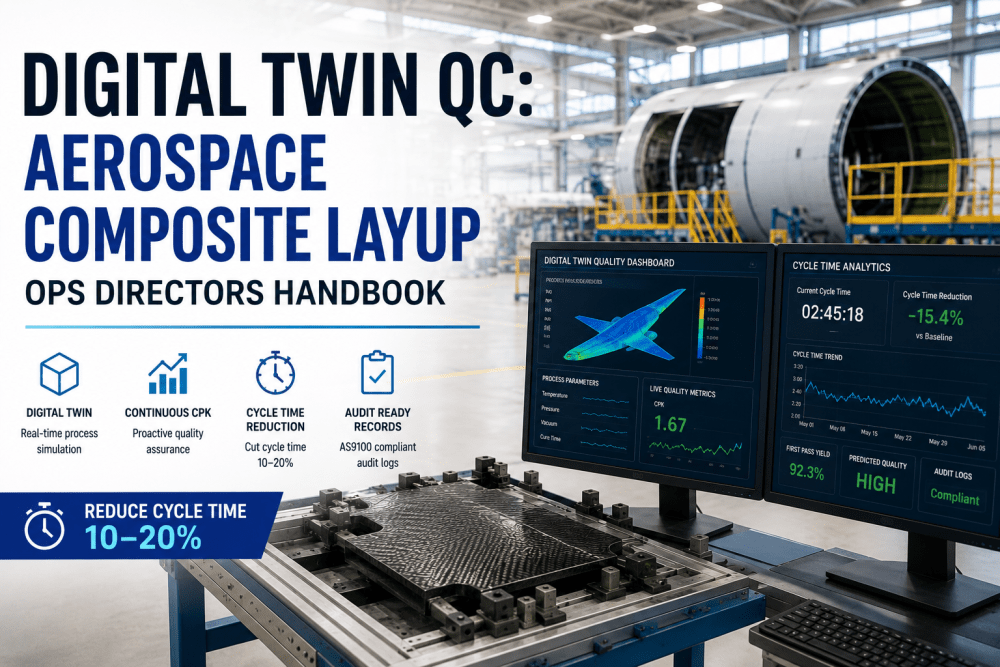
An automotive stamping operations director reviews the weekly downtime report and sees a familiar pattern: 47 unplanned downtime events across eight press lines, totaling 186 hours of lost production. The root causes are also familiar — progressive die wear, material lot variation, lubrication degradation, and sensor calibration drift — but each one was detected only after it caused a stoppage. Digital twin quality for automotive stamping changes this paradigm entirely, creating a virtual replica of every press line that simulates production conditions in real time, predicts quality deviations before they occur and identifies process parameter adjustments that prevent downtime before it starts.
Why Traditional Downtime Tracking Fails in Automotive Stamping Operations
In automotive stamping, downtime follows a structural pattern that traditional tracking systems fail to address. Equipment degradation develops gradually across shifts — die wear accumulates, lubrication degrades, sensor calibration drifts — but these developing conditions are invisible to conventional downtime tracking until they cross the threshold into an actual stoppage. A study of twelve stamping press lines found that 68% of unplanned downtime events were preceded by detectable process parameter shifts that went unnoticed for an average of 3.7 shifts. By the time the stoppage occurred, the facility had already lost production capacity through reduced line speed, increased scrap, and degraded part quality. Digital twin quality solves this by continuously simulating press line conditions in a virtual environment, detecting developing issues before they cause downtime. Operations directors exploring digital twin deployment Book a Demo to review the downtime reduction model for their stamping operations.
A Structured Deployment Roadmap from Baseline to Real-Time Prevention
iFactory's digital twin quality platform deploys across eight press lines over a structured 12-week timeline designed to deliver measurable downtime reduction within the first quarter of operation. The platform creates a real-time virtual replica of each press line, simulating production conditions and predicting quality deviations before they cause stoppages.
Press lines selected based on downtime frequency, scrap rate, and production value. Digital twin models created for each press-die combination using PLC data, sensor streams, and historical quality records. Baseline downtime data collected from existing CMMS and MES sources for 21 days to establish pre-deployment benchmarks.
Digital twin models trained on 24 months of historical production data to recognize process parameter shifts that precede downtime events. Virtual validation runs compare simulated conditions against actual production outcomes to calibrate model accuracy before live deployment.
Digital twin activated in real-time mode across all eight press lines. Predictive alerts configured to fire when simulated conditions indicate a developing issue, giving operators 60 to 120 minutes of advance warning before a stoppage would occur. Alerts include recommended parameter adjustments.
Pre-deployment versus post-deployment downtime rate, quality performance, and Cpk stability compared to validate ROI. Full pilot report generated with downtime signature analysis, reduction attribution, and financial impact. Scale deployment plan developed for additional press lines and die programs.
Four Integrated Capabilities That Prevent Downtime Before It Occurs
Digital twin quality for automotive stamping combines four integrated capabilities that create a real-time downtime prevention system. Each capability feeds into the next, enabling operations directors to intervene while process parameters remain within specification. Book a Demo to see the integrated platform in production.
Downtime Reduction ROI from Digital Twin Quality Deployment
The operations director deployed the iFactory digital twin quality platform across eight press lines over 12 weeks. The following results represent the measured performance improvement from pre-deployment baseline to post-deployment steady state.
| Metric | Pre-Deployment | Post-Deployment | Improvement |
|---|---|---|---|
| Unplanned Downtime per Line | 23.4 hrs/month | 11.2 hrs/month | −52% reduction |
| Downtime Detection Latency | 3.7 shifts avg | < 3 minutes | 99.8% faster |
| Process Cpk Stability | 1.42 avg | 1.89 avg | +33% improvement |
| First-Pass Yield | 84% | 96% | +12 points |
| Annual Downtime Cost (8 lines) | $4.05M | $1.94M | −52% |
| Operator Response to Alerts | 32 min avg | 5 min avg | −84% faster |
| Predictive Alert Accuracy | N/A | 91% precision | Validated |
| Net Annual Savings | — | $2.11M | 3.4x ROI by month 5 |
Four Ways Digital Twin Quality Delivers Comprehensive Downtime Prevention
Continuous simulation eliminates the detection latency gap. The most significant limitation of traditional downtime tracking is the 3.7-shift average gap between process parameter shift onset and stoppage occurrence. Digital twin quality reduces this gap to under 3 minutes by continuously simulating press line conditions and comparing them against optimal operating ranges. Operations directors gain visibility into developing issues while there is still time to intervene.
Multi-parameter correlation captures signals single metrics miss. Traditional SPC and downtime tracking measure individual parameters against fixed thresholds. Digital twin quality correlates tonnage, speed, temperature, lubrication pressure, and material properties simultaneously, detecting interaction patterns that no single parameter would reveal independently — such as the relationship between lubrication degradation and tonnage increase that precedes die galling.
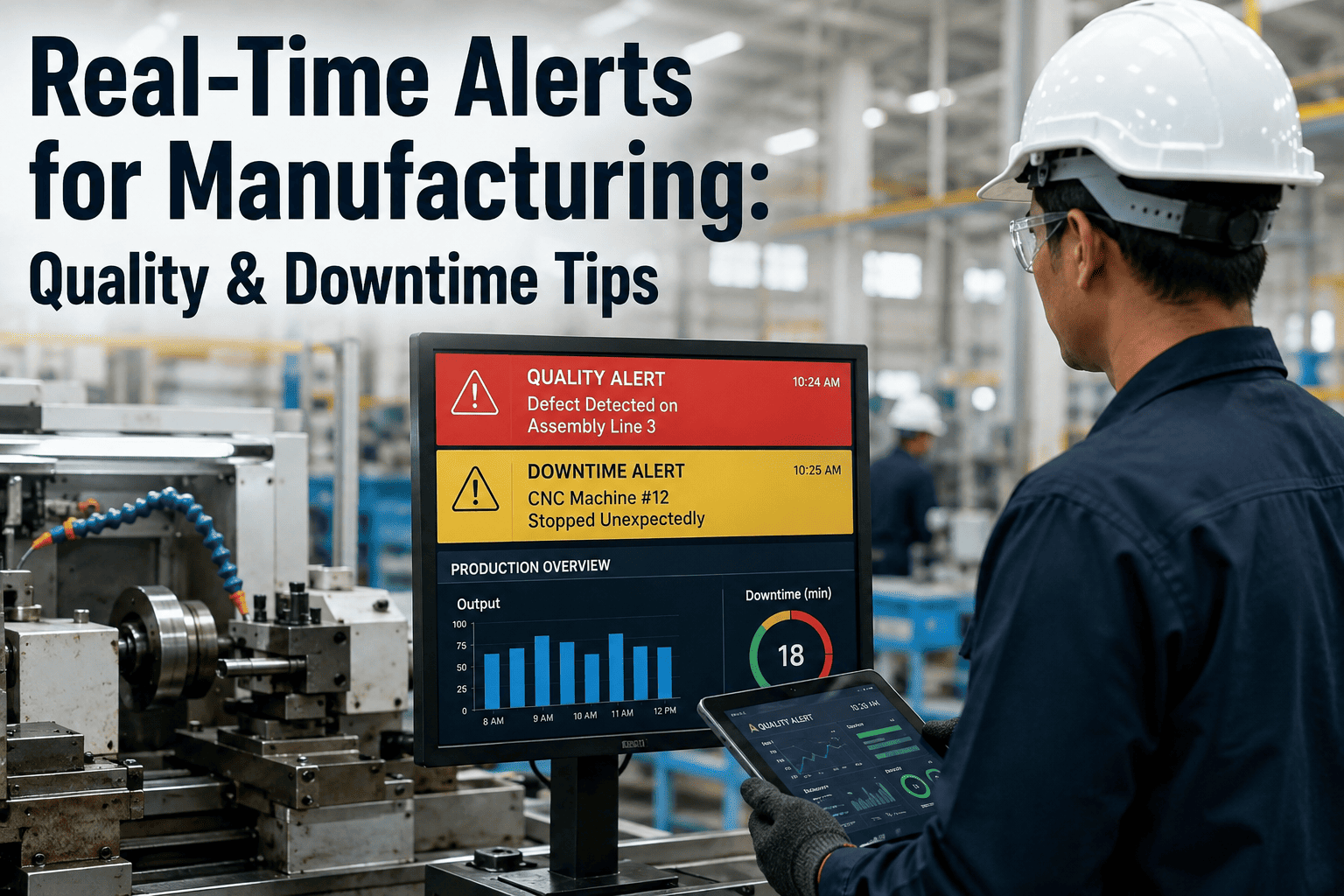
Predictive alerts enable proactive intervention with quantified lead time. Traditional downtime tracking notifies operators after a stoppage has already occurred. Digital twin quality delivers predictive alerts 60 to 120 minutes before the predicted stoppage, with specific parameter adjustment recommendations and simulated outcome projections. This lead time transforms the operations team's capability from downtime reporting to downtime prevention.
The structured 12-week deployment eliminates implementation uncertainty. Automotive stamping operations face legitimate concerns about deploying AI-driven digital twin platforms in IATF 16949-regulated environments. iFactory's phased approach — baseline establishment, virtual validation before live deployment, ROI confirmation before scale — ensures every investment decision is supported by plant-specific performance data rather than industry benchmarks.
From Downtime Tracking to Real-Time Prevention in One Quarter
This digital twin quality deployment demonstrates that the gap between traditional downtime tracking and real-time prevention is not a technology gap — it is a methodology gap. iFactory's structured 12-week deployment applies proven digital twin modeling, AI-driven analytics, and operational best practices to deliver measurable downtime reduction within a single quarter of operation. The 52% downtime reduction, $2.1M net annual savings, and 3.5-month payback are direct outcomes that compound across the full facility as the platform scales. The compression of detection latency from 3.7 shifts to under 3 minutes is an operational capability that fundamentally changes how the plant manages production risk. Operations directors ready to eliminate reactive downtime tracking Book a Demo to review the deployment plan for their stamping operations.



.png)