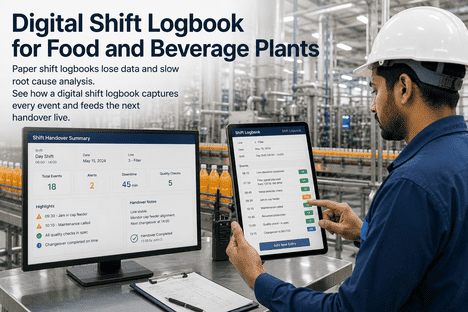
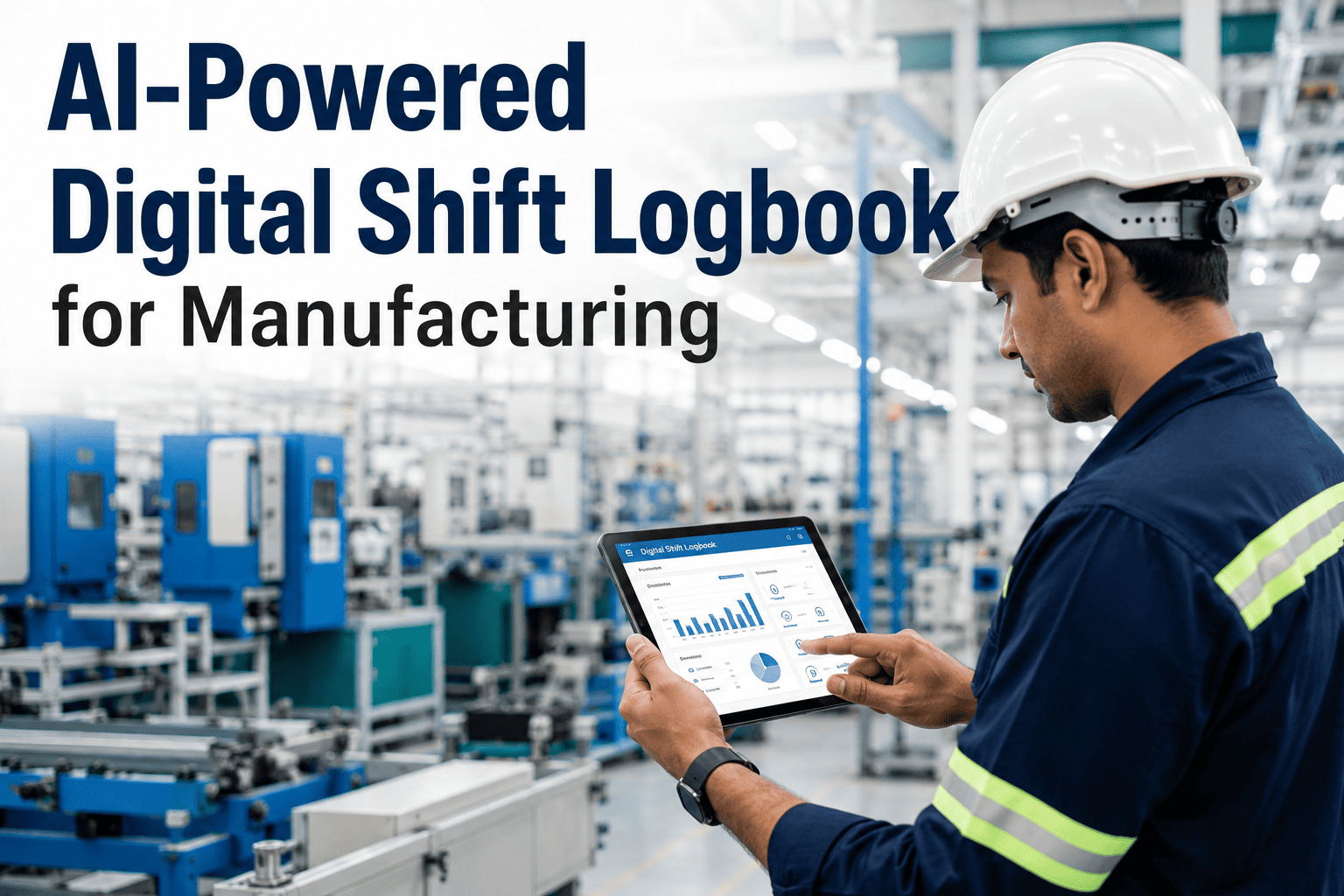
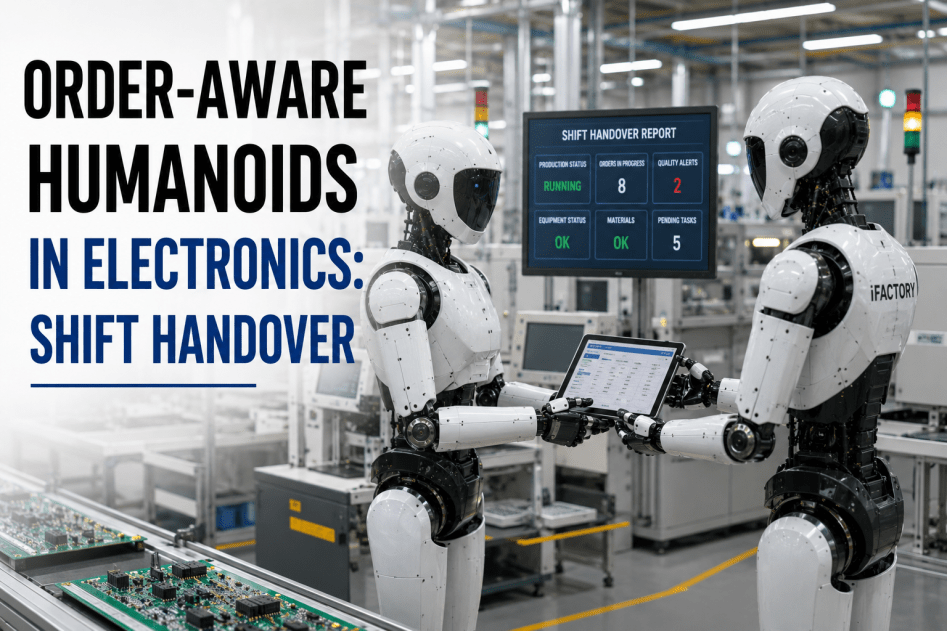
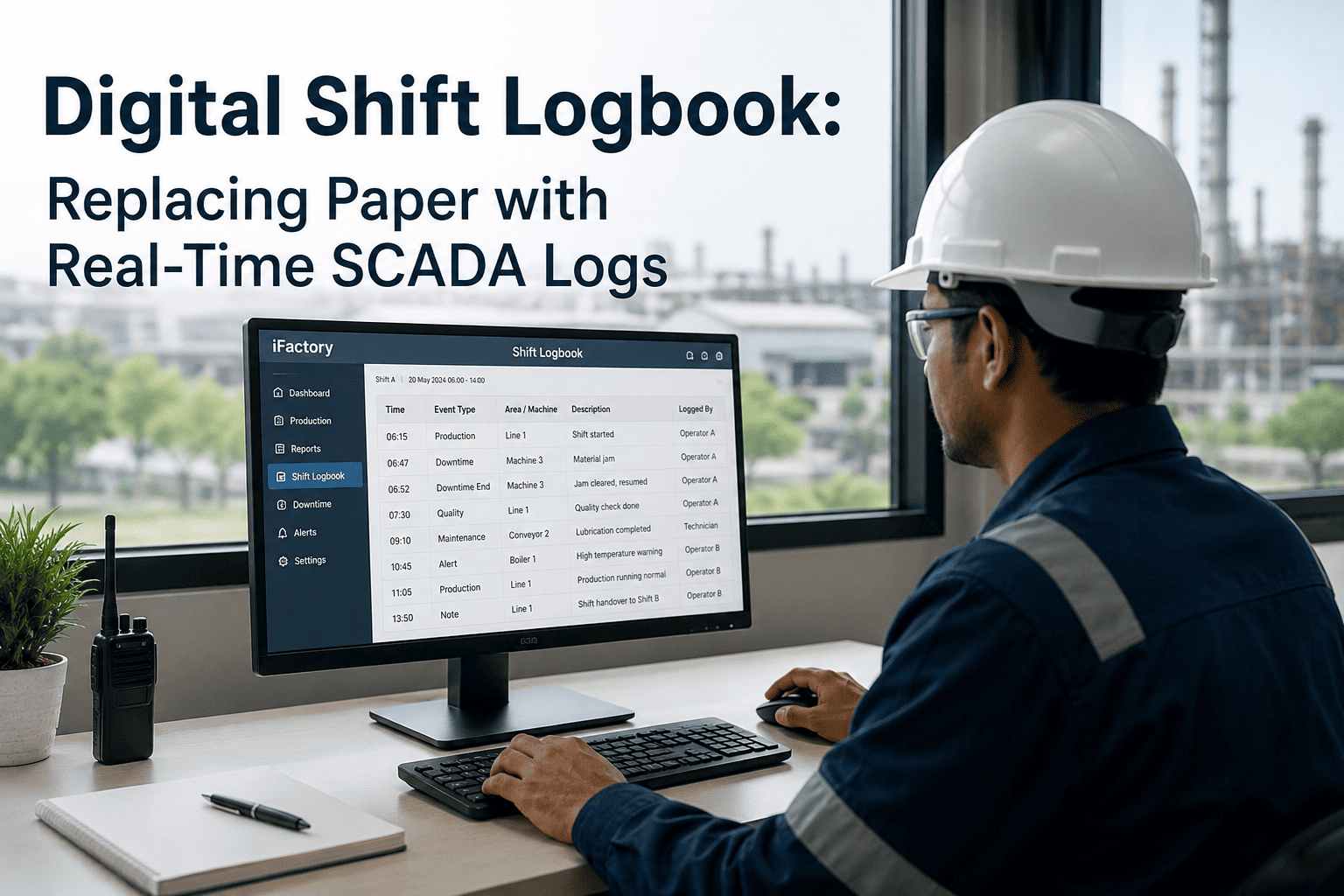
The night shift fixed a sticking valve and scribbled it on the whiteboard. By morning the board was wiped, the incoming crew never saw the note, and three hours later the line was down. Every food plant knows some version of that story, because the most dangerous moment in a 24/7 operation is not when a machine breaks — it is the ten minutes when one shift hands over to the next. Handover is less than 5% of operating time, yet around 40% of plant incidents happen during or right after it. Paper logs and verbal briefings lose 40 to 60% of what mattered, and what is lost cannot be searched when you later need to find the root cause. A digital shift logbook captures every event as it happens and feeds it straight into the next handover — so context survives the shift change instead of evaporating with it.
iFactory Digital Shift Logbook
A Digital Shift Logbook for Food & Beverage Plants
Capture every event, equipment status and safety note in real time, and feed the next handover live — turning a 20-minute verbal briefing into a 3-minute structured review nothing falls out of.
40%
of incidents at handover
40-60%
of info lost verbally
20 to 3
minute handover, cut
$840K
a year lost to gaps
What Paper Quietly Loses
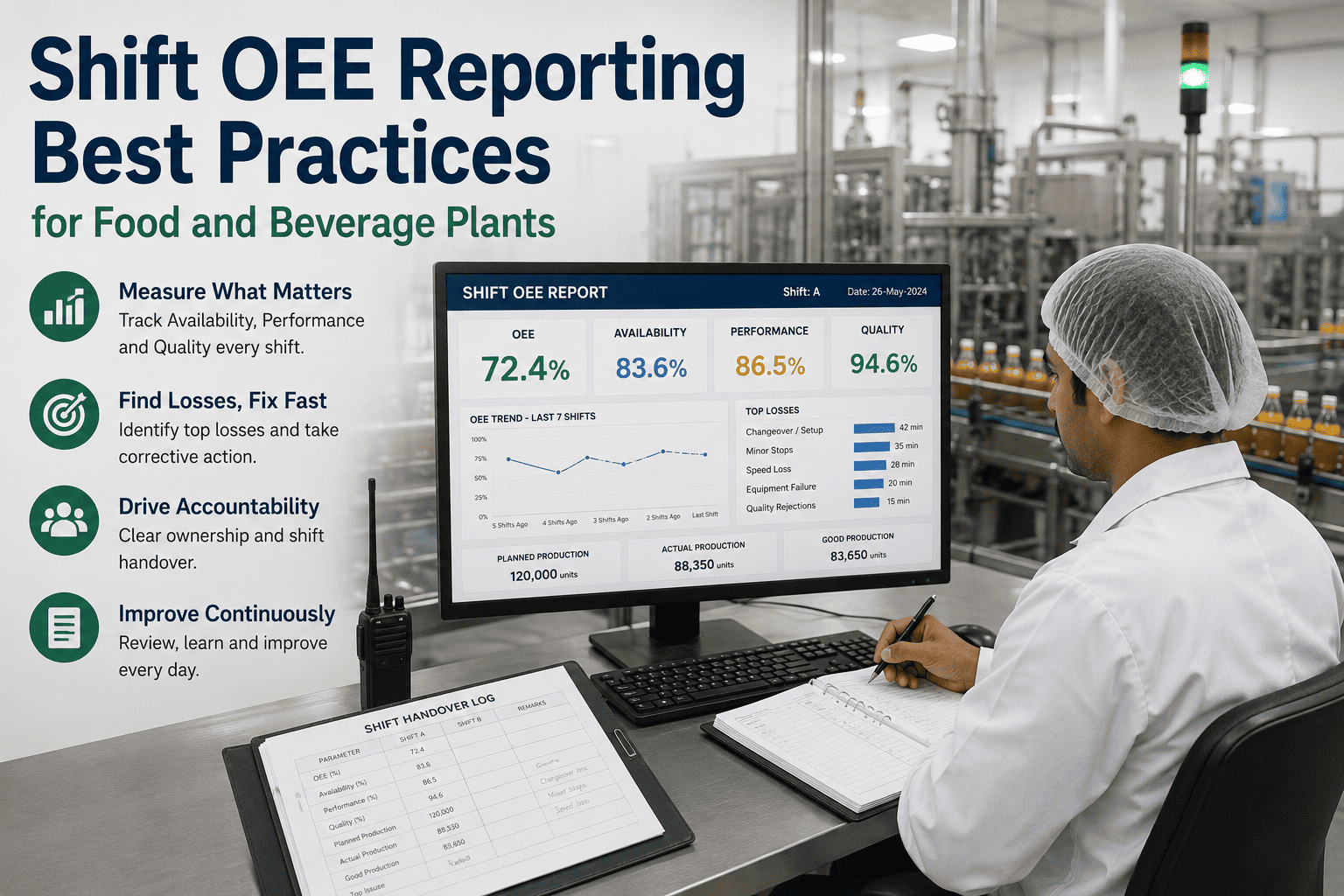
A paper logbook feels like a record, but it is a leaky one. Handwriting is illegible, pages go missing, whiteboards get wiped, and the most important detail often lives only in a tired operator's memory at the end of a long shift. None of it can be searched later, which is exactly when a root cause investigation needs it.
40-60%
Lost in the telling
Verbal handovers drop nearly half of the actionable information before the incoming crew ever hears it.
Gone
Wiped or misplaced
Whiteboard notes get erased and paper pages get lost, taking the only record of a fix or fault with them.
Unsearchable
No way to look back
Paper cannot be searched, trended, or audited, so finding when an issue started means flipping through binders.
In memory
Trapped context
Equipment status that lives in someone's head walks out the door at the end of every shift.
Log It Where It Happens, As It Happens
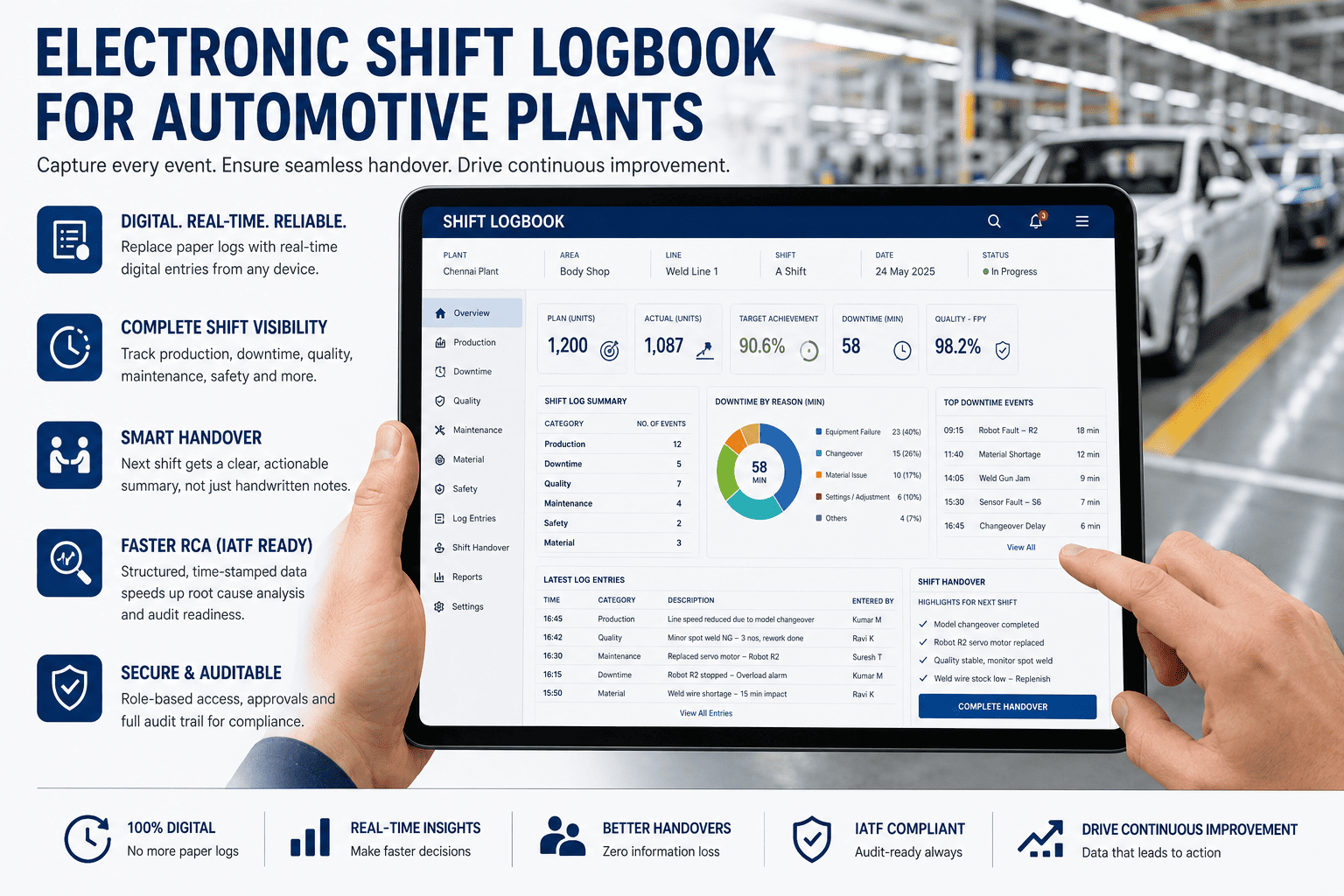
The fix is to capture each event at the moment it occurs, not from memory at shift end. Operators log on a tablet right at the line using structured templates, so every entry is timestamped, attributed, and consistent — building a permanent, searchable memory of the plant instead of a pile of notes.
Point-of-Occurrence Logging
Events are recorded on tablets right at the line as they happen, eliminating recall errors and end-of-shift guesswork.
Structured Templates
Guided fields keep categories consistent across operators, so the data is clean enough to actually trend later.
Photo & Voice Evidence
Attach a photo of the leak or a voice memo of the detail, capturing context a one-line scribble never could.
Equipment Status Tracking
Log when a filler goes down, comes back, or needs attention, so the next shift knows exactly what is running.
Want to see point-of-line logging on a tablet? Book a demo and we'll walk a live shift entry from event to handover.
The Handover That Reads Itself In
Because every event is already captured, the handover stops being a verbal scramble. The incoming crew opens a structured summary of the outgoing shift before they start, confirms they have read it, and steps onto the floor with full context. A twenty-minute briefing becomes a three-minute review where nothing important is left to chance.
1
Events Captured Live
Throughout the shift, every event, status change, and safety note is timestamped into the logbook in real time.
2
Summary Builds Itself
Those entries assemble into a structured shift summary automatically — no manual end-of-shift report writing.
3
Incoming Crew Reviews
The next shift reads the complete summary before stepping on the line, starting with context instead of a guess.
4
Acknowledge & Go
A mandatory acknowledgment confirms the handover was read, closing the gap where critical items used to vanish.
Turn Months of Logs Into Root Cause
A searchable logbook is more than a record — it is a memory you can interrogate. When something goes wrong, you can trace exactly when it started instead of guessing. And across months of structured entries, patterns surface that no paper log would ever reveal: the quality dip every Tuesday afternoon, the bearing that needs attention every third cycle.
Searchable History
Find every mention of an asset, fault, or batch in seconds, so root cause analysis starts with facts, not a binder hunt.
Pattern Detection
Recurring failure modes and quality drift become visible across shifts and weeks, surfacing the repeat issues to fix.
Shift Benchmarking
Compare downtime and incidents by shift and reason, turning the logbook into a continuous-improvement tool.
Feeds the CMMS
A logged fault can generate a maintenance work order directly, so a noted issue becomes a tracked task, not a forgotten one.
Curious what patterns are hiding in your shift history? Talk to our team and we'll show how structured logs surface them.
Audit-Ready for GMP and Part 11
In a food and beverage plant, the shift log is part of your compliance story. Digital entries are timestamped, attributed, and immutable, with electronic signatures — so the audit trail an inspector wants is built automatically, no paper retrieval, no scrambling to reconstruct who did what and when.
Immutable Audit Trail
Every entry timestamped, attributed, and locked, providing an instant audit trail for GMP and FDA-regulated environments.
Electronic Signatures
E-signed handovers and acknowledgments aligned with FDA 21 CFR Part 11 electronic-record and signature requirements.
ALCOA+ Integrity
Records that are attributable, legible, contemporaneous, original, and accurate, satisfying data-integrity expectations.
Safety Flags Escalated
Every safety observation is automatically escalated and tracked until resolved, not left buried in a log nobody rereads.
What a Digital Logbook Delivers
Capturing every event and feeding it live into the next handover converts directly into safer shift changes, faster investigations, and far less lost time. These reflect outcomes manufacturers report after moving from paper logs to a digital shift logbook.
3 min
Handover review
a structured read replaces the 20-minute verbal scramble
Nothing
Falls through
mandatory acknowledgment closes the handover gap
Searchable
Plant memory
root cause starts from facts, not from a binder hunt
Audit
Ready
timestamped, e-signed entries for GMP and Part 11
Ready to retire the whiteboard for good? Book a demo and see a digital handover built from your own shift events.
Frequently Asked Questions
Why is the shift change such a risky moment?
Because that's when context evaporates. Handover is less than 5% of operating time, yet around 40% of plant incidents happen during or immediately after it, and verbal briefings lose 40 to 60% of the actionable information. When a fix or fault lives only on a wiped whiteboard or in a tired operator's memory, the incoming crew inherits a problem they know nothing about — often discovering it only when the line goes down.
How does a digital logbook feed the next handover live?
Every event is logged on a tablet at the point of occurrence, timestamped and attributed in real time. Those entries assemble into a structured shift summary automatically, so there's no end-of-shift report to write. The incoming crew reviews that complete summary before stepping onto the floor and confirms it with a mandatory acknowledgment — turning a 20-minute verbal handover into a 3-minute read where nothing important is left to chance.
How does it actually help with root cause analysis?
Paper can't be searched; a digital logbook can. When something goes wrong you can trace exactly when it started in seconds rather than flipping through binders. More powerfully, pattern detection across months of structured entries surfaces recurring issues that are invisible in paper — the quality trend that appears every Tuesday afternoon, or the bearing that needs attention every third cycle — so you fix the cause, not just the symptom.
Is it compliant for a food and beverage plant?
Yes. Entries are timestamped, attributed, immutable, and electronically signed, giving you an instant audit trail aligned with FDA 21 CFR Part 11, GMP, and ALCOA+ data-integrity principles. Safety observations are automatically escalated and tracked until resolved, so compliance and safety items don't get buried in a log nobody rereads.
Is it hard for operators to adopt?
No — it's built for the operators you already have. Structured templates make logging faster than scribbling a note, photo and voice capture add context without typing, and teams are usually logging activities and completing handovers within minutes of setup. The fastest way to see it is a demo on your own shift workflow; book a slot and bring the kind of event your crews most often lose at handover.
Don't Let Context Die at Shift Change.
See a Digital Shift Handover Live
Bring the kind of event your crews most often lose at handover. We'll show point-of-line logging on a tablet, the structured summary that builds itself, the acknowledgment that closes the gap, and the searchable history that turns months of logs into root cause — audit-ready for GMP and Part 11.
Searchable
for root cause