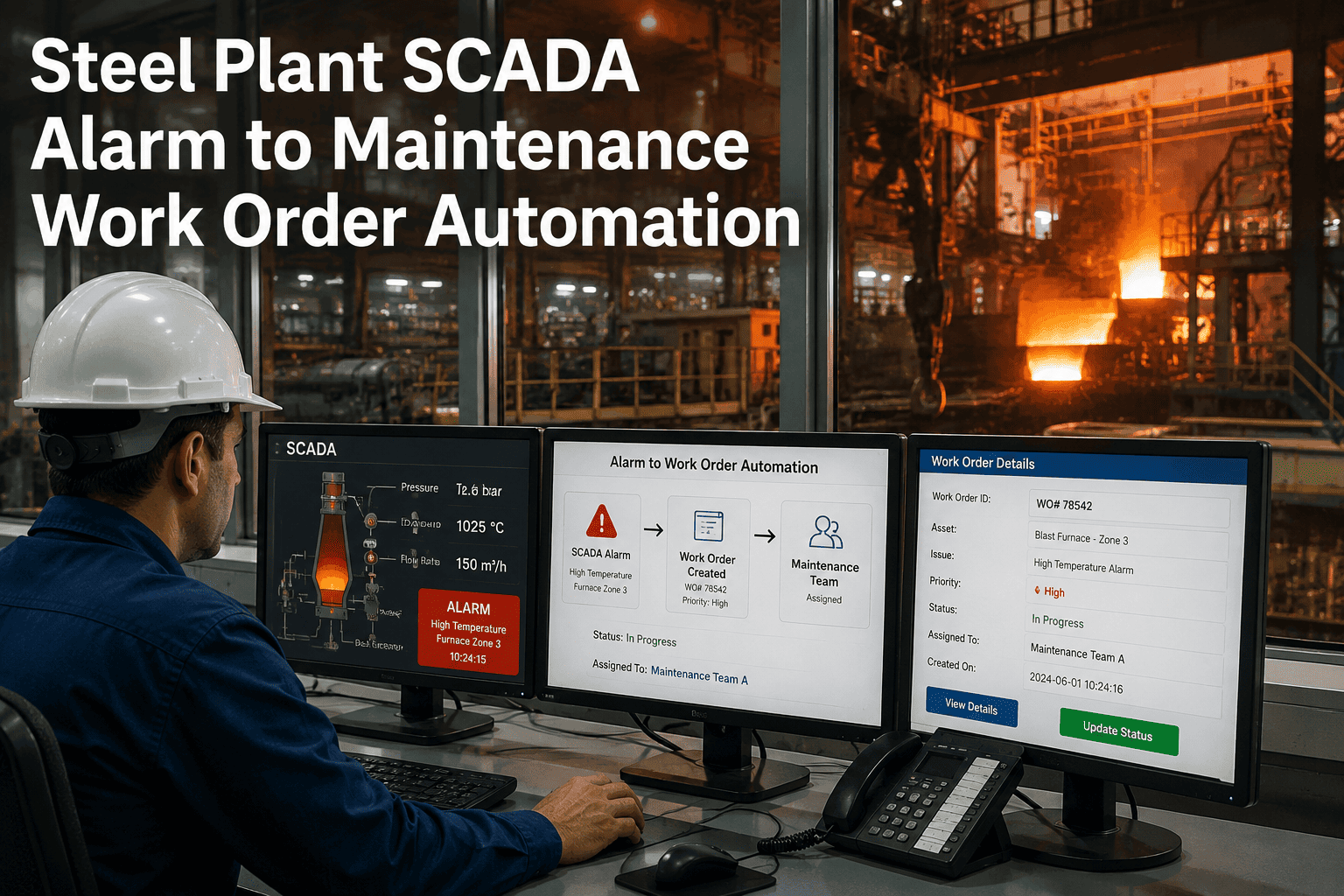
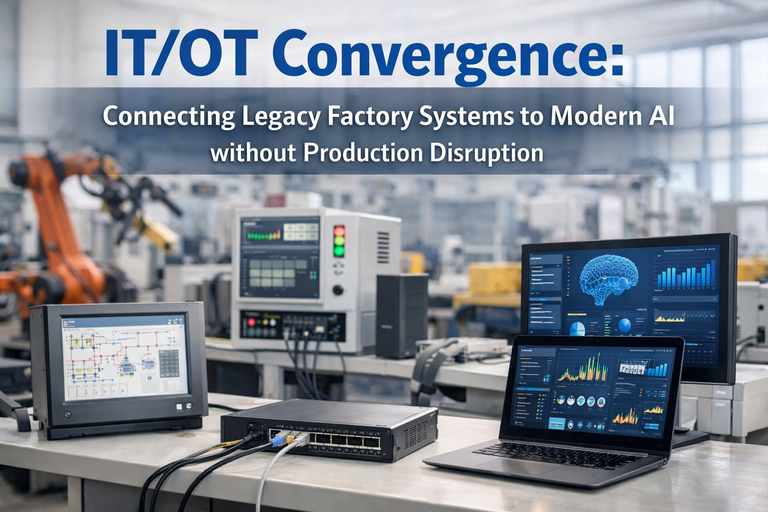
A Karnataka steel plant's blast furnace ran on a 1998 ABB DCS—22 years old, unsupported, spare parts unavailable. The operations team wanted AI-powered optimization to reduce coke consumption. Their IT vendor said: "Replace the entire DCS first. ₹18 crores, 18-month shutdown." The plant couldn't afford either cost or downtime. Meanwhile, their competitor deployed AI on a similar vintage Yokogawa DCS—without replacement—and achieved 8% coke savings in 6 months. The difference? The competitor used an overlay integration approach that worked with legacy protocols, not against them.
75% of Indian steel plants run legacy DCS systems (15-25+ years old) from ABB, Yokogawa, Honeywell, or Siemens. These systems work reliably but lack AI capabilities. Complete replacement costs ₹15-25 crores plus extended shutdowns—prohibitive for most brownfield plants. The practical solution: AI integration via modern middleware that speaks legacy protocols (Modbus, OPC, Profibus) while providing real-time optimization. Here's your complete guide to modernizing without replacing.
Integrating AI with Legacy DCS Systems in Indian Steel Plants: A Practical Guide
No Rip-and-Replace | Zero Production Downtime | ₹2-5 Cr vs ₹18 Cr
Legacy DCS Landscape: What's Running in Indian Steel
Four Dominant Legacy Platforms
ABB 800xA / Advant
18-25yrMost common in integrated steel plants. Modbus/OPC protocols. Spare parts scarce.
Yokogawa CENTUM
15-22yrPopular in blast furnaces, coke ovens. Proprietary protocols but OPC gateway available.
Honeywell TDC/TPS
20-28yrOften in power plants, rolling mills. Modbus RTU common. Migration tools exist.
Siemens PCS7/S7
12-20yrNewer vintage, better support. Profibus/Profinet. Easiest to integrate with.
Reliability: 20-year-old DCS systems often have 99.8%+ uptime—proven, stable, operators know them intimately. Cost: Replacement is ₹15-25 Cr plus 12-18 month shutdown. Risk: "Never change a running system"—fear of introducing instability. Result: Plants defer modernization indefinitely, missing AI benefits.
Get Free DCS Integration Assessment
We'll analyze your specific DCS platform, version, and protocols to determine best integration approach. Get detailed technical roadmap showing exactly how AI overlays with your existing system.
- DCS platform compatibility analysis
- Protocol mapping (Modbus/OPC/Profibus)
- Integration architecture design
- Risk assessment & mitigation
- Cost estimate & timeline
- Zero-downtime deployment plan
Questions about your specific DCS model? Chat with OT integration specialists — We've integrated with ABB, Yokogawa, Honeywell, Siemens systems.
Six Integration Challenges: Why IT Vendors Fail at OT
Technical & Organizational Obstacles
1. Proprietary Legacy Protocols
DCS systems speak old industrial protocols—not modern IT languages
- Modbus RTU/TCP (serial/ethernet variants)
- OPC DA/UA (different versions incompatible)
- Profibus DP (fieldbus, not ethernet-native)
- Vendor-specific protocols (Yokogawa Vnet)
- Documentation often missing or incomplete
2. Real-Time Requirements
Steel processes demand <100ms response—IT systems deliver 500ms+
- Blast furnace control: 50-100ms updates
- Rolling mill speed: 20-50ms response
- Cloud API latency: 300-500ms (too slow)
- IT databases not designed for 10Hz+ writes
- Must preserve DCS control loop integrity
3. Zero-Downtime Constraint
Steel plants can't shut down for IT projects—₹5-8 Cr/day production loss
- Blast furnace: 7-10 day shutdown = ₹50-80 Cr loss
- DCS changes require extensive testing
- No "try and rollback"—must work first time
- Integration must be non-intrusive (read-only initially)
- Phased deployment across equipment mandatory
4. OT-IT Cultural Divide
Operations teams distrust IT vendors who don't understand steel
- OT: Safety-first, conservative, proven tech
- IT: Move-fast, cloud-native, latest frameworks
- OT speaks "blast furnace temp" not "API endpoints"
- Operations fear AI will destabilize processes
- Vendor must earn trust through OT competence
5. Cybersecurity Concerns
Connecting OT to IT networks creates attack surface—operations resists
- DCS networks historically air-gapped (isolated)
- IT-OT bridge = potential malware path
- Industrial systems not patched regularly
- Data diode or firewall mandatory
- Compliance: IEC 62443, ISA 99 standards
6. Incomplete/Inaccurate Documentation
20-year-old DCS systems have missing specs, undocumented changes
- Original integrator no longer available
- Multiple modifications over decades
- Tag databases incomplete or outdated
- Wiring diagrams not updated
- Requires extensive discovery phase
Three Integration Approaches: Overlay vs Parallel vs Hybrid
Choosing the Right Architecture
Overlay Integration
AI reads DCS data, provides recommendations, operators implement
- Zero DCS modification
- No production risk
- Fast deployment (3-4 mo)
- Lowest cost (₹2-3 Cr)
- Easiest approval from operations
- Requires operator action
- Slower optimization
- Human bottleneck
Parallel System
New AI-powered DCS runs alongside legacy, gradual migration
- Modern infrastructure
- Full AI integration
- Future-proof platform
- Gradual migration (low risk)
- Fallback to legacy always available
- High cost (₹12-18 Cr)
- Long timeline (12-18 mo)
- Dual system complexity
Hybrid (Recommended)
Overlay + selective closed-loop control for non-critical parameters
- Balanced cost (₹4-6 Cr)
- Progressive automation
- Real optimization value
- Moderate risk/timeline
- Best ROI (80% of value at 30% cost)
- Requires careful scoping
- More complex than overlay
- Needs OT buy-in
Conservative/High-Risk Process: Start with overlay (blast furnace, coke oven) to build trust. Medium Risk: Hybrid approach (rolling mill, reheating furnace)—AI controls non-critical loops, operators supervise. Low Risk/Greenfield: Parallel system with gradual migration. Most Indian steel plants should start with overlay, upgrade to hybrid after 12-18 months of proven value.
8-Step Implementation Guide: Overlay Integration
From DCS Discovery to Live AI Optimization
DCS Discovery & Documentation (Week 1-3)
Audit existing DCS: platform, version, protocols, tag database. Identify all data points needed for AI (temperatures, pressures, flows, quality). Document communication interfaces (Modbus addresses, OPC server config). Critical: Get read-only access without any DCS modifications.
Protocol Gateway Deployment (Week 4-6)
Install edge gateway device that speaks DCS protocols (Modbus/OPC/Profibus). Configure data polling (typically 1-10 second intervals). Implement security: data diode or firewall rules (OT → IT only, no reverse). Test data quality: verify all tags readable and accurate.
Data Historian Setup (Week 7-9)
Deploy time-series database (InfluxDB, TimescaleDB, or industrial historian like OSIsoft PI). Store 12+ months of historical data for AI training. Implement data quality checks (range validation, outlier detection). Establish data retention policies (raw data 2 years, aggregated data 10 years).
AI Model Training (Week 10-14)
Train ML models on 12-18 months historical data. Develop process models (heat balance, material balance, combustion). Validate models achieve 90%+ accuracy on test data. Focus: blast furnace coke rate, reheating furnace fuel, rolling mill thickness control.
Operator Interface Development (Week 15-18)
Build AI recommendation dashboard integrated with existing HMI. Display optimal setpoints alongside current values. Show confidence scores and reasoning (why AI suggests change). Implement alert system (SMS/email) for significant recommendations. Make interface intuitive for operators who distrust AI initially.
Advisory Mode Pilot (Week 19-26)
Deploy AI in "advisory only" mode—no automatic control. AI suggests setpoint changes, operators manually implement. Track implementation rate (target: 70%+ in first month). Compare actual vs predicted outcomes to build operator trust. Refine models based on operator feedback.
Closed-Loop Enablement (Optional, Week 27-32)
For hybrid approach: Enable automatic setpoint writing for non-critical parameters (e.g. reheating furnace fuel flow, not blast furnace). Implement safety bounds (AI can adjust ±10% only, operators can override anytime). Start with single loop, expand gradually. Requires write access to DCS via OPC or Modbus write commands.
Continuous Improvement (Month 9+)
Retrain models quarterly with new data. Expand to additional equipment (more furnaces, mills). Optimize AI parameters based on 6-12 months of learnings. Typical performance: 3-5% efficiency gains in first year, 6-10% by year 2 as models improve.
Get Step-by-Step Integration Plan for YOUR Plant
We'll create detailed project plan with timelines, milestones, and deliverables specific to your DCS platform. See exactly what happens each week from discovery to live AI.
Case Study: West Bengal Integrated Steel Plant
ABB 800xA (1999) Integration - 14-Month Deployment
2.5 MT/year Capacity | Blast Furnace #2 | Yokogawa OPC Gateway
Challenge: 22-year-old ABB DCS, unsupported, spare parts unavailable. Full replacement quoted ₹18 Cr + 14-month shutdown. Needed AI optimization without replacement.
- Protocol: ABB Modbus TCP → Kepware OPC server → InfluxDB historian
- Data Points: 450 tags (temperatures, pressures, flows, burden composition)
- AI Models: Coke rate prediction, burden optimization, blast parameters
- Mode: Overlay (advisory) for 6 months, then hybrid (closed-loop for non-critical)
- Timeline: 3 months discovery/gateway, 4 months model training, 2 months advisory, 5 months closed-loop enablement
- Zero downtime: All work completed during normal operations, no BF shutdown required
Risk Mitigation: Five Critical Strategies
Protecting Production While Integrating
Risk 1: DCS Destabilization
Fear: AI integration causes DCS crashes, production stops
Phase 1 is 100% read-only—physically impossible to affect DCS. Use data diode hardware (unidirectional data flow). No DCS configuration changes. Pilot on single equipment first, expand only after 3-6 months proven stability.
Risk 2: Cybersecurity Breach
Fear: IT-OT connection creates path for malware/ransomware
Deploy industrial firewall (Claroty, Nozomi) or data diode. Implement network segmentation (DMZ between IT/OT). No internet access from OT network. Follow IEC 62443 security guidelines. Regular penetration testing.
Risk 3: Operator Resistance
Fear: Operations reject AI, system provides value but unused
Involve operators from day 1 (not just management). Start advisory-only mode—AI suggests, operators decide. Show quantified results (coke saved per shift). Provide training—operators must understand AI reasoning. Never override operator judgment.
Risk 4: Integration Complexity Underestimated
Fear: Project timeline doubles, costs spiral due to unforeseen technical issues
Allocate 30% contingency time for discovery phase (documentation always incomplete). Use experienced OT integrator (not generic IT vendor). Implement phased approach with go/no-go gates. Build protocol gateway first, validate data quality before AI development.
Concerned about integration risks? Discuss with OT security experts — We'll address your specific concerns with proven mitigation strategies.
Legacy DCS Integration Takeaways
- 75% of Indian steel plants have legacy DCS (15-25+ years old)—replacement prohibitively expensive
- Overlay integration costs ₹2-5 Cr vs ₹15-25 Cr replacement—achieves 80% of value at 20% cost
- Zero-downtime deployment mandatory—all integration work during normal operations, no shutdown
- Start advisory-only mode—build operator trust before enabling closed-loop control
- 8-step process from discovery to live AI typically takes 6-8 months for overlay integration
- ROI typically 250-400% Year 1 from fuel savings alone—justifies integration cost easily
Modernize Your Legacy DCS with AI—Without Replacement
Free DCS integration assessment: We'll analyze your specific platform and create detailed technical roadmap.
See exactly how to add AI capabilities to your 20-year-old DCS without rip-and-replace.