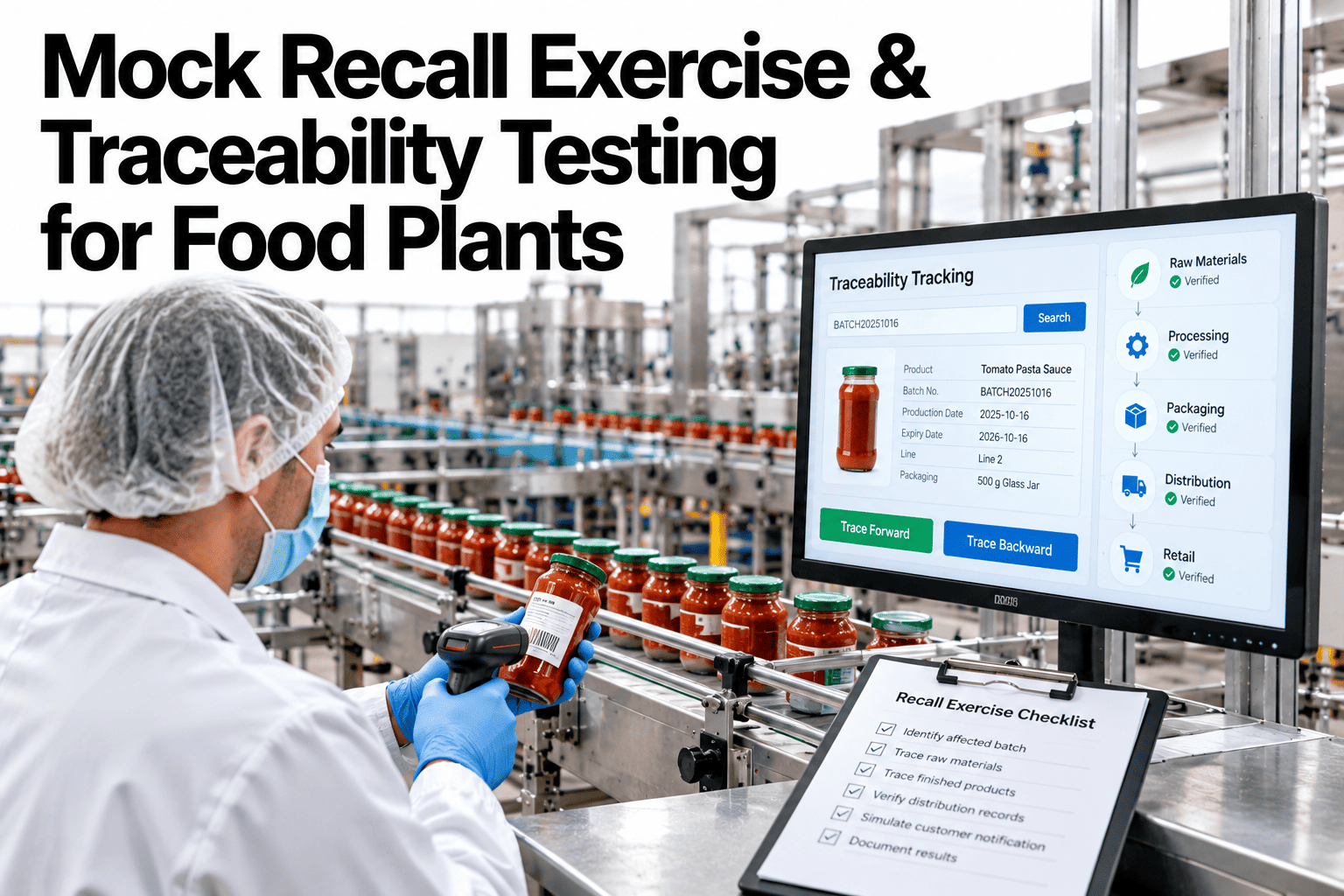
A mock recall that finishes in two hours and gets filed as a pass is telling you the paperwork exists, not that the system works under the pressure a real event would bring. The exercises that actually find gaps are the ones designed to be uncomfortable, pulling a real lot, tracing it one up and one down through real records, and timing how long it genuinely takes a real team to reconcile quantities. A mock recall built that way is worth running before an actual event forces the question, and food safety directors tightening their program can design a harder mock recall exercise around their own traceability data.
Design the Exercise to Find the Gap, Not to Confirm the File Is Complete
iFactory AI pulls lot genealogy automatically so a mock recall tests whether the trace is correct, not just whether someone can locate a binder.
Why Easy Mock Recalls Don't Build Real Readiness
A mock recall that always clears quickly usually means the exercise was designed around the data that is easiest to find, not the data a real event would actually require.
The Same Lot Gets Tested Every Time
A team that practices on a familiar, well-documented lot never finds the gaps that show up on a less common SKU or a lot spanning a shift change.
Quantity Reconciliation Gets Skipped
Confirming that ingredient quantities received match quantities used and shipped is the step that actually proves the trace is complete, and it is often the first one dropped under time pressure.
No One Times the Real Bottleneck
A fast overall result can hide one record type, such as a rework or a co-packer handoff, that consistently takes far longer to locate than the rest.
One-Up, One-Down: What the Trace Actually Has to Show
Trace back and trace forward are the two directions every mock recall has to prove, and both depend on the same underlying lot genealogy data.
Time Your Own One-Up, One-Down Trace
Bring a real lot number to a 30-minute session and see how long a full trace back and trace forward actually takes against your current records.
Who Owns What During a Recall
A mock recall also tests whether the recall team's roles are actually clear, not assumed, when the exercise starts.
| Role | Primary Responsibility |
|---|---|
| Recall Coordinator | Leads the exercise, declares scope, and owns the final timeline report |
| Quality / Food Safety | Confirms hazard assessment and lot scope, verifies trace completeness |
| Production / Operations | Supplies production records, rework history, and lot consumption data |
| Customer Service / Sales | Confirms distribution records and customer contact readiness |
| Regulatory / Legal | Confirms notification requirements and documentation standards |
A role left undefined during a mock exercise stays undefined during a real one, which is why the exercise should force every function to actually participate rather than letting one person run the whole trace alone.
Designing an Exercise That Finds Gaps
A stronger mock recall design rotates variables deliberately instead of repeating the same comfortable scenario.
An Illustrative Comparison: Trace Time by Record Source
The figures below are a labeled illustrative composite, not a reported customer result, showing where trace time tends to concentrate when genealogy is pulled manually versus from connected records.
The plants that pass mock recalls comfortably are not always the ones that would handle a real event well. The ones worth trusting are the ones that have deliberately made the exercise harder over time, rotating which lot gets picked, timing the slowest record source instead of just the total, and insisting on full quantity reconciliation rather than stopping once a lot number is located.
Frequently Asked Questions
How often should a mock recall exercise be run?
Most GFSI-aligned programs expect at least an annual exercise, though plants with complex multi-ingredient products or frequent formulation changes often benefit from running one more often, and varying the lot selected each time. Build a mock recall schedule around your own SKU complexity in a short session.
What is a reasonable target time for a full trace?
There is no single universal number, since it depends on product complexity and supply chain depth, but most programs aim for a trace that completes within hours rather than days, with quantity reconciliation included rather than treated as optional. Ask the iFactory AI team what a realistic target looks like for your product line.
Does trace forward matter as much as trace back?
Yes, and plants often underpractice it, since trace back toward ingredient suppliers tends to get more attention than trace forward toward customers and distribution, even though both directions are required to execute an actual recall or withdrawal. Test a trace forward exercise on a recent shipment in a demo.
Should the mock recall be announced in advance?
Running at least some exercises unannounced, or with limited advance notice to only the recall coordinator, produces a far more accurate picture of real readiness than a fully scheduled exercise everyone has prepared for in advance. Plan an unannounced exercise with the iFactory AI team for your next cycle.
How does this connect to our existing traceability system?
Lot genealogy, ingredient consumption, and distribution records are pulled from the systems you already use for production and shipping, so a mock recall tests the real data path rather than a separate exercise-only record set. Review your current traceability data sources with the support team.
Find the Gap in a Drill, Not in a Real Event
iFactory AI pulls lot genealogy automatically so your next mock recall tests the system, not just the paperwork. Book a walkthrough on your own traceability data.