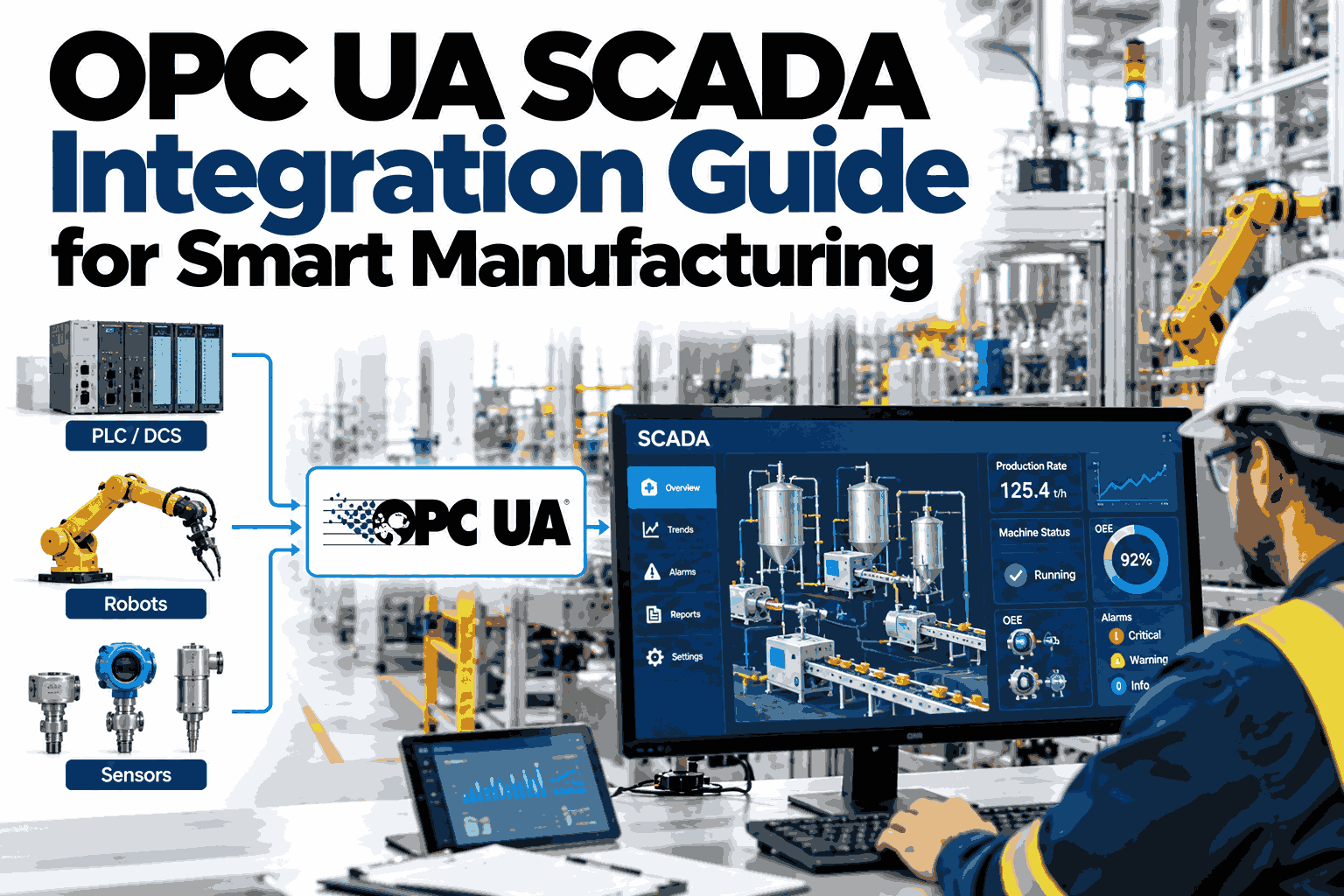
Your factory generates terabytes of sensor data every day. Your PLCs track vibration, temperature, pressure, and power consumption across hundreds of assets. Your SCADA system monitors production in real time. But here's the problem: less than 10% of that data ever reaches an AI model. The bottleneck isn't your machines or your sensors — it's the protocol layer between them and your analytics stack. OPC UA and MQTT are the two industrial protocols that solve this. Together, they form the data backbone that turns a traditional factory into an AI-ready factory — without disrupting live production.
AI-Native Digital Transformation for Smart Manufacturing
Join iFactory's expert-led session on building AI-ready data architectures — including OPC UA/MQTT pipeline design, edge AI integration, predictive maintenance, and real-time factory intelligence. Learn how leading facilities turn sensor data into competitive advantage.
The industrial AI market reached $43.6 billion in 2024 and is growing at 23% CAGR. But here's what most vendors won't tell you: the majority of industrial AI projects fail not because the AI models are wrong, but because the data pipeline feeding them is broken. Inconsistent sensor data, siloed PLCs, proprietary SCADA protocols, and missing timestamps create a garbage-in-garbage-out loop that no amount of machine learning can fix.
This guide is for plant engineers, automation specialists, and IT/OT architects who need to build a real-time, AI-ready data pipeline from sensors, PLCs, and SCADA systems to cloud analytics — using OPC UA and MQTT as the protocol foundation. We'll cover what each protocol does, how they work together, the exact architecture you need, and how iFactory's AI-powered CMMS plugs into this stack as the operational intelligence layer.
Building an AI-Ready Data Pipeline? Start With the Right CMMS Foundation
iFactory's cloud-native CMMS connects to OPC UA and MQTT-enabled sensors, PLCs, and edge gateways — turning raw machine data into predictive maintenance triggers, automated work orders, and real-time asset intelligence. See it live in 30 minutes.
OPC UA vs MQTT: What Plant Engineers Need to Know
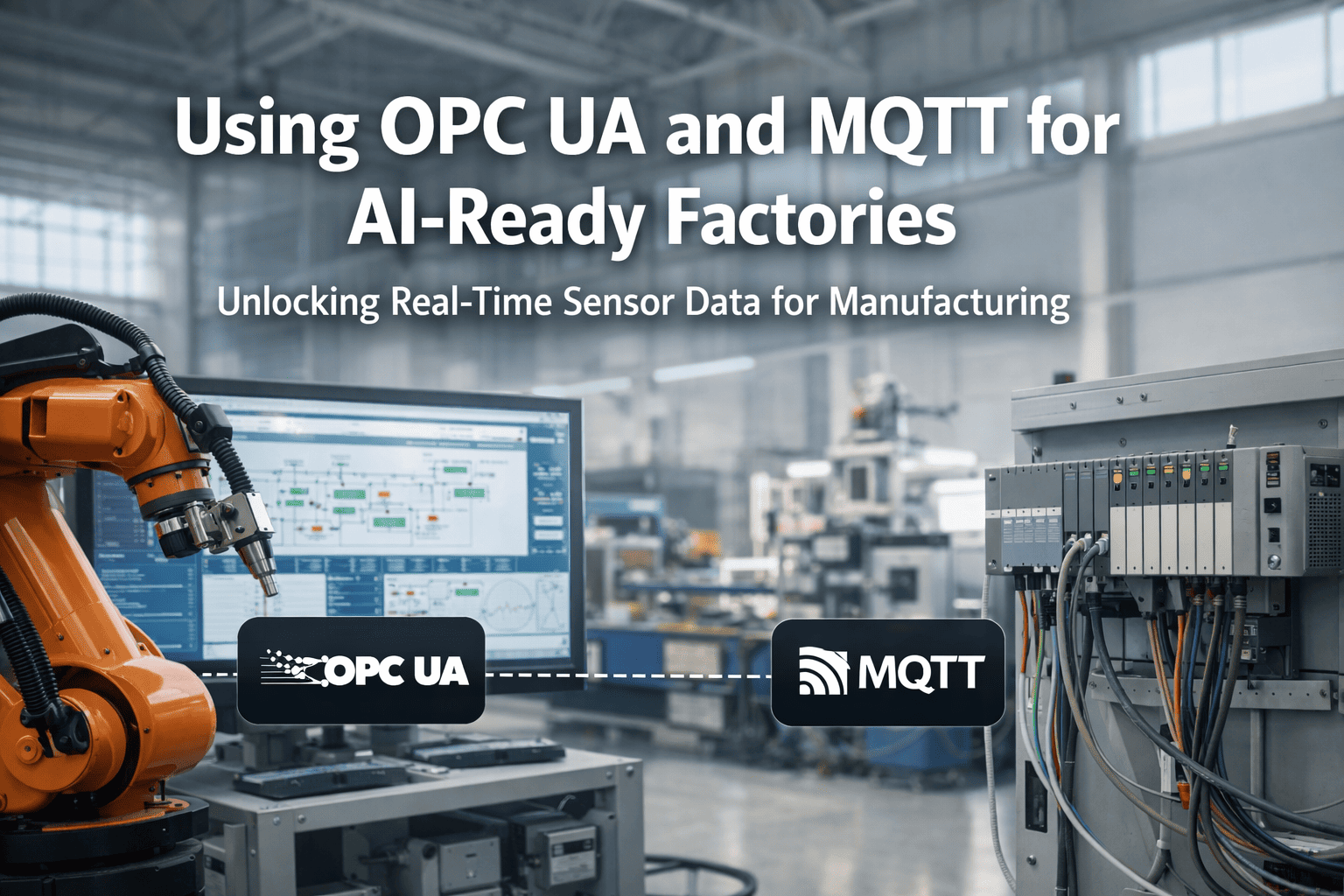
OPC UA and MQTT are not competing protocols — they're complementary layers of the same data architecture. Thinking of them as either/or is the most common mistake in industrial data pipeline design. Here's how each protocol works and why modern AI-ready factories use both:
- Rich semantic data models with metadata, units, and context
- Client-server + pub/sub architecture for deterministic control
- Built-in security: encryption, authentication, certificates
- 100+ companion specifications for industry verticals
- Native PLC/SCADA integration — Siemens, Rockwell, Beckhoff
- Best for: Structured machine-to-machine communication on the plant floor
- Lightweight pub/sub — designed for high-throughput, low bandwidth
- Broker-based: scales to millions of devices effortlessly
- QoS levels for guaranteed message delivery
- Native cloud platform support — AWS IoT, Azure IoT Hub, GCP
- Sparkplug B adds OPC UA-like structure to MQTT payloads
- Best for: Moving data from edge/factory to cloud AI and analytics
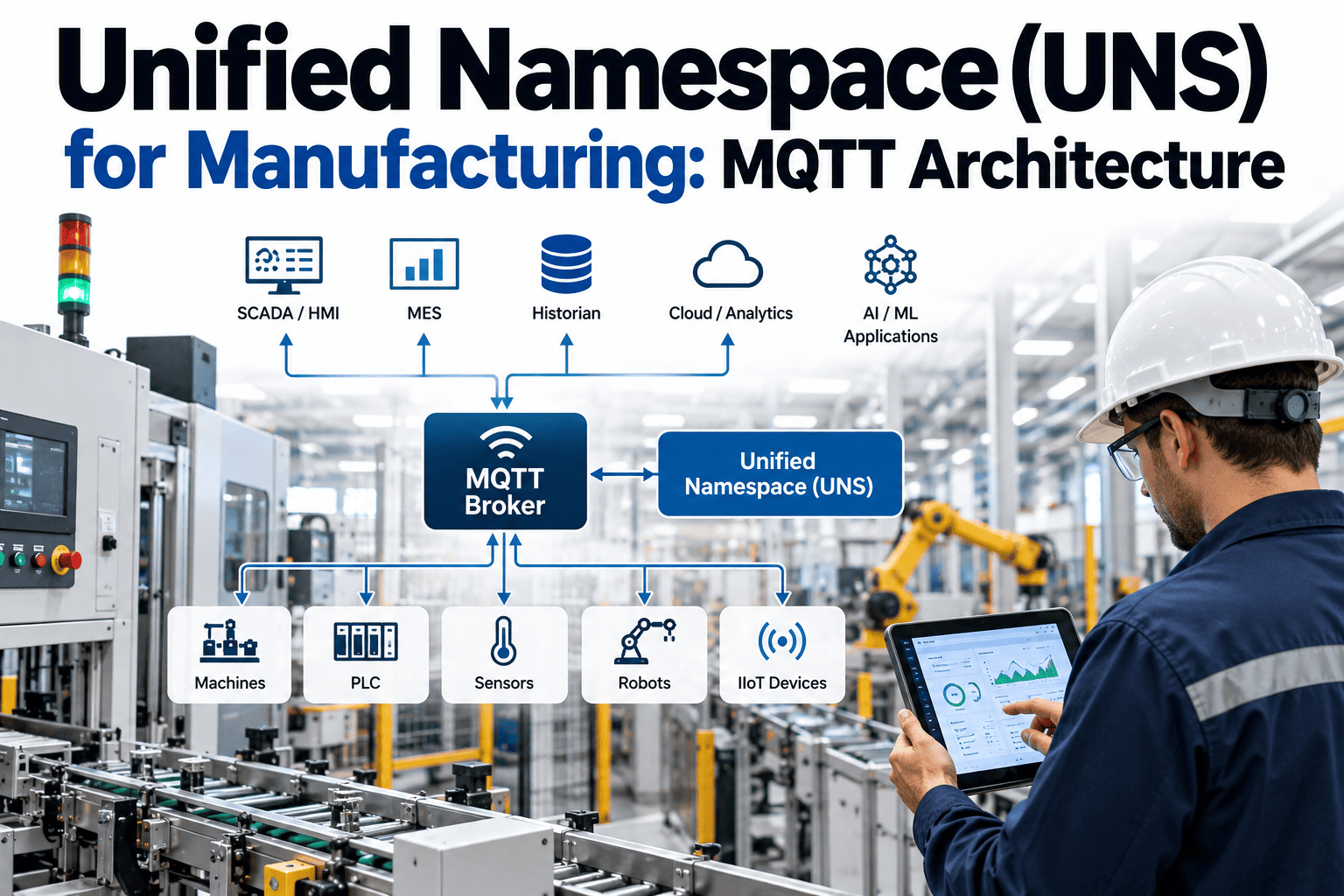
The industry consensus in 2026 is clear: OPC UA organizes the data, MQTT moves it. When paired with Sparkplug B (an open standard that adds structure and consistency to MQTT messages), the two protocols exchange industrial data reliably from the factory floor to the cloud — with end-to-end security and standardized data models intact. AWS, Microsoft Azure, Google Cloud, SAP, Siemens, Beckhoff, and Rockwell all now support OPC UA over MQTT natively.
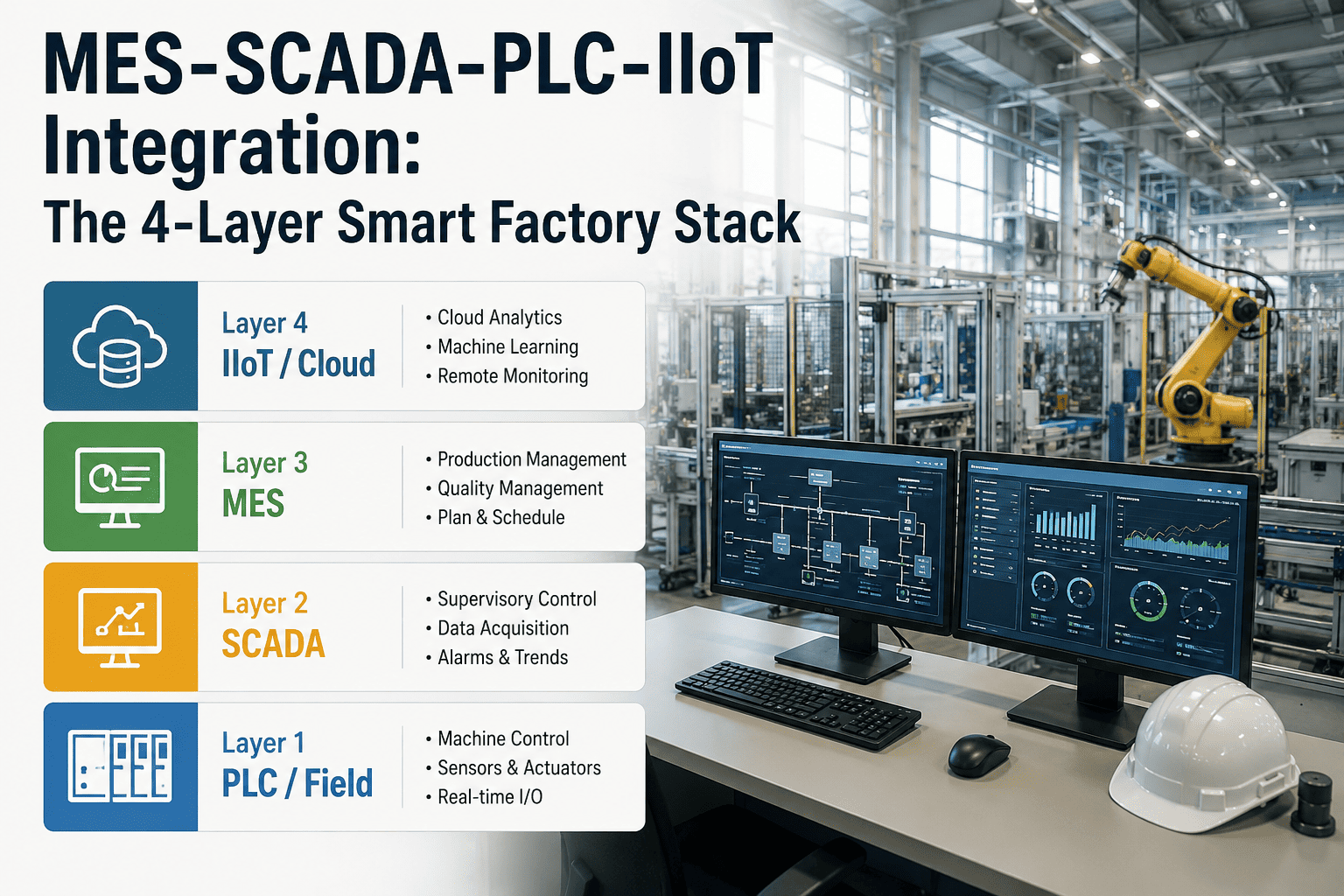
The AI-Ready Factory Data Architecture: 5-Layer Reference Stack
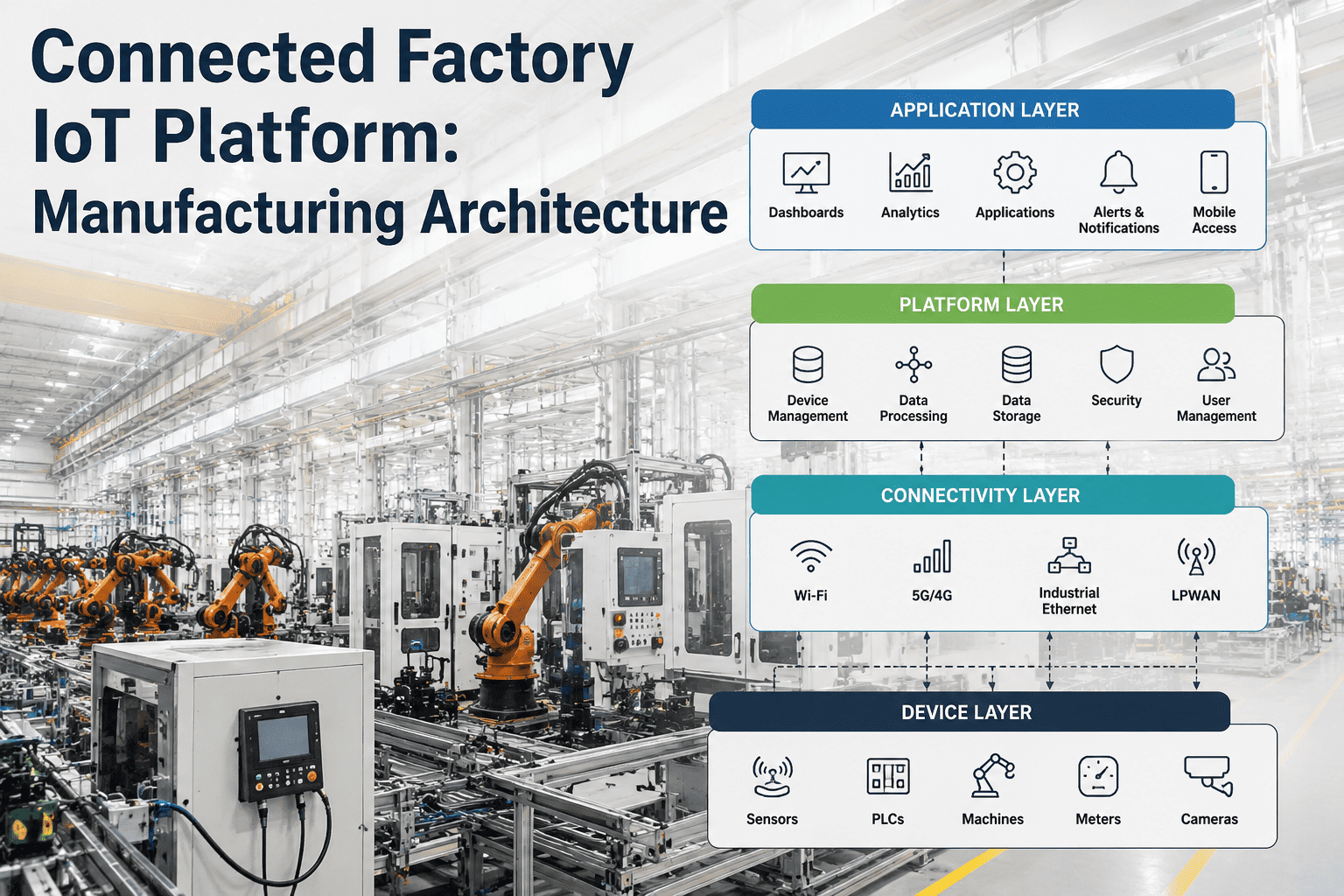
An AI-ready factory isn't a single tool — it's a layered data architecture where each component feeds intelligence to the next. Here's the reference stack that leading manufacturers (Samsung, BMW, Schneider Electric) use, and where OPC UA, MQTT, and iFactory fit:
Vibration sensors, temperature probes, pressure transducers, power meters, flow sensors attached to every critical asset. PLCs (Siemens S7-1500, Allen-Bradley, Beckhoff TwinCAT) aggregate machine-level data. SCADA systems provide supervisory control. Protocol: OPC UA server embedded in PLC or edge gateway exposes data with full semantic context.
Edge devices (Siemens IOT2050, AWS IoT Greengrass, Azure IoT Edge, Advantech gateways) run OPC UA clients that subscribe to PLC data, then republish via MQTT broker to the cloud. This is where data is normalized, timestamped, and compressed for transport. Protocol: OPC UA PubSub over MQTT with Sparkplug B encoding for structured payloads.
A centralized MQTT broker (HiveMQ, EMQX, Mosquitto, or cloud-native brokers in AWS/Azure) acts as the pub/sub hub. Every data producer publishes once; every consumer subscribes. QoS 1 for critical alarms, QoS 0 for high-frequency telemetry. Topic hierarchy: factory/line01/cnc-machine-04/vibration.
iFactory subscribes to the MQTT data stream and transforms raw sensor telemetry into actionable operations: predictive maintenance alerts, automated work order generation, asset health scoring, and real-time dashboards. This is where data becomes decisions. No sensor data goes unused.
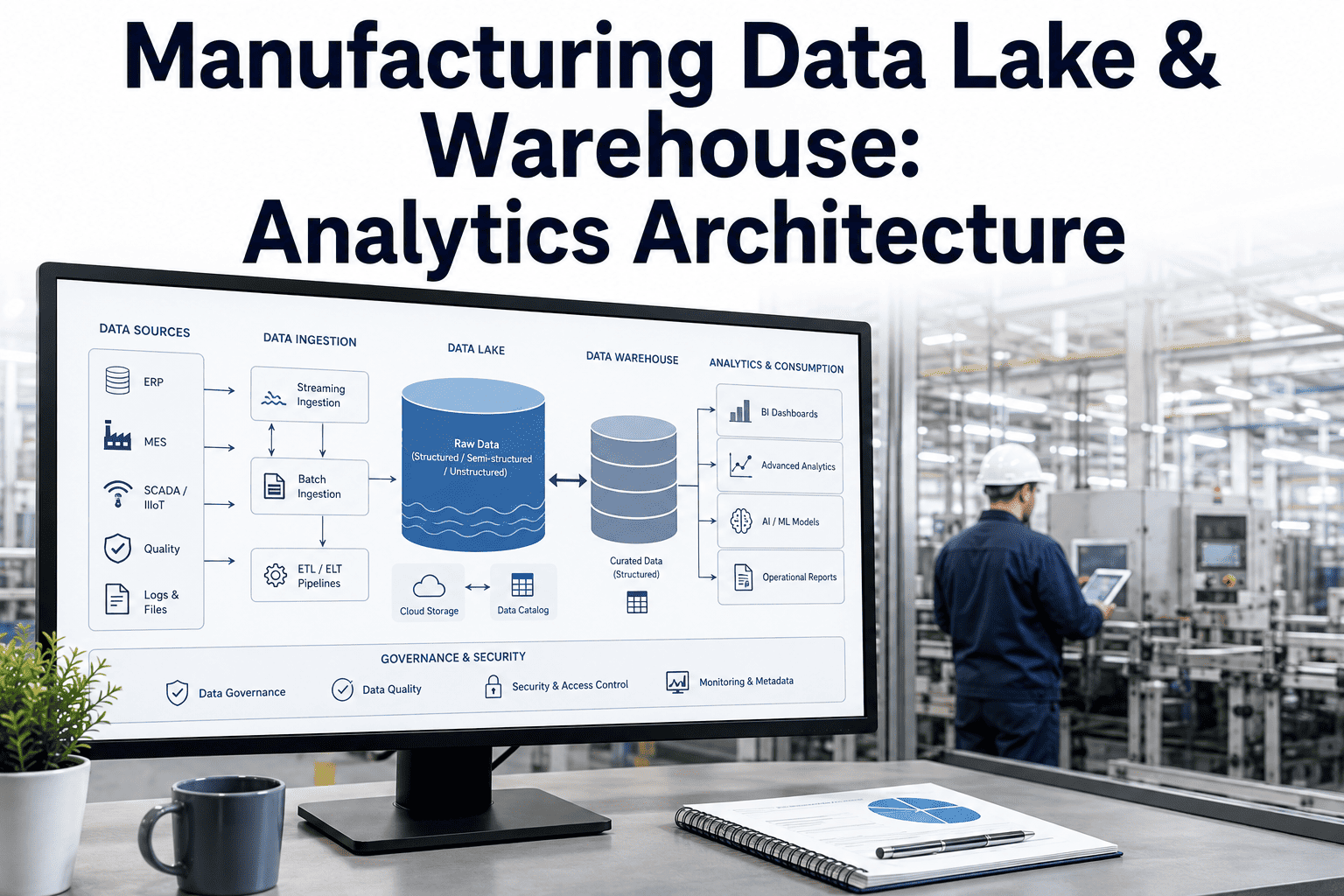
Clean, contextualized data flows from iFactory to cloud ML platforms for advanced analytics: predictive failure models, production optimization, energy management, and digital twin simulation. Because OPC UA preserved the semantic context and MQTT delivered it reliably, AI models train on clean, labeled data — not noise.
iFactory sits at the critical Layer 4 — where raw data becomes operational intelligence. Without this layer, sensor data flows into a data lake and drowns. See how iFactory turns your OPC UA/MQTT data into automated maintenance actions →
OPC UA + MQTT: Head-to-Head Technical Comparison
For plant engineers evaluating which protocol to deploy where, here's the technical comparison that matters for AI-ready data pipeline design:
| Feature | OPC UA | MQTT | Combined (OPC UA over MQTT) |
|---|---|---|---|
| Architecture | Client-Server + PubSub | Publish-Subscribe (broker) | PubSub with semantic context |
| Data Model | Rich hierarchical with metadata | Raw payload (JSON/binary) | Sparkplug B adds structure to MQTT |
| Latency | Sub-millisecond (TSN capable) | <50ms typical | Edge: sub-ms / Cloud: <50ms |
| Scalability | Hundreds of nodes per server | Millions of devices per broker | Unlimited with broker federation |
| Security | Built-in encryption + certificates | TLS + ACL-based access | End-to-end OPC UA security over MQTT |
| Cloud Native | Requires gateway for cloud | Native AWS/Azure/GCP support | Direct cloud ingestion |
| Best Use Case | PLC-to-PLC, SCADA, MES | Edge-to-cloud, telemetry, AI | Full-stack AI-ready pipeline |
| AI Readiness | Provides labeled, contextual data | Provides transport at scale | AI gets clean, fast, labeled data |
Your Sensor Data Deserves Better Than a Data Lake
iFactory transforms OPC UA/MQTT sensor streams into predictive maintenance, automated work orders, and real-time asset health — not just dashboards. See the difference in a live demo.
6 Real-World Use Cases: OPC UA + MQTT Powering AI in Manufacturing
The OPC UA + MQTT architecture isn't theoretical — it's already deployed across the world's most advanced factories. Here's what these data pipelines enable, and how iFactory amplifies each use case:
Implementation Guide: Building Your OPC UA + MQTT Pipeline Without Disrupting Production
The biggest fear plant engineers have about implementing a new data pipeline is production disruption. The OPC UA + MQTT architecture is specifically designed to be deployed alongside existing systems — reading data passively without modifying PLC logic or SCADA configurations. Here's the proven 4-phase approach:
Inventory every PLC, sensor, and SCADA system. Identify which assets already support OPC UA natively (most modern Siemens, Rockwell, Beckhoff PLCs do). Flag legacy equipment that needs retrofit sensors or gateway conversion. Define the critical data points your AI use cases require — vibration, temperature, pressure, power, cycle counts, OEE metrics.
Deploy edge gateways alongside existing PLCs (non-invasive — read-only OPC UA client connections). Configure MQTT broker on-premises or in the cloud. Establish topic hierarchy: site/area/line/machine/sensor. Set QoS levels: QoS 1 for alarms and maintenance triggers, QoS 0 for high-frequency telemetry. Implement TLS encryption and certificate-based authentication.
Connect iFactory to your MQTT broker. Configure asset mapping: link MQTT topics to iFactory's asset management hierarchy. Enable AI-driven predictive maintenance rules based on incoming sensor streams. Set up automated work order triggers for threshold breaches. Activate real-time dashboards for maintenance and operations teams.
Extend sensor coverage to all critical assets. Connect additional data consumers: cloud AI models, digital twin platforms, ERP systems. iFactory's cloud-native architecture scales without infrastructure changes. Continuously refine predictive models as more data accumulates. The more data, the smarter the AI becomes.
Most teams go from zero to first AI-driven work order in 6 weeks. iFactory's team helps you architect the pipeline, connect the protocols, and start seeing value fast. Book a demo and get your implementation roadmap →
Expert Perspectives: Industry Leaders on OPC UA, MQTT, and AI-Ready Data
The convergence of OPC UA and MQTT isn't just a technical trend — it's the consensus architecture endorsed by the world's largest automation vendors, cloud providers, and industrial standards bodies:
OPC UA PubSub enables the use of OPC UA directly over the Internet by utilizing popular data transports like MQTT while retaining end-to-end security and standardized data modeling. It harmonizes process and factory automation, scaling from field to cloud and back.
OPC UA became the de-facto standard for interoperable in-plant information gathering and the technology's next task is to establish the same position for plant-to-cloud information gathering. The heart of OPC UA is the information model, allowing endpoints to be self-describing.
OPC UA will be our way of incorporating machine data into our data analytics and AI capabilities, to ultimately deliver on the promise of accessible data and easy-to-use AI across factories. Google Cloud is committed to openness and industry collaboration through the OPC UA Cloud Library.
The industrial technology market reached $176.9 billion in 2024. Edge AI, generative AI, agentic AI, and physical AI have the biggest impact across 60+ emerging technologies. Most industrial AI value comes from sensor time-series data that must run reliably at the edge and integrate with OT systems.
Common Pitfalls: Why Most Factory Data Pipelines Fail (And How to Avoid Them)
After researching hundreds of IIoT implementations, the failure patterns are consistent. Avoid these and your pipeline will succeed:
Don't Build a Data Pipeline Without an Operational Intelligence Layer
iFactory turns your OPC UA/MQTT sensor data into predictive maintenance, automated work orders, and real-time asset intelligence. It's the layer that makes your entire data investment pay off. See it live in 30 minutes.
Frequently Asked Questions
No — this is one of the key advantages. OPC UA clients connect to your existing PLCs and SCADA system in read-only mode, extracting data without modifying any control logic. The MQTT layer operates alongside your current infrastructure. iFactory subscribes to the MQTT data stream independently. Your existing operations continue unchanged while you build the AI-ready data pipeline in parallel.
Yes. Legacy PLCs that don't support OPC UA natively can be connected through edge gateways that support Modbus, PROFINET, EtherNet/IP, and other legacy protocols — then convert to OPC UA format. Retrofit IoT sensors can also be added to machines that have no digital communication at all. BMW successfully deployed this approach on legacy monorail systems using low-cost sensors and edge gateways. Book a demo and we'll assess your specific equipment mix.
Both — they're complementary, not competing. OPC UA provides rich, structured data with semantic context on the plant floor (PLC-to-PLC, PLC-to-edge). MQTT provides lightweight, scalable transport from edge to cloud. Together with Sparkplug B, they form the complete AI-ready pipeline. Think of it as: OPC UA organizes the data, MQTT moves it. This is the consensus architecture supported by AWS, Azure, Google Cloud, Siemens, Rockwell, and Beckhoff.
iFactory operates as Layer 4 — the operational intelligence layer — between your sensor data pipeline and your cloud AI models. It subscribes to your MQTT data stream, correlates sensor readings with asset records and maintenance history, and converts insights into automated actions: predictive maintenance work orders, threshold-based alerts, asset health scores, and real-time dashboards. Without this layer, sensor data goes to a data lake but nobody acts on it. iFactory makes your data investment pay off.
Sparkplug B is highly recommended — it adds OPC UA-like structure (metadata, birth/death certificates, state management) to MQTT payloads. Without it, MQTT messages are just raw data blobs that every consumer must parse independently. With Sparkplug B, your MQTT messages carry semantic context, automatic device discovery, and standardized data formats. This makes downstream integration with iFactory, AI models, and digital twins dramatically simpler and more reliable.
Your Factory's AI Journey Starts With the Right Data Pipeline
OPC UA + MQTT + iFactory = the complete architecture for turning sensor data into competitive advantage. In 30 minutes, we'll show you exactly how iFactory connects to your existing infrastructure, what AI insights you'd see from day one, and how fast your team can have predictive maintenance running. No commitment. No pressure.