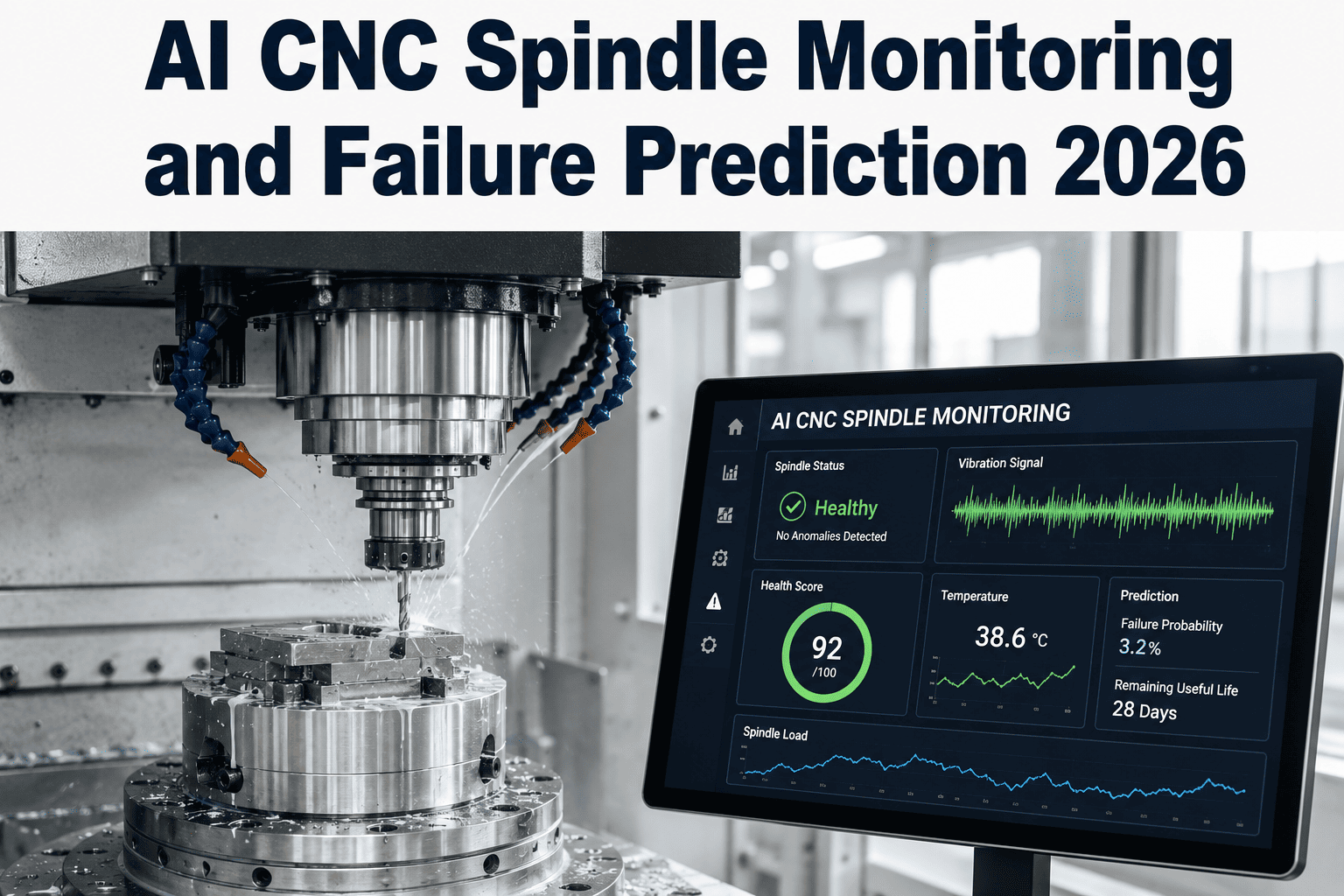
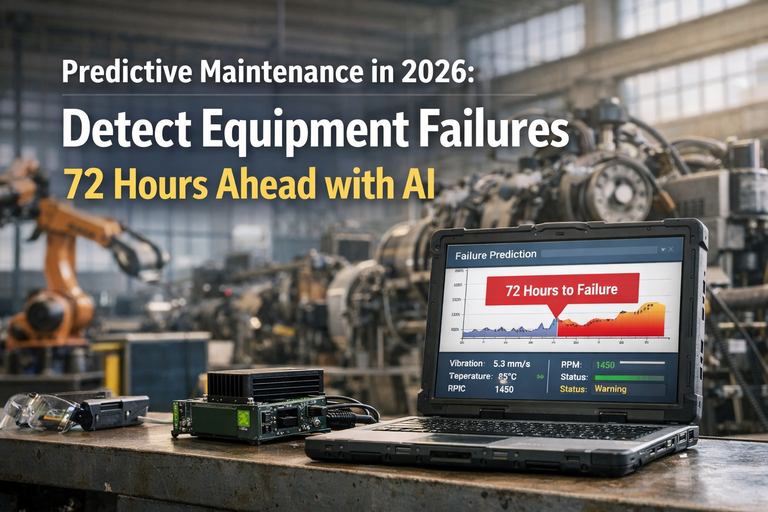
Most maintenance programs still run on a mix of fixed schedules and reactive fixes, replacing bearings on a calendar interval regardless of actual wear and responding to failures after a machine has already stopped. Vibration, temperature, current draw, and acoustic signature all change measurably before a piece of equipment fails, often days or weeks ahead of the breakdown, but that data is only useful if something is actually watching it continuously across every asset rather than checking a handful of critical machines on a rounds schedule. A predictive plant intelligence platform pulls all four signal types together across the full asset base and turns gradual drift into an early warning a maintenance team can act on. A short session with our team can show what that coverage looks like layered over your current maintenance program.
Smart Factory Platform · Predictive Intelligence
Predictive Plant Intelligence Platform for Factories
AI monitors vibration, temperature, current, and acoustic data across every connected asset in the plant, predicting failures before they happen instead of waiting for a fixed maintenance interval or a breakdown to force the issue.
4
signal types monitored continuously
Days to Weeks
of early warning before a typical failure
All Assets
not just the ones on a rounds schedule
The Scheduling Mismatch
Fixed Maintenance Intervals Don't Track How Equipment Actually Wears
A calendar-based maintenance schedule treats every asset of a given type the same way, replacing a bearing or a belt at a fixed interval regardless of how hard that specific machine has actually been run. Some equipment runs light and could safely go longer between services, wasting maintenance labor and parts on interventions that weren't needed yet. Other equipment runs hard, under load conditions the schedule never accounted for, and fails well before its next scheduled service catches the wear. Reactive maintenance solves the second problem by responding after the fact, but by then the plant has already absorbed unplanned downtime, and often a secondary failure caused by the first component's breakdown cascading into connected systems. Neither approach tracks the actual condition of the equipment, which is the one thing that would let a maintenance team intervene exactly when it's needed and not a day before or a week too late. The mismatch compounds across a plant with hundreds of assets, since even a modest percentage running outside the pattern their schedule assumes translates into a steady stream of both wasted maintenance labor and unplanned failures happening in parallel, each pulling the team's attention in a different direction.
What Gets Monitored
Four Signal Types That Change Before a Failure Actually Happens
Equipment rarely fails without warning, it fails after a period of degradation that shows up in measurable signals well before the breakdown itself. Watching all four together builds a more complete picture than any single signal could provide on its own.
Vibration
Changes in vibration frequency and amplitude that signal bearing wear, misalignment, or imbalance developing in rotating equipment.
Temperature
Rising operating temperature in motors, gearboxes, and bearings that indicates increased friction or a developing lubrication issue.
Current Draw
Shifts in motor current that reveal mechanical load changes, phase imbalance, or a developing electrical fault before it escalates.
Acoustic Signature
Sound pattern changes that surface developing faults in gearing, bearings, and compressed air or steam systems.
See Your Asset Base Ranked by Actual Condition
Most plants have never seen their full equipment list sorted by real-time degradation risk rather than time since last service. A short session shows what that ranked view looks like for your facility.
Applied Example
How a Bearing Failure Gets Caught Two Weeks Before It Would Have Stopped the Line
Consider a conveyor drive motor running on a twelve-month bearing replacement schedule, well within its interval and showing no obvious signs of trouble during a routine walk-through inspection. Under continuous monitoring, the vibration signature begins showing a gradual increase in high-frequency amplitude consistent with early-stage bearing wear, a change too subtle to hear or feel during a manual check but clearly visible in the sensor trend over several days. Temperature readings at the bearing housing begin trending upward in parallel, reinforcing the vibration signal rather than appearing as an isolated anomaly. The combined trend crosses a threshold that generates a work order two weeks before the bearing would likely have failed outright, giving the maintenance team time to schedule the replacement during a planned changeover instead of responding to an unplanned stoppage that would have halted the line and required emergency parts sourcing.
Reactive vs Scheduled vs Predictive
Three Approaches to the Same Maintenance Decision
Reactive, scheduled, and predictive maintenance aren't mutually exclusive strategies so much as a spectrum most plants sit somewhere along, and moving further toward predictive doesn't require abandoning the other two entirely.
Reactive Maintenance
Responds after failure, causing unplanned downtime and often secondary damage to connected systems.
Scheduled Maintenance
Services on a fixed calendar regardless of actual condition, wasting labor on some assets while missing early wear on others.
Predictive Maintenance
Tracks actual condition continuously and schedules intervention based on real degradation trends across every connected asset.
What's Actually at Stake
Where Unplanned Downtime Actually Costs a Plant
The direct cost of an unplanned stoppage is the obvious one: lost production time, expedited parts shipping, and overtime labor to get the line back up. The less obvious costs tend to matter more over a full year. A bearing that fails catastrophically instead of being caught early often takes connected components down with it, turning a bearing replacement into a full drivetrain rebuild. A plant running reactive maintenance also tends to carry larger spare parts inventory as insurance against unpredictable failures, tying up working capital that a more predictable maintenance rhythm would free up. And unplanned downtime disproportionately falls on already-strained maintenance teams, pulling technicians off planned work to fight fires, which creates a compounding cycle where planned maintenance keeps slipping because reactive work keeps consuming the available hours. Energy consumption tends to climb quietly during the degradation period too, since a bearing running rough or a motor drawing excess current due to developing mechanical resistance both consume more power than the same equipment running healthy, an inefficiency that goes unmeasured on most plant floors until it's captured as part of a broader condition monitoring program.
Every maintenance manager I've worked with already believes in predictive maintenance in principle, the resistance has always been practical: sensors on every asset, a system to actually watch the data, and enough confidence in the alerts to act on them instead of dismissing them as noise. The technology finally caught up to the idea. What used to require a dedicated reliability engineer manually reviewing vibration reports now runs continuously in the background, and the alerts that reach a technician's queue are specific enough to act on instead of a vague warning to go check on something.
Wendell Achebe-Fontaine
Plant Reliability Manager · 18 years across discrete and process manufacturing
Getting Started Guidance
What to Confirm Before Adding Predictive Monitoring to a Plant
A short readiness check up front shows how quickly a first set of critical assets can be monitored and generating useful trend data.
| Question | Why It Matters |
|---|
| Which assets currently cause the most unplanned downtime? | Identifies where predictive coverage adds value first |
| What sensors, if any, are already installed on critical equipment? | Determines how much new instrumentation a pilot needs |
| How is maintenance work currently scheduled and prioritized? | Shows how predictive alerts would plug into existing workflows |
| Who reviews maintenance alerts and dispatches technicians today? | Defines the workflow a predictive alert needs to route into |
Common Questions
Predictive Plant Intelligence — Frequently Asked
These are the questions plant managers and reliability teams tend to ask first before adding a predictive intelligence platform.
Does this require replacing our existing sensors or maintenance system?
In most cases the platform integrates with sensors and maintenance systems already in place rather than requiring a full replacement, since the goal is adding an analysis layer on top of existing data streams. Assets with no existing instrumentation may need new sensors added as part of a pilot, but that's typically scoped around the specific equipment being prioritized rather than the whole facility at once.
Book a demo to review what's already compatible in your current setup.
How much advance warning does the system typically provide?
Warning time varies by failure mode and equipment type, but many developing issues like bearing wear or lubrication problems show measurable signal changes days to weeks before an actual failure, giving a maintenance team real scheduling flexibility rather than an emergency response window. Faster-developing issues like an electrical fault may provide a shorter but still actionable warning period.
Contact support to review typical warning windows for your equipment types.
Can it monitor older equipment without built-in smart sensors?
Yes, retrofit sensors can be added to most legacy equipment to capture vibration, temperature, current, and acoustic data even when the machine itself has no native monitoring capability. This is often where predictive monitoring adds the most value, since older equipment tends to carry more unplanned failure risk than newer assets with built-in diagnostics.
Book a session to discuss retrofit options for your specific equipment.
How does the system avoid generating too many false alerts?
The model learns each asset's normal operating baseline over time and flags deviations from that specific baseline rather than applying a generic threshold across dissimilar equipment, which is what keeps alert volume manageable and each flag meaningful. Alerts are also weighted by how multiple signal types move together, since a single noisy sensor reading is treated differently than a consistent trend across vibration and temperature together.
Ask our team about alert tuning for your facility.
Does this replace our maintenance team's judgment on when to service equipment?
No, the platform surfaces condition trends and generates recommended work orders, but the maintenance team still makes the final call on scheduling and prioritization based on plant context the system doesn't have visibility into, like an upcoming production run or parts availability. It's built to inform that judgment with better data, not replace it.
Book a call to see how alerts integrate with your team's existing decision process.
Know What's Actually Wearing Out Before It Stops Your Line
iFactory monitors vibration, temperature, current, and acoustic signals across your full asset base, turning gradual wear into an early warning your maintenance team can act on instead of a stoppage they have to react to.