A single missed note during shift change can cost your cement plant ₹50 lakh in kiln losses. Research shows 40% of plant incidents occur during shift handovers—despite these periods representing less than 5% of total operational time. When critical kiln parameters, ongoing maintenance issues or developing problems aren't communicated properly between shifts, the incoming team operates blind. The result: unexpected kiln trips, refractory damage, coating failures, and production losses that compound hour after hour. This guide examines how poor shift handovers directly cause kiln losses and how digital logbooks eliminate these operational gaps. Schedule a demo to see how iFactory transforms shift communication.
Shift Handover Failures in Cement Plants
How Poor Communication Leads to Kiln Losses & What Digital Logbooks Prevent
What Gets Lost Between Shifts
Every shift change creates a communication gap. In cement plants running 24/7, these gaps accumulate into serious operational losses.
Night Shift Ends
Operator notices kiln bearing temperature trending 8°C higher than normal. Notes it "mentally" but doesn't document—assumes day shift will check.
Verbal Handover
Quick 5-minute conversation. Temperature trend isn't mentioned—overshadowed by discussion about yesterday's quality issue.
Bearing Fails
Temperature spike triggers emergency shutdown. Day shift had no context—couldn't anticipate failure that was developing for 12+ hours.
₹75 Lakh Loss
18 hours downtime + emergency repair costs + lost production + potential refractory damage from thermal shock.
The Pattern: 78% of kiln-related incidents have roots in information that existed but wasn't transferred between shifts. The problem isn't detection—it's communication.
5 Ways Poor Handovers Cause Kiln Losses
Each communication gap creates a specific type of operational risk.
Undocumented Parameter Trends
Kiln shell temperatures, bearing vibrations, and flame patterns that shift gradually over hours go unnoticed when each shift sees only their 8-hour window.
Incomplete Maintenance Status
Ongoing repairs, bypassed safety systems, or pending work orders not clearly communicated—incoming shift operates with false assumptions about equipment state.
Lost Process Adjustments
Feed rate changes, fuel mix modifications, or draft adjustments made during the shift—reasons behind decisions not documented, reversed by next team.
Forgotten Raw Material Issues
Changes in limestone quality, moisture content, or alternative fuel ratios that require kiln parameter adjustments—context lost at shift change.
Delayed Alarm Response
Alarms that were acknowledged and being monitored by outgoing shift—incoming team doesn't know the context, either ignores or overreacts.
Recognize these patterns in your plant? Schedule a consultation to discuss how digital handovers can eliminate these gaps.
Paper Logbooks vs. Digital Handovers
Why traditional methods fail and what modern solutions deliver.
See How iFactory Digital Logbooks Work
Watch a live demo showing real-time shift handovers, auto-populated kiln parameters, and instant alert escalation—tailored for cement operations.
How Digital Logbooks Prevent Kiln Losses
Structured communication that ensures nothing falls through the cracks.
Structured Handover Checklists
Pre-defined templates for kiln operations ensure critical items are never skipped: bearing temperatures, shell scanner readings, fuel quality, coating status.
Auto-Populated Parameters
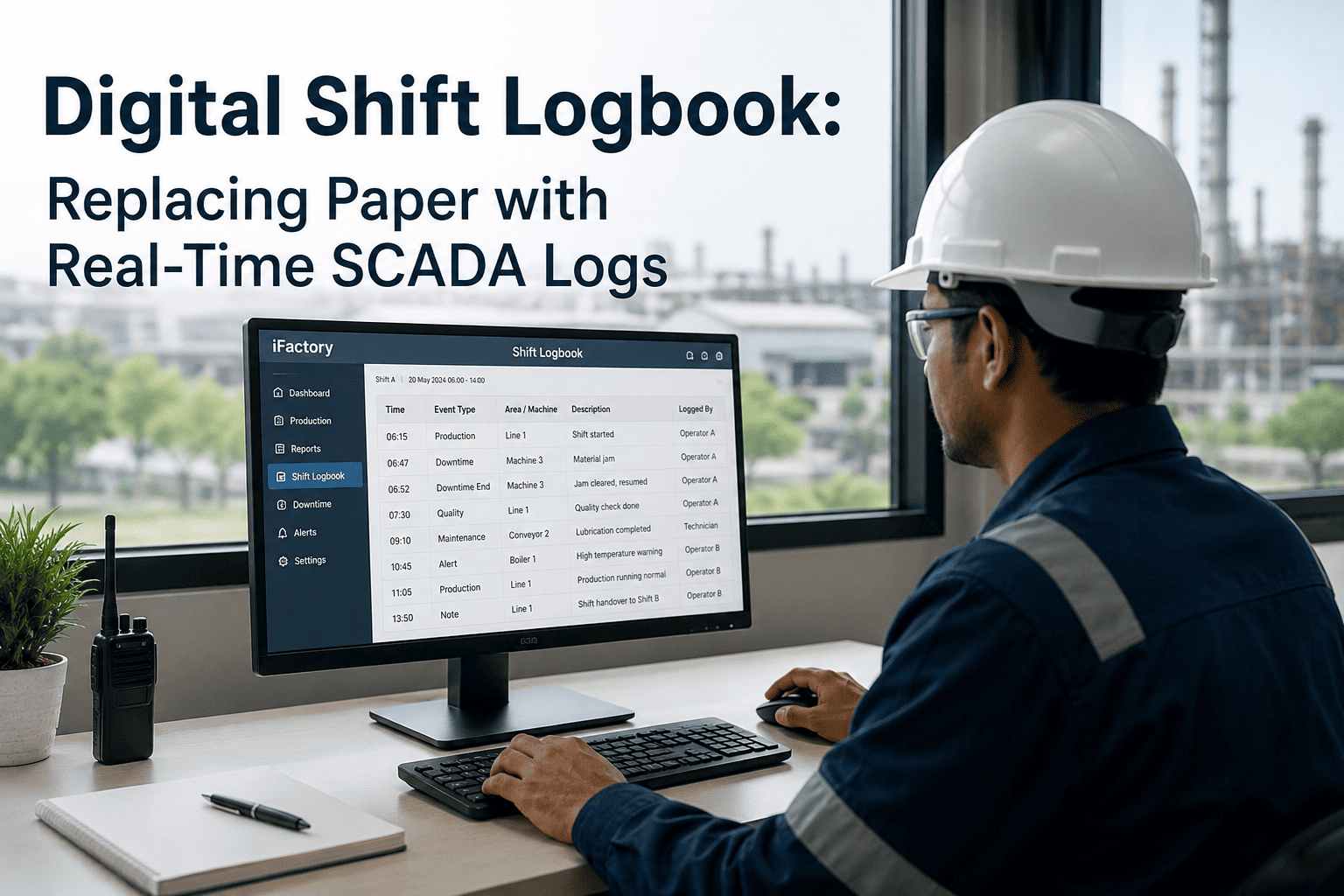
Real-time kiln data flows directly from SCADA/DCS—no manual copying. Incoming shift sees exact state at handover moment plus 24-hour trends.
Intelligent Alert Escalation
Flagged issues automatically notify supervisors and maintenance teams. Unacknowledged items escalate until resolved—nothing gets buried.
Complete Audit Trail
Every entry timestamped, every acknowledgment logged. For incident investigations, compliance audits, or performance reviews—full visibility.
Questions about implementation for your plant? Contact our technical team for a customized assessment.
From Paper to Digital in 4 Weeks
A practical transition that doesn't disrupt your operations.
Template Design
Configure kiln-specific checklists, define mandatory fields, set up parameter auto-population from your DCS
Team Training
Hands-on sessions for each shift—mobile app usage, entry creation, alert acknowledgment, handover protocols
Parallel Run
Digital system runs alongside paper for validation. Teams build confidence, edge cases identified and resolved
Full Deployment
Paper retired, digital becomes standard. Ongoing support ensures smooth operation across all shifts
Shift Handover Failures: What You Need to Know
40% of plant incidents occur during shift handovers—despite being only 5% of operational time
50% of operating errors happen within 30 minutes of shift start due to incomplete information transfer
Kiln downtime costs ₹15-25 lakh/hour—single handover failure can result in multi-crore losses
Digital logbooks reduce unplanned stops 37% through structured handovers and automatic escalation
4-week implementation—from paper to digital with parallel run, training, and full deployment
Complete audit trail supports compliance, root cause analysis, and continuous improvement
Stop Losing Production to Communication Gaps
See how iFactory digital logbooks transform shift handovers in your cement plant—structured checklists, auto-populated kiln data, and intelligent escalation.