In most plants, the safety data that reaches management is about things that already went wrong: injuries, first aid cases and the odd near miss. Behavior-based safety turns the attention to what people do every day, through short peer observations, honest conversations and fixes to the conditions that make risky shortcuts tempting. It only works when observations are quick, no-blame and acted on. This guide covers observation cards, coaching, analytics and how mobile software helps build a real reporting culture. Talk it through in a safety culture session.
Behavior-Based Safety Observation Software for Plants
Thirty-second observations on a phone, a two-minute coaching talk on the floor and analytics that point to the systems behind risky behavior, not the people.
- How a BBS observation program actually works
- Observation cards, coaching and no-blame rules
- Analytics that lead to fixes, not finger-pointing
What Behavior-Based Safety Is, and Is Not
A way to learn from everyday work, not a way to assign blame.
Behavior-based safety is a structured way for workers to observe each other at work, talk about what they saw and use the results to improve both habits and conditions. At its best it builds a reporting culture where people point out risks without fear. At its worst it becomes a tool for blaming individuals, and reporting dries up. OSHA's guidance on incident investigation makes the same point about blame: a fault-finding approach stops short of the real causes. Our safety culture team can review how your program is seen on the floor.
BBS done well
- Peers observing peers, with permission
- Safe behaviors recognised as well as risks
- Asking why the risky way made sense
- Fixing conditions, equipment and procedures
BBS done badly
- Supervisors writing up workers
- Only at-risk behavior recorded
- Names attached and used for discipline
- Quotas that produce fake cards
OSHA's recordkeeping rule at 29 CFR 1904.35 prohibits retaliating against employees for reporting work-related injuries or illnesses. A BBS program should build the same trust for observations. Keep cards free of names by default, and never link observations to discipline.
Designing the Observation Card
Short enough to use, specific enough to learn from.
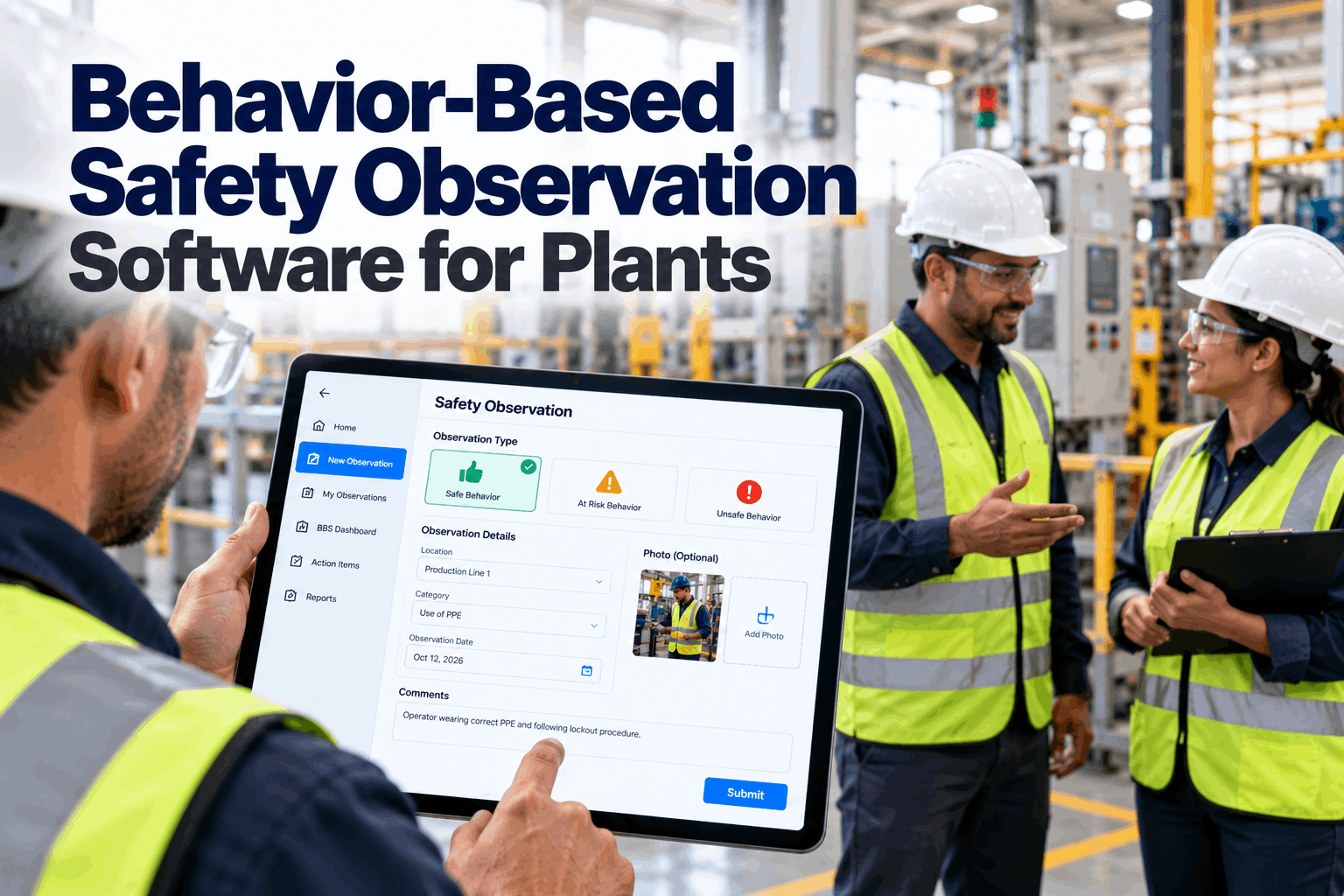
The observation card is the heart of the program. Keep it to a handful of categories that match the risks in your plant, with room for what was done safely, what was at risk and why. Review the categories once a year against your incident and near miss data, so the card keeps pointing at the hazards that actually hurt people in your plant. The interactive card below shows a typical layout. Tap safe or at risk for each category. Design your own card with our program designers.
The most useful field on the card is the reason behind an at-risk behavior. People rarely take shortcuts for no reason. Slow restarts, missing tools, poor layout and time pressure show up again and again, and those are things management can fix.
The Observation and Coaching Cycle
Observe, talk, record, fix, follow up.
Each observation is a short cycle. The observer watches a task for a few minutes, then has a brief, respectful conversation with the person, starting with what was done well. Only then is the observation logged. The whole cycle rarely takes more than five minutes, which is why it can fit into a normal shift without stopping production. The software takes care of the record and routes system issues to the right owner. If the worker would rather not be observed at that moment, the observer moves on. Respecting that choice is part of what makes people say yes the next time. See the cycle in a product demo.
Ask
Get the worker's permission to observe.
Observe
Watch the task for a few minutes.
Talk
Praise safe work, ask about risks.
Log
Thirty seconds on a phone, no names.
Fix
System issues routed to owners.
Coaching Conversations That Work
Two minutes of respect does more than a rule reminder.
Coaching is where behavior actually changes. A good conversation is short, specific and two-way. It recognises what went well, asks about the risk with curiosity and agrees one thing to try. Avoid lecturing or quoting rules, because people stop listening as soon as a talk feels like a reprimand. Train observers in a coaching workshop. Observers new to coaching often find the first few conversations awkward. Pairing them with an experienced observer for their first week builds confidence quickly.
Start positive
Name something specific that was done safely.
Ask, then listen
"I noticed you reached past the guard. What made that the easiest way?"
Agree one step
One safer way to do it, and any fix the worker needs.
Thank them
Close by thanking them for their time and honesty.
Turn Observations into Measurable Change
Quick mobile observations, coaching prompts and analytics that show which conditions drive risky behavior and whether fixes are working.
BBS Analytics That Lead to Fixes
Look for patterns in conditions, not in people.
Observation data becomes valuable when it is grouped and trended. The software shows the share of safe behavior by category, area and task over time, and groups the reasons people give for at-risk behavior. That is where the biggest improvements usually hide. Look at trends over months rather than weeks, because a single busy week or a new observer can swing the numbers. Compare areas only when they do similar work, and always read the comments behind a change before acting on it. Review your data with our analytics team.
If almost every card says everything was safe, the program may be under pressure to look good, or quotas may be producing quick cards with little thought. Ask about quality as well as quantity, and celebrate cards that led to a real fix.
From Observation to System Fix
The AI groups the reasons. People decide what to change.
When hundreds of cards mention similar reasons in different words, the AI groups them and shows the pattern to safety leaders. The exchange below shows how a supervisor might use it. Questions on setup go to our solutions team.
Rolling Out a BBS Program Step by Step
Start small, earn trust, then grow.
Programs that launch plant-wide on day one often stall, because people are unsure what the cards are for and whether they are safe to fill in honestly. A phased rollout lets one area prove the approach and become its own best advert. Plan your rollout in a planning call.
Design with workers
A small team of workers and supervisors chooses the categories and writes the card in plain language.
Train observers
Volunteers learn to observe, coach and log. Leaders explain the no-blame rules in person.
Pilot one area
Run for a few months, fix the first system issues quickly and share the results.
Expand
Add areas one by one, using pilot observers as coaches for new teams.
The Role of Supervisors and Leaders
Workers watch what leaders do with the cards.
The fastest way to kill a BBS program is for leaders to ignore the system issues it raises. The fastest way to build one is to fix a few of them quickly and say so publicly. Supervisors should observe too, but as coaches, not inspectors. Plant leaders should review the reasons behind at-risk behavior every month and own the fixes that need money or engineering time. Talk through leadership routines with our support team.
What leaders do
- Review reasons and system issues monthly
- Fund and own the bigger fixes
- Thank teams for honest cards
- Share what changed because of cards
What leaders avoid
- Asking who was on a card
- Judging areas only by percent safe
- Letting system issues sit unanswered
- Treating BBS as a worker-only program
BBS Program Mistakes to Avoid
Most programs fail on trust, not on tools.
These are the patterns that most often turn a promising program into a paperwork exercise. A short program review can spot them early.
What works
- No names and no discipline from cards
- Workers trained and leading observations
- System issues fixed and shared back
- Quality of cards valued over count
What fails
- Using cards to find who to blame
- Card quotas tied to bonuses
- Reasons never asked or never read
- Fixes promised but not delivered
How iFactory Runs Behavior-Based Safety
Behavior-Based Safety Observations, on your own network.
iFactory provides quick mobile and voice observations, coaching prompts, no-name records by default, AI grouping of reasons and analytics by category, area and task. It runs on an on-prem AI server inside your plant, so observation data stays under your control. Fit questions go to our solutions team.
Quick observations
Phone or voice, about thirty seconds.
Coaching prompts
Simple guides for the floor conversation.
No-name records
Observations about tasks, not people.
Reason grouping
AI groups why at-risk behavior happened.
BBS analytics
Percent safe, trends and participation.
System fixes
Issues routed to owners and tracked.
Results depend on your program design, training and leadership follow-through. We measure participation, percent safe and system fixes on your own data during the pilot, rather than promising a general figure.
Turnkey AI: Delivered, Connected and Live in 6–12 Weeks
You do not build this. It arrives ready.
iFactory ships as a pre-configured NVIDIA AI server with the software pre-loaded, racked and ready. Rack it, plug in power and Ethernet, and the AI is live on your network. Our team handles cabling, network setup, PLC, SCADA, DCS and CMMS integration, area and roster links, operator training and 24×7 remote monitoring. Data stays on your network. For a scope matched to your plant, request a turnkey quote.
Ship, network and data
Server installed. Areas, tasks, roles and observation categories set up.
Model training and pilot
Observers trained. Cards and coaching prompts tuned with one area.
Go-live and training
Program live across the plant. Analytics shared with teams. 24×7 monitoring begins.
Frequently Asked Questions
What is behavior-based safety software?
It is software that lets workers log quick safety observations, supports coaching conversations and analyses the data to find patterns and the conditions behind risky behavior.
Should observations include names?
Generally no. No-name observations build trust and keep the focus on tasks and conditions rather than individuals.
How long should an observation take?
A few minutes to watch and talk, and about thirty seconds to log on a phone or by voice.
Who should do observations?
Ideally workers observing peers, with supervisors and managers also taking part. Broad participation across shifts and roles gives better data and builds ownership.
Should we set observation quotas?
Use targets carefully. Quotas tied to rewards often lead to quick cards with little value. Track quality and the fixes that come from cards as well as counts.
How does it lead to fewer incidents?
By coaching safer habits and fixing the conditions that make risky shortcuts tempting, before those shortcuts lead to injuries.
Can observations be logged by voice?
Yes. Observers can speak a short observation on a handheld or headset, and the system turns it into a structured card with the category, area and reason filled in for review.
Where is observation data stored?
On the on-prem server inside your plant, under your own access controls.
How do we start?
Start with one area and a small group of trained observers. A 6-week pilot sets up the card, coaching prompts and analytics. To plan it, contact our team.
Build a Reporting Culture That Lasts
In thirty minutes we review your current observation program or card, and sketch a no-blame mobile program for one area. You keep the sketch either way.
- 1Your current observation card
- 2Last quarter's observation counts
- 3Top incident types in the plant
- 4How observers are trained today
- 5One fix that came from an observation