Factory Lighting Design for AI Vision Inspection in Greenfield Manufacturing Facilities
By Riley Quinn on June 10, 2026
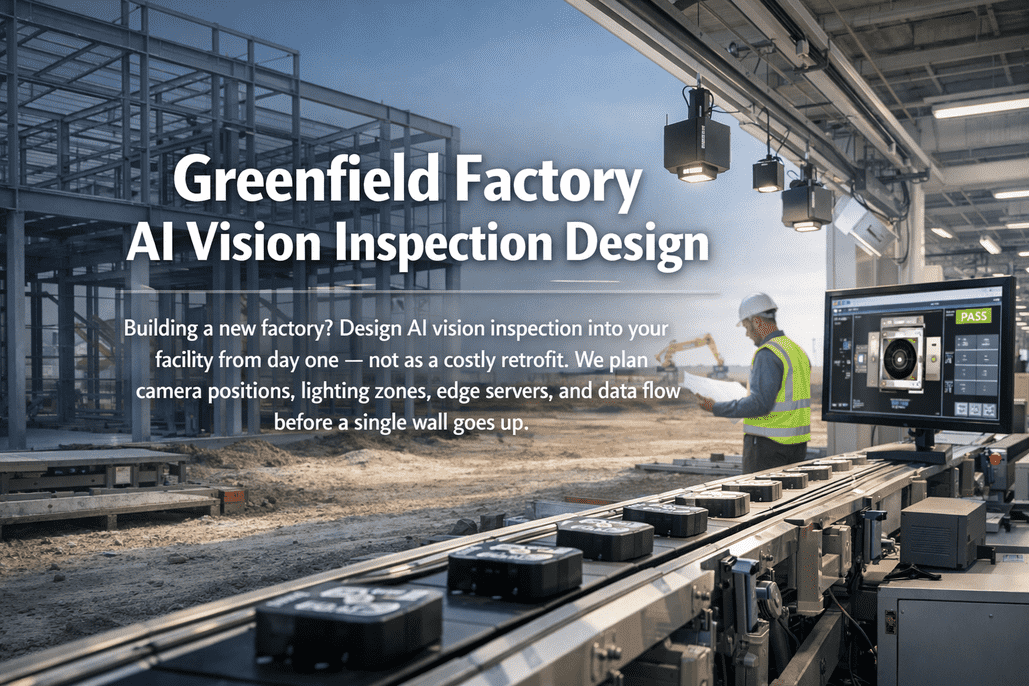
Lighting is the single most underestimated factor in AI vision inspection—and the single most expensive to fix after construction. A $500,000 vision system with poor lighting produces worse results than a $50,000 system with lighting designed specifically for its inspection task. In greenfield manufacturing, you have one chance to design ceiling heights, electrical rough-ins, ambient light controls, and dedicated inspection lighting zones into the building before concrete is poured. This guide covers the six lighting techniques, spectral selection for different materials, shadow elimination strategies, and the architectural decisions that make AI vision succeed or fail on the factory floor. Book a demo to see how iFactory designs lighting-optimized inspection zones into greenfield factory layouts.
Vision Lighting Design
Factory Lighting for AI Vision Inspection
The lighting you design into the building determines whether AI vision succeeds or fails
AI vision algorithms can only analyze what the camera captures—and the camera can only capture what lighting reveals. Conventional inspection misses up to 30% of defects because lighting variability creates inconsistent images that confuse even advanced AI models. Getting lighting right in greenfield design eliminates these failure modes permanently.
30%
defects missed from poor lighting
Lighting Quality > Camera Quality
A $500K vision system with inconsistent lighting produces worse results than a $50K system with purpose-designed illumination. Image quality is determined by lighting first, optics second, and the AI algorithm third. Greenfield design is the one opportunity to get the foundation right.
Ambient
light is the enemy
Uncontrolled Light Destroys Consistency
Skylights, windows, overhead fluorescents, and seasonal sunlight angle changes all create variable ambient conditions that shift image quality throughout the day. In greenfield design, you specify inspection zones with controlled lighting enclosures, light-blocking curtains, and dedicated electrical circuits that eliminate ambient interference.
Strobe
freezes motion blur
High-Speed Lines Need Strobe Lighting
At 600+ units per minute, continuous lighting creates motion blur that degrades AI detection. Strobe lighting synchronized to camera exposure freezes the image, delivering sharp captures at any line speed. Greenfield electrical design must specify strobe controller power, trigger signal routing, and EMI shielding from day one.
Designing a greenfield facility with AI vision inspection? Book a lighting design consultation to get vision-optimized zones designed into your floor plan.
Lighting Techniques Mapped to Inspection Types
Each lighting technique reveals different defect characteristics. Choosing the wrong technique for your inspection task is like shining a flashlight directly at a mirror—you'll see the light source, not the surface. Here's which technique works for each inspection type in food manufacturing.
Technique
How It Works
Best For
Front Light (Bright Field)
Light and camera on same side — highlights surface color, print, and texture
Label verification, date code reading, color sorting, surface contamination
Back Light
Light behind the object — camera sees silhouette and edges
Fill level detection, dimensional measurement, foreign object detection, presence/absence
Ring Light
Circular light around the camera lens — even, shadow-free illumination
Close-up inspection, seal integrity, barcode reading, small component verification
Dome Light
Diffused light from all angles — eliminates glare on curved surfaces
Glossy packaging, canned goods, curved bottle inspection, metallic film pouches
Bar Light
Linear LED arrays — uniform coverage across wide inspection areas
Low-angle light that illuminates only raised features and surface irregularities
Scratch detection, crack identification, embossed text reading, surface texture analysis
Design Vision Lighting Into Your Greenfield Layout
iFactory's greenfield consultants specify lighting techniques, inspection zone enclosures, and electrical rough-ins for AI vision systems—designed into the building before construction begins.
LED Spectral Selection: Which Color Reveals Which Defect
Different LED wavelengths interact with materials differently—a defect invisible under white light may glow under UV or disappear under red. Selecting the right spectral band for each inspection task is a design decision that must be made before electrical rough-ins are installed.
Red (620–750nm)
Reduces glare on shiny surfaces and enhances edge detection. Suppresses surface texture to reveal dimensional features. Ideal for printed text verification and edge measurement on metallic packaging.
Blue (450–495nm)
Brings out fine surface details on dark objects. Higher contrast for small defects, scratches, and surface contamination. Best for dark-colored food products and detecting subtle surface anomalies.
Green (495–570nm)
Balanced contrast across most materials. Matches peak sensitivity of many industrial camera sensors. Good general-purpose wavelength when no specific material challenge exists.
White (Broadband)
Required for true color inspection—label color verification, produce grading, surface discoloration detection. Specify high-CRI LEDs (90+) for accurate color reproduction that matches human perception.
UV (365–405nm)
Causes fluorescence in contaminants invisible under normal light. Detects residual cleaning chemicals, foreign biological material, label adhesive defects, and security markings. Essential for food safety inspection.
Infrared (780nm+)
Penetrates packaging to inspect contents without opening. Detects moisture levels, fat content, and chemical composition. Enables inspection through translucent films and identifies heat-related process issues.
Need help selecting the right spectral bands for your products? Schedule a vision lighting demo — we'll recommend the wavelengths that detect your specific defect types.
Expert Perspective
"Lighting is the foundation of every machine vision application. When lighting is designed well, AI vision becomes far more accurate and reliable. When it's an afterthought, even the most advanced algorithms can't compensate for inconsistent images. The greenfield moment is the only time you can design lighting infrastructure into the building structure itself."
— Machine Vision Lighting Best Practice, 2026
30%
of defects missed due to poor lighting design
99.5%+
AI detection accuracy with purpose-designed lighting
10x
cost to retrofit vision lighting vs. designing it in
Don't let lighting be your vision system's weakest link. Request a consultation and get lighting-optimized inspection zones in your greenfield layout.
Conclusion: Design the Light Before You Pour the Concrete
Your AI vision system will only ever be as good as the lighting that feeds it. Ceiling heights determine camera mounting distances. Electrical rough-ins determine where strobe controllers can be installed. Ambient light controls determine whether your vision system works consistently at 2 PM in summer and 6 AM in winter. Window placement, skylight design, zone enclosures, and dedicated power circuits for vision lighting are all decisions that become permanent on the day concrete is poured. Greenfield is the one moment when you can design lighting infrastructure into the building itself—not bolt it on afterward at 10x the cost and half the effectiveness.
Build Vision-Ready Lighting Into Your Factory
iFactory's greenfield consultants design inspection zones with purpose-selected lighting techniques, spectral bands, and ambient controls—integrated into the building before construction begins.
Why is lighting the most important factor in AI vision inspection?
AI algorithms can only analyze what the camera captures, and the camera can only capture what lighting reveals. Poor lighting creates inconsistent images—variable shadows, glare, and contrast shifts—that cause even advanced AI to miss defects or generate false positives. Research shows conventional inspection misses up to 30% of defects from lighting variability alone. Purpose-designed lighting eliminates this variability, enabling 99.5%+ detection accuracy. Book a consultation to see lighting design applied to your specific inspection tasks.
What lighting technique should I use for food packaging inspection?
It depends on the inspection task. Use front light (bright field) for label verification and date code reading. Use back light for fill level detection and foreign object identification. Use dome light for glossy packaging and curved surfaces like cans and bottles. Use dark field for scratch and crack detection. Most food packaging lines need multiple techniques at different inspection stations—which is why designing these zones into the greenfield layout is critical.
What LED color should I use for machine vision inspection?
Red LEDs reduce glare on metallic surfaces and enhance edge detection. Blue LEDs bring out fine details on dark products. Green LEDs provide balanced contrast across most materials. White (high-CRI) LEDs are required for true color inspection. UV LEDs detect contaminants invisible under normal light. Infrared LEDs penetrate packaging to inspect contents. The right choice depends on your product material, surface finish, and the specific defect type you need to detect.
How do I prevent ambient light from interfering with vision inspection?
In greenfield design, specify inspection zones with light-blocking enclosures, opaque curtains or tunnels around the inspection point, and no skylights or windows above vision stations. Use strobe lighting synchronized to camera exposure—the strobe overpowers ambient light during the microsecond capture window. Design dedicated electrical circuits for vision lighting separate from general factory illumination. These architectural decisions must be made before construction.
Why is strobe lighting needed for high-speed production lines?
At 600+ units per minute, continuous lighting creates motion blur that degrades AI detection accuracy. Strobe lighting fires a brief, intense pulse synchronized to the camera exposure—typically 10–100 microseconds—that freezes the product image regardless of line speed. This produces sharp, blur-free captures that AI can analyze accurately. Greenfield electrical design must specify strobe controller power, trigger signal routing, and EMI shielding to prevent interference with nearby equipment.