Structural flaws discovered after the concrete cures are 10x more expensive to fix than catching them during the pour. A missed weld inspection on a mezzanine column is a safety liability that persists for the life of the building. Greenfield factory construction has six critical quality control phases—and the inspection points within each phase have specific windows that close permanently as construction progresses. This checklist maps every QC checkpoint across all six phases so nothing gets buried behind drywall, concrete, or insulation before it's verified. Book a demo to see how iFactory's greenfield consultants manage construction quality digitally from groundbreaking through commissioning.
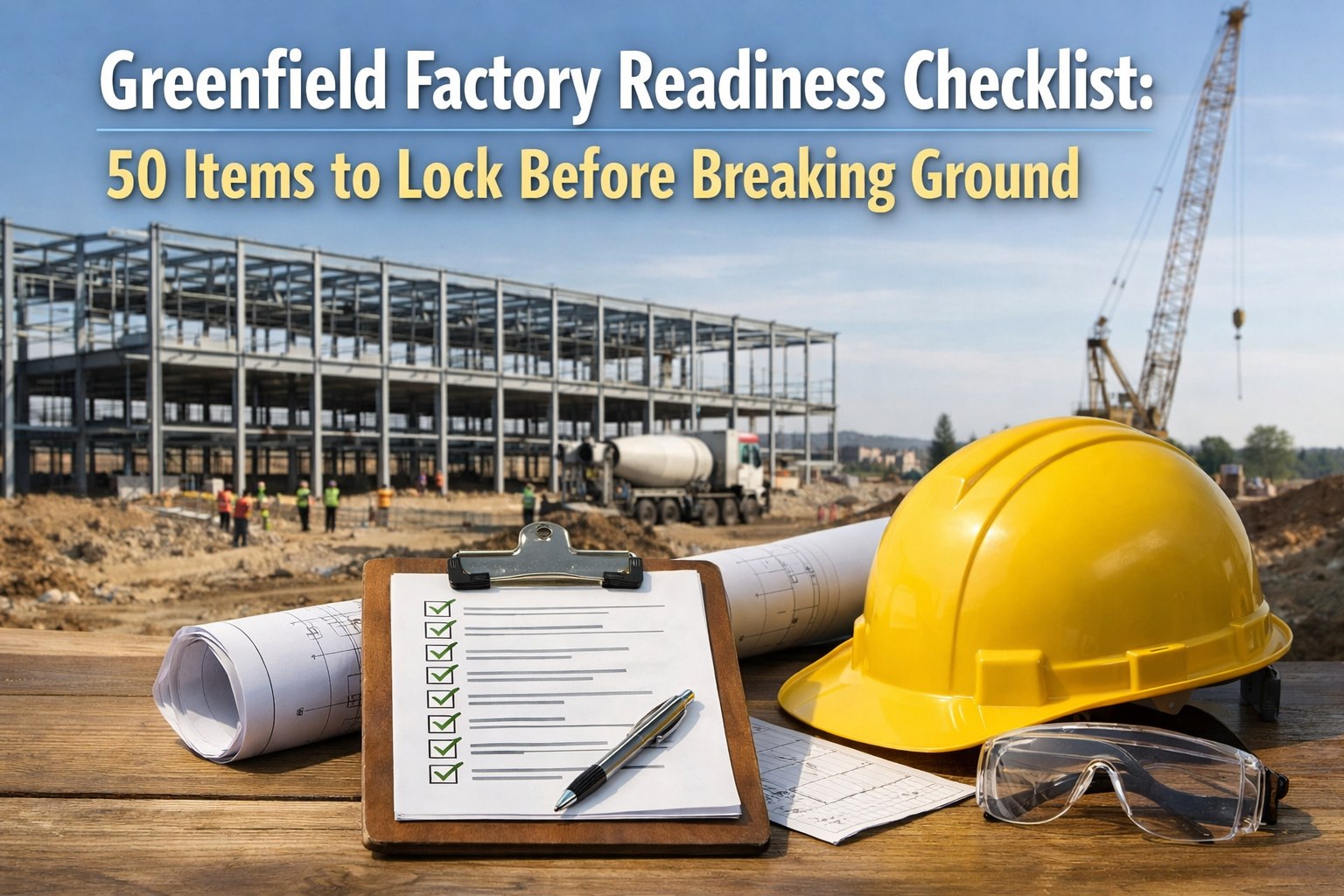
Construction QC Checklist
Factory Construction Quality Control
Six phases. Every critical inspection point. Zero items buried unchecked.
Phase 1 — Pre-Construction Documentation
The foundation of construction QC isn't a physical inspection — it's a document audit before a single shovelful of dirt is moved. Missing permits, outdated drawings, or unverified subcontractor credentials discovered mid-build create delays that cascade through every subsequent phase.
All permits obtained and posted on-site
Architectural and engineering drawings reviewed and approved
Geotechnical report reviewed — soil bearing capacity confirmed
All subcontractor COIs, licenses, and certifications verified
Quality control plan written with hold points defined per phase
Material submittal schedule established with approval workflow
Phase 2–3 — Foundation and Structural
Structural inspections are the project's point of no return. Flaws in the foundation or steel frame are defects that compromise the entire building — they must be caught before any further progress. Once concrete cures or steel is enclosed, the window closes permanently.
Excavation depth and dimensions verified
Rebar size, spacing, and cover depth confirmed per specs
Anchor bolt placement and alignment checked
Concrete slump test at pour — workability verified
Compression cylinders cast for strength testing
Post-cure inspection: cracking, honeycombing, surface defects
Steel members verified — correct size, grade, and placement
All bolted connections torque-verified per AISC specs
All welds inspected — NDT (ultrasonic/magnetic particle) on critical joints
Column plumb and beam alignment within tolerance
Mezzanine and elevated platform load ratings verified
Roofing trusses and load-bearing structures per design
Need QC oversight for your greenfield build? Book a construction QC planning session — we'll define hold points and inspection protocols for every phase.
Phase 4 — MEP Systems (Before Enclosure)
The operational heart of your factory lies within the walls and ceilings: mechanical, electrical, and plumbing systems. Every MEP inspection must happen after installation but before insulation, drywall, or ceiling panels enclose them permanently.
Conduit routing per design
Wire gauges match panel schedules
Grounding and bonding verified
Breaker settings documented
Insulation resistance tested
Ductwork sealed and insulated
Damper locations per drawings
Leak test on duct connections
Equipment pads level and vibration-isolated
Pipe slopes and supports verified
Pressure and leak tests witnessed
Fire sprinkler coverage per NFPA
Backflow prevention installed
All MEP approvals documented
Digitize Your Construction QC Process
iFactory's greenfield consultants manage construction quality digitally — automated hold-point tracking, photo-verified inspections, and real-time deficiency reporting from groundbreaking through commissioning.
Phase 5–6 — Equipment Installation and Commissioning
Equipment installation QC ensures every machine sits on the correct foundation, connects to the right utilities, and aligns to specification. Commissioning verifies the entire integrated system — not just individual components — works as designed under real operating conditions.
Foundation pads level, grouted, and cured to spec
Equipment aligned per OEM tolerances
Utility connections (power, compressed air, water, gas) verified
Vibration isolation and seismic anchoring confirmed
Safety guards, e-stops, and lockout points installed
OEM manuals, warranties, and spare parts cataloged
All systems integration tested end-to-end
Fire and life safety systems fully tested (alarm, sprinkler, suppression)
HVAC balanced and airflow verified per design
PLC/SCADA communications tested across all protocols
Punch list items resolved and verified closed
As-built drawings, O&M manuals, and certificates compiled
Want digital commissioning readiness tracking for your project? Schedule a commissioning QC demo with our greenfield team.
Expert Perspective
"Structural inspections are a project's point of no return. Flaws in the foundation or structural frame are foundational defects that compromise the entire building's safety and longevity. They must be identified and corrected before any further progress is made. Documentation is paramount — meticulous records create an undeniable project history that's your proof of compliance and your reference for future maintenance."
— Construction Quality Control Best Practice, 2025
10x
more expensive to fix structural flaws after concrete cures
6
critical QC phases in greenfield factory construction
35%
of rework caused by missed inspection hold points
Ready to run construction QC with zero missed checkpoints? Request a consultation and get digital QC tracking for your greenfield project.
Conclusion: Inspect Now or Pay Later
Every checklist item above has a window — and every window closes permanently as construction progresses. Rebar can't be inspected after the pour. Welds can't be tested after the fireproofing. Ductwork can't be verified after the ceiling goes up. The cost of catching problems during construction is measured in hours and materials. The cost of catching them after is measured in demolition, rework, and schedule slippage. This checklist exists to make sure nothing gets buried unchecked.
Never Miss a Construction QC Checkpoint
iFactory's greenfield consultants manage construction quality with digital hold-point tracking, photo-verified inspections, and automated deficiency workflows from groundbreaking through commissioning.
Frequently Asked Questions
What are the most critical inspection points in factory construction?
The most critical are structural hold points: rebar placement before concrete pour, weld inspections on load-bearing connections, bolt torque verification on steel frame, and anchor bolt alignment. These are "point of no return" inspections — once concrete cures or steel is enclosed, flaws become permanent structural deficiencies.
Book a consultation to define hold points for your project.
When should MEP inspections happen during construction?
MEP inspections must happen after systems are installed but before insulation, drywall, or ceiling panels enclose them. Once enclosed, ductwork sealing, pipe slopes, conduit routing, and connection quality become invisible. Schedule MEP rough-in inspections as a mandatory hold point before any enclosure work begins.
What concrete tests are required during factory construction?
During the pour: slump tests to verify workability and compression cylinders cast for strength testing (ASTM C39 standard). These confirm the concrete mix meets the required PSI strength specified by the engineer. After curing: visual inspection for cracking, honeycombing, and surface defects, plus survey verification that anchor bolts and embeds are correctly located.
What welding inspections are needed for structural steel?
All structural welds require visual inspection at minimum. Critical load-bearing joints require NDT (non-destructive testing) — typically ultrasonic testing or magnetic particle inspection per AWS D1.1 and AISC standards. Welders must hold current certifications for the specific weld types and positions required. All inspection reports must be documented and retained.
What does commissioning readiness mean for a greenfield factory?
Commissioning readiness means all individual systems (electrical, mechanical, plumbing, fire safety, controls) have been installed, tested independently, and are ready for integrated systems testing. This includes: all punch list items resolved, fire and life safety systems fully tested, PLC/SCADA communications verified across all protocols, HVAC balanced, and as-built documentation compiled. Only then should equipment be energized for the first time.