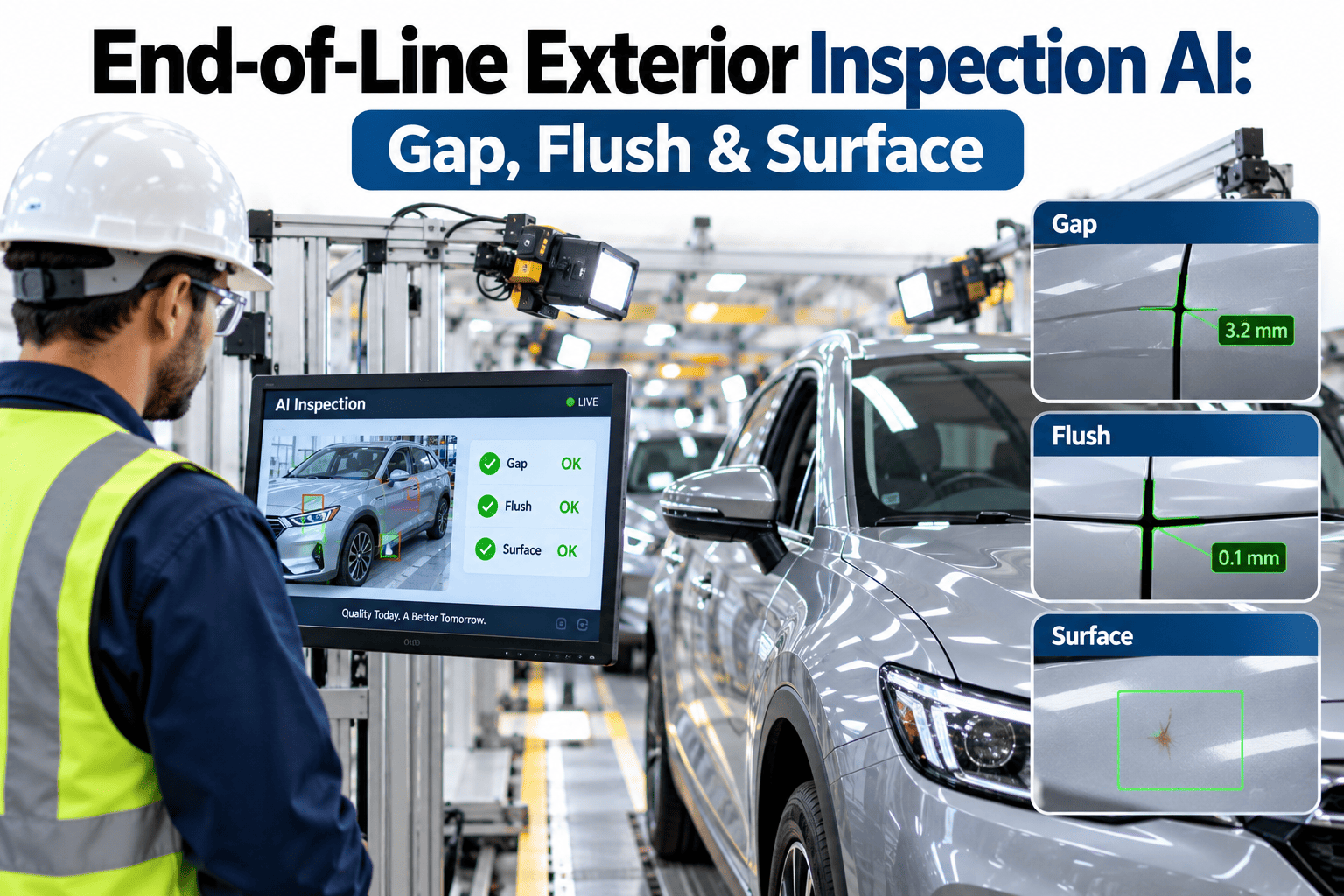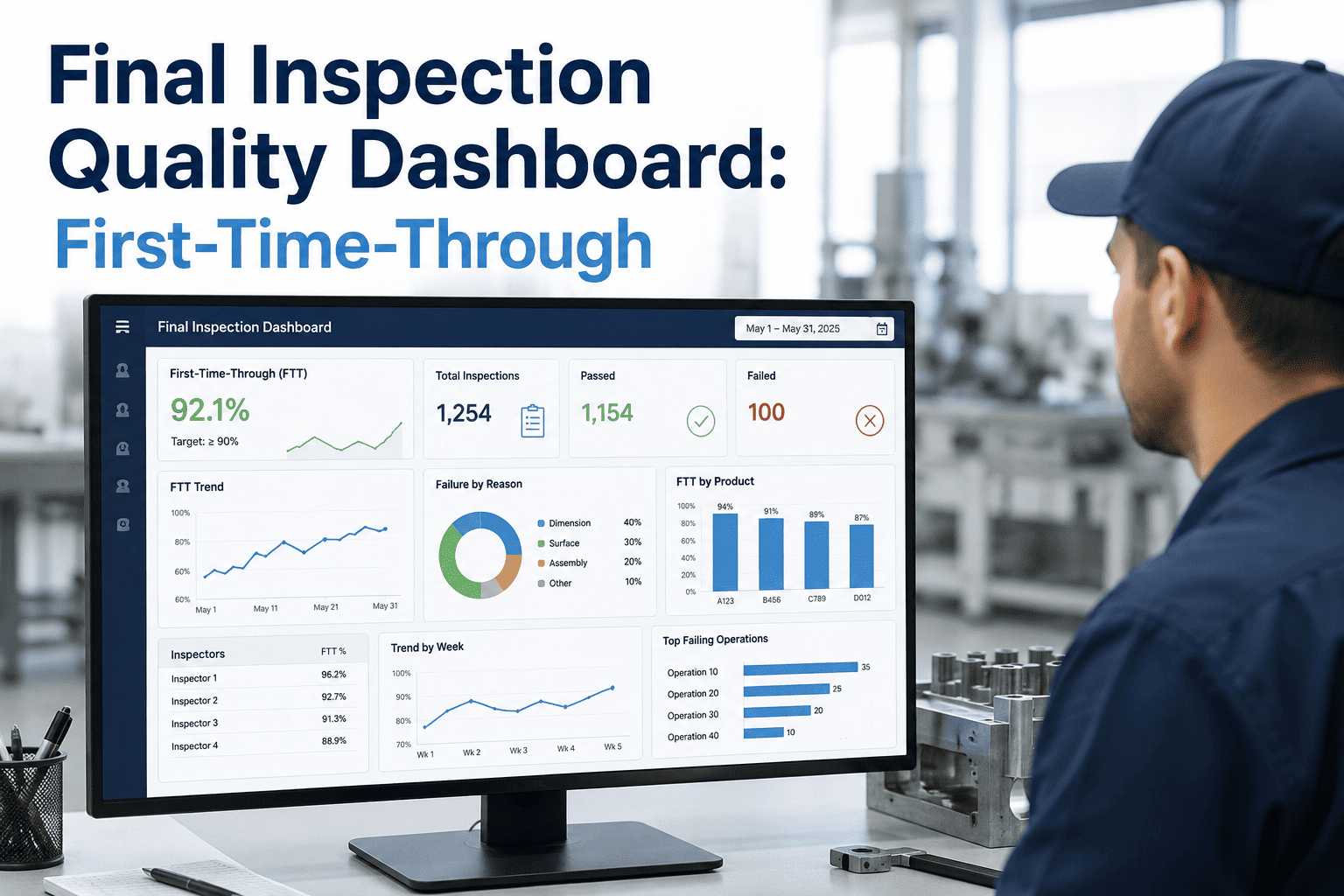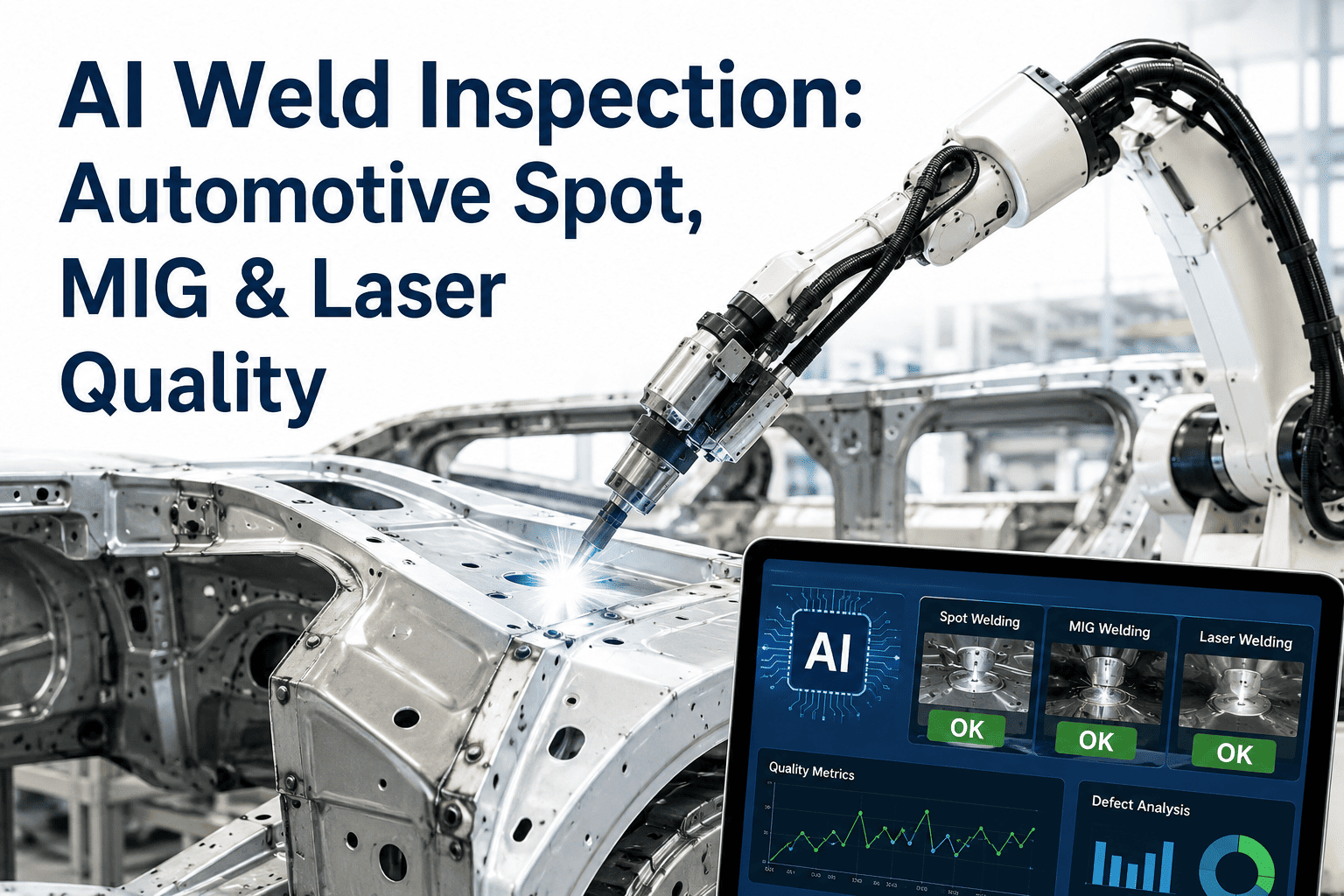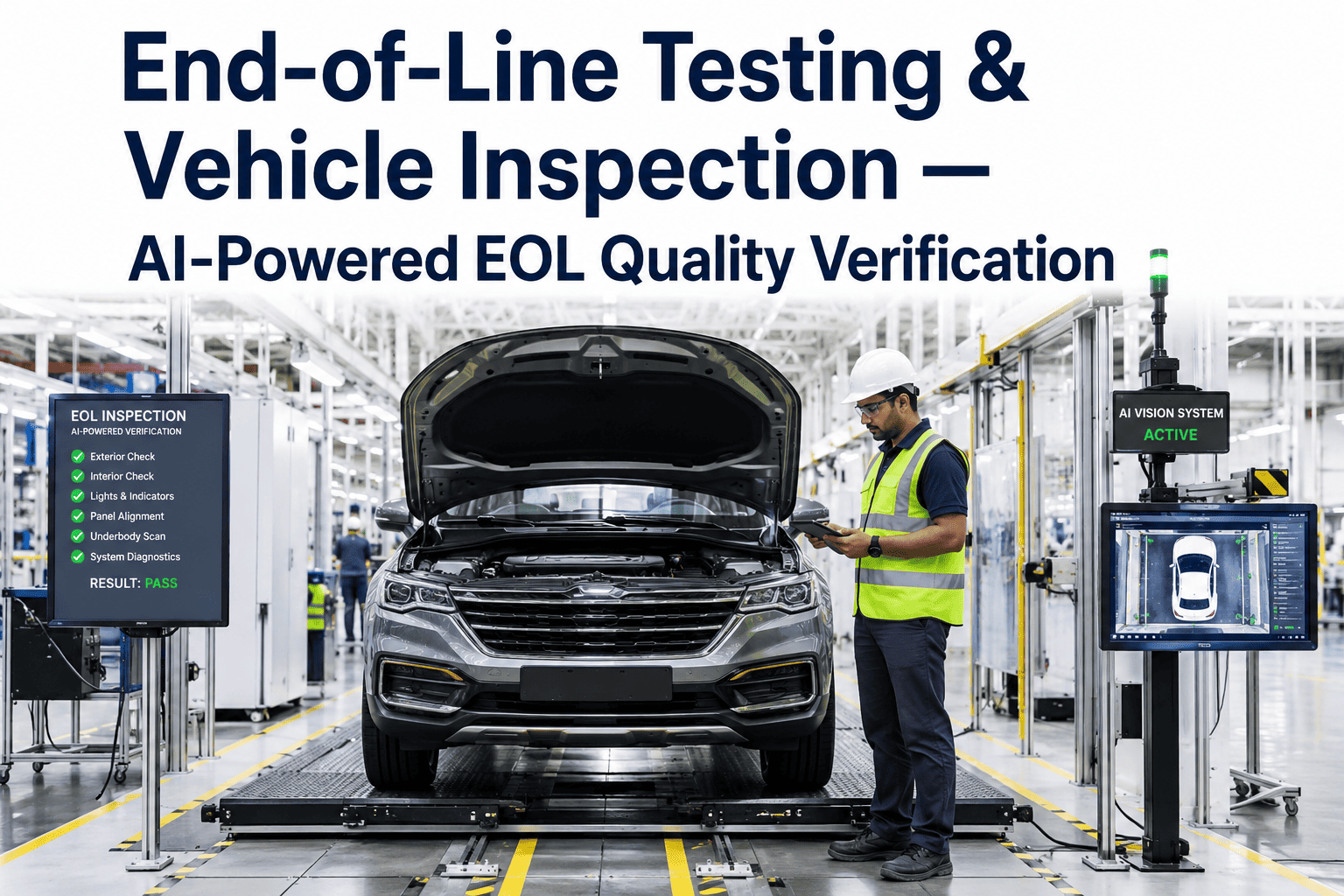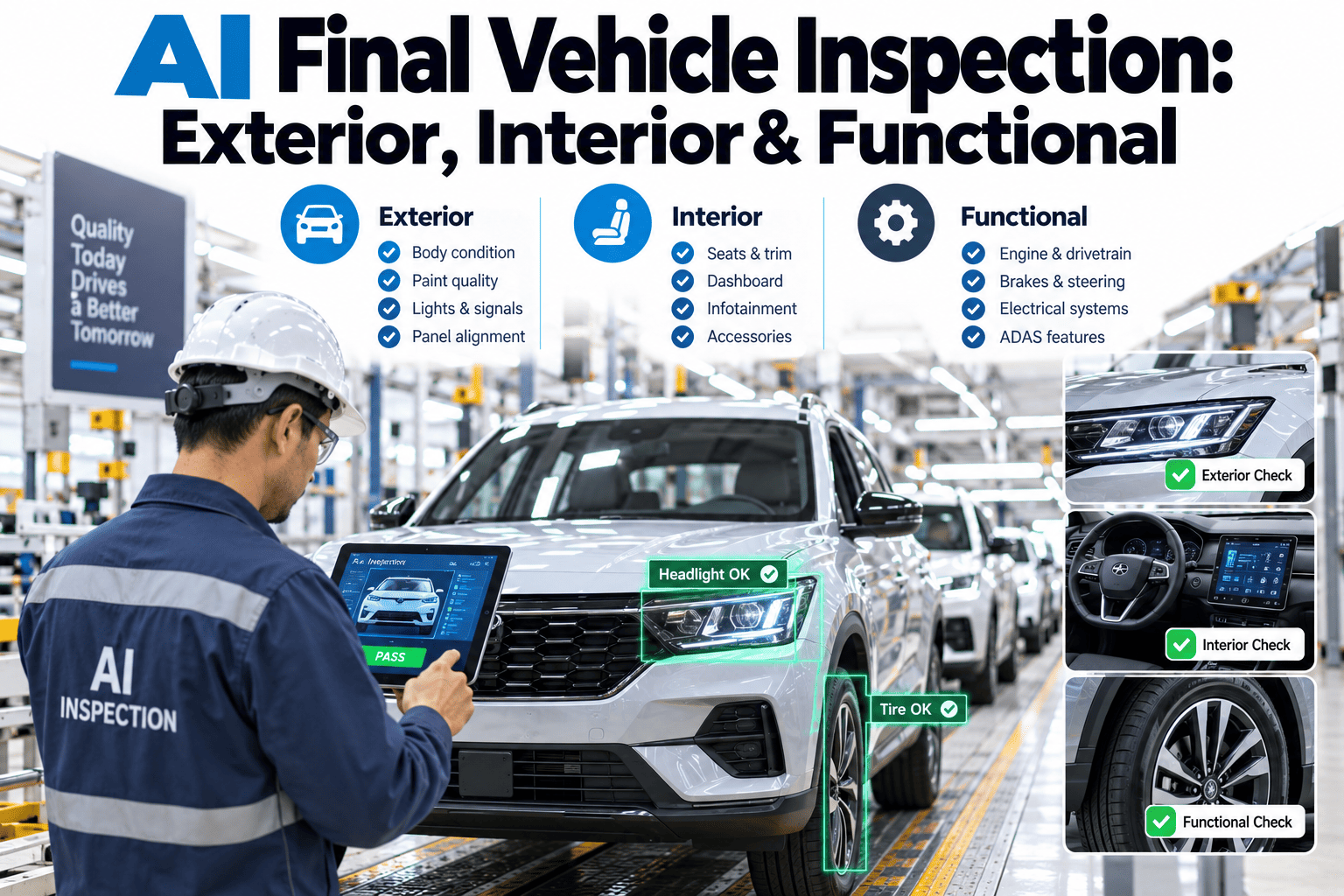
Every vehicle rolling toward the final gate of an assembly plant carries the accumulated result of thousands of upstream processes, and the final inspection station is the last checkpoint before that vehicle becomes someone's daily driver. A human inspector, however experienced, checks a sample of panels, glances over the interior, and runs through a limited set of functional tests within the few minutes allotted per vehicle on a moving line — a process that inevitably misses defects a sustained, systematic check would catch. AI final vehicle inspection covering exterior, interior, and functional checks together closes that gap by applying consistent, full-coverage verification across all three domains on every vehicle, not a sample. Manufacturers evaluating this for their own end-of-line process can start with a conversation with iFactory support.
One Vehicle, Three Inspection Domains, Zero Gaps Before It Leaves the Plant
Exterior surface, interior assembly, and functional verification checked comprehensively at end-of-line, on every vehicle rather than a sample.
Why Final Inspection Needs to Cover Three Domains, Not One
A vehicle can pass a flawless exterior inspection and still leave the plant with an interior trim gap a customer notices the first time they sit down, or a functional defect in a warning light circuit that only manifests once the vehicle is delivered and driven under real conditions. Treating exterior, interior, and functional inspection as three separate, disconnected checks — often performed by different stations or different inspectors with different priorities — creates exactly the kind of gap where a defect in one domain slips through because no single check was actually responsible for catching it.
A unified final inspection approach treats these three domains as complementary parts of one comprehensive check on every vehicle, correlating findings across domains where relevant. A functional defect traced to a specific interior assembly step, for instance, is far easier to diagnose and correct at the source when interior and functional inspection data are connected rather than siloed in separate systems reviewed by separate teams with no shared visibility into the full picture of what happened to that specific vehicle.
What Gets Checked in Each Domain
Each of the three domains covers a distinct category of defect, verified through a different combination of AI vision, sensor, and functional test methods appropriate to what is actually being checked.
Surface, Gap, and Paint Quality
Panel gap and flush measurement, paint defect detection including orange peel and inclusions, trim alignment, and badge or emblem placement verified across every exterior surface.
Assembly, Fit, and Finish
Dashboard and console panel fit, seat trim and stitching quality, seatbelt and airbag component presence, and switch and control panel alignment checked throughout the cabin.
Systems and Controls Verification
Headlight, taillight, and turn signal function, infotainment and dashboard display operation, window and door lock actuation, and warning light and sensor system self-check confirmed operational.
See All Three Domains Inspected on One Vehicle
Book a 30-minute walkthrough and watch exterior, interior, and functional inspection run together on a live vehicle at end-of-line.
Method and Detection Focus by Domain
Each domain relies on a different primary detection method suited to the physical nature of what is being checked, and understanding this mapping helps plants plan the right combination of hardware at each station.
| Domain | Primary Method | Typical Defect Caught | Customer Impact if Missed |
|---|---|---|---|
| Exterior | High-resolution AI vision, structured light | Gap variance, paint defect, misaligned trim | Visible cosmetic complaint, resale value impact |
| Interior | AI vision, tactile fit verification | Panel gap, loose trim, stitching defect | Perceived quality complaint, rattle or squeak over time |
| Functional | Automated system self-test, sensor verification | Light circuit fault, control non-response, sensor error | Safety concern, warranty claim, possible field failure |
A Composite Scenario: The Trim Defect That Traced Back to a Functional Fault
An assembly plant running unified final inspection flagged an interior dashboard trim panel with a slightly irregular fit on a specific vehicle, a defect that on its own would typically be logged as a minor cosmetic finding and routed for a quick rework touch-up before shipment. Because the same vehicle's functional inspection data was connected to the interior finding, the team noticed the affected vehicle had also logged a warning light self-test anomaly in the same dashboard zone.
Investigation revealed that the trim panel fit issue and the warning light fault shared a common cause — a connector clip behind the dashboard panel that had not fully seated during assembly, simultaneously creating a slight gap in the trim fit and an intermittent connection in the warning light circuit behind it. Catching both symptoms together, rather than treating the trim issue as purely cosmetic and the functional fault as a separate unrelated finding, let the team correct the actual assembly issue at its source rather than simply patching the visible cosmetic symptom and shipping a vehicle with a latent electrical fault.
Common Mistakes in Final Inspection Program Design
Treating the Three Domains as Fully Separate Checks
Siloed exterior, interior, and functional inspection data misses the kind of shared root cause connection that only becomes visible when findings across domains are correlated on the same vehicle.
Relying on Sampling for Functional Checks
A functional defect, particularly one tied to safety systems like lighting or warning indicators, carries enough downstream risk that full-coverage verification is worth the investment over a sampling approach.
Under-Resourcing Interior Inspection Relative to Exterior
Exterior defects are more visible and often receive more inspection attention by default, but interior fit and finish issues drive a meaningful share of customer perceived-quality complaints and deserve comparable rigor.
Not Routing Findings Back to the Responsible Upstream Station
A final inspection finding that is corrected only at the end of the line without feeding back to the upstream assembly station responsible tends to recur on the next vehicle rather than being resolved at its source.
Is Your Final Inspection Process Ready for This Integration
You currently run exterior, interior, and functional checks as separate, disconnected stations
This is the most common starting point, and connecting the data across these existing stations is often a faster path to value than replacing the underlying inspection hardware itself.
You have a process for routing a final-inspection finding back to the upstream station responsible
Where this feedback loop does not exist yet, findings tend to get corrected repeatedly at the end of the line rather than resolved permanently at the source.
You know your current inspection coverage rate across all three domains, not just exterior
Many plants have strong exterior inspection coverage but a much lower sampling rate for interior and functional checks, which is worth quantifying honestly before planning an upgrade.
Calibrating Standards Across Exterior, Interior, and Functional Domains
One of the more subtle challenges in unifying three inspection domains is ensuring the acceptance threshold for each is calibrated consistently with what actually matters to a customer, rather than each domain inheriting whatever threshold happened to be convenient to implement technically. A gap measurement tolerance on an exterior panel that is technically achievable to detect at very fine precision does not automatically mean that precision level reflects a genuine customer-perceivable difference, and setting thresholds too tightly can generate a flood of findings that do not actually correspond to a quality issue a customer would ever notice.
The most effective calibration approach starts from documented customer complaint data and warranty claim history, working backward to identify what magnitude of defect in each domain has historically correlated with a real customer-reported issue, then setting the AI inspection threshold at or somewhat tighter than that level rather than at whatever the sensing technology's theoretical precision limit happens to be. This keeps the inspection program focused on catching defects that matter rather than generating findings that are technically real but practically irrelevant to the customer experience.
Interior and functional thresholds benefit from the same customer-data-driven calibration, though the type of historical data differs — interior fit and finish thresholds are often best calibrated against perceived-quality survey data and dealer feedback, while functional thresholds are more directly calibrated against warranty claim data tied to specific system failures. Bringing all three domains under a consistent, customer-outcome-driven calibration philosophy, even though the underlying data sources differ, is what keeps the unified inspection program coherent rather than three independently-tuned systems that happen to share a dashboard.
Handling Variant and Trim-Level Differences Across a Model Line
A single vehicle model frequently ships in multiple trim levels and configurations, each with different interior materials, different available features, and sometimes different exterior styling elements, and a final inspection system built without accounting for this variation risks either missing defects specific to a particular trim or generating false findings when a legitimate trim-specific design difference is mistaken for a defect. A base trim's cloth seat stitching pattern is not a defect when compared against a premium trim's leather stitching pattern — it is simply a different, correctly manufactured configuration.
Building trim-awareness into the inspection system requires maintaining a reference standard for each trim and configuration variant separately, rather than a single generic standard applied uniformly across every vehicle regardless of build specification. This reference data typically comes from the vehicle's own build sheet or production order, which the inspection system reads at the start of the check to determine which specific standard to apply for that individual vehicle as it moves through the station.
Closing the Loop: Routing Findings Back to Upstream Assembly
A final inspection finding, no matter how accurately detected, delivers only partial value if it results only in a rework correction on that one vehicle without ever informing the upstream process that produced the defect in the first place. The most effective programs build a defined feedback path from every final inspection finding back to the specific assembly station, work cell, or supplier responsible, so that a pattern emerging across multiple vehicles triggers an upstream process investigation rather than an endless cycle of end-of-line rework absorbing the cost of a recurring issue that could be corrected at its source.
This feedback loop works best when it is fast and specific rather than aggregated into a delayed weekly or monthly quality report. A trim fit issue traced to a specific work cell should reach that cell's supervisor within the same shift it was detected, not surface three weeks later in a summary report by which point dozens of additional vehicles may have passed through the same cell with the same undetected issue. Plants that have implemented same-shift feedback loops report meaningfully faster correction cycles than those relying on periodic quality review meetings as the primary mechanism for surfacing upstream process issues.
Building this loop also requires clarity on ownership — a specific role or team responsible for triaging final inspection findings, determining which represent a genuine upstream pattern versus an isolated one-off issue, and routing the pattern-level findings to the right owner for correction. Without this ownership clearly assigned, findings tend to accumulate in a shared queue that nobody feels fully responsible for acting on, which undermines much of the value the unified inspection system was built to deliver in the first place.
What This Means for Customer Perceived Quality Long-Term
Perceived quality — the subjective sense a customer forms about a vehicle's build integrity from small details like panel gaps, interior fit, and how solidly a switch clicks — has become one of the most consistently cited factors in brand loyalty and repurchase studies across the automotive industry, precisely because it is one of the few quality signals an average customer can directly evaluate themselves without any technical knowledge. A customer will rarely know whether a powertrain component was manufactured to a tighter tolerance than a competitor's, but they will absolutely notice an uneven door gap or a rattling interior panel within the first weeks of ownership.
This dynamic is precisely why interior and exterior fit-and-finish inspection deserves the same rigor as functional and safety-critical checks, even though the direct safety stakes are lower. A vehicle that is mechanically flawless but delivers a poor tactile and visual impression on first contact will still generate the kind of perceived-quality complaint that shows up in customer satisfaction surveys, influences word-of-mouth reputation, and ultimately affects resale value — all outcomes a comprehensive final inspection program is specifically designed to protect against.
Manufacturers who track perceived-quality survey results alongside their inspection defect data over multiple product cycles consistently find a correlation between improved fit-and-finish detection rates at final inspection and improved perceived-quality scores in the following model year's customer surveys, providing a longer-horizon validation of the inspection investment beyond the more immediate defect-catch-rate metrics tracked day to day on the plant floor.
Frequently Asked Questions
Can one inspection station cover all three domains, or does each need a separate station?
In practice, exterior, interior, and functional inspection typically require separate physical stations given the different equipment and access each domain requires — exterior inspection needs a full walk-around view of the vehicle body, interior inspection needs cabin access, and functional testing often requires the vehicle to be powered and its systems actively engaged. The integration value comes not from combining these into one physical station but from connecting the data each station generates so findings can be correlated across domains on the same vehicle. Manufacturers can review a typical station layout by contacting iFactory support.
How does AI vision detect a functional defect like a warning light fault?
Functional defects like warning light or control faults are typically detected through automated system self-tests combined with AI vision confirming the correct visual response — for example, verifying a specific warning light actually illuminates when its corresponding system self-test triggers it, rather than relying solely on the system's own internal diagnostic report. This combination catches cases where the underlying system logic reports normal operation but the physical component itself has failed to respond correctly.
What is a typical defect rate found at final inspection versus earlier in the process?
Defect rates found specifically at final inspection vary significantly by plant and product complexity, but the value of catching a defect at this stage lies less in the raw rate and more in the fact that it represents the last opportunity to correct an issue before the vehicle reaches a customer. A defect caught here, even a relatively rare one, avoids the substantially higher cost and customer impact of the same defect surfacing after delivery, which is why full-coverage inspection across all three domains matters even when overall defect rates are already low.
Does adding AI inspection at final inspection slow down line speed?
Properly designed AI inspection systems are built to operate within existing line takt time rather than requiring the line to slow down, since the inspection happens automatically as the vehicle passes through the station rather than requiring a human inspector to manually examine every point of interest within the same time window. Plants transitioning from manual sampling to full AI-based coverage typically see inspection time per vehicle stay flat or improve, since automated checks run consistently at speed rather than varying with inspector fatigue over a shift.
How long does it take to deploy unified inspection across all three domains?
Plants with existing inspection stations in each domain can typically connect the underlying data and begin cross-domain correlation within a few weeks, since this integration work focuses on data connectivity rather than new hardware installation. Plants building out functional or interior inspection capability from scratch alongside an already-mature exterior program should expect a longer timeline, driven mainly by the physical station build-out rather than the software integration itself. Book a demo to scope a realistic deployment timeline for your current station setup.
Check Every Vehicle Comprehensively Before It Leaves the Plant
iFactory unifies exterior, interior, and functional inspection into one comprehensive final check on every vehicle, not a sample. Book a walkthrough to see it running on your line.