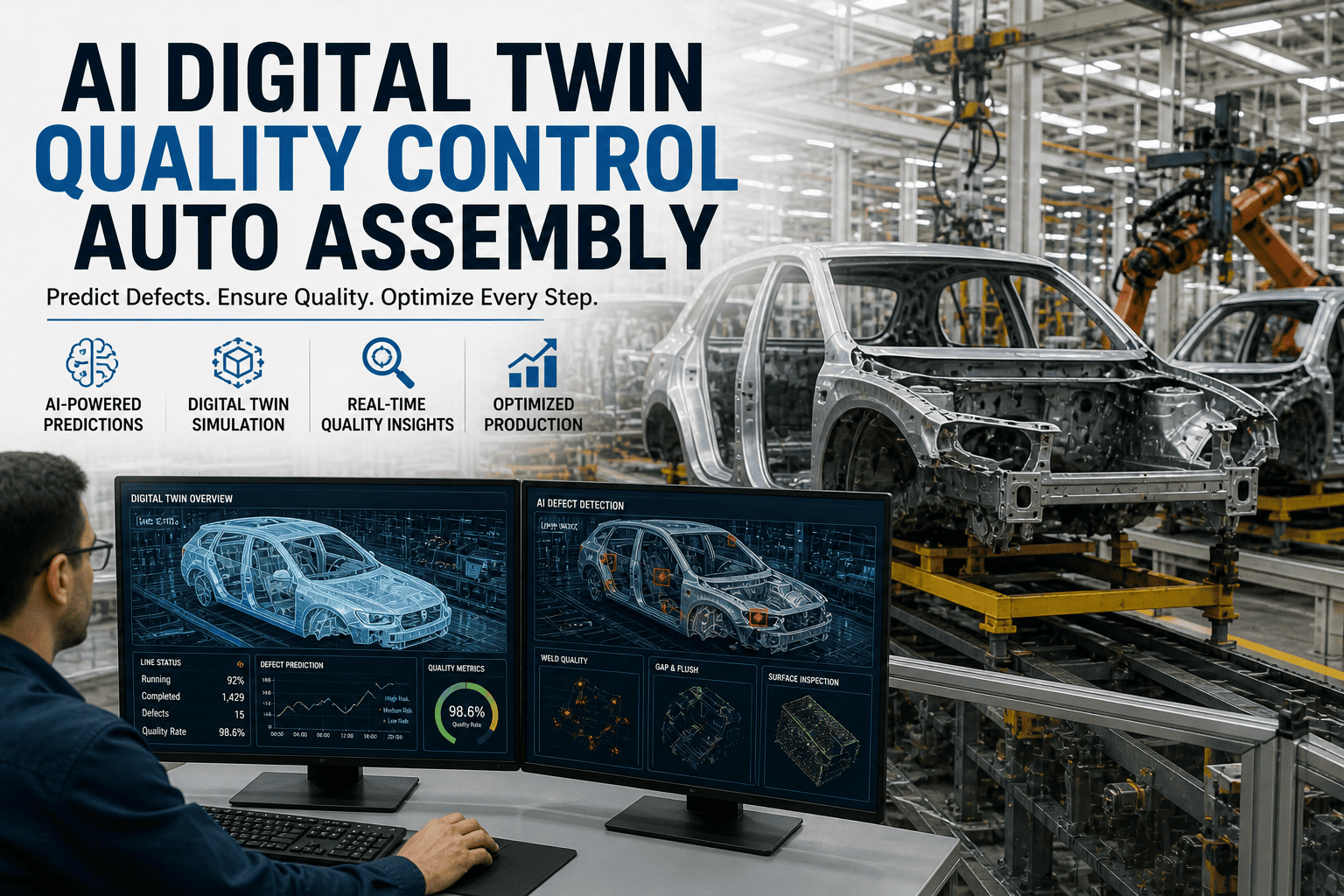
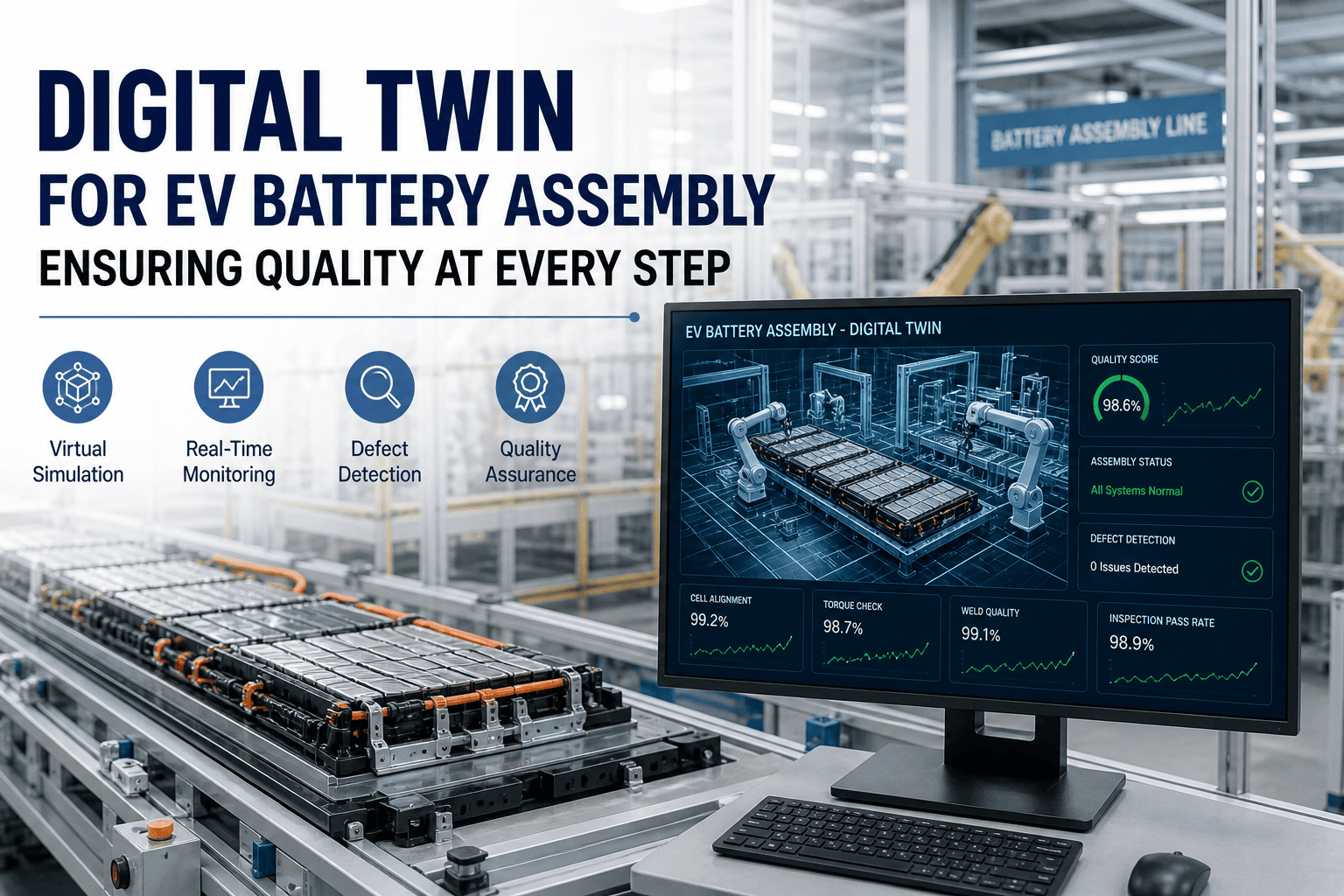
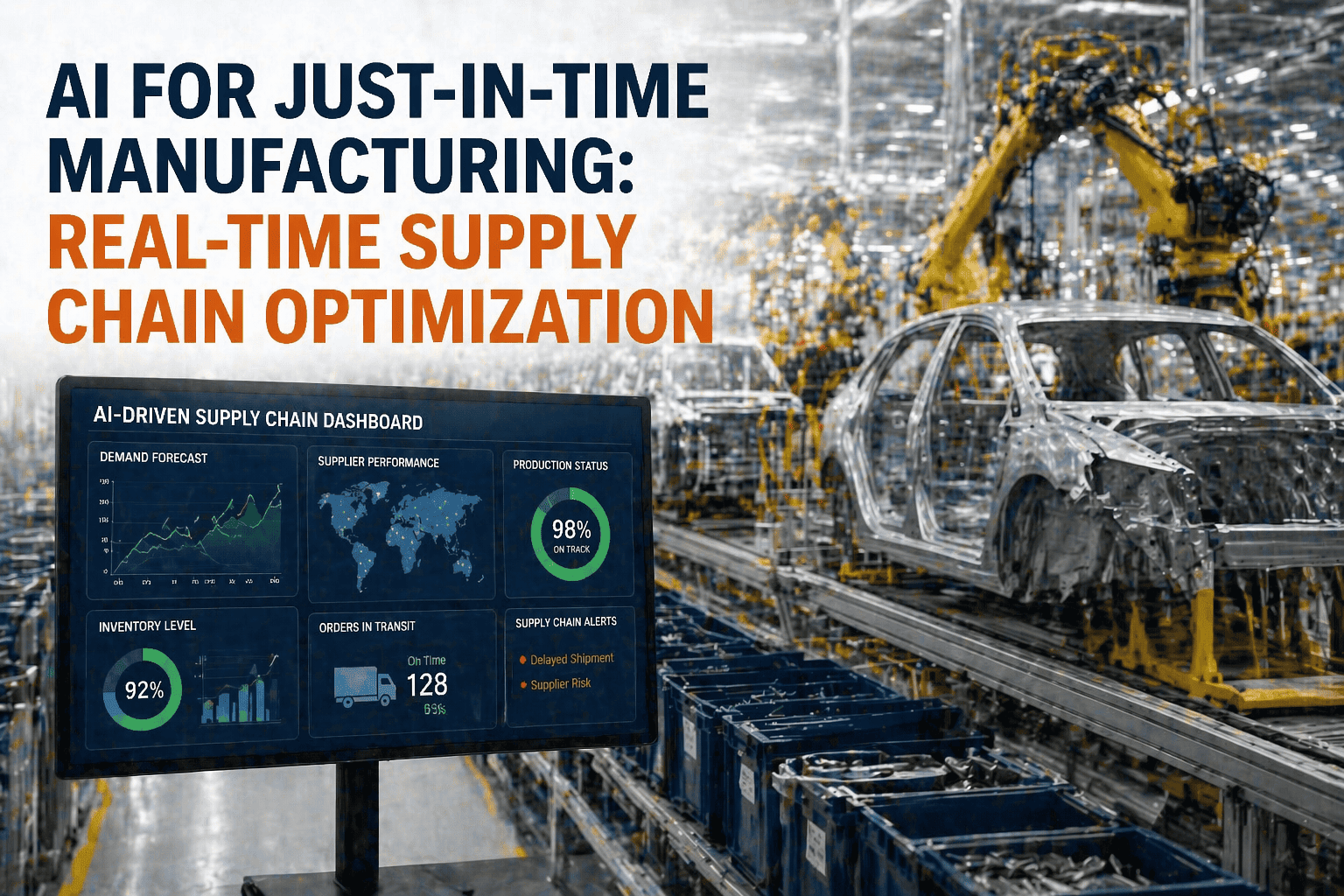
The EV charging infrastructure market is scaling faster than most manufacturers can keep up. By 2030, the world needs 40 million public charging points — nearly 10× today's number. Every connector, power module, and control board in every charger must be manufactured to exact tolerances. One failed component in the field doesn't just inconvenience a driver — it erodes trust in the entire EV ecosystem. AI in EV charging infrastructure manufacturing is now the critical lever separating market leaders from those falling behind on quality and speed. See how iFactory AI closes the quality gap — book a demo.
Why EV Charging Manufacturing Is a Quality-Critical Industry
Building an EV charger is not like assembling consumer electronics. A DC fast charger operates at 400–1,000V, draws up to 350kW, and must survive 10+ years of outdoor exposure, temperature swings from -40°C to 60°C, and hundreds of thousands of plug cycles. A hairline solder crack on a power module. A connector seated 0.3mm off-spec. A thermal paste void under an IGBT. Any one of these invisible defects passes visual inspection — and fails catastrophically in the field, typically 18–36 months after delivery when the warranty clock is already ticking.
Traditional manufacturing quality processes — manual inspection, random sampling, end-of-line testing — were designed for a different era. They miss 20–30% of defects under real production conditions. In EV charging manufacturing, that miss rate is unacceptable. AI changes the equation entirely.
The Scale Problem: Demand Is Outrunning Capacity
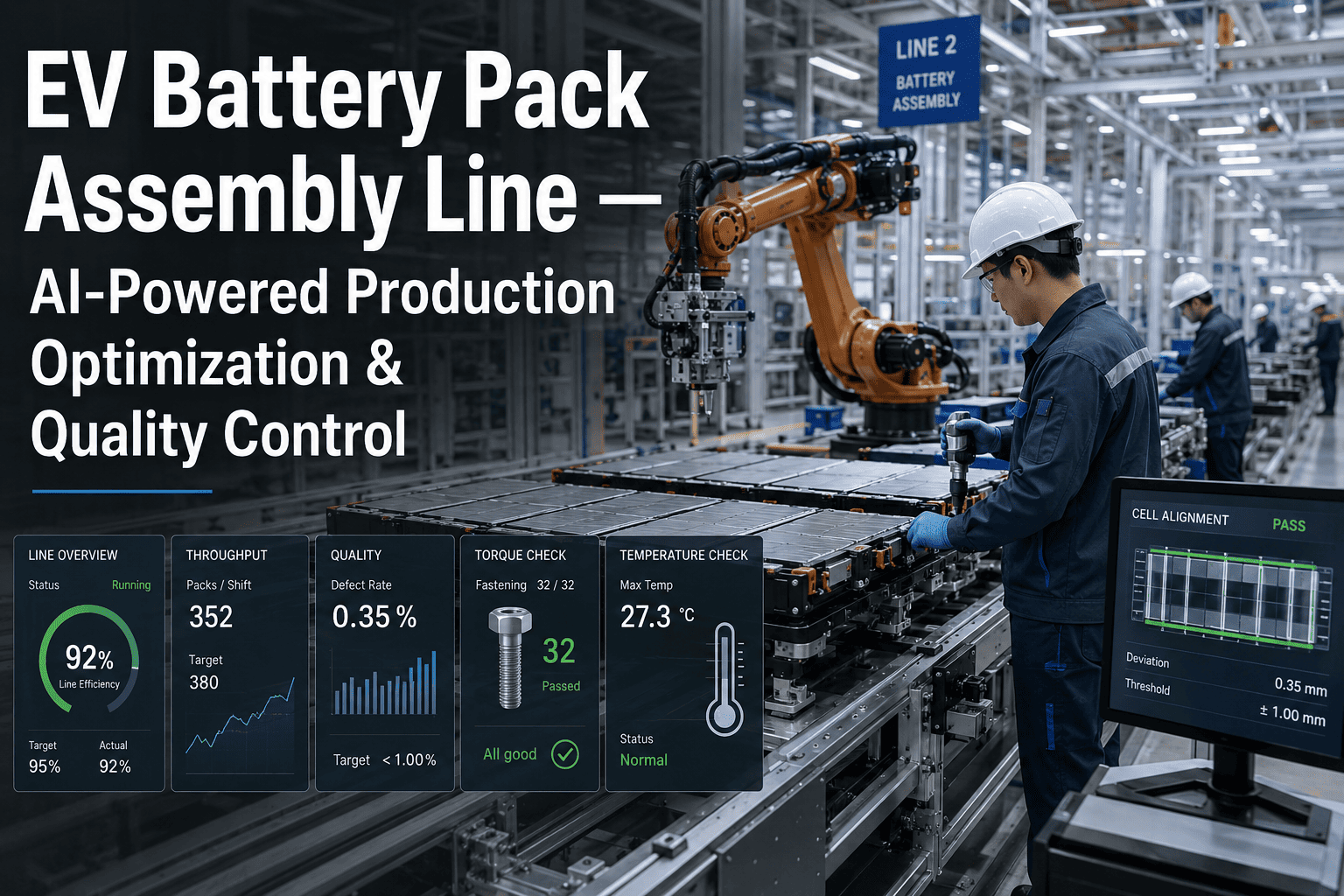
To meet 2030 targets, EV charger manufacturers must multiply output by 10× — while maintaining or improving quality. That is physically impossible with today's manual inspection workforce. The only path is AI-driven automation that inspects every unit, every component, every cycle, at production speed.
Where AI Creates Value: 5 Manufacturing Stages
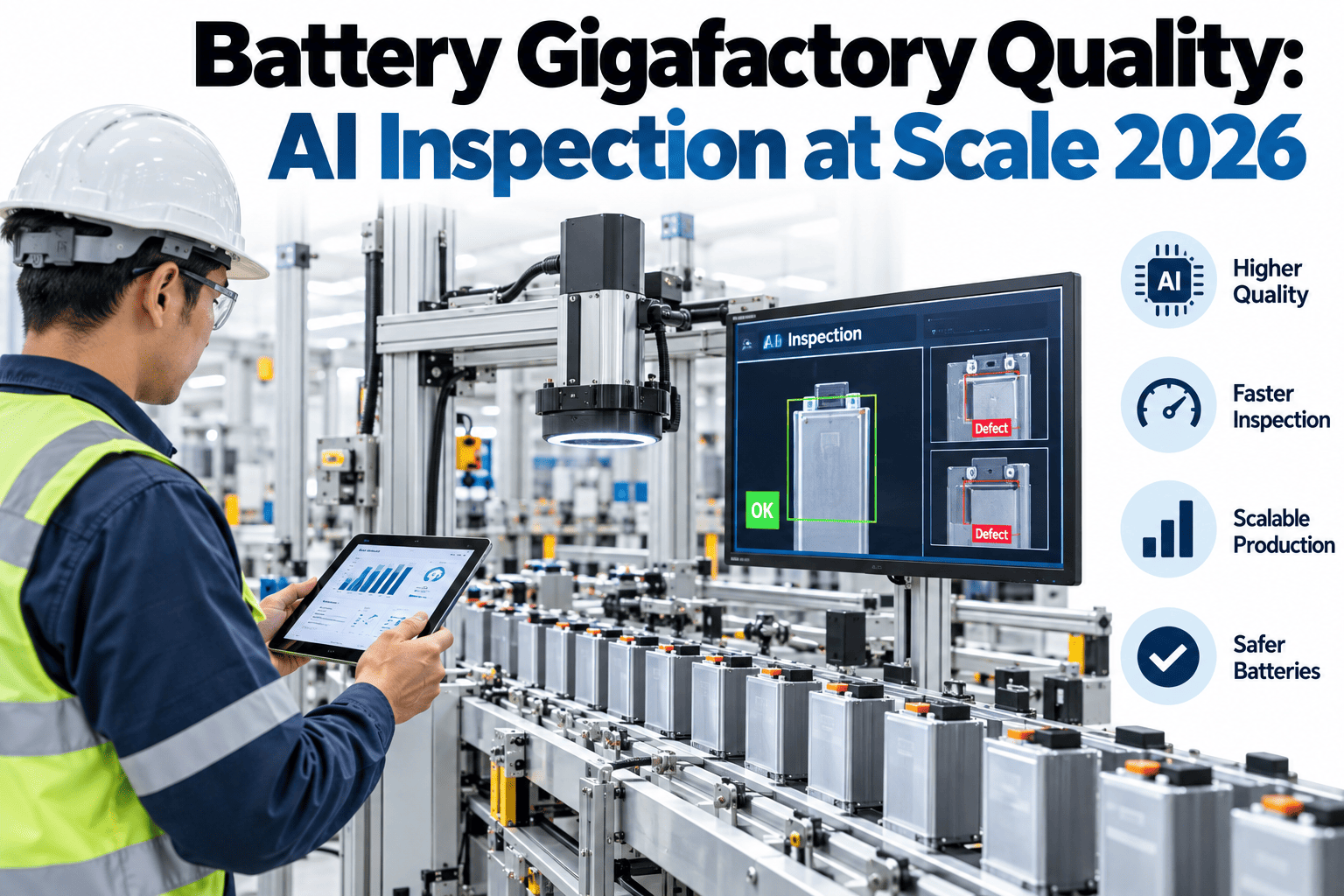
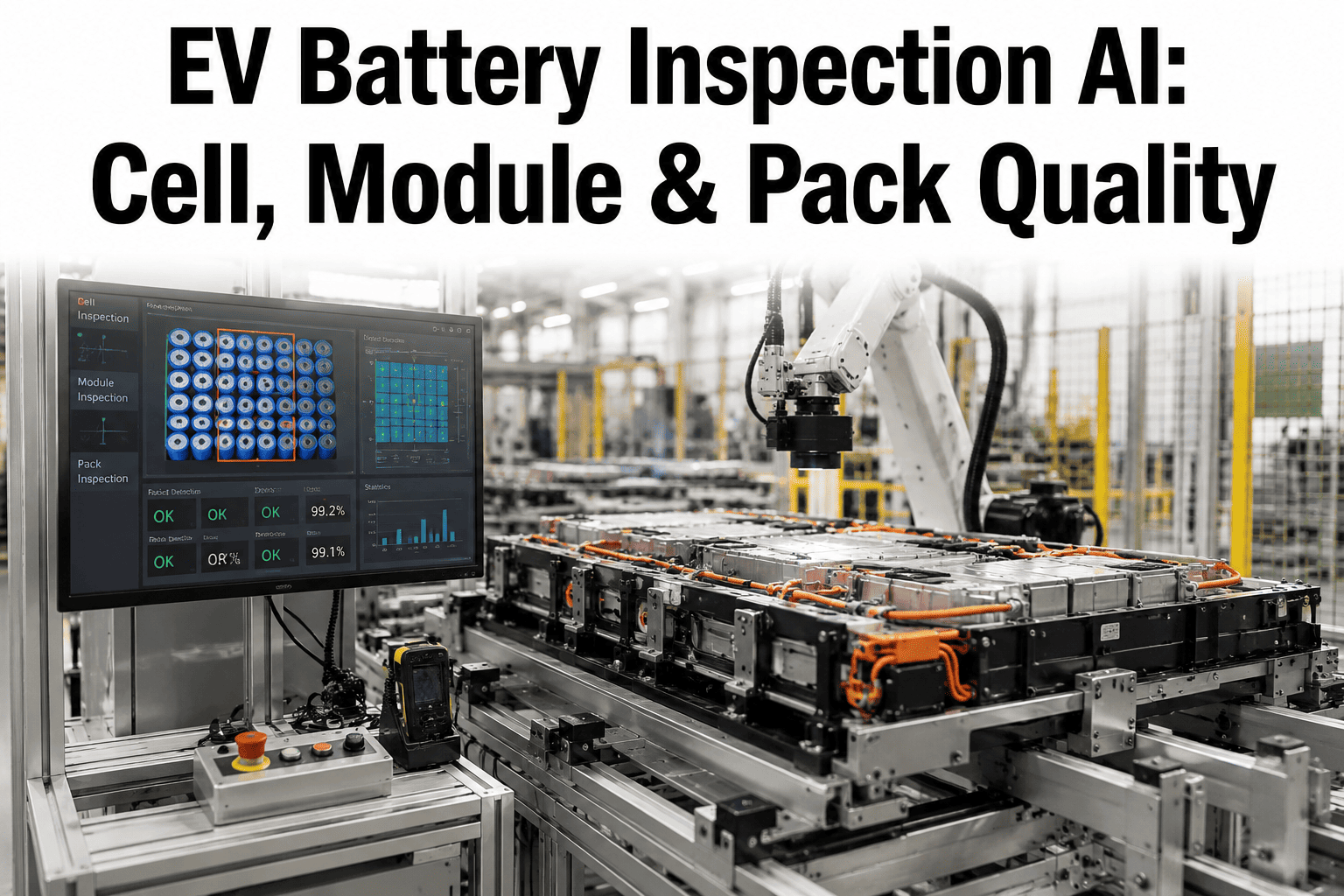
AI vision systems inspect solder joints, component placement, and trace integrity at 10,000+ boards per hour. Defects invisible to human inspectors — micro-cracks, bridging, cold joints — are flagged at sub-100ms inference speed before boards enter power assembly. Detection accuracy exceeds 95–99% in mature deployments.
Charging connectors experience mechanical stress on every plug cycle. AI inspection validates pin seating depth, crimp geometry, and contact surface integrity. A connector seated 0.3mm off-spec passes visual check but fails after 50,000 cycles in the field. AI catches this at assembly.
Thermal paste coverage on power electronics directly determines charger lifespan and fire safety. AI vision with IR overlay confirms paste volume, distribution, and void-free contact on every unit — replacing manual sampling that only checks 1–2% of production.
IP54/IP65 ratings are contractual requirements for outdoor chargers. AI-guided sealing verification and gasket inspection confirms that every enclosure meets the spec, not just those pulled for periodic audit. Failed seals discovered in the field mean full hardware replacement — $800–$3,000 per unit.
AI analyzes functional test signatures — voltage curves, current profiles, communication handshake timing — to detect units that pass binary pass/fail thresholds but show drift patterns predictive of early failure. Units with marginal signatures are flagged for rework before shipping, not after 18 months in the field.
The Numbers: What AI Delivers in EV Manufacturing
Real-World Use Case: PCB Escape Rate Crisis
A manufacturer producing 600,000 power control boards annually for Level 2 and DC fast chargers had a 1.2% field escape rate — boards passing quality testing but failing 12–24 months after installation. Post-warranty analysis traced failures to solder joint anomalies undetectable by conventional optical inspection.
- Manual sampling: 1–2% of boards inspected
- 7,200 defective boards/day escaping to assembly
- Field failure rate: 1.2%
- Annual warranty cost: $1.8M
- 100% of boards inspected at line speed
- Defective boards diverted to rework same shift
- Escape rate: 0.08% (93% reduction)
- Warranty claims dropped 85% in 6 months
AI + Digital Twin: Scaling Without Risking Quality
Manufacturing scale and quality don't naturally move together. As volume doubles, complexity compounds — more shifts, more equipment variation, more supplier parts converging on the assembly line. The manufacturers winning in EV charging infrastructure are combining AI inspection with digital twin simulation to stress-test their scaled operations before they run them.
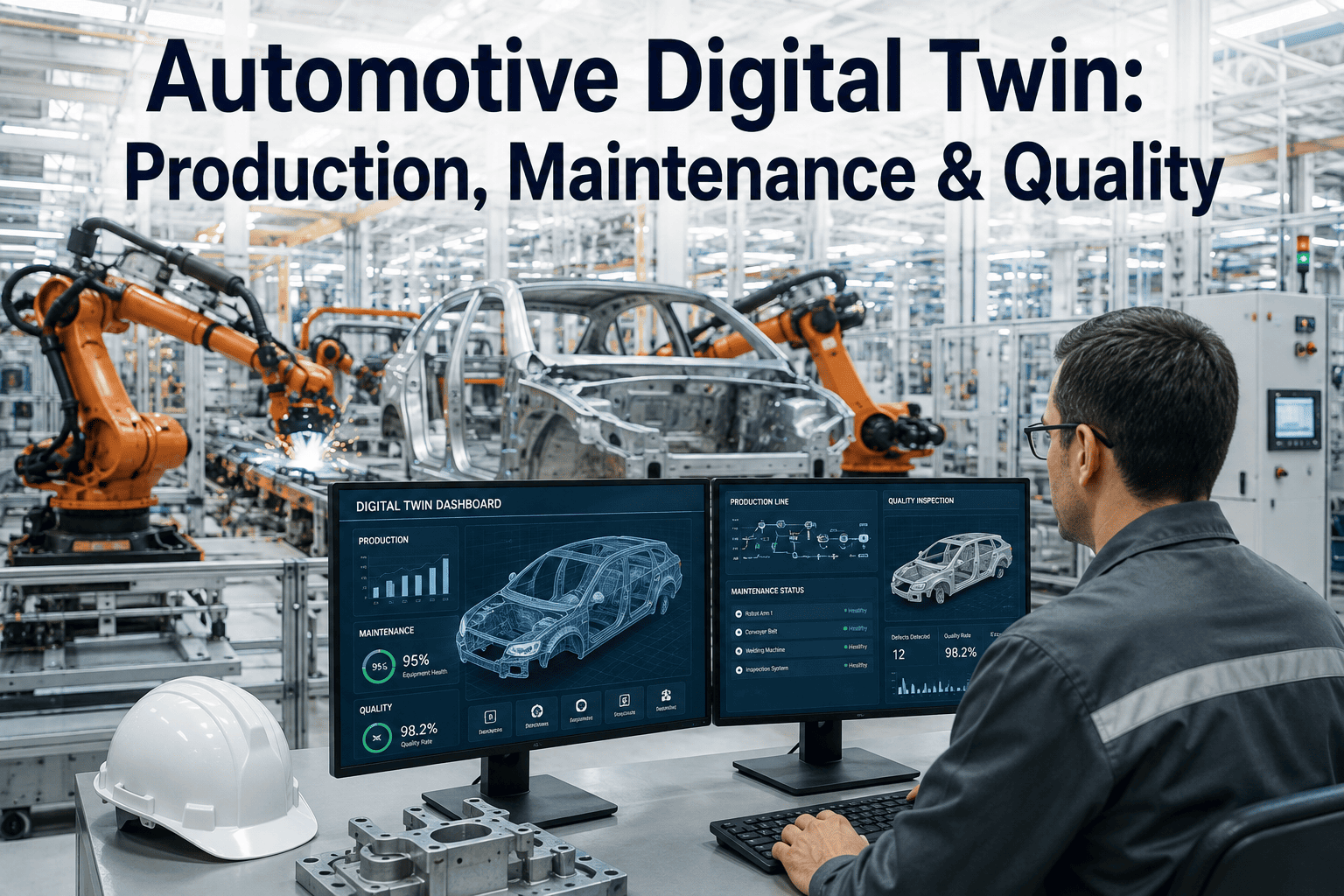
Digital twins model new product introduction — a new charger variant, a new power module supplier, a capacity expansion — in simulation before production starts. Equipment clashes, buffer mismatches, and supplier delivery gaps are discovered in weeks of planning, not weeks of production downtime.
As AI inspection systems collect quality data on every unit, that data recalibrates the digital twin to reflect actual production reality — not spec-sheet assumptions. The twin becomes more accurate over time, making scenario predictions more reliable with every production run.
When AI flags an uptick in connector defects from a specific supplier lot, the digital twin can simulate the downstream impact on assembly yields before the full lot is processed. Procurement can be notified, inspection protocols tightened, and production replanned — without stopping the line.
The Hidden Cost of Not Acting: Field Failure Math
What to Look for in an AI Manufacturing Partner
The Competitive Window Is Closing
EV charging infrastructure contracts are now being awarded on quality track record as much as price. Network operators — who face public pressure every time a charger goes offline — are building supplier scorecards based on field reliability data. Manufacturers who can demonstrate AI-validated quality at scale are winning contracts that manual-inspection competitors cannot match.
The manufacturers deploying AI quality systems today are not just cutting defects. They are building the data infrastructure — millions of inspections, quality signatures, process correlations — that will make their operations continuously smarter over the next decade. That lead is compounding. The time to build it is now, not after the next quality crisis.
FAQ: AI in EV Charging Infrastructure Manufacturing
How is AI inspection different from traditional automated optical inspection (AOI)?
Can AI inspection keep up with high-volume EV charger production speeds?
What data is needed to deploy AI quality inspection in an EV manufacturing facility?
Does AI quality control work for both Level 2 and DC fast charger manufacturing?
How does AI help with supply chain quality issues from component suppliers?
What is the typical ROI timeline for AI inspection in EV charging manufacturing?
Let AI Inspect Every Charger You Build
iFactory AI deploys inline quality inspection for EV charging manufacturers — PCB, connectors, thermal systems, and final assembly. See your defect escape rate drop within weeks.