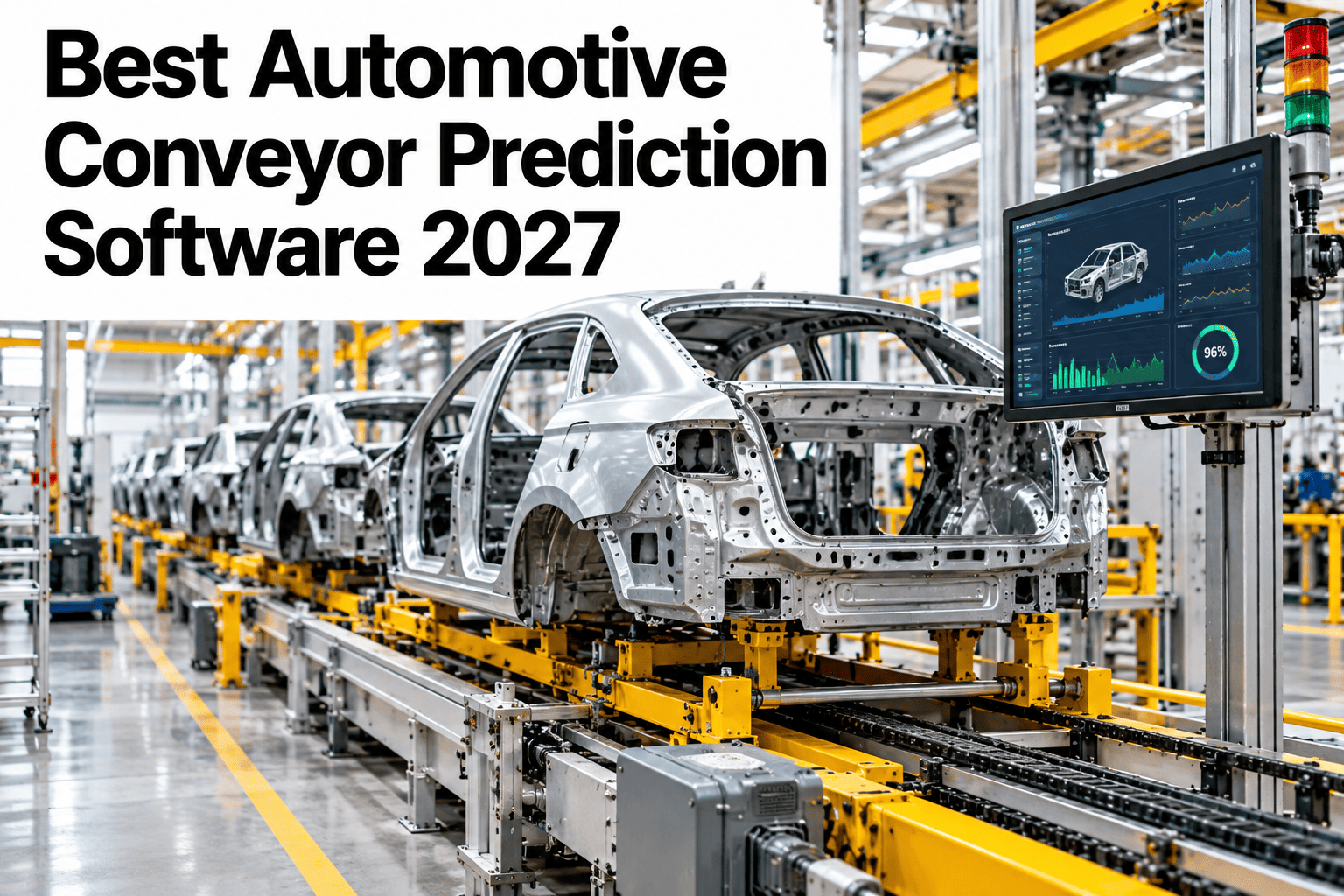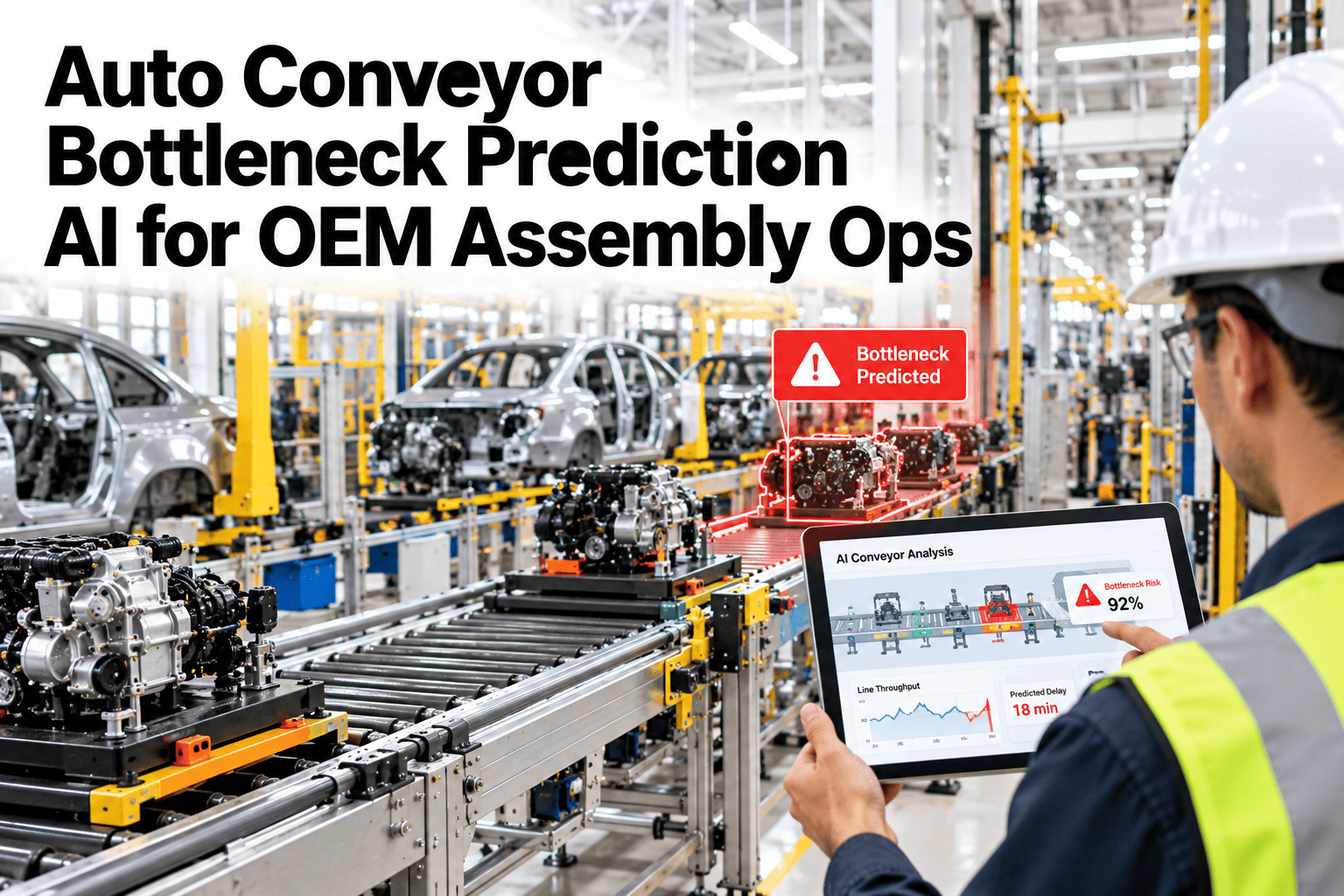
By the time a bottleneck is visible on an assembly line, parts are already accumulating faster than the downstream station can absorb them, and the team's only real option at that point is firefighting, pulling people and attention toward the symptom rather than the cause that was building for the past twenty minutes. A bottleneck rarely appears out of nowhere; it builds as a pattern of accumulation that a model watching the right signals can see coming well before a supervisor notices the physical backup on the floor. See bottleneck prediction running on your own assembly line data.
See the Bottleneck Before It's Visible on the Floor
iFactory AI models accumulation patterns and downstream constraints to predict a conveyor bottleneck before it forms, with dynamic re-routing suggestions ready in time.
By the Time It's Visible, It's Already a Problem
A supervisor spotting a physical backup of parts on the conveyor is seeing the end result of a pattern that has usually been building for fifteen or twenty minutes already, which means the response at that point is reactive by definition, pulling attention and labor toward clearing the immediate backup rather than addressing whatever constraint actually caused it to start accumulating in the first place.
Accumulation Modeling
Tracks the rate parts are building at each station against its actual processing capacity.
Downstream Constraint Detection
Identifies which specific downstream station is the real limiting factor right now.
Dynamic Re-Routing
Suggests alternate routing to relieve pressure before accumulation becomes visible.
Predict Bottlenecks on Your Own Line
Book a 30-minute session and see accumulation modeling and bottleneck prediction running on your own assembly line data.
Firefighting Versus Prediction
The same bottleneck handled reactively or predictively produces very different outcomes for the shift.
From Trend to Re-Routing Suggestion
The prediction pipeline runs continuously against live line data, turning an accumulation trend into an actionable suggestion.
What Gets Modeled
Different line conditions require different accumulation signals to predict accurately.
| Condition | Signal Tracked | Prediction Lead Time |
|---|---|---|
| Gradual station slowdown | Processing rate trending below station capacity | 10-20 minutes |
| Upstream surge | Parts arriving faster than normal input rate | 5-15 minutes |
| Intermittent micro-stops | Frequency of short stoppages increasing at a station | 15-30 minutes |
Rolling Out on Assembly Ops
iFactory AI connects to your existing conveyor and station throughput data without requiring a separate monitoring layer.
Expert Review
The re-routing suggestion is the part that actually changes behavior on the floor, since a prediction alone still leaves the supervisor guessing at the response, while a specific suggestion turns a ten-minute warning into a ten-minute window to actually act on it.
Frequently Asked Questions
Does this require new sensors on the line?
No, it connects to throughput and conveyor data your line already generates rather than requiring new hardware specific to bottleneck prediction. Support can confirm what data your current systems provide.
How far in advance does a prediction typically arrive?
Lead time varies by the type of developing bottleneck, typically ranging from five to thirty minutes depending on whether the cause is a gradual slowdown or a sudden upstream surge.
Can re-routing suggestions be automated rather than manual?
Suggestions are generated for a supervisor to act on, and whether routing itself can be automated depends on your line's existing control system capabilities. Discuss automation options on a call.
Does this work across multiple assembly lines simultaneously?
Yes, prediction models run per line, with a plant-wide view available for supervisors overseeing multiple lines at once.
How is prediction accuracy validated over time?
Predictions are compared against actual outcomes on an ongoing basis, and the model is refined as more line-specific data accumulates. Ask support how accuracy is tracked.
Stop Firefighting Bottlenecks That Already Happened
iFactory AI predicts conveyor bottlenecks before they form, with re-routing suggestions ready in time to act. Book a demo on your own assembly line.