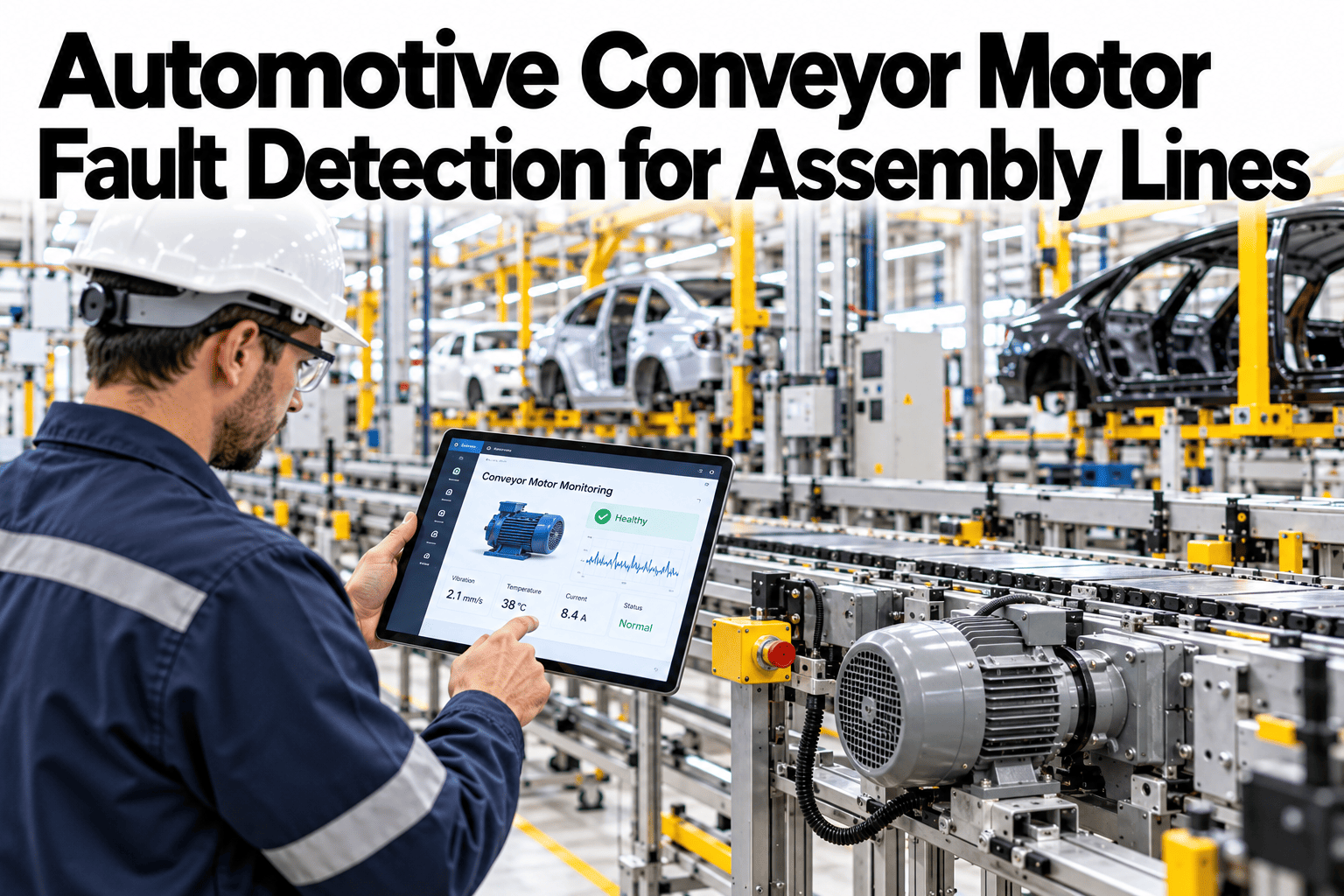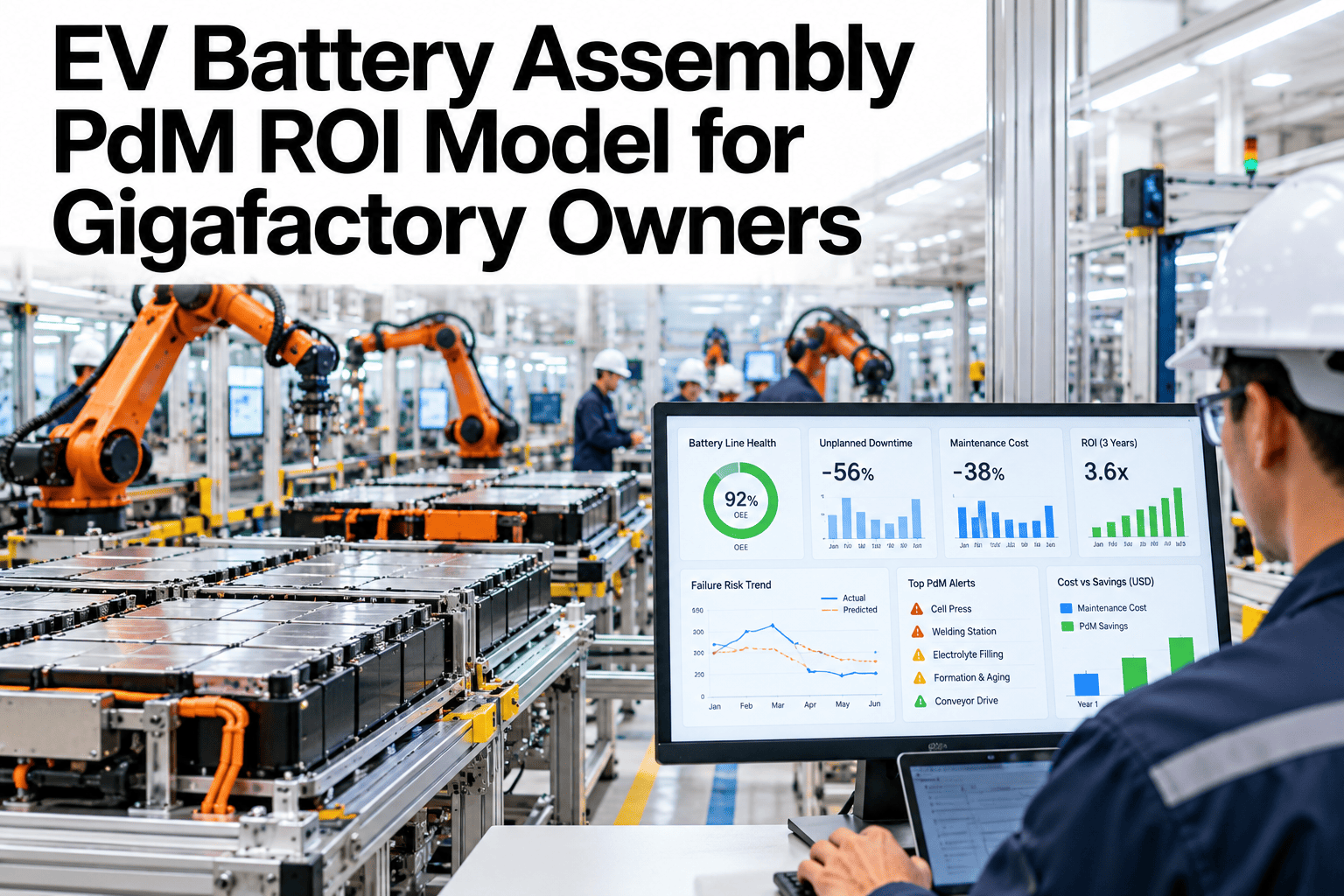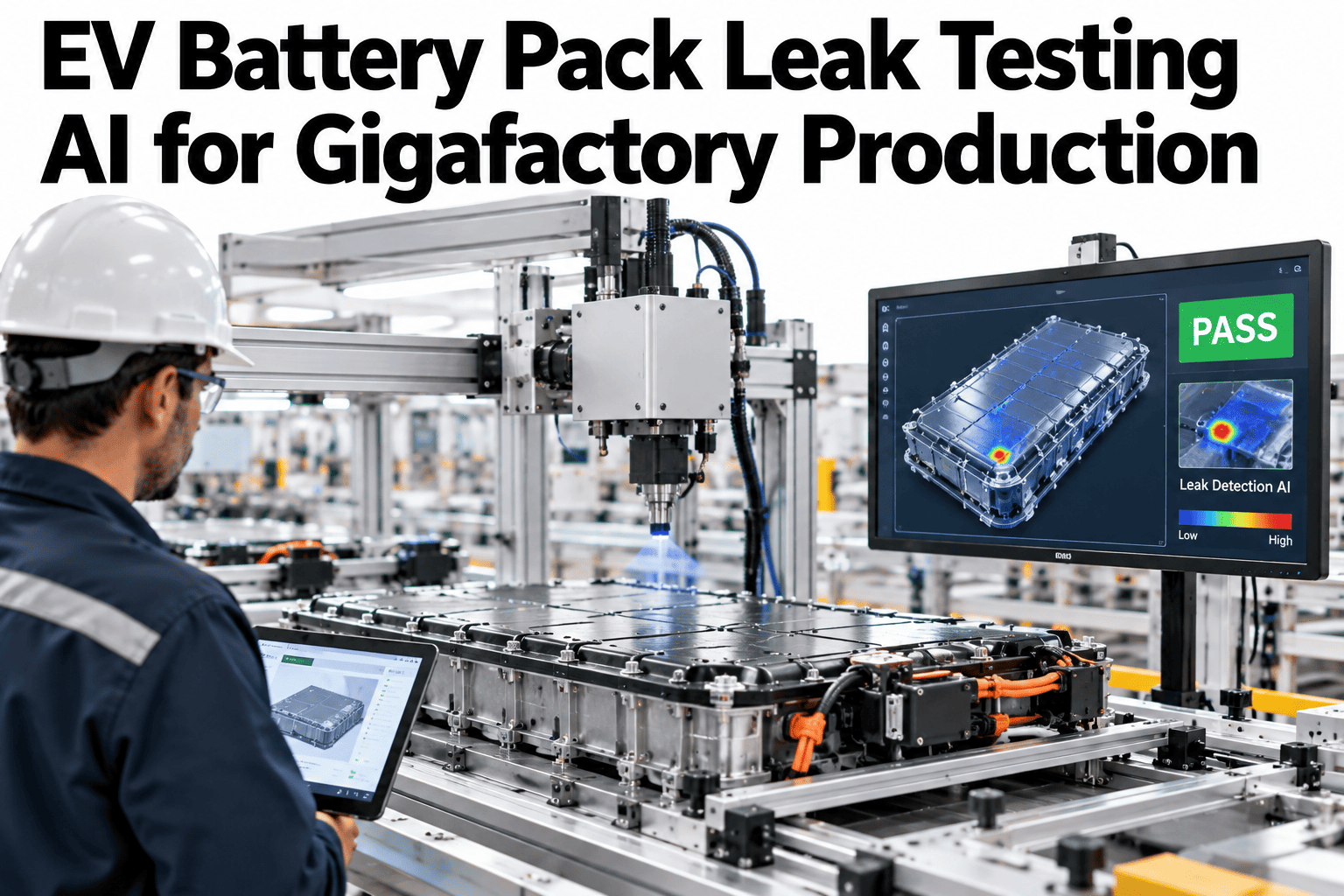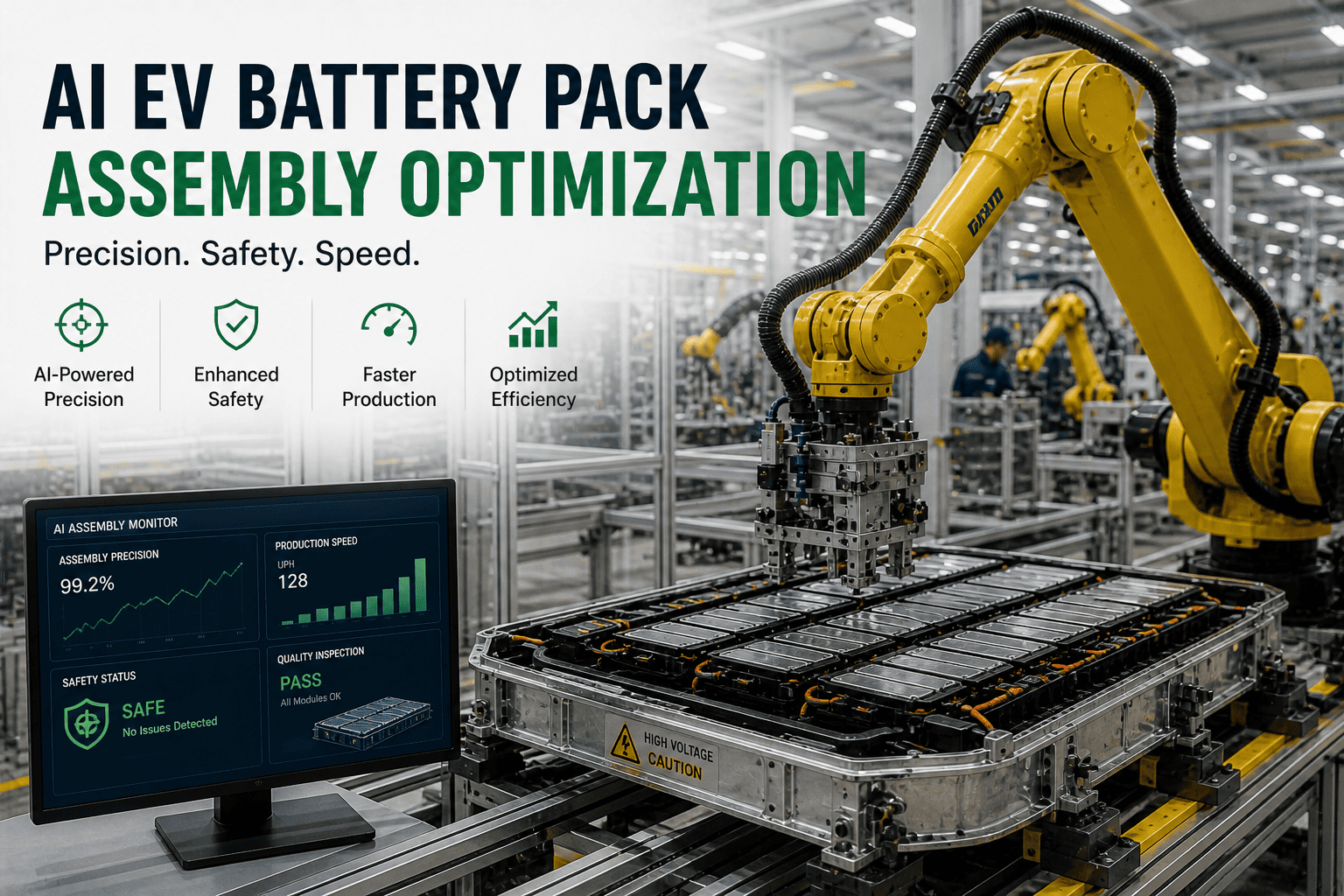
A gigafactory conveyor system is not a warehouse belt — it is a precision transport infrastructure handling electrochemically sensitive cell stacks, delicate electrode assemblies, and partially charged modules that cannot tolerate vibration, position error, or uncontrolled dwell time. When a precision index conveyor drifts out of tolerance, the cells it carries may be damaged before any quality check fires an alarm. iFactory AI monitors servo drives, index accuracy, lift-transfer stations, and carrier health continuously — so gigafactory conveyor failures are detected in the signal before they become a production event. See how iFactory AI monitors your gigafactory conveyor health in a live session.
Gigafactory Conveyor PdM Built for Precision-Index Transport
Servo drive analytics, index accuracy tracking, lift-transfer monitoring, and carrier health — continuously watched so delicate battery assemblies are never put at risk by an undetected conveyor fault.
Why Gigafactory Conveyors Demand a Different PdM Approach
A conventional automotive assembly conveyor carries body-in-white at ambient temperature. A gigafactory precision-index conveyor carries live electrochemical assemblies with sub-millimeter positioning requirements at each process station.
A servo drive that is drifting 0.3 mm from its position target on a body conveyor is a minor adjustment. The same drift on a cell-stacking index conveyor can compress or misalign a cell stack in a way that does not produce an immediate visible defect but causes internal short circuit risk in the finished module. PdM in this environment must be sensitive enough to detect developing faults at a fraction of the tolerance that would matter in a conventional plant.
The Four Conveyor Sub-Systems iFactory AI Monitors
Gigafactory conveyor health is not a single measurement — it is the combined health of four interdependent sub-systems, each with its own failure mode and early-detection signature.
Servo drives on precision-index conveyors produce continuous feedback data — position error, torque demand, speed deviation, and thermal load — that collectively describe the drive's health long before a fault trips an alarm. iFactory AI tracks torque demand trend against a load-normalized baseline, detecting when a drive is working harder than expected for the same index cycle. Rising torque demand at constant load is the earliest signal of mechanical drag developing in the conveyor system.
Precision index conveyors rely on mechanical indexers, linear servo motors, or independent cart systems to deliver carriers to exact process positions. Index accuracy is measured as the deviation between commanded position and actual carrier position at dwell. iFactory AI tracks this deviation on every index cycle, building a statistical distribution that reveals whether accuracy is centered and stable, drifting in one direction, or showing increasing variance — each pattern pointing to a different mechanical cause.
Lift-transfer stations — the mechanical junctions between conveyor segments where carriers are raised, transferred, and lowered — have more moving components than any other part of the conveyor system and consequently the highest unplanned failure rate. Pneumatic actuator cycle time drift, motor current draw at lift, and position sensor consistency are the three leading indicators. A lift station that is taking 15% longer to complete its cycle than baseline is announcing developing mechanical drag before any position error or fault code appears.
Carriers and pallets in gigafactory conveyors are precision-engineered fixtures that hold cell stacks or modules in exact positions during transport and at process stations. Carrier wear — locating pin wear, clamp spring fatigue, guide roller deterioration — introduces micro-movements that accumulate into position error without any servo fault being recorded. Tracking carrier-specific position error across cycles identifies individual carriers developing geometric wear before they cause yield loss.
Monitor Every Conveyor Sub-System in Your Gigafactory
iFactory AI connects to servo drives, index sensors, lift stations, and carrier tracking systems to deliver continuous conveyor health monitoring. Book a 30-minute session to see the monitoring architecture for your line configuration.
Failure Modes and Detection Signals
Gigafactory conveyor failures do not appear suddenly. Every failure mode has an early-detection signature that precedes the fault event by days or weeks when the right measurements are being tracked.
| Failure Mode | Detection Signal | Lead Time | Production Risk |
|---|---|---|---|
| Servo drive torque overload | Torque demand trending above load-normalized baseline | 1–3 weeks | Index fault trip, line stop |
| Position accuracy drift | Per-cycle dwell error trending — mean or variance increasing | 2–4 weeks | Cell stack misalignment, yield loss |
| Lift station actuator wear | Cycle time increase, current draw rising at stroke | 1–2 weeks | Carrier jam at transfer, line stop |
| Guide rail contamination or wear | Servo torque spike at consistent rail position | 1–3 weeks | Carrier vibration, product disturbance |
| Carrier locating pin wear | Per-carrier position error higher than fleet average | 3–6 weeks | Progressive position error, cell damage risk |
| Linear motor track fault | Propulsion current anomaly, speed control deviation | 1–2 weeks | Carrier speed variation, station dwell error |
How iFactory AI Integrates with Gigafactory Conveyor Systems
Gigafactory conveyor control systems — whether PLCs, servo controllers, or independent cart system management software — all produce the data streams iFactory AI needs without requiring any modification to control architecture.
Servo Controller Integration
Position error, torque feedback, and speed data read directly from servo drives via OPC UA or EtherNet/IP at the scan rate needed to capture index-cycle-level detail without burdening the control network.
Independent Cart System Analytics
For linear motor-based independent cart systems, iFactory AI reads per-cart position, propulsion current, and dwell accuracy data, building individual health profiles for each mover in the carrier population.
Pneumatic Actuator Monitoring
Lift-transfer pneumatic cycle time tracked via existing position sensor signals — no additional sensors required at lift stations already instrumented for control purposes.
Carrier-Level Traceability
RFID or barcode carrier identification linked to per-cycle position data, so carrier-specific wear can be tracked across thousands of cycles and individual carriers flagged for inspection before they degrade fleet accuracy.
Frequently Asked Questions
Can iFactory AI monitor independent cart (linear motor) conveyor systems as well as traditional chain-driven index conveyors?
Yes. iFactory AI handles both system types. Linear motor independent cart systems provide particularly rich health data — per-mover position, propulsion current, and thermal load — that supports individual mover health tracking across the full carrier fleet. Chain-driven index conveyors are monitored through servo drive feedback, encoder signals, and actuator cycle time data. Ask support about compatibility with your specific conveyor control architecture.
How sensitive does the position monitoring need to be for gigafactory applications?
Detection sensitivity targets vary by assembly stage. Cell stacking and electrode handling require the highest sensitivity — detecting trend changes at the 0.05–0.1 mm level before the actual position error approaches the process tolerance. Module and pack assembly stations have slightly wider tolerances but still require substantially tighter monitoring than conventional automotive assembly. iFactory AI configures sensitivity thresholds per zone based on the process tolerance at each station. Walk through zone-by-zone sensitivity configuration in a demo.
Does the system require the conveyor to stop for data collection?
No. All monitoring is continuous during production, drawing from existing servo controller feedback and sensor data. Health analysis happens in parallel with conveyor operation with no impact on cycle time, throughput, or control system performance. This is the fundamental advantage of model-based monitoring over periodic manual checks that require production interruption.
How does iFactory AI handle the high-cleanliness and controlled-environment requirements of gigafactory dry rooms?
iFactory AI's edge hardware is deployed outside dry room environments where possible, drawing data from existing control signals through the facility network. Where sensors are needed inside controlled environments, ruggedized instrumentation rated for the specific cleanliness classification is specified during the deployment scoping phase. The monitoring architecture minimizes hardware inside restricted areas. Get details on dry-room-compatible deployment configurations.
What is the typical deployment timeline for gigafactory conveyor PdM with iFactory AI?
Deployment typically spans eight to fourteen weeks from signal mapping to live monitoring, depending on the number of conveyor zones, control architecture complexity, and the scope of carrier-level traceability integration. The system arrives pre-configured for the facility's conveyor types after an upfront scoping session, minimizing on-site commissioning time. Monitoring goes live progressively by zone rather than requiring full facility completion before any value is delivered.
Protect Your Gigafactory Production with Precision Conveyor PdM
iFactory AI monitors servo drives, index accuracy, lift-transfer stations, and carrier health continuously across your EV battery assembly conveyor network. Book a walkthrough to see the monitoring framework applied to your line configuration.