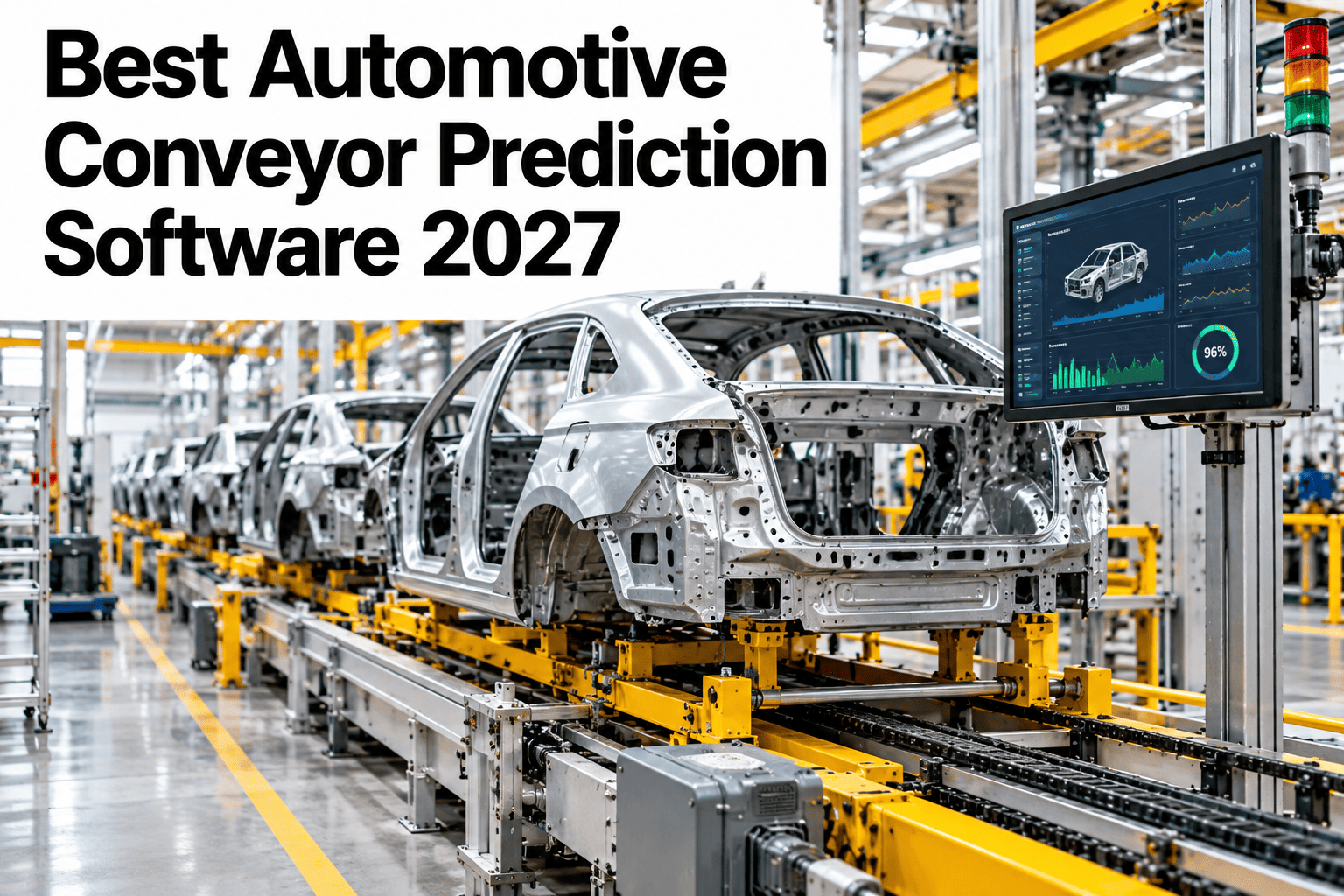
Automotive assembly conveyor prediction software in 2027 is not a single tool — it is a category with a wide range of capabilities, from simple threshold alerting on motor current to full predictive models that forecast chain replacement weeks in advance and identify developing bottlenecks before they back up the line. Choosing the right platform means knowing which failure modes matter most in your plant, what data sources you have available, and how deeply the software integrates with your maintenance workflow. iFactory AI covers the full capability set across chain wear, motor gearbox fault detection, sensor monitoring, jam prediction, and bottleneck forecasting on a single connected platform. See iFactory AI's automotive conveyor prediction capabilities in a live session.
Best Automotive Conveyor Prediction Software 2027
A capability comparison across the features that matter — chain wear prediction, motor fault detection, jam forecasting, and bottleneck analytics — for OEM and Tier 1 assembly plants.
What Makes Automotive Conveyor Prediction Harder Than General PdM
Automotive assembly conveyors operate under conditions that invalidate the standard predictive maintenance assumptions built for rotating equipment in lighter-duty environments.
Five Capabilities to Evaluate in 2027
Not all automotive conveyor prediction platforms cover the same capability set. These are the five that should be on every evaluation checklist for OEM and Tier 1 assembly plant applications.
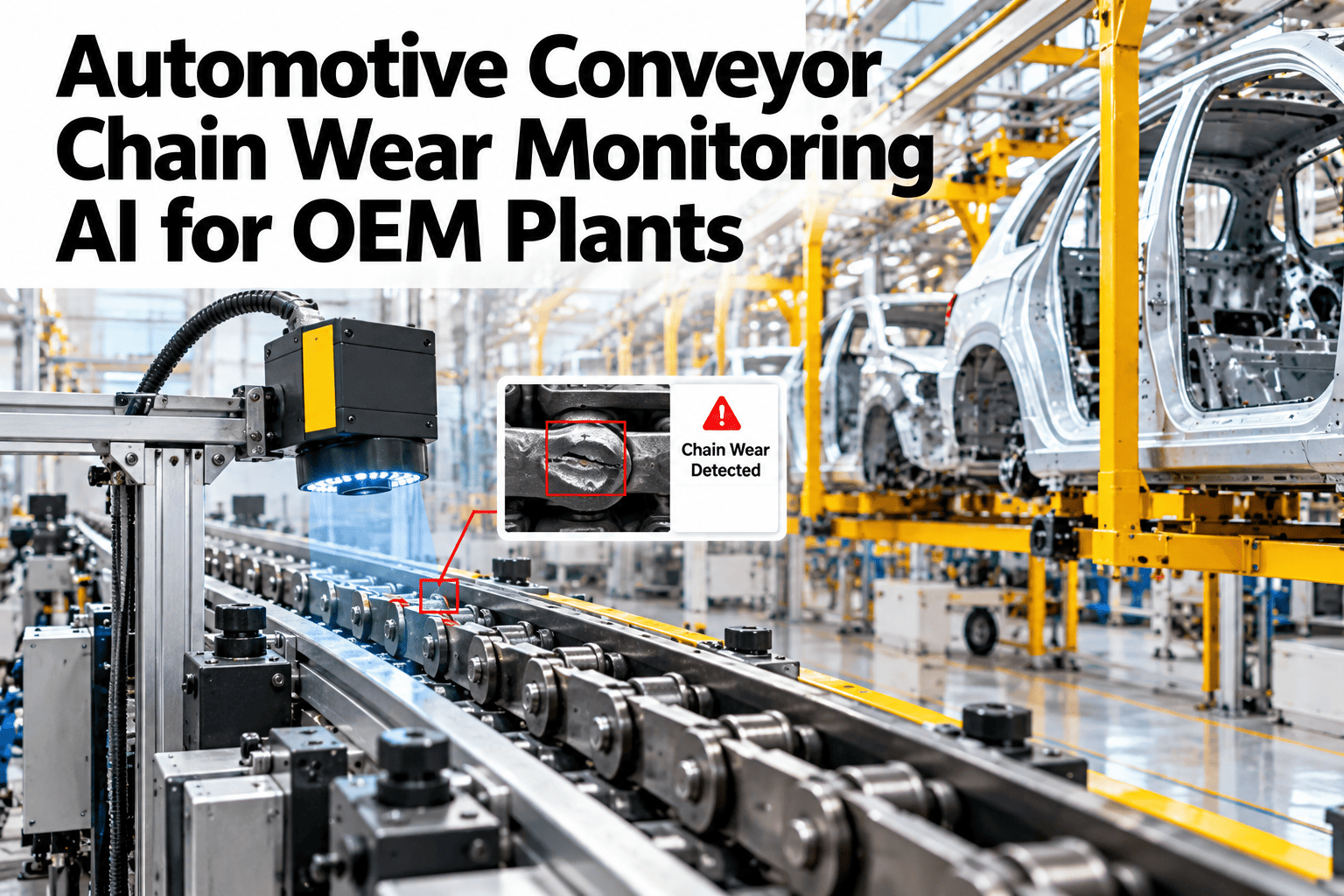
Chain Wear Prediction with Pitch Elongation Tracking
Chain elongation monitoring through sensor-based pitch measurement — tracking deviation from nominal pitch across the chain's full length, not just at a single point. Platforms that only measure overall chain tension miss the segment-level elongation variation that causes tracking problems and premature sprocket wear before overall tension indicates a problem. Look for remaining useful life estimates with a change-out date recommendation rather than a simple wear percentage.
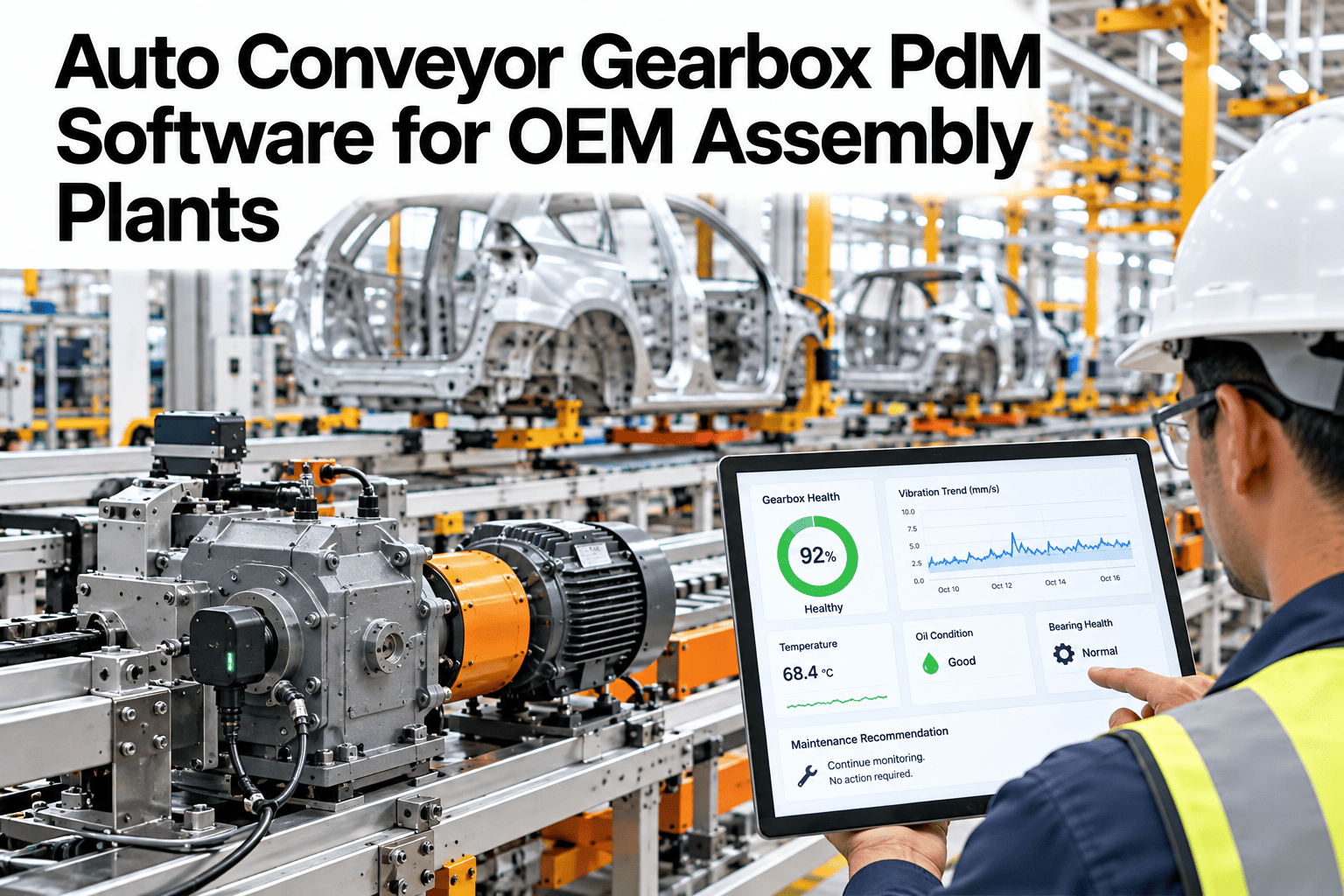
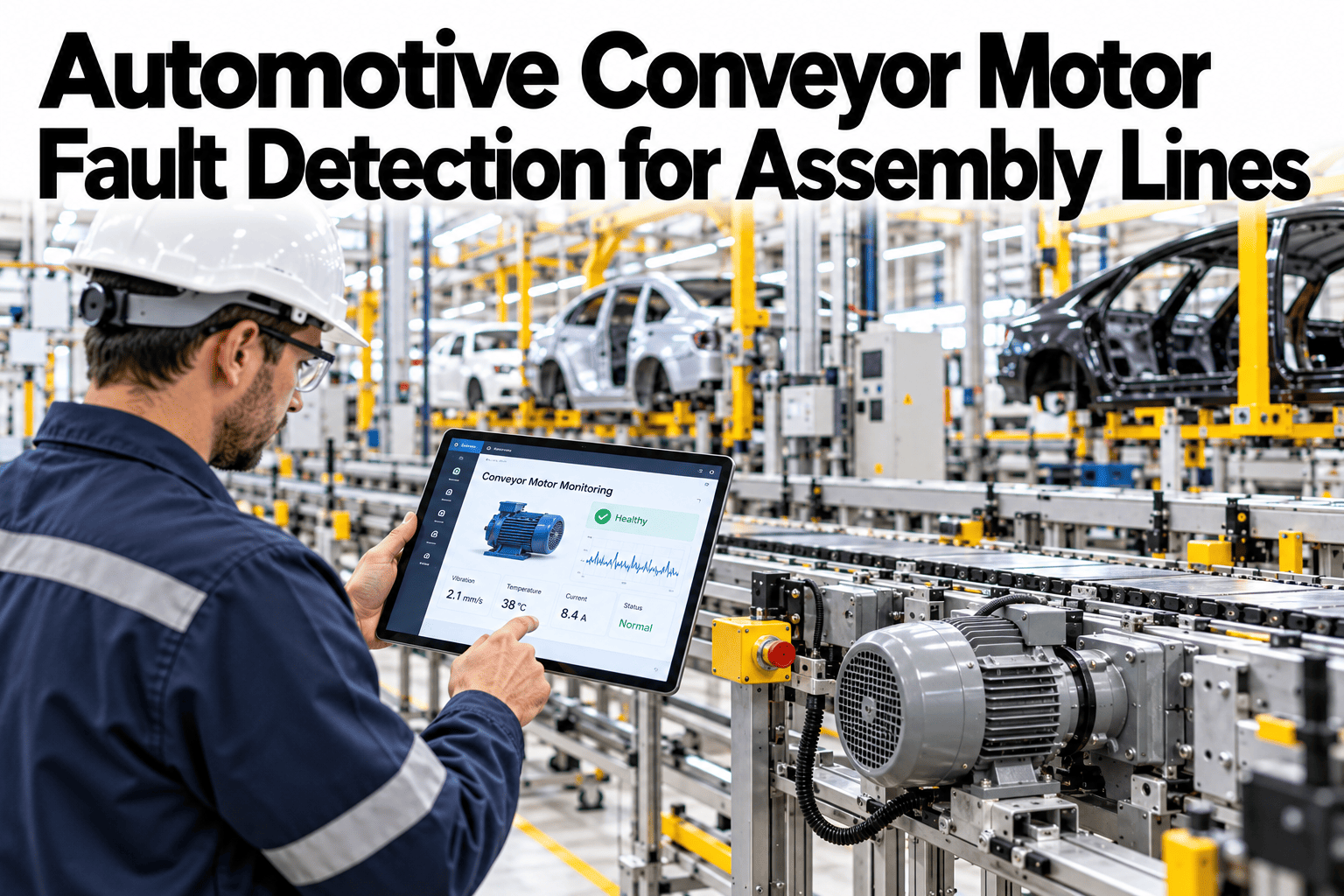
Motor and Gearbox Fault Detection via MCSA and Vibration Fusion
Motor current signature analysis detects rotor bar faults, bearing degradation, and mechanical load anomalies without physical sensor installation on the motor. Combined with vibration at the gearbox and thermal trending, a fused model significantly outperforms any single technology — catching fault types that are invisible to temperature-only monitoring and distinguishing load changes from genuine electrical faults that MCSA alone cannot separate.
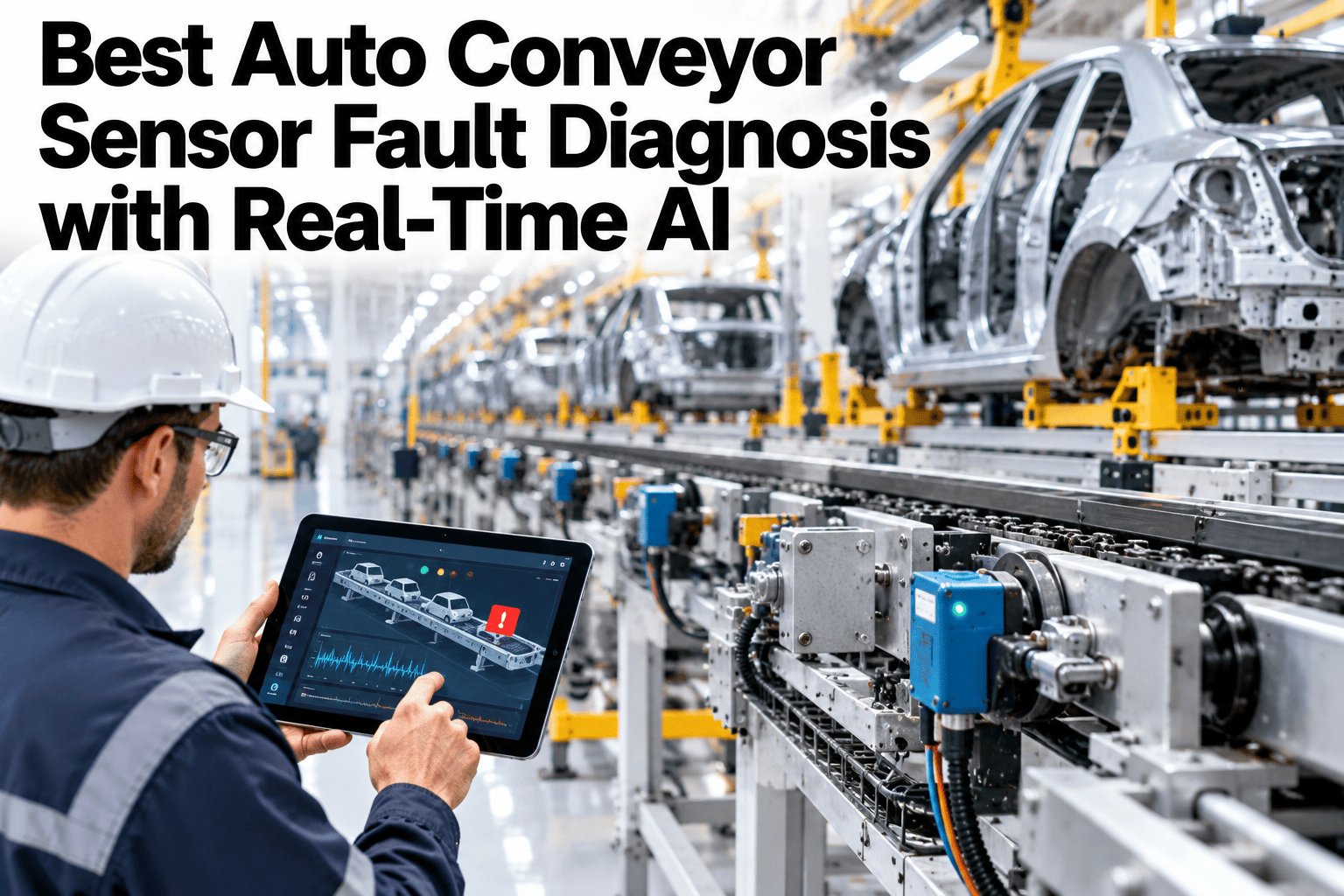
Jam Pre-Signature Detection
A conveyor jam is preceded by detectable signatures — increased drive current at specific chain positions, timing variations at sensors, and load distribution changes across drive units — that appear minutes to hours before the jam event itself. Software that detects these pre-signatures and alerts maintenance before the jam is the difference between a proactive intervention and a line-stop event requiring a jam crew response.
Bottleneck Forecasting and Flow Analytics
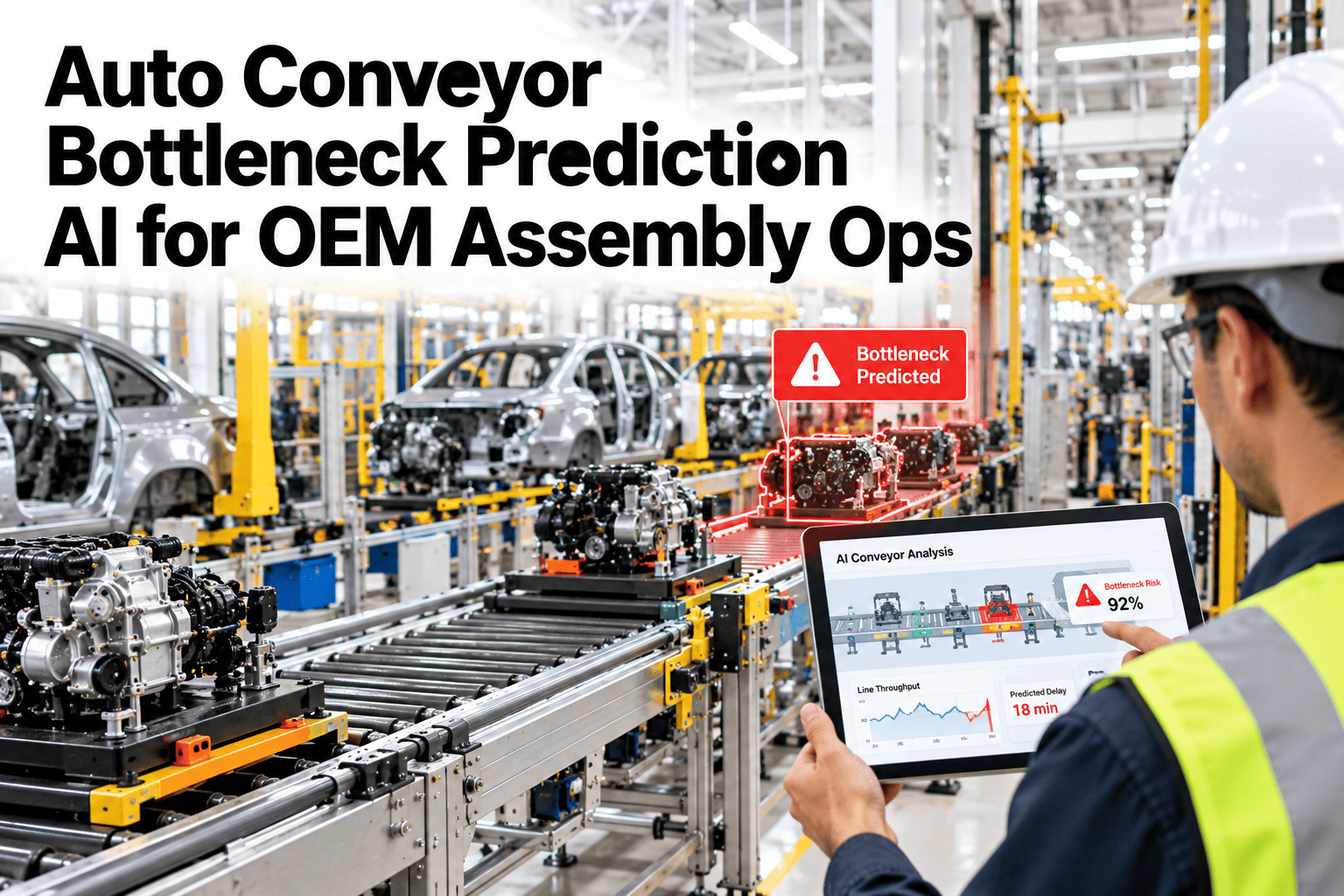
Conveyor bottleneck prediction goes beyond equipment failure — it includes carrier queue buildup, station timing drift, and throughput imbalance that slow the line without causing a stop. Software that tracks carrier throughput rates, station dwell times, and buffer fill levels in real time can identify developing bottlenecks and recommend resequencing or resource shifts before the constraint becomes visible to operators.
Automated Work Order Generation
A prediction platform that requires manual interpretation of alerts and manual creation of maintenance work orders introduces delay and human error into the response chain. The best 2027 platforms auto-generate work orders from alert events, including the fault description, recommended action, required parts, and priority level — routing directly to the CMMS with no manual step between alert and work order.
See All Five Capabilities on Your Own Conveyor Data
iFactory AI covers chain wear, motor fault, jam prediction, bottleneck forecasting, and automated work orders on a single platform built for OEM and Tier 1 assembly environments. Book a 30-minute session to evaluate against your plant's specific requirements.
Deployment and Integration Requirements
Deployment architecture matters as much as capability coverage when evaluating automotive conveyor prediction software for a production plant environment.
| Deployment Criterion | What to Look For | iFactory AI Approach |
|---|---|---|
| Data residency | On-premise processing for OEM network security requirements | Edge AI server deployed inside plant network — no data leaves the building |
| Sensor installation | Minimal installation footprint — production cannot stop for weeks of sensor work | MCSA from MCC connections + selective vibration sensors — phased installation |
| PLC/SCADA integration | Reads existing control data without modifying PLC programs | OPC UA, EtherNet/IP, and Modbus read-only connections |
| CMMS integration | Auto-populates work orders in existing CMMS | Standard API integration with major CMMS platforms |
| Go-live timeline | Monitoring live within weeks, not months | Phased go-live: first conveyor section in 4–6 weeks |
Frequently Asked Questions
Does automotive conveyor prediction software need to be installed by the conveyor OEM?
No. Third-party predictive maintenance platforms like iFactory AI connect to existing conveyor control signals and MCC panels without requiring OEM involvement. The installation reads data from existing systems rather than modifying them, which means it does not affect conveyor warranties or control system certifications. OEM-supplied monitoring tools, where they exist, typically cover only their specific equipment and lack the cross-system bottleneck analytics that are most valuable at the plant level. Ask support about integration with your specific conveyor control architecture.
How does jam prediction work, and how far ahead can the software detect a developing jam?
Jam prediction works by detecting the early current and timing signatures that precede a carrier or chain jam — increased drive motor current at a specific rail position, sensor timing drift, and load distribution changes across multiple drive units. Detection lead time varies by jam type: progressive chain-related jams typically show signatures 2–6 hours in advance, while sudden carrier misalignment jams have shorter lead times of 15–45 minutes. Both windows are sufficient for a maintenance response before a line stop occurs. See jam pre-signature detection demonstrated on conveyor data in a live session.
Can the platform cover skillet systems and floor-level conveyors as well as overhead body conveyors?
Yes. iFactory AI monitors overhead body conveyors, floor-level skillet systems, underfloor trolley conveyors, and paint shop conveyor systems using the same monitoring framework with configuration adapted to each conveyor type's specific failure modes and data sources. A single platform covering all conveyor types in the assembly plant avoids the integration overhead of multiple single-purpose tools.
What is the difference between bottleneck detection and conveyor failure prediction?
Conveyor failure prediction targets mechanical failures — chain breaks, motor faults, bearing seizures — that stop the conveyor. Bottleneck detection targets flow constraints that slow throughput without stopping the conveyor — carrier queue buildup, station dwell time increases, and throughput imbalance between line sections. Both are important: failure prediction protects against stops; bottleneck detection protects against rate loss. iFactory AI covers both on the same platform, displaying them in a single production health view. Get details on how iFactory AI displays both prediction types in the same dashboard.
How does the platform handle model retraining when a conveyor is modified or repaired?
After a significant maintenance event — chain replacement, gearbox overhaul, or track modification — iFactory AI initiates a new baseline period for the affected section, treating the post-maintenance state as a new normal rather than comparing against the pre-maintenance baseline that no longer represents the system's current condition. This prevents false alarms in the post-maintenance period while the new baseline is established, and it captures the maintenance-event date as a context marker in the trend history.
The Complete Automotive Conveyor Prediction Platform for 2027
iFactory AI covers chain wear, motor gearbox faults, sensor issues, jam prediction, and bottleneck forecasting on one platform built for OEM assembly plants. Book a walkthrough to see the full capability set on your conveyor configuration.