
An auto body shop can lay down thousands of spot welds on a single vehicle, and the traditional way of proving they are good is to tear a few apart and hope the sample speaks for the rest. Real-time weld defect prediction flips that order by reading the electrical and mechanical signature of every weld while it is still happening. Current, voltage, and electrode force tell a story in milliseconds, and the right AI reads that story before the part moves to the next station. Body shops comparing tools can watch iFactory AI score real weld signatures in a live 30-minute session before shortlisting anything.
Know a Weld Is Bad Before the Car Leaves the Station
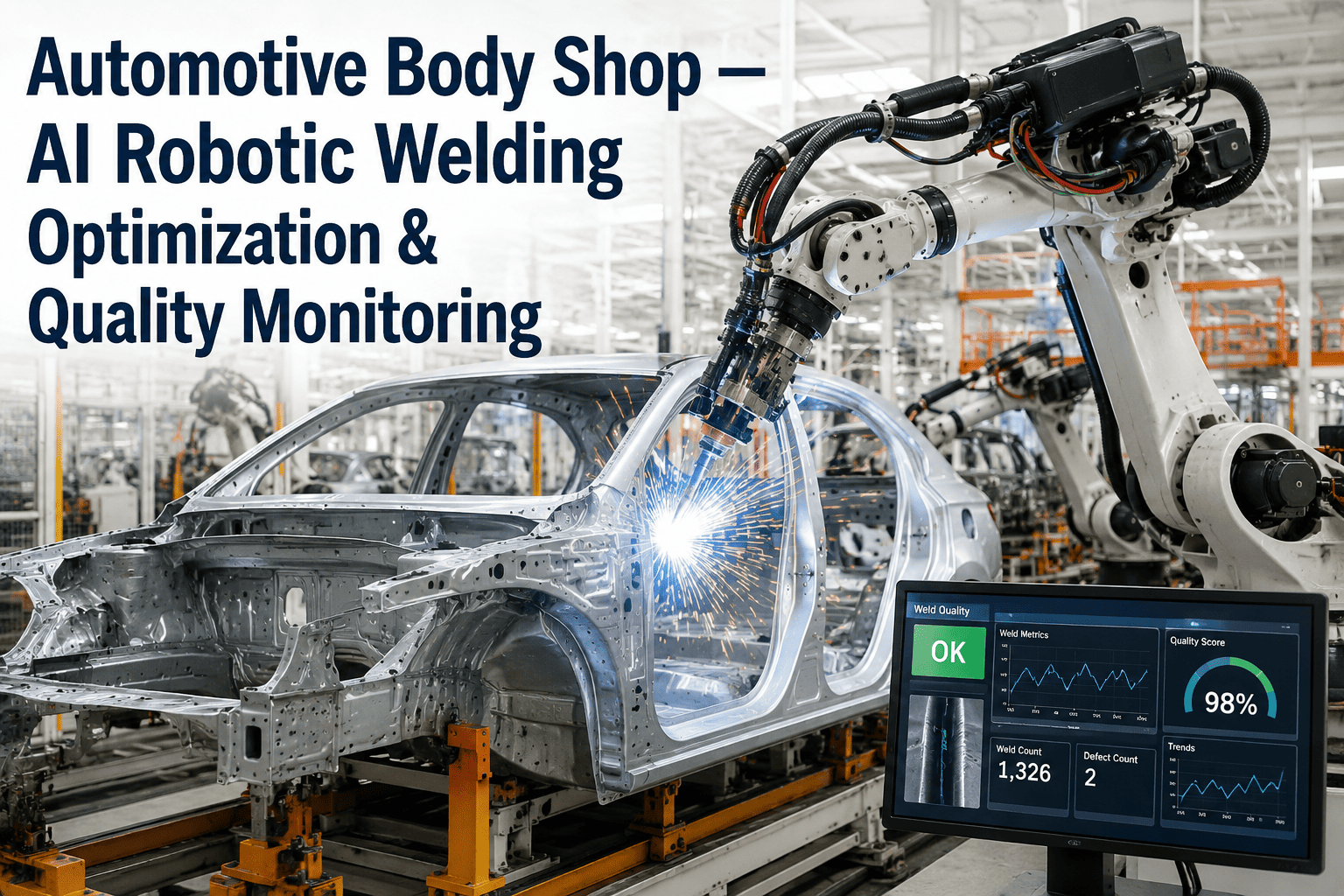
iFactory AI analyzes current, voltage, and force signatures on every spot weld and flags likely defects within milliseconds of the weld finishing.
What "Best" Actually Means for Weld Prediction
A long feature list is not the test. A body shop needs a system that judges every weld quickly, explains its call, and keeps working as electrodes wear and materials change.
A verdict lands before the next weld, so a bad joint never travels downstream unnoticed.
Every weld on every vehicle is scored, which removes the blind spots that sampling leaves.
Each alert names the likely defect type so a technician knows what to fix first.
Electrode drift is tracked over time so tip dressing happens on evidence, not on a fixed guess.
Coated steels, high-strength grades, and stack-ups change the signature, and the model has to allow for that.
Flags reach the weld controller, MES, and quality team without manual re-entry.
One Weld, Roughly a Third of a Second
A typical resistance spot weld runs through four phases in a very short window. Each phase leaves its own fingerprint in the signals, and that is what the AI reads.
Force builds and sheets seat together. A weak or late force ramp often points to a gap or air pressure issue.
Current flows and the nugget forms. Voltage and resistance curves show growth, stall, or a sudden collapse.
The nugget solidifies under force. Force behavior here separates a stable joint from a weak one.
Electrodes release. The full signature is complete and the model issues its verdict.
Signatures That Give Defects Away
Different defects distort the signals in different ways. The table shows the patterns a prediction model learns to separate.
| Defect | Signature Pattern | Common Cause | Usual Response |
|---|---|---|---|
| Expulsion | Sudden voltage drop and force spike mid-weld | Excess current or poor fit-up | Review current and check gap |
| Cold Weld | Low heat input, flat resistance curve | Worn tip or low current | Dress or replace electrode |
| Stick Weld | Irregular force release at the end | Electrode contamination | Clean or dress tip |
| Shunting | Reduced current at the joint | Weld spacing too tight | Adjust sequence or spacing |
| Burn-Through | Sharp resistance collapse and heat spike | Thin sheet or excess energy | Lower energy or time |
See Your Own Weld Signatures Scored
Book a 30-minute session and iFactory AI will walk through how your weld schedules, materials, and controllers translate into a defect prediction model.
Where Prediction Beats Sampling
Quality methods differ mostly in how long they take to give an answer. The bars show relative time to a verdict, not exact figures.
Prediction does not replace periodic verification. It tells you which welds deserve a physical check and keeps the rest from being ignored.
Electrode Wear: The Slow Drift Behind Most Weld Trouble
Most cold welds are not sudden events. Tips mushroom gradually, contact area grows, and current density quietly falls until a threshold is crossed.
Signature sits inside its healthy band.
Resistance curve shifts a little each cycle.
AI flags the trend before defects appear.
Maintenance acts on evidence, not a fixed count.
A Composite Scenario: The Line That Passed Sampling
A body shop building a side-frame subassembly passed its scheduled teardown checks every week, yet field returns showed a handful of weak joints on one station.
Illustrative example based on common spot welding patterns, not a specific customer result.
A Six-Point Checklist Before You Choose
Delivered Turnkey, Live in 6 to 12 Weeks
iFactory AI arrives pre-configured on an NVIDIA server with software pre-loaded. Rack it, connect power and Ethernet, and the team handles the rest.
Frequently Asked Questions
Can AI really judge a weld without cutting it open?
It predicts quality from how current, voltage, and force behave during the weld, and those patterns correlate strongly with nugget formation. It does not remove the need for periodic physical verification. It tells you where to look. A live walkthrough with the iFactory AI team shows how validation works on your line.
Which signals matter most for prediction?
Current and voltage show heat input and resistance behavior, while electrode force reveals fit-up and release problems. Models perform best when all three are read together, because each defect distorts them differently and combined patterns are far harder to confuse.
How does it handle electrode wear over time?
The model tracks how the signature drifts across many welds, so gradual tip wear shows up as a trend before it becomes a defect. Maintenance can then dress or replace tips based on evidence rather than a fixed weld count, which cuts both scrap and unnecessary downtime.
Does it work with different materials and stack-ups?
Coatings, thickness, and steel grade all change a normal signature, so the system learns a separate healthy band for each combination in your schedule. That prevents false alarms on difficult stack-ups. See these healthy bands built from your own weld schedules in a short live session.
How long before the system is live?
Delivery is turnkey and typically takes 6 to 12 weeks. The hardware arrives pre-configured, integration covers cabling, network, and plant systems, and the last phase focuses on training quality staff and handing over dashboards for daily use. Map out a rollout plan for your body shop in one 30-minute call.
Catch Weak Welds While the Weld Is Still Warm
iFactory AI reads every weld signature, flags likely defects in milliseconds, and tracks electrode wear before it costs you quality. Book a walkthrough on your own line data.




.png)