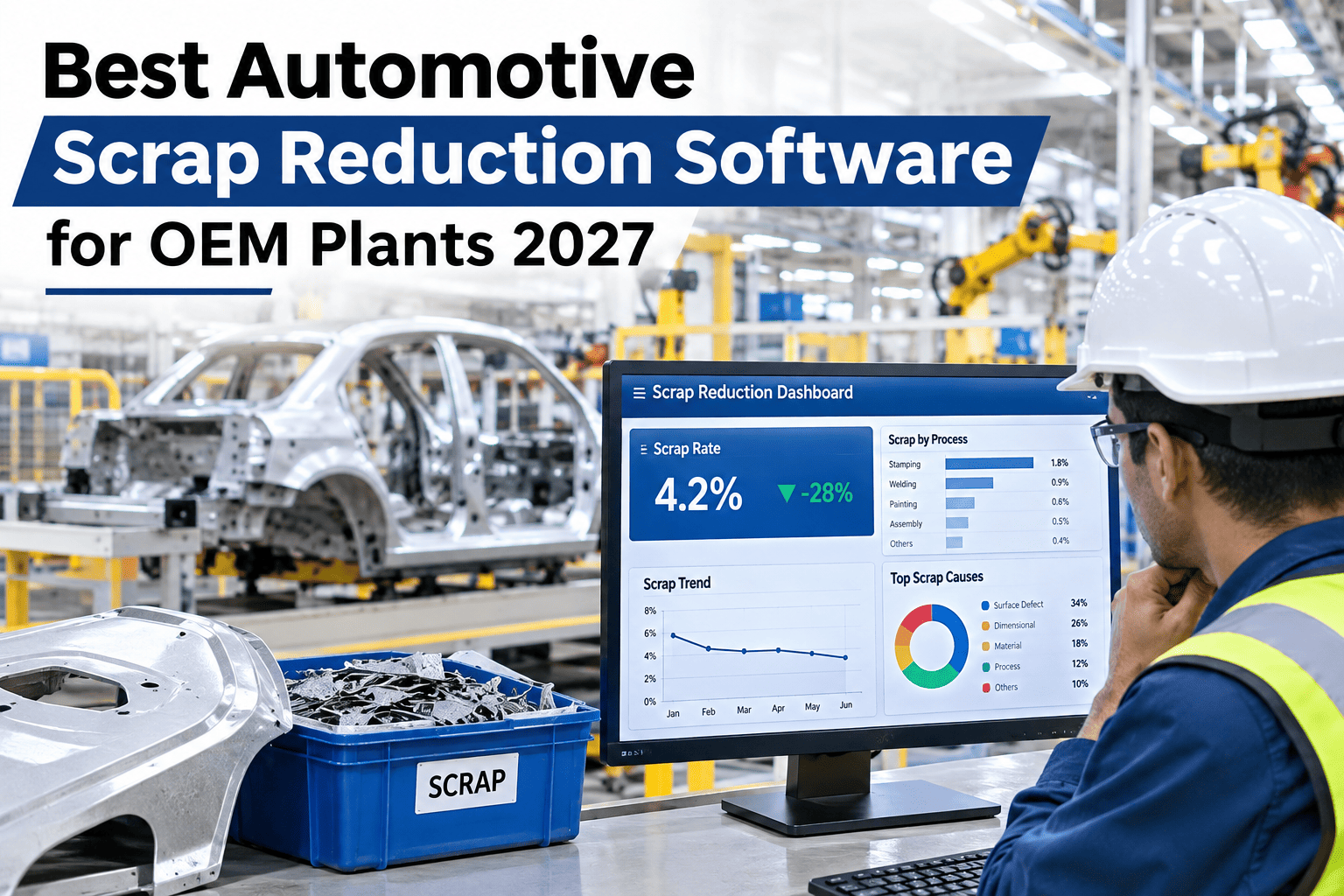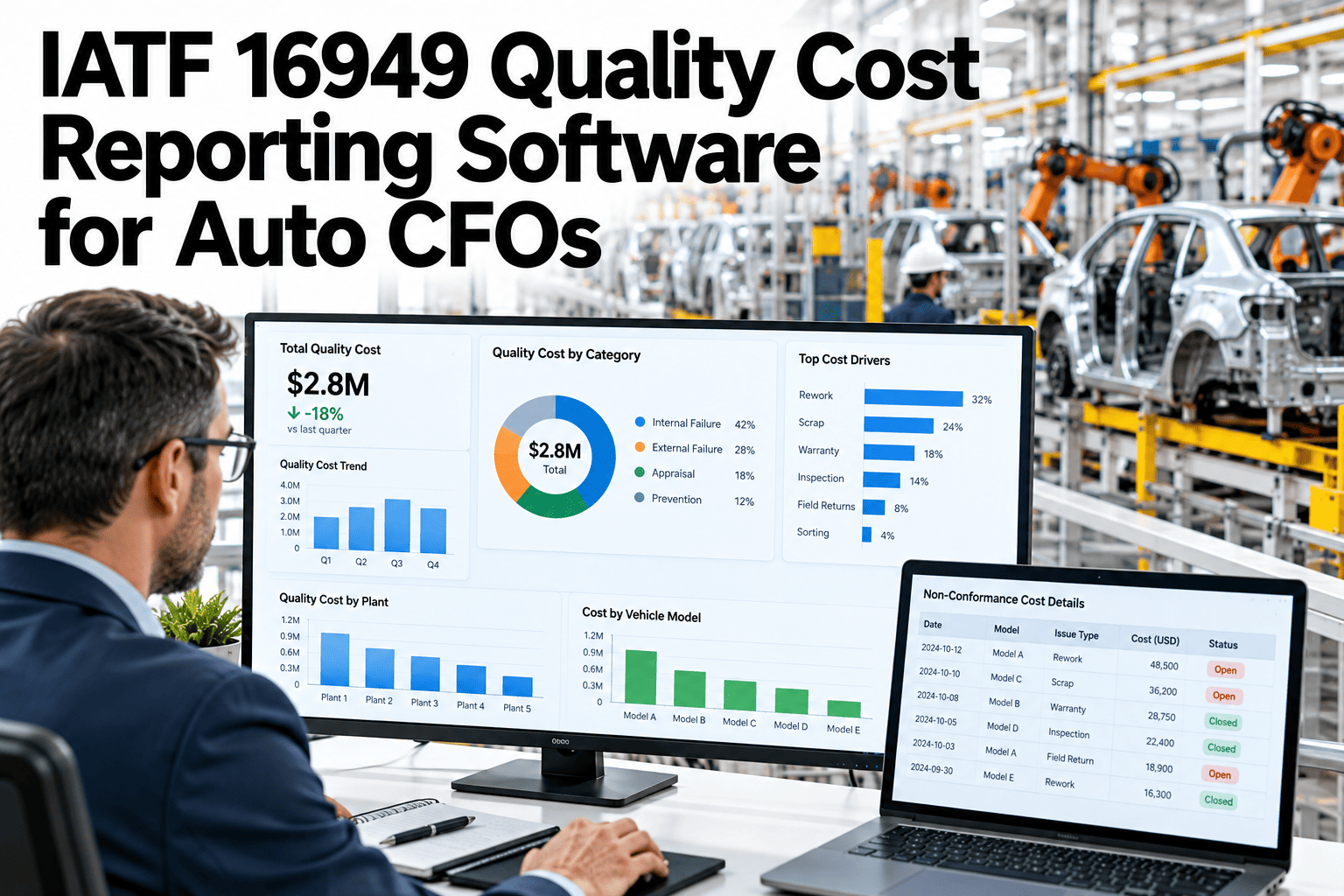
A CFO looking at a scrap report full of event counts and part numbers has no real basis to approve or reject an investment, because none of it is expressed in the one unit finance actually decides on — dollars, broken down by material, labor and overhead per defect. Scrap cost modeling exists to translate operational data into exactly that, on a dashboard finance can read without a plant engineer in the room to interpret it. Auto OEM plant CFOs evaluating a scrap-reduction investment can see a cost-attributed scrap dashboard built from their own data with iFactory AI.
Scrap Reports Built for Engineers Rarely Help the Person Approving the Budget
iFactory AI attributes material, labor and overhead cost to every defect automatically, turning a scrap log into a dashboard finance can actually use to decide.
What "Cost Per Defect" Actually Has to Include
Material cost alone understates the real impact of a defect, because the labor already invested before the scrap point, and the overhead allocated to that unit's time on the line, are both lost along with the material.
What a CFO-Ready Dashboard Actually Shows
| View | What it answers |
|---|---|
| Cost by defect type | Which defect categories are costing the most in dollars, not event count |
| Cost by station | Which stations are generating the most costly scrap |
| Trend over time | Whether a targeted fix is actually reducing the cost, not just the count |
| Investment comparison | Projected payback for a proposed fix against its actual cost |
Put Your Own Scrap Data on a Dashboard Finance Can Read
Share a recent scrap export and a short session will show the same data attributed by material, labor and overhead cost.
A Composite Scenario: The Investment Case That Finally Made Sense
A plant's engineering team had requested funding for a fix three times, each time presenting a scrap event count that finance could not translate into a clear return. Rebuilding the same case with cost-attributed data showed the defect in question, while not the highest by count, carried the highest total cost because it was typically caught late in the process after significant labor had already been invested. That reframing, not any change in the underlying problem, is what got the investment approved — a translation iFactory AI's team can help build for your own pending requests.
Why Live Dashboards Matter More Than a Monthly Report
A monthly scrap cost summary tells finance what already happened. A live dashboard lets them see whether a funded fix is actually reducing cost in near real time, which matters both for confirming the investment worked and for catching early if it did not, before a full quarter has passed.
Frequently Asked Questions
Give Finance a Scrap Number They Can Actually Act On
iFactory AI attributes material, labor and overhead cost to every defect automatically, live on a CFO-ready dashboard. Book a walkthrough with your own data.