Every automotive OEM sustainability report now carries a net-zero date, but the plant floor rarely has a roadmap that matches it. EHS teams are asked to report Scope 1, 2, and 3 emissions with growing precision while still relying on spreadsheets, annual utility bills, and estimated supplier factors that were never built for audit-grade reporting. The gap between the commitment on the cover page and the data behind it is where most net-zero programs quietly stall. AI-tracked emissions data closes that gap by turning energy meters, production records, and supplier data into a live decarbonization roadmap instead of a once-a-year exercise. Talk to iFactory about building your plant's net-zero roadmap — book a demo.
Net-Zero + AI Emissions Tracking
Your Net-Zero Target Has a Date.
Does Your Plant Have a Roadmap?
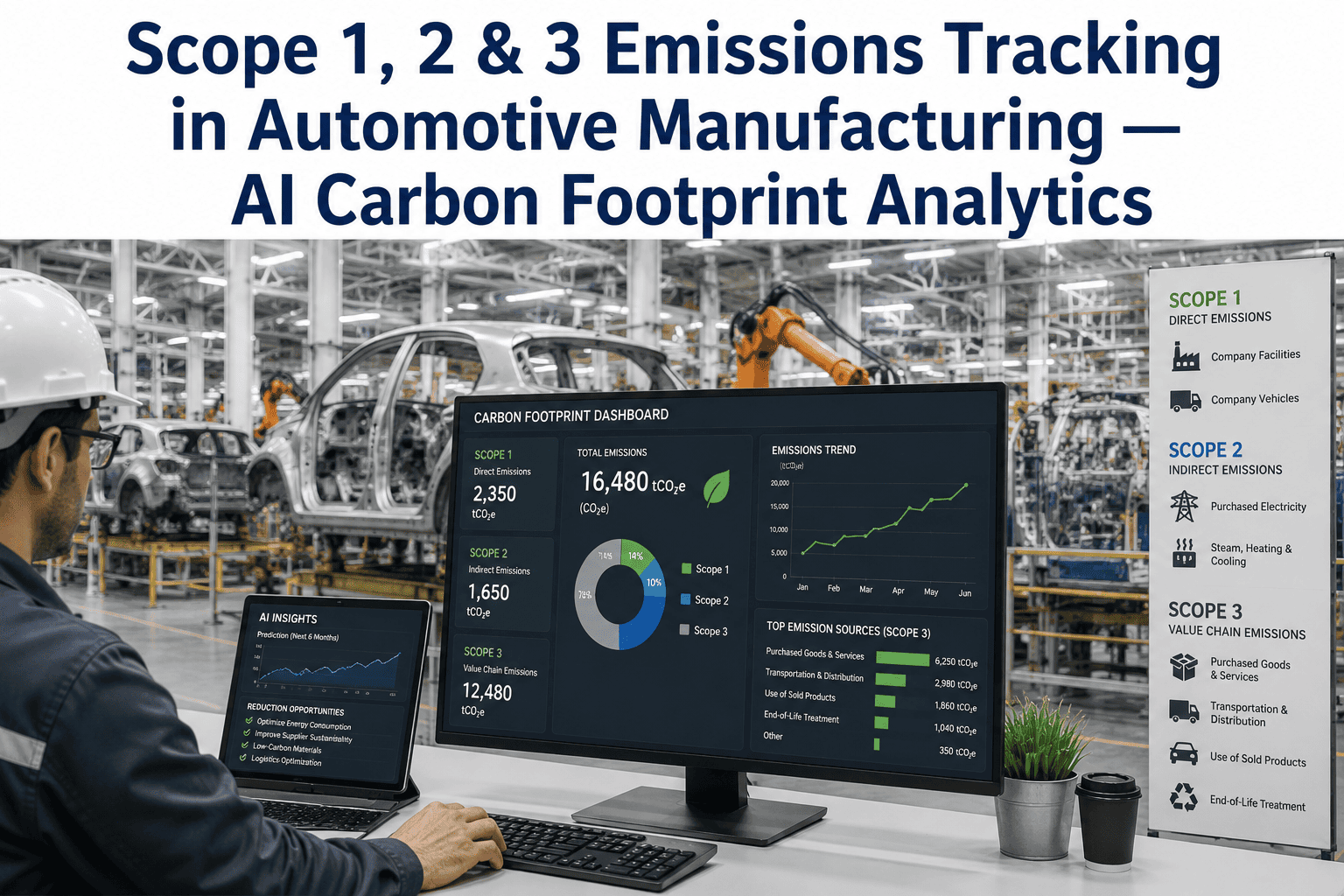
iFactory tracks Scope 1, 2, and 3 emissions at the plant level, in real time, and turns them into a decarbonization roadmap that stands up to SBTi validation and CSRD reporting.
Where Your Plant's Emissions Actually Sit
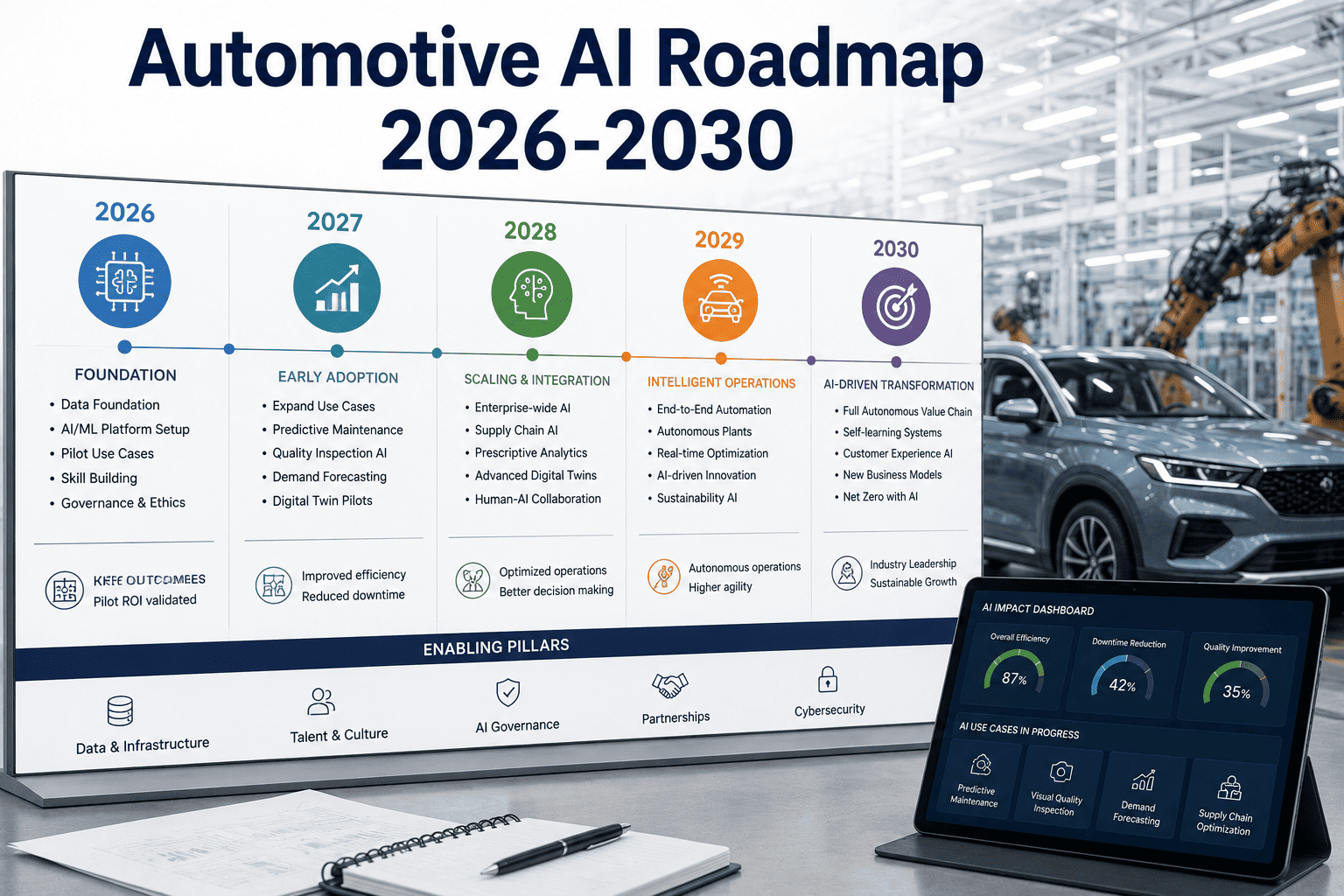
The Four-Phase Net-Zero Roadmap
Phase 1
Baseline & Measure
Connect energy meters, production data, and supplier records into one measurement system. Establish an audit-defensible Scope 1-2-3 baseline before setting any target.
Phase 2
Quick-Win Reductions
Compressed air leak detection, HVAC scheduling, and idle-equipment shutdown are typically the fastest 10 to 15% of reduction, with payback inside a single budget cycle.
Phase 3
Structural Change
Renewable power purchase agreements, waste heat recovery, and process electrification address the harder-to-move majority of Scope 1 and 2 emissions.
Phase 4
Supplier & Scope 3
Supplier emissions data collection and material substitution close the largest remaining gap, since electrification alone can cut downstream Scope 3 by 50 to 70%.
Reduction Levers AI Helps You Prioritise
Energy Monitoring by Line
Per-machine and per-line energy data identifies which assets drive disproportionate consumption relative to output, so investment goes where it pays back fastest.
Waste Heat Recovery
Furnace, compressor, and process heat that is currently vented can be captured and reused, directly reducing the fuel load behind Scope 1 emissions.
Renewable Integration
On-site solar, battery storage, and renewable power agreements are modelled against actual plant load profiles rather than generic assumptions.
Supplier Emissions Scoring
Supplier-submitted or estimated emissions factors are tracked per material lot, building the Scope 3 dataset SBTi validation requires over time.
Book a Demo — Model Your Plant's Net-Zero Path
Bring your current utility bills and production volumes. iFactory will show you where your plant's emissions actually concentrate and which reduction levers close the gap fastest.
Manual Reporting vs. AI-Tracked Emissions Data
| Reporting Activity | Manual / Spreadsheet | iFactory AI-Tracked |
|---|---|---|
| Data frequency | Monthly or annual | Continuous, per shift |
| Scope 3 supplier coverage | Estimated averages | Lot-level tracked data |
| Audit readiness | Reconstructed at report time | Continuously logged with lineage |
| Reduction lever visibility | Identified retrospectively | Flagged as they emerge |
| CSRD / SBTi alignment | Manual mapping exercise | Built into the data model |
FAQ: Net-Zero Roadmaps for Automotive Manufacturing
What is the difference between carbon neutral and net zero for a manufacturing plant?
Carbon neutral generally means a plant's emissions have been balanced through offsets, while net zero means emissions have been reduced as close to zero as possible at the source, with offsets used only for the residual amount that cannot yet be eliminated. Most automotive OEM sustainability commitments now favour net zero language because offset-heavy carbon neutral claims are facing increasing scrutiny from regulators and investors. A credible net-zero roadmap therefore prioritises measured reduction levers — energy efficiency, electrification, renewable procurement — over offset purchases as the primary strategy.
Why is Scope 3 so difficult to track for automotive manufacturers?
Scope 3 typically represents 70 to 90% of a manufacturer's total emissions, spanning supplier material production, inbound and outbound logistics, and the use phase of the finished product. Unlike Scope 1 and 2, which come from meters and utility bills a plant controls directly, Scope 3 data depends on suppliers reporting accurately, which is inconsistent across a multi-tier supply chain. SBTi's automotive net-zero standard now requires 95% Scope 3 coverage for a validated target, which is pushing manufacturers toward systematic, lot-level supplier data collection rather than annual industry-average estimates. Ask our team how iFactory structures supplier-level Scope 3 tracking.
How much emissions reduction can electrification realistically deliver?
Electrification of processes and product lines is one of the strongest single levers available, with industry analysis showing it can reduce downstream Scope 3 emissions by 50 to 70% and cut a product's overall carbon footprint by 30 to 50%. However, electrification alone is rarely sufficient for a comprehensive net-zero pathway, since it does not address supplier-side material emissions or the energy source behind the electricity itself. A complete roadmap pairs electrification with renewable power procurement and supplier engagement to close the remaining gap.
What data does iFactory need to build our plant's net-zero roadmap?
iFactory connects to existing energy meters, IoT sensors, MES production records, and SAP or ERP supplier data — no separate sustainability data collection system is required. Where sub-metering does not yet exist, iFactory can deploy non-intrusive energy sensors to establish per-line and per-machine visibility within weeks. This means the plant's existing operational data becomes the foundation for the emissions baseline, rather than requiring a parallel manual data-gathering exercise. Book a demo to see what data your plant already has available.
How long does it take to see measurable emissions reductions?
Phase 2 quick-win reductions — compressed air leak repair, HVAC scheduling, and idle-equipment shutdown — typically deliver 10 to 15% of achievable reduction within the first two to three months, often with payback inside a single budget cycle. Structural changes such as waste heat recovery or renewable power agreements take longer to plan and finance but represent the larger share of long-term reduction. A realistic roadmap sequences both, so early wins fund credibility for the larger investments that follow.
Net-Zero Roadmap + iFactory
Turn Your Sustainability Commitment Into a Measured Plant Roadmap.
iFactory tracks Scope 1, 2, and 3 emissions continuously and builds the reduction roadmap that makes your net-zero target defensible, not aspirational.